


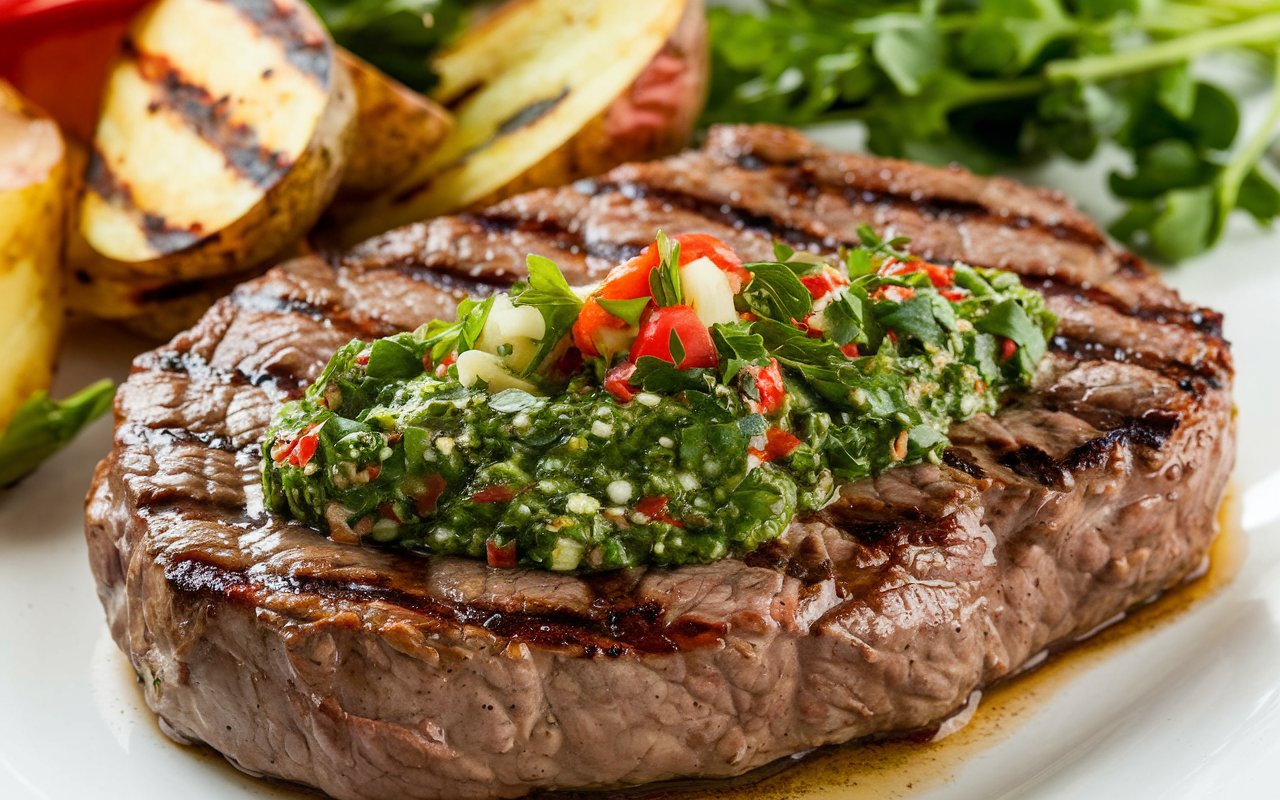
Famed for its lush grasslands and robust cattle culture, Argentina has cemented an international reputation for succulent, flame-grilled beef. Yet one key element transforms a good steak into an unforgettable feast: Chimichurri, a vibrant green sauce brimming with parsley, garlic, oregano, and a hint of chili. Argentinian Chimichurri Steak exemplifies how a simple marinade (or post-cooking sauce) can bring beef to life, infusing each bite with herby zing and a pleasant, garlicky undertone. Often served tableside in Argentine steakhouses, chimichurri merges tangy vinegar or lemon juice with quality olive oil, creating a sauce that simultaneously cuts through the steak’s richness while complementing its natural flavor.
- Section 1: Why Argentinian Chimichurri Steak Shines
- Section 2: Ingredient Overview
- Section 3: Step-by-Step Recipe (Approx. 30–40 Minutes Plus Optional Marinade Time)
- Section 4: Tips for Stellar Chimichurri Steak
- Section 5: Flavor Variations
- Section 6: Serving Suggestions
- Section 7: FAQ – Argentinian Chimichurri Steak
- Conclusion
My first tango with chimichurri occurred at an asado (Argentine barbecue), where slabs of beef seared over wood embers before being crowned with this luscious sauce. The aroma of grilled meat fused with the bright, fresh punch of parsley and garlic, generating a flavor synergy that soared beyond any standard marinade. Determined to replicate it, I uncovered the secrets: fresh herbs—never let them wilt or rely on dried versions—along with a good ratio of vinegar, chili, and a quality oil. Over time, I learned that chimichurri can function as both a marinade (brief or overnight) and a finishing sauce. Now, whenever I want to celebrate the essence of Argentine grilling, I whip up a batch of chimichurri and let it transform an ordinary steak into a culinary journey to Buenos Aires.
In this guide, we’ll show you how to craft Argentinian Chimichurri Steak, from mixing the sauce (herb ratio, acid balance, optional heat) to selecting the right cut of beef, grilling or searing, and finishing with a flourish. Whether you fancy a quick marinade or a post-cooking drizzle, prepare for a refreshing, herby marinade that brightens each steak bite with classic Argentine gusto.

Section 1: Why Argentinian Chimichurri Steak Shines
- Herbaceous & Tangy
Chimichurri merges fresh parsley (and often cilantro), garlic, chili, and vinegar, forming a sauce that’s both refreshing and pungent. This complements beef’s richness, cutting through fat and accentuating flavor. - Versatile Preparation
You can marinade the steak briefly for infusion or simply serve the sauce at the table. Either approach ensures the zesty flavors interplay with the meat. - Quick to Assemble
Chimichurri calls for minimal cooking—just chop, stir, and let the flavors meld. The steak itself can be grilled or pan-seared in minutes. - Global Crowd-Pleaser
While iconic in Argentina, chimichurri appeals internationally, prized for its bold green hue and bright taste that pairs well with more than just steak (think chicken, fish, vegetables).
Section 2: Ingredient Overview
Use this table for 3–4 servings, or scale up:
| Ingredient | Quantity | Notes |
|---|---|---|
| Steak (ribeye, strip, flank, or sirloin) | ~1½ lb (680 g) total | Choose your favorite cut; Argentine traditions use cuts like flank |
| Fresh Parsley (flat-leaf, chopped) | ~1 cup (firmly packed) | The sauce’s core herb |
| Garlic (minced) | 3–4 cloves | Adjust based on preference for pungency |
| Oregano (fresh or dried) | 1 tbsp fresh or 1 tsp dried | Secondary herb; cilantro can be partially subbed if desired |
| Red Chili Flakes or Fresh Chili | ½–1 tsp or 1 small chili | For mild heat; can skip or intensify |
| Olive Oil | ~½ cup | Good-quality extra virgin recommended |
| Vinegar (red wine or white wine) | 2–3 tbsp | Some prefer lemon juice or a mix of both |
| Salt & Pepper | To taste | Season carefully, ~½ tsp salt + pinch pepper recommended |
| Optional Sweetener | ½ tsp sugar or honey | If you want to mellow acidity slightly |
| Additional Spices (paprika, cumin) | A pinch (optional) | Some variations add a hint for extra dimension |
Section 3: Step-by-Step Recipe (Approx. 30–40 Minutes Plus Optional Marinade Time)
Chimichurri Sauce
- Chop & Mix
- Finely chop 1 cup parsley (plus any oregano or cilantro if using fresh). Mince or finely grate 3–4 cloves of garlic. Place in a bowl.
- Add 2–3 tablespoons vinegar (start lower, adjust after tasting), ½ cup olive oil, ½–1 teaspoon salt, a pinch of pepper, and chili flakes or diced chili to taste.
- Taste & Adjust
- Stir thoroughly. If it’s too thick, add more oil or a splash of water. If too acidic, drizzle a bit more oil or add a pinch of sugar/honey. If not punchy enough, more vinegar or chili.
- Let the sauce rest at least 10 minutes (up to a few hours) for flavors to meld. Some prefer overnight in the fridge, returning it to room temp before serving.
Steak Prep & Cooking
- Choose & Season Steak
- Pat the steak dry. Season both sides with salt and pepper. Optionally marinade in a portion of chimichurri for 15–30 minutes (not longer, as vinegar may toughen the surface).
- Grill or Pan-Sear
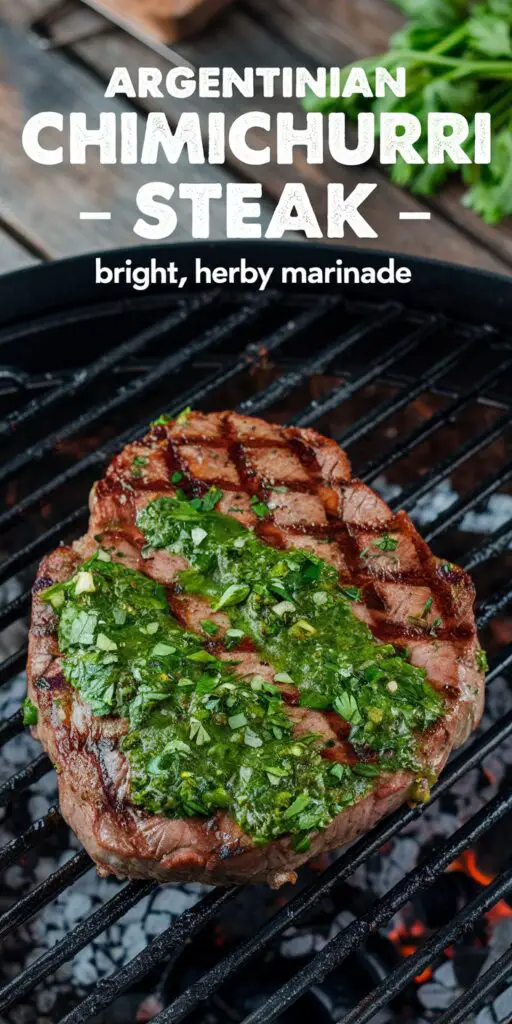
- Grilling: Preheat grill to high. Sear the steak ~4–5 minutes per side for medium-rare, adjusting based on thickness. The internal temp ~130–135°F (54–57°C).
- Pan-Searing: Heat a heavy skillet (cast iron is ideal) with 1 tablespoon oil over medium-high. Place the steak, pressing gently for full contact. Sear each side ~3–4 minutes for medium-rare. If thick, reduce heat or finish in a 400°F (200°C) oven.
- Let the steak rest on a cutting board for ~5–10 minutes.
- Slice & Serve
- Slice against the grain if it’s a cut like flank or sirloin. For ribeye or strip, you may plate the steak whole or slice.
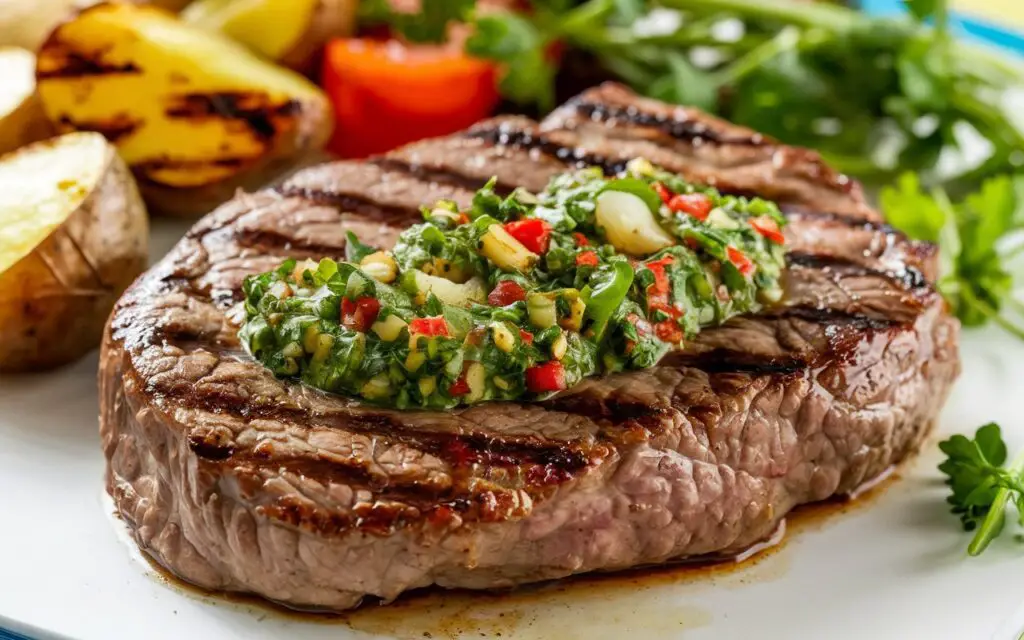
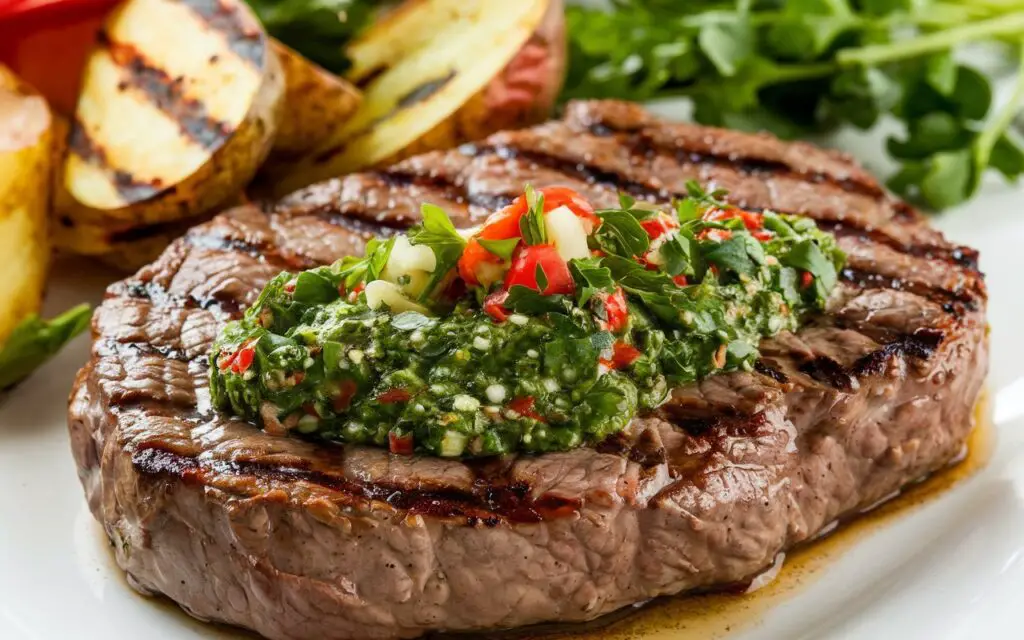
- Spoon or drizzle chimichurri sauce over the top. Alternatively, serve it in a bowl for diners to apply themselves. Enjoy while the steak remains warm.
Section 4: Tips for Stellar Chimichurri Steak
- Fresh Herbs
- Parsley shouldn’t be wilted or old. The sauce’s vibrancy depends on fresh, green leaves.
- Monitor Acidity
- Chimichurri’s tang is key, but too acidic can overpower. Start small with vinegar or lemon, adding gradually until balanced.
- Avoid Overcooking
- Overcooked steak can turn tough, overshadowing the sauce’s merits. Aim for medium-rare to medium so the marinade’s brightness complements the meat’s juiciness.
- Temperature Matters
- Let the steak rest before slicing. This step preserves moisture. Serve chimichurri at room temperature for peak flavor.
Section 5: Flavor Variations
- Extra Heat
- For a spicier sauce, add fresh red chili or a pinch of cayenne. Some Argentinian homes add aji molido (mild red pepper).
- Lemony Twist
- Sub half the vinegar with lemon juice. This slightly sweet, citrusy undertone lifts the overall sauce.
- Cilantro Blend
- Some blend in half parsley, half cilantro for a southwestern spin. This synergy also plays well if you prefer a slightly more pungent herb base.
- Textural Variation
- While traditional chimichurri is chunkier, you can pulse the ingredients in a food processor for a smoother consistency. Just be careful not to puree into a paste—some texture remains ideal.
Section 6: Serving Suggestions
- Classic Asado Style: Offer chimichurri steak with grilled vegetables (peppers, onions, zucchini) for a full Argentinian barbecue vibe.
- Potatoes or Fries: Crisp fries or roasted potatoes deliver a comforting starch that mops up extra sauce.
- Salad: A simple green or tomato salad can lighten the overall meal, letting the sauce remain the star.
- Leftover Tacos or Sandwiches: Thinly slice leftover steak, layering it in tortillas or bread with extra chimichurri for a next-day treat.
Section 7: FAQ – Argentinian Chimichurri Steak
Q1: Do I need to marinade overnight?
A1: Not mandatory. A brief marinade (15–30 minutes) can suffice, or you can skip marinating entirely, simply serving chimichurri as a finishing sauce. Extended marination in high-acid sauce might toughen the exterior.
Q2: Can I store leftover chimichurri?
A2: Yes, it keeps for ~1 week in the fridge. The color may darken, but flavor holds. Bring it to room temp before using again.
Q3: Any cuts of steak to avoid?
A3: Tough cuts requiring long braises (like chuck) don’t fit well here. Flank, skirt, sirloin, ribeye, or strip are popular choices for quick, direct-heat cooking.
Q4: How do I avoid a too-garlicky sauce?
A4: Use fewer cloves or roast the garlic first to mellow it. Each family’s chimichurri varies—some love potent garlic, others prefer restraint.
Q5: Is traditional chimichurri always green?
A5: Classic chimichurri is predominantly green, but there’s a red variant (chimichurri rojo) containing tomatoes or peppers for color. The technique is similar, with slight ingredient shifts.
Conclusion
Uniting prime beef with a bright, herbaceous marinade or finishing sauce, Argentinian Chimichurri Steak exemplifies the flair of South American cuisine: fresh, robust, and proud of its simple yet powerful components. Every slice of tender steak benefits from the tangy, garlicky pop of chimichurri, highlighting how a handful of quality herbs and straightforward technique can elevate a dish to legendary status.
Now that you’re comfortable blending parsley, garlic, chili, and oil into a bold sauce and searing or grilling your steak to succulent perfection, why not stage a mini Argentine asado at home? As you relish each bite—perhaps garnishing with extra chimichurri or a side of grilled veggies—drop back here to share your personal spin. Did you add a citrus twist, incorporate more oregano, or marinate the steak overnight? Your imaginative touches might tempt others to join the global chorus singing praises of chimichurri’s vibrant charm.