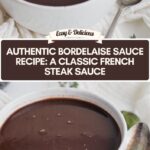



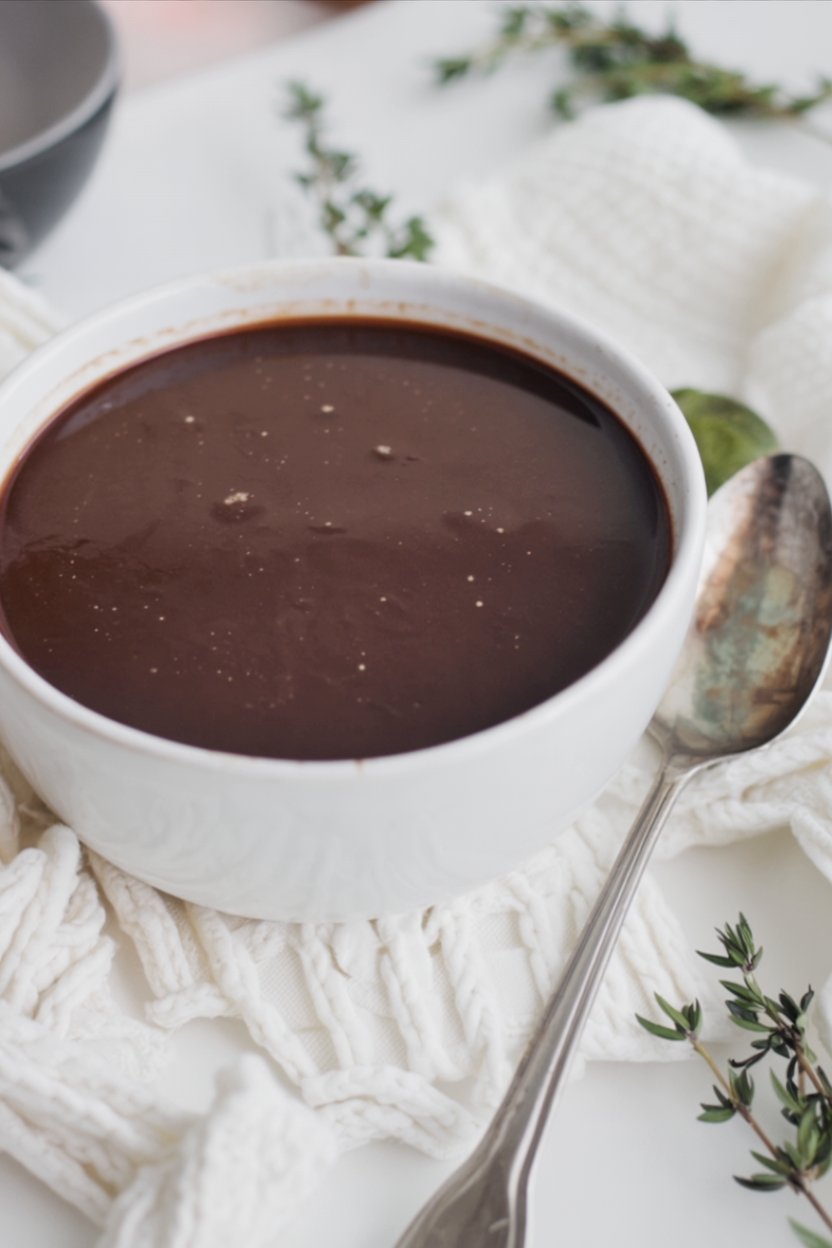
Have you ever wondered why a steak at a high-end French bistro tastes infinitely better than the one you make at home? The secret often isn’t the meat itself, but the glossy, rich liquid gold poured over it. Today, we are mastering a culinary icon: the Bordelaise Sauce Recipe.
- Ingredients
- Timing
- Step-by-Step Instructions
- Step 1: Sauté the Aromatics
- Step 2: The Red Wine Reduction
- Step 3: Simmer with Demi-Glace
- Step 4: Mount with Butter (Monter au Beurre)
- Step 5: Strain and Season
- Nutritional Information
- Healthier Alternatives
- Serving Suggestions
- Common Mistakes to Avoid
- Storing Tips
- Conclusion
- FAQs
- Q1. What is the best red wine for Bordelaise sauce?
- Q2. Can I use beef broth instead of demi-glace?
- Q3. What is the difference between Bordelaise and Red Wine Jus?
- Q4. Is the alcohol cooked out?
- Authentic Bordelaise Sauce Recipe: A Classic French Steak Sauce
I still remember the first time I attempted a classic French sauce. I was intimidated by the fancy terminology, but I quickly learned that the process is actually quite therapeutic. Originating from the Bordeaux region of France (famous for its wine), this sauce is a celebration of dry red wine, bone marrow, and savory aromatics. It transforms a simple seared steak into a masterpiece of haute cuisine.
In this guide, we will break down the intimidation factor. We will take simple ingredients—shallots, thyme, and red wine—and reduce them into an intense, velvety sauce. Whether you are planning a romantic dinner or just want to elevate your weekend roast, this Bordelaise sauce recipe is the key to unlocking deep, restaurant-quality flavor right in your own kitchen.
Ingredients
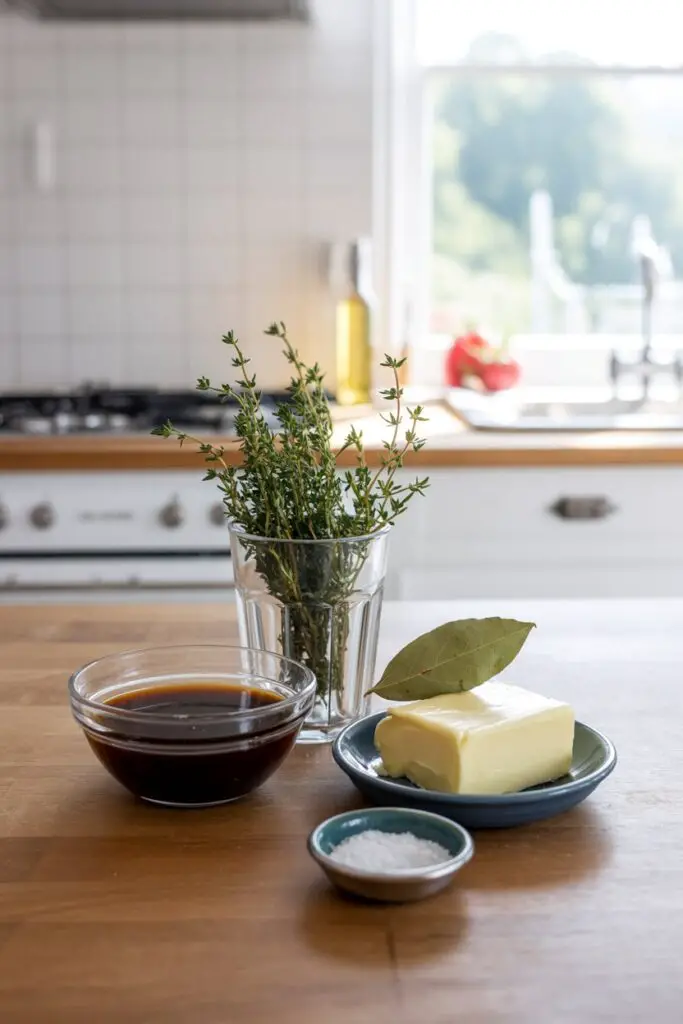
The magic of French cooking often lies in the quality of the mise en place. Here is what you need to build this flavor bomb.
| Ingredient | Amount/Quantity | Notes |
| Unsalted Butter | 1 tablespoon | For sautéing the aromatics. |
| Shallot | 1 small, peeled & diced | Provides a sweet, mild onion flavor base. |
| Peppercorns | 12 to 15 whole | Black peppercorns work best for a sharp bite. |
| Garlic Clove | 1, smashed | crushed slightly to release oils. |
| Dry Red Wine | 1 cup | Cabernet Sauvignon, Merlot, or a Bordeaux blend. |
| Demi-Glace | 4 cups | The rich, gelatinous beef stock reduction that gives body. |
| Fresh Thyme | 1 sprig | Adds a subtle, earthy herbal note. |
| Bay Leaf | ½ leaf | Dried or fresh (remove the rib if fresh). |
| Bone Marrow Butter | 2 tablespoons | Or regular cold unsalted butter for mounting. |
| Coarse Salt | To taste | Ideally Kosher or sea salt. |

Timing
Good sauce takes a little patience, but it is much faster than you might think, especially when using prepared demi-glace.
- Prep Time: 10 minutes
- Cook Time: 25 minutes
- Total Time: 35 minutes (About 15 minutes faster than roasting potatoes)
Step-by-Step Instructions
Step 1: Sauté the Aromatics
Start by building the flavor foundation. Add 1 tablespoon of unsalted butter to a medium-sized saucepot over medium heat. Once the butter is melted and foaming slightly, add the diced shallot, smashed garlic clove, and crushed peppercorns.
- Action: Sauté everything for 3 to 4 minutes.
- Visual Cue: You are looking for the shallots to turn translucent and lightly browned (caramelized), but not burnt. This browning adds a layer of sweetness.
Step 2: The Red Wine Reduction
This is where the “Bordelaise” character comes to life. Pour the 1 cup of dry red wine into the pot.
- Cook: Let the wine bubble away until it is reduced by 75%.
- Tip: Keep a close eye on this. You want the alcohol to evaporate and the flavor to concentrate. You should be left with about ¼ cup of syrupy liquid. The bubbles will start to look larger and slower as it thickens.
Step 3: Simmer with Demi-Glace
Once the wine is reduced, add the 4 cups of demi-glace, the fresh thyme sprig, and the bay leaf.
- Simmer: Reduce the heat to low-medium. Cook gently for 15 to 20 minutes.
- Goal: You want the sauce to reduce slightly further and, more importantly, infuse with the herbs. The consistency should be nappe (thick enough to coat the back of a spoon).
Step 4: Mount with Butter (Monter au Beurre)
Remove the sauce from the heat. This step is critical for that velvety texture. Whisk in the 2 tablespoons of cold unsalted butter.
- Upgrade: If you want the most authentic experience, use bone marrow butter here. It adds an unctuous, savory depth that is unparalleled.
- Technique: Whisk vigorously. The cold fat emulsifies into the warm sauce, giving it a glossy sheen.
Step 5: Strain and Season
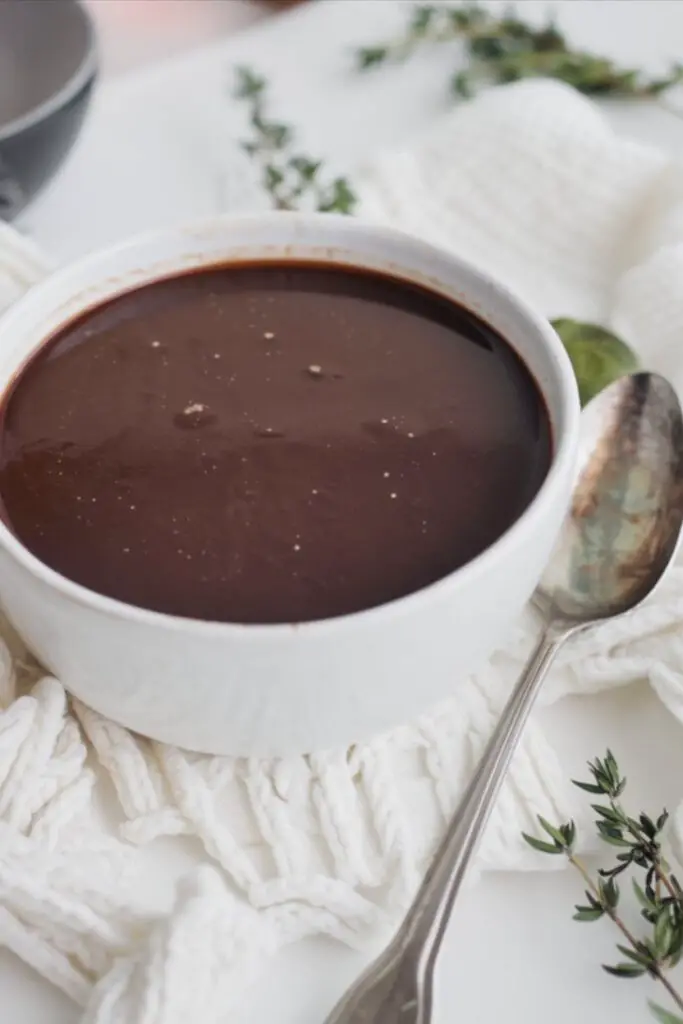
Place a chinois, fine mesh strainer, or cheesecloth over a clean bowl or gravy boat. Strain the sauce, pressing down on the solids to extract every drop of flavor before discarding them.
- Finish: Taste the sauce. Season with coarse salt to taste. (Always salt at the end, as the reduction concentrates the sodium already present in the demi-glace).
Nutritional Information
While this is an indulgent addition to a meal, a little goes a long way. Here is an estimate per 2-tablespoon serving:
- Calories: ~80 kcal
- Fat: 6 g
- Carbohydrates: 3 g
- Protein: 1 g
- Sodium: Varies (depends on demi-glace and added salt)
Note: The bone marrow butter will increase the fat content but provides essential fatty acids and collagen.
Healthier Alternatives
If you are watching your intake but still crave that French richness, here are a few modifications:
- Reduce the Butter: You can finish the sauce with just 1 tablespoon of butter instead of two. It will be slightly less glossy but still flavorful.
- Mushroom Base: For a lower-cholesterol version, substitute the beef demi-glace with a rich vegetable or mushroom reduction. Mushrooms contain natural glutamates that mimic the meaty umami of beef.
- Sodium Control: Use a low-sodium beef stock to make your demi-glace so you have complete control over the saltiness during the final seasoning step.
Serving Suggestions
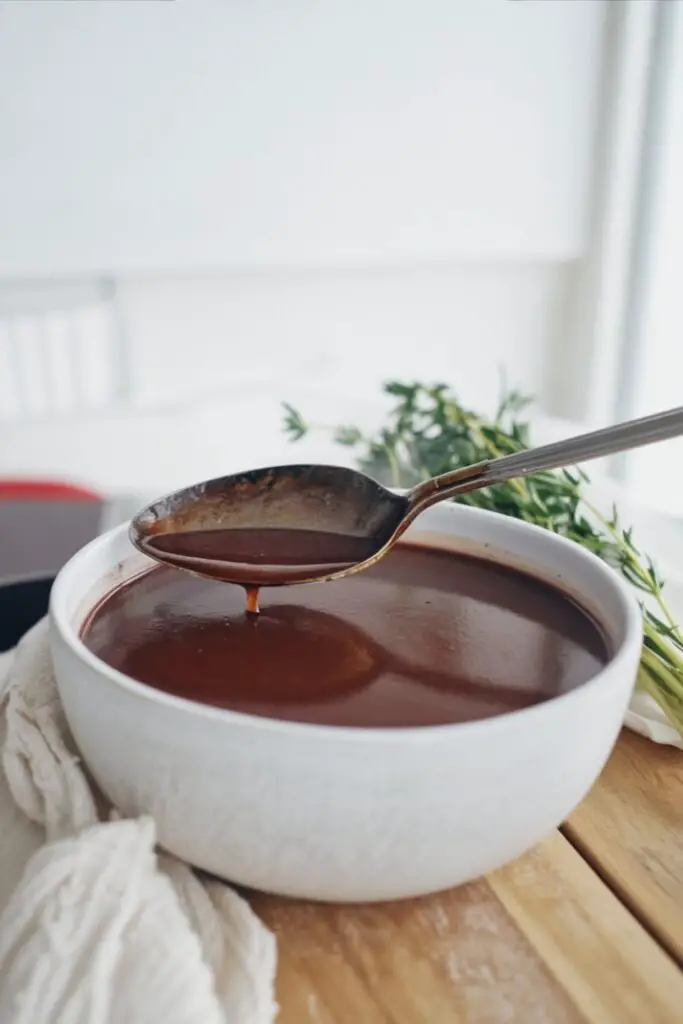
This Bordelaise Sauce Recipe is versatile, but it truly shines when paired with red meat.
- The Classic Pairing: Pour generously over a pan-seared filet mignon or a grilled ribeye steak. The tannins in the wine reduction cut through the fat of the beef perfectly.
- Elevated Sides: Serve alongside Pommes Purée (ultra-creamy mashed potatoes) or roasted root vegetables.
- Vegetarian Option: Believe it or not, this sauce is incredible over a roasted Portobello mushroom steak or a savory lentil loaf, adding a meaty depth without the meat (if using the mushroom alternative mentioned above).
Common Mistakes to Avoid
French sauces require attention to detail. Avoid these common traps:
- Burning the Shallots: If the heat is too high, shallots will burn and turn bitter. Solution: Sauté on medium heat and stir frequently.
- Not Reducing Enough: If the wine isn’t reduced by 75%, the sauce will taste acidic and thin. Solution: Be patient; wait for that syrupy consistency before adding the demi-glace.
- Boiling at the End: Once you whisk in the finishing butter, do not return the sauce to a boil. Solution: Keep it warm, but boiling will cause the emulsion to break, leaving you with a greasy sauce.
- Using Cooking Wine: Never use “cooking wine” with added salt. Solution: Use a dry red wine that you would enjoy drinking. If it’s not good enough for your glass, it’s not good enough for your sauce.
Storing Tips
Bordelaise sauce is excellent for making ahead of time.
- Refrigerator: Store in an airtight container for up to 3 days. The sauce will turn into a jelly consistency when cold due to the gelatin in the demi-glace—this is normal!
- Freezer: Pour the cooled sauce into an ice cube tray. Once frozen, transfer the cubes to a freezer bag. This way, you can grab a “sauce puck” whenever you make a single steak. It lasts up to 3 months.
- Reheating: Warm gently in a saucepan over low heat. Whisk constantly as it melts to encourage the emulsion to hold. Do not microwave if possible, as it may separate.
Conclusion
Mastering this Bordelaise Sauce Recipe is a rite of passage for any home cook. It moves you away from bottled steak sauces and introduces you to the deep, complex world of French culinary tradition. The combination of wine, aromatics, and rich demi-glace creates a flavor profile that is robust yet elegant.
We hope this guide helps you feel confident in bringing a taste of France to your dinner table. Try it out and let us know! Did you use bone marrow butter or stick to classic butter? Leave a comment below with your thoughts and photos. And if you loved this recipe, don’t forget to subscribe to our blog for more chef-approved techniques made simple.
FAQs
Q1. What is the best red wine for Bordelaise sauce?
The best choice is a dry red wine with good body and moderate tannins. A Cabernet Sauvignon, Merlot, or—naturally—a Bordeaux blend are ideal choices. Avoid sweet wines like Zinfandel or Port, as they will make the sauce cloyingly sweet once reduced.
Q2. Can I use beef broth instead of demi-glace?
Technically, yes, but the texture will be different. Demi-glace is highly reduced stock that is thick and gelatinous. If you use regular beef broth, you will need to reduce it significantly longer to get the right body, or thicken it with a small cornstarch slurry (though this is less traditional).
Q3. What is the difference between Bordelaise and Red Wine Jus?
Great question! A red wine jus is typically lighter and is often just the pan drippings deglazed with wine and stock. A classic Bordelaise is more complex, involving a specific reduction of shallots and herbs, and crucially, it includes bone marrow (or is finished with marrow butter) for a distinctively rich mouthfeel.
Q4. Is the alcohol cooked out?
Most of the alcohol evaporates during the vigorous boiling and reduction phases. However, trace amounts may remain. The flavor that stays behind is the essence of the grape, not the booziness.
Print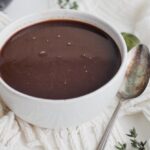
Authentic Bordelaise Sauce Recipe: A Classic French Steak Sauce
- Total Time: 35 minutes
- Yield: Approx. 2 Cups
- Diet: Gluten Free
Description
Have you ever wondered why a steak at a high-end French bistro tastes infinitely better than the one you make at home? The secret is this glossy, rich liquid gold. Originating from the Bordeaux region of France, this sauce is a celebration of dry red wine, bone marrow, and savory aromatics. It transforms a simple seared steak into a masterpiece of haute cuisine. Whether you are planning a romantic dinner or just want to elevate your weekend roast, this recipe unlocks deep, restaurant-quality flavor.
Ingredients
- 1 tablespoon Unsalted Butter (for sautéing)
- 1 small Shallot, peeled & diced
- 12 to 15 whole Black Peppercorns
- 1 Garlic Clove, smashed
- 1 cup Dry Red Wine (Cabernet Sauvignon, Merlot, or Bordeaux blend)
- 4 cups Demi-Glace
- 1 sprig Fresh Thyme
- 1/2 Bay Leaf (dried or fresh)
- 2 tablespoons Bone Marrow Butter (or cold unsalted butter)
- To taste Coarse Salt
Instructions
- Sauté the Aromatics: Melt 1 tablespoon of butter in a medium saucepot over medium heat. Add the diced shallot, smashed garlic, and peppercorns. Sauté for 3 to 4 minutes until shallots are translucent and lightly caramelized (not burnt).
- Red Wine Reduction: Pour the red wine into the pot. Let it bubble away until it is reduced by 75% (you should be left with about ¼ cup of syrupy liquid). Watch closely as the alcohol evaporates.
- Simmer with Demi-Glace: Add the demi-glace, fresh thyme, and bay leaf. Reduce heat to low-medium and cook gently for 15 to 20 minutes. The sauce should reduce slightly and thicken to coat the back of a spoon (nappe).
- Mount with Butter: Remove the sauce from the heat. Whisk in the 2 tablespoons of cold bone marrow butter (or regular butter) vigorously. This emulsifies the fat into the warm sauce, giving it a glossy sheen.
- Strain and Season: Place a fine-mesh strainer (chinois) over a clean bowl. Strain the sauce, pressing down on the solids to extract flavor. Discard solids. Taste and season with coarse salt.
Notes
- The “Nappe” Test: You know the sauce is the right consistency when it coats the back of a spoon and holds a line when you run your finger through it.
- Bone Marrow Butter: For the most authentic experience, use bone marrow butter in the final step. It adds an unctuous, savory depth that regular butter cannot match.
- Salt Last: Always season with salt at the very end. The reduction process concentrates the sodium already present in the demi-glace, so tasting first is crucial.
- Wine Choice: Use a wine you would enjoy drinking. If it doesn’t taste good in the glass, it won’t taste good in the sauce.
- Prep Time: 10 minutes
- Cook Time: 25 minutes
- Category: Sauce, Condiment
- Method: Reduction, Simmering
- Cuisine: French
Nutrition
- Serving Size: 2 tablespoons
- Calories: 80 kcal
- Sugar: 2 g
- Sodium: 200 mg
- Fat: 6 g
- Saturated Fat: 3 g
- Unsaturated Fat: 3 g
- Trans Fat: 0 g
- Carbohydrates: 3 g
- Fiber: 0 g
- Protein: 1 g
- Cholesterol: 15 mg