


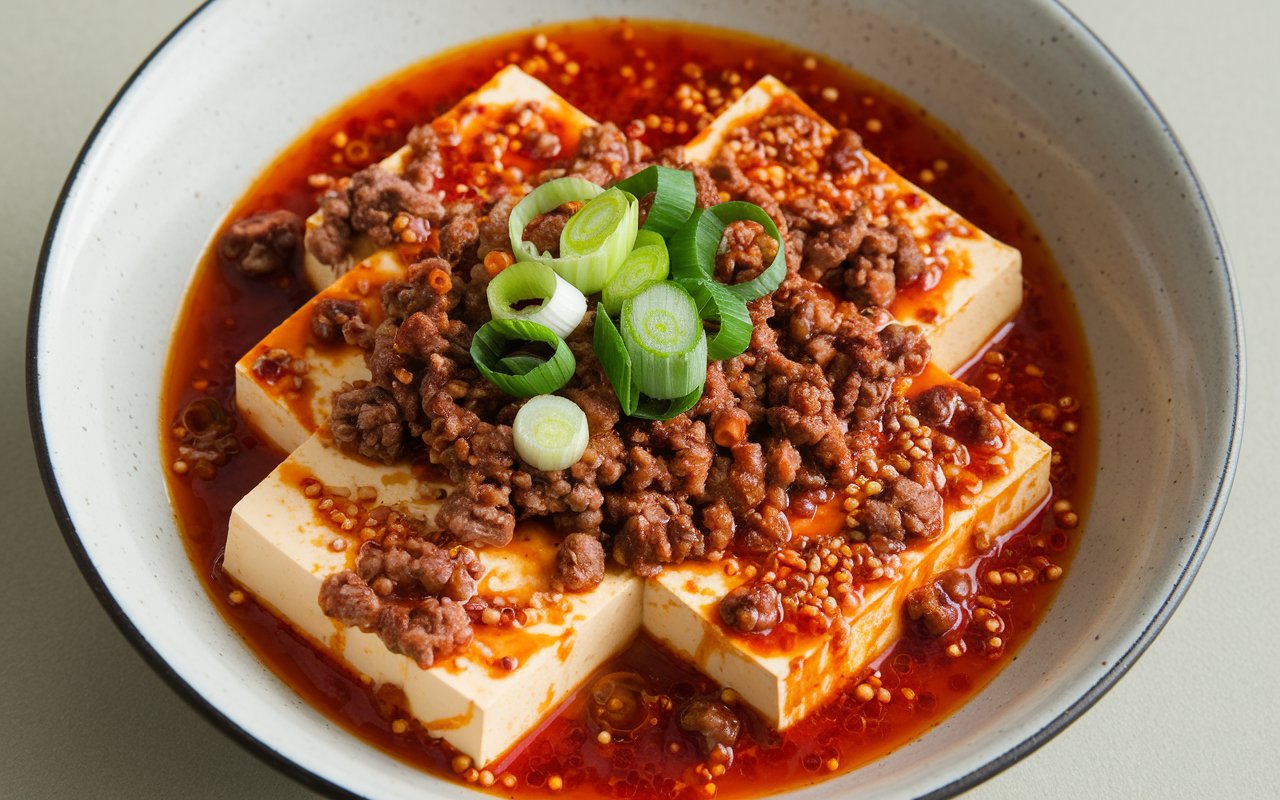
Few dishes capture the heart of Sichuan cuisine quite like Chinese Mapo Tofu. This vibrant dish bursts with the deep, fiery heat of chili bean paste and the tongue-tingling sensation of Sichuan peppercorns. For many, preparing Mapo Tofu is not only a culinary ritual but also an emotional connection to rich family traditions and the adventurous spirit of exploring bold flavors. Whether you’re a longtime fan of spicy food or looking to try something new, this recipe promises an authentic taste of China that is as exhilarating as it is comforting.
- A Glimpse into the World of Mapo Tofu
- Essential Ingredients: Building Blocks of Flavor
- Step-by-Step Chinese Mapo Tofu Recipe
- Preparation: Setting the Stage
- Cooking Process: Building the Flavor Base
- Bringing It All Together: Simmer and Thicken
- Tips and Tricks for Perfect Mapo Tofu
- Frequently Asked Questions (FAQ) About Chinese Mapo Tofu
- What makes Chinese Mapo Tofu so special?
- Can I make Mapo Tofu without meat?
- How can I adjust the spice level?
- Is Mapo Tofu difficult to prepare?
- What should I serve with Mapo Tofu?
- Bringing It All Together: Savor the Spicy, Numbing Magic
A Glimpse into the World of Mapo Tofu
Mapo Tofu has its roots in the Sichuan province of China, where every meal is an expression of passion and balance. The dish’s name – “Mapo” – is said to honor an old pockmarked woman whose humble eatery served this very delicacy. Today, Mapo Tofu is celebrated worldwide for its unique blend of spicy, savory, and numbing flavors that make it a perennial favorite among lovers of Chinese cuisine.
A Personal Connection
I remember the first time I tasted authentic Chinese Mapo Tofu at a family gathering. The dish’s alluring aroma and vibrant heat instantly transported me back to memories of shared meals and laughter in a bustling kitchen. Each bite evoked a sense of warmth and adventure—a reminder that food is more than just nourishment; it’s a celebration of culture, creativity, and connection.
The Essence of Sichuan Flavors
Mapo Tofu is a symphony of contrasts. The silky, delicate tofu is enveloped in a robust, spicy sauce where the fiery heat of chili bean paste meets the unique, tongue-tingling sensation of Sichuan peppercorns. This delightful balance of heat and numbness, known as “málà” in Chinese, defines the dish and sets it apart from other spicy recipes.

Essential Ingredients: Building Blocks of Flavor
The secret to creating a memorable Mapo Tofu lies in the quality of its ingredients. Every component—from the tofu to the spice mix—plays a crucial role in crafting a dish that is both bold and nuanced.
Hand-Picked Ingredients
Below is a comprehensive table of the ingredients you’ll need, along with their quantities and special notes to help you source the best produce and spices:
| Ingredient | Quantity | Notes |
|---|---|---|
| Soft silken tofu | 400-500 grams | Choose fresh tofu that is smooth and delicate |
| Ground pork (or beef, if preferred) | 200 grams | Lean ground pork adds richness; you can substitute with beef for a variation |
| Doubanjiang (fermented chili bean paste) | 2 tablespoons | The heart of the dish; provides deep umami and a spicy kick |
| Sichuan peppercorns | 1 teaspoon (toasted) | Toast to bring out their numbing aroma; adjust based on your spice tolerance |
| Garlic, minced | 3-4 cloves | Fresh garlic for robust flavor |
| Ginger, minced | 1 tablespoon | Adds brightness and a subtle zing |
| Green onions, finely chopped | 2 stalks | Both white and green parts for garnish and flavor |
| Soy sauce | 1 tablespoon | For depth and saltiness |
| Chicken or vegetable broth | 1 cup | A light broth that helps meld the flavors |
| Chili oil | 1-2 teaspoons | For extra heat and a glossy finish |
| Cornstarch | 1 teaspoon | Mixed with 2 teaspoons water to form a slurry for thickening |
| Salt and sugar | To taste | To balance the flavors |
| Vegetable oil | 2-3 tablespoons | For sautéing |
Step-by-Step Chinese Mapo Tofu Recipe
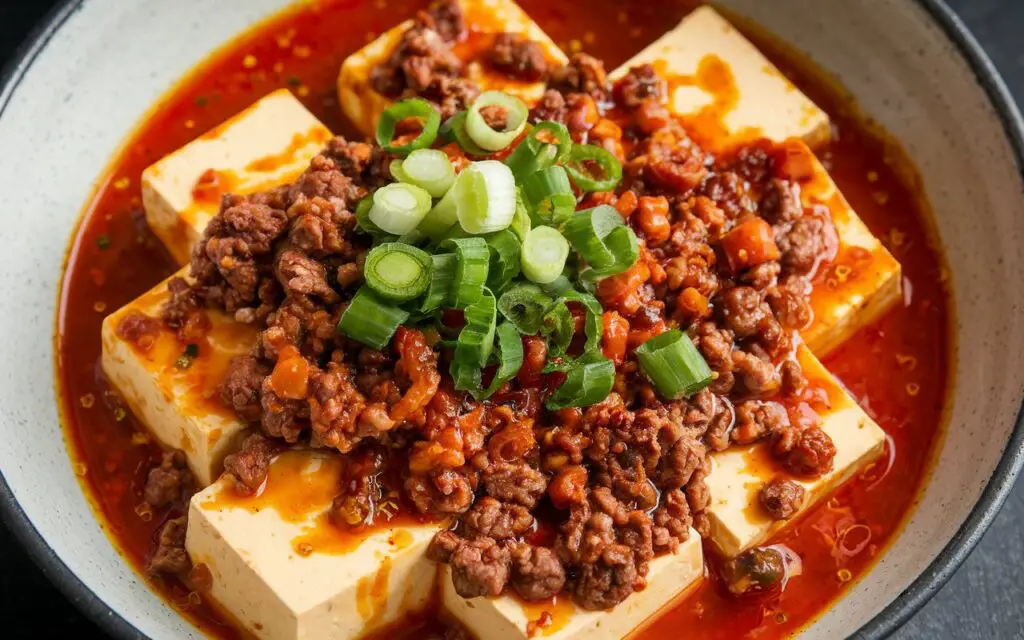
Embark on this culinary journey by following these detailed steps to create your own authentic Mapo Tofu. The process is designed to help you layer the flavors gradually, ensuring that each bite is an explosion of savory, spicy, and numbing sensations.
Preparation: Setting the Stage
- Prepare the Tofu:
- Gently drain the silken tofu and cut it into 1-inch cubes.
- Place the tofu cubes in a bowl of warm salted water (a pinch of salt in water) and let them sit for about 5 minutes. This helps firm up the tofu slightly and enhances its flavor absorption.
- Toast the Sichuan Peppercorns:
- In a dry pan over medium heat, toast the Sichuan peppercorns until they release their fragrant aroma (about 1-2 minutes).
- Once toasted, use a mortar and pestle (or spice grinder) to coarsely grind them. Set aside for later use.
- Mix the Cornstarch Slurry:
- In a small bowl, mix 1 teaspoon of cornstarch with 2 teaspoons of water. This slurry will help thicken the sauce later on.
Cooking Process: Building the Flavor Base
- Heat the Pan:
- In a large, deep skillet or wok, heat 2-3 tablespoons of vegetable oil over medium-high heat. The oil should be hot enough to sizzle when the garlic is added.
- Sauté Aromatics:
- Add the minced garlic and ginger to the pan. Sauté for about 30 seconds until fragrant, taking care not to let them burn.
- Quickly add the ground pork. Stir-fry for 3-4 minutes until the pork is browned and cooked through. This step is essential as it builds the robust flavor foundation for the dish.
- Introduce the Doubanjiang:
- Add 2 tablespoons of doubanjiang (fermented chili bean paste) to the pan. Stir well to ensure the pork is evenly coated. Allow the paste to cook for another 1-2 minutes—this deepens its flavor and reduces any raw edge.
- Deglaze and Build the Sauce:
- Pour in 1 cup of chicken or vegetable broth. Stir to deglaze the pan by scraping any browned bits off the bottom. These bits are packed with flavor!
- Add 1 tablespoon of soy sauce and a pinch of salt and sugar to balance the heat and savory elements. Let the mixture come to a simmer.
Bringing It All Together: Simmer and Thicken
- Gently Add the Tofu:
- Carefully slide the tofu cubes into the simmering sauce. Avoid stirring vigorously to prevent breaking the tofu. Instead, gently toss the tofu to ensure even distribution of the sauce.
- Simmer for Flavor Infusion:
- Reduce the heat to medium-low. Allow the tofu to simmer in the sauce for about 5-7 minutes. This step lets the tofu absorb the bold flavors of the sauce without losing its shape.
- Thicken the Sauce:
- Gradually pour in the cornstarch slurry while gently stirring. The sauce will begin to thicken, creating a silky coating over the tofu and pork.
- Sprinkle in the toasted and ground Sichuan peppercorns. Stir to combine and let the sauce cook for another 1-2 minutes, allowing the numbing sensation of the peppercorns to meld with the spicy base.
- Finish with Chili Oil and Green Onions:
- Drizzle 1-2 teaspoons of chili oil over the dish for an extra layer of heat and a glossy finish.
- Finally, sprinkle the chopped green onions over the top as a fresh garnish.
Tips and Tricks for Perfect Mapo Tofu
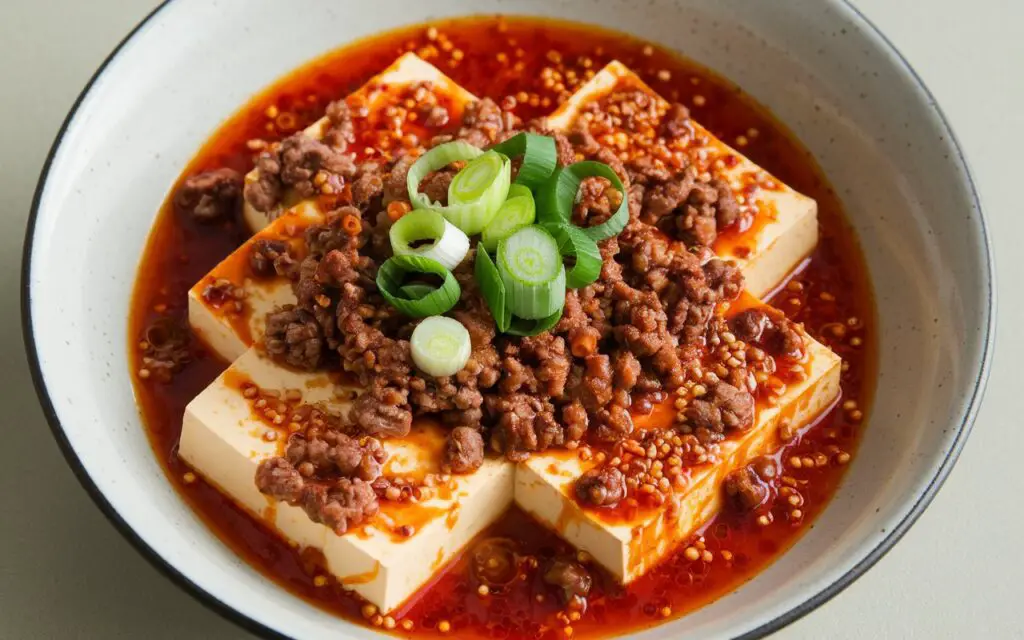
- Choose the Right Tofu: For an authentic texture, use soft silken tofu that provides a delicate contrast to the hearty sauce. If you prefer a firmer texture, you can opt for medium tofu, but the traditional recipe embraces the silky consistency.
- Mind the Heat: Doubanjiang and Sichuan peppercorns are potent ingredients. Adjust their quantities according to your spice tolerance. Remember, you can always add a little extra if you crave more heat.
- Gentle Stirring: When incorporating tofu into the sauce, treat it gently. The delicate tofu can easily crumble, so use a light hand to keep the cubes intact.
- Layering Flavors: Allow each ingredient to bloom in the pan before adding the next. The key to a well-balanced Mapo Tofu is in building layers of flavor slowly.
- Resting Time: If time allows, let the dish rest off the heat for a few minutes before serving. This rest period helps the flavors meld beautifully.
Frequently Asked Questions (FAQ) About Chinese Mapo Tofu
What makes Chinese Mapo Tofu so special?
Chinese Mapo Tofu is celebrated for its unique balance of fiery heat and numbing spice. The combination of doubanjiang and Sichuan peppercorns creates a “málà” (numbing-spicy) flavor profile that is both complex and addictive, making it a standout dish in Sichuan cuisine.
Can I make Mapo Tofu without meat?
Absolutely! While traditional Mapo Tofu often includes ground pork, you can easily create a vegetarian version by substituting with finely chopped mushrooms or extra firm tofu. The key is to maintain the robust flavors of the doubanjiang and Sichuan peppercorns.
How can I adjust the spice level?
The heat in Mapo Tofu primarily comes from doubanjiang and chili oil. If you prefer a milder dish, reduce the amount of these ingredients. Additionally, removing the seeds from the chili peppers (if using fresh chilis) can help lower the heat without compromising flavor.
Is Mapo Tofu difficult to prepare?
Mapo Tofu is surprisingly approachable once you understand the key steps. The process involves a few essential techniques—sautéing aromatics, deglazing the pan, and gently simmering the tofu—which are all straightforward. With practice, you’ll master the balance of flavors and texture.
What should I serve with Mapo Tofu?
Mapo Tofu pairs wonderfully with steamed white rice, which helps mellow the heat while soaking up every drop of its delicious sauce. You might also enjoy it with a side of stir-fried greens or a light cucumber salad to balance the richness of the dish.
Bringing It All Together: Savor the Spicy, Numbing Magic
Chinese Mapo Tofu is more than just a meal—it’s a dynamic culinary experience that encapsulates the spirit of Sichuan cuisine. With its fiery heat, tender tofu, and aromatic blend of spices, every bite is an invitation to explore the rich traditions of Chinese cooking. As you serve this dish, imagine the bustling streets of Chengdu, the heart of Sichuan, where vibrant flavors and innovative techniques have been celebrated for centuries.
Every step of this recipe, from gently simmering the tofu to carefully toasting the peppercorns, is a testament to the art of balance. The interplay between spicy, savory, and numbing sensations is what makes Mapo Tofu so unforgettable. When you prepare this dish in your own kitchen, you’re not just following a recipe—you’re joining a long line of home cooks and chefs who have dedicated themselves to mastering one of China’s most beloved dishes.
Call-to-Action:
If you’re ready to embrace the fiery spirit of Sichuan cuisine and bring an authentic taste of China into your home, try this Chinese Mapo Tofu recipe today! Share your culinary adventures on social media, leave a comment with your favorite twist on the dish, and subscribe for more recipes that celebrate the art of bold, authentic flavors. Let every spoonful remind you of the magic that happens when tradition meets passion—your next spicy, numbing delight awaits!
Enjoy the process of creating this iconic dish and let it transport you to the heart of Sichuan. Your journey into authentic Chinese flavors starts here, so gather your ingredients, fire up your wok, and savor every delicious, tongue-tingling bite!