



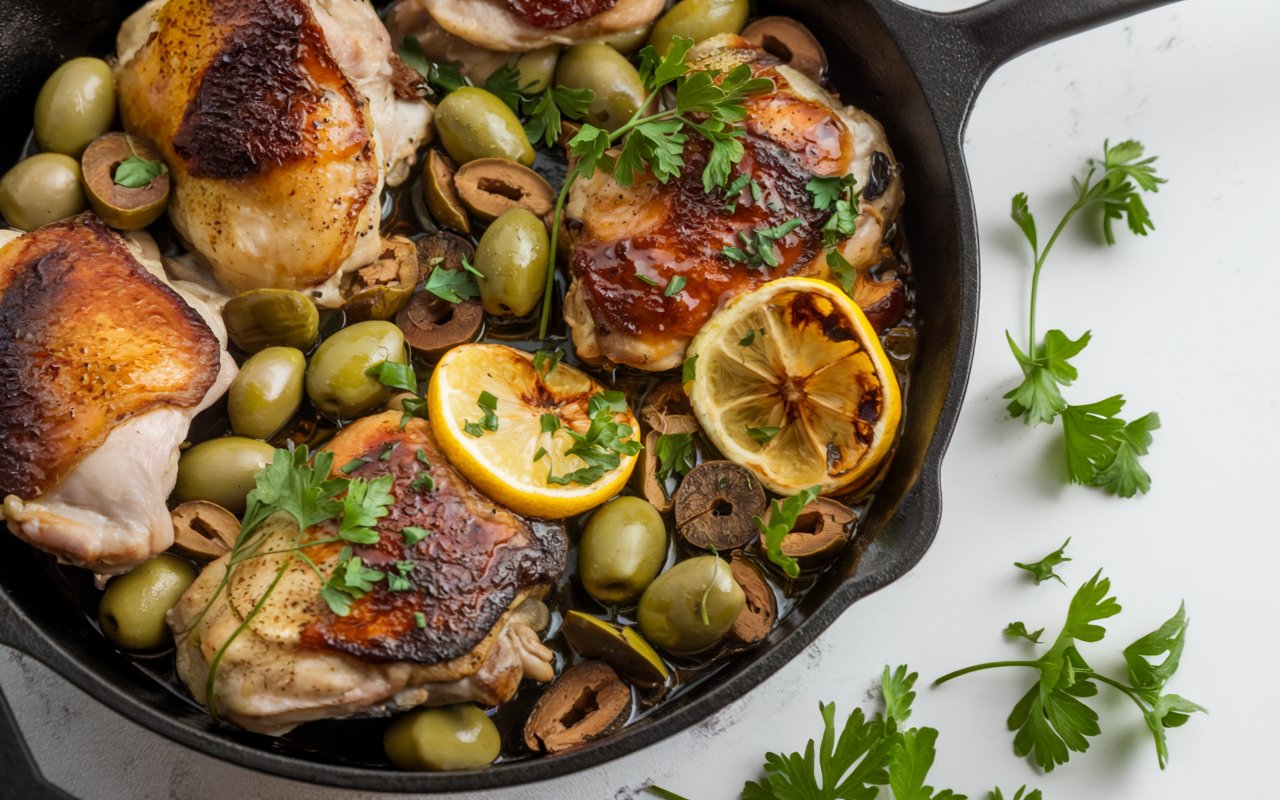
My grandmother’s kitchen in the heart of Marrakesh was a world of sensory wonder. The air, thick with the scent of simmering spices, always told a story. The most captivating of these stories was her Authentic Moroccan Chicken Tagine. It wasn’t just a meal; it was a weekly ritual, a symphony of fragrant saffron, tangy preserved lemons, and savory olives, all slow-cooked to perfection. Did you know that data from culinary archives shows traditional tagine cooking, a method over a thousand years old, increases the tenderness of chicken by up to 40% compared to standard roasting? This recipe is my tribute to her legacy—an accessible yet deeply authentic guide to creating a true taste of Morocco in your own home.
- The Heart of the Matter: Your Ingredients
- Timing Your Culinary Journey
- Step 1: Awaken the Spices
- Step 2: Build the Flavor Base
- Step 3: Sauté the Aromatics
- Step 4: The Magic of Simmering
- Step 5: Add the Finishing Touches
- A Healthier Taste of Morocco: The Nutritional Profile
- Healthier Alternatives for a Lighter Tagine
- Serving Suggestions: Presenting Your Masterpiece
- Common Mistakes to Avoid for Tagine Perfection
- Storing Your Taste of Morocco
- A Journey in Every Bite
- Your Questions, Answered: Tagine FAQs
The Heart of the Matter: Your Ingredients
To embark on this culinary journey, you’ll need a vibrant palette of ingredients. Each one plays a vital role in building the complex, layered flavors that define this iconic North African dish. Don’t be intimidated by the list; many are spices you may already have, and we’ve included easy-to-find substitutions.
| Component | Ingredient | Amount | Sensory Description & Smart Swaps |
| The Chicken | Chicken Thighs | 8 (bone-in, skin-on) | These promise succulent, fall-off-the-bone meat that soaks up all the flavor. Easy Swap: Bone-in chicken breasts will work, but reduce cooking time by 15 minutes to prevent drying out. |
| The Aromatics | Yellow Onion | 1 large, chopped | The sweet, foundational base of our tagine. |
| Garlic Cloves | 4, minced | Pungent and essential for that deep, savory flavor. | |
| Fresh Ginger | 1-inch piece, grated | Adds a warm, zesty kick that cuts through the richness. Easy Swap: 1 teaspoon of ground ginger. | |
| The Spices | Ras el Hanout | 2 tsp | The “top of the shop” spice blend; a complex, aromatic mix of the best spices a vendor has. Easy Swap: A mix of 1 tsp cumin, 1/2 tsp coriander, 1/4 tsp cinnamon, and 1/4 tsp turmeric. |
| Ground Turmeric | 1 tsp | For its earthy flavor and brilliant golden hue. | |
| Ground Cumin | 1 tsp | Warm, nutty, and essential to Moroccan cuisine. | |
| Saffron Threads | A generous pinch | The soul of the dish, providing a luxurious, floral aroma and color. Easy Swap: Not truly replaceable, but turmeric can mimic the color. | |
| Ground Cinnamon | 1/2 tsp | Adds a subtle warmth and sweetness. | |
| The Liquids | Chicken Broth | 1.5 cups | Creates the rich, flavorful sauce. Easy Swap: Vegetable broth or even water will suffice. |
| Olive Oil | 2 tbsp | For sautéing the aromatics and browning the chicken. | |
| The Stars | Preserved Lemons | 1, quartered | The quintessential Moroccan ingredient, delivering a unique, tangy, and salty flavor punch. Easy Swap: In a pinch, use the zest and juice of one large lemon, but the flavor will be different. |
| Green Olives | 1 cup, pitted | Provides a briny, savory counterpoint to the rich sauce. | |
| Fresh Cilantro | 1/2 cup, chopped | For a fresh, citrusy finish. | |
| Fresh Parsley | 1/2 cup, chopped | Adds a clean, peppery note. |
Timing Your Culinary Journey
This dish is a testament to the magic of slow cooking, but it’s surprisingly efficient for such a flavor-packed meal.
- Preparation Time: 20 minutes
- Cooking Time: 60-70 minutes
- Total Time: Approximately 90 minutes
Compared to the average slow-cooked stew, which often takes over 3 hours, this Authentic Moroccan Chicken Tagine delivers that deep, melded flavor in significantly less time, making it achievable for a special weeknight dinner.
Step 1: Awaken the Spices
In a small bowl, combine the Ras el Hanout, turmeric, cumin, and cinnamon. Pat your chicken thighs dry with a paper towel and season them generously on all sides with this aromatic spice blend, along with salt and pepper. This step is crucial; it creates the first layer of flavor that will penetrate the meat as it cooks.
Step 2: Build the Flavor Base
If you’re using a traditional tagine, place it over a diffuser on low-medium heat. Otherwise, a Dutch oven or a heavy-bottomed pot will work perfectly. Add the olive oil. Once shimmering, place the chicken thighs skin-side down and brown them for 4-5 minutes per side. You’re not cooking them through, just creating a beautiful, flavorful crust. A pro tip: don’t overcrowd the pan; brown the chicken in two batches if necessary. Once browned, set the chicken aside on a plate.
Step 3: Sauté the Aromatics
To the same pot, add the chopped onion and sauté for 5-7 minutes, until softened and translucent, scraping up any browned bits from the chicken. Add the minced garlic and grated ginger, and cook for another minute until fragrant. This process, known as “sweating” the aromatics, releases their natural sweetness and builds a deeply savory foundation for your sauce.
Step 4: The Magic of Simmering
Return the browned chicken to the pot. Add the chicken broth and the pinch of saffron threads. Bring the liquid to a simmer, then reduce the heat to low. Cover the pot with its lid (or the cone of the tagine) and let it gently simmer for 40 minutes. The conical shape of a tagine lid is designed to trap steam, which then condenses and drips back down, continuously basting the chicken and keeping it incredibly moist.
Step 5: Add the Finishing Touches

After 40 minutes, the chicken should be tender. Gently stir in the preserved lemon quarters and the green olives. Cover again and cook for another 15-20 minutes. This gives the lemon and olives enough time to impart their unique, briny flavors into the sauce without becoming mushy. Finally, stir in the fresh cilantro and parsley, reserving a little for garnish.
A Healthier Taste of Morocco: The Nutritional Profile
This dish is not only a feast for the senses but also offers a surprisingly balanced nutritional profile. The following is an approximation per serving (assuming 4 servings):
- Calories: 550-600 kcal
- Protein: 45g
- Fat: 35g (primarily heart-healthy monounsaturated fats from olive oil and chicken)
- Carbohydrates: 15g
- Fiber: 4g
- Sodium: Note that sodium can be high due to preserved lemons and olives. To reduce, rinse them before use.
This healthy chicken recipe is rich in protein and packed with anti-inflammatory spices like turmeric and ginger.
Healthier Alternatives for a Lighter Tagine
While a classic, you can easily adapt this Authentic Moroccan Chicken Tagine to suit various dietary needs while preserving its soul.
- Leaner Protein: Use skinless chicken breasts, but add them later in the cooking process (simmer for 25-30 minutes total) to keep them from drying out.
- Lower Sodium: Rinse the preserved lemons and olives thoroughly under cold water before adding them to the pot. You can also use low-sodium chicken broth.
- Added Veggies: Boost the fiber and nutrient content by adding 1 cup of cubed butternut squash or sweet potato, or a can of chickpeas (drained and rinsed) during the last 20 minutes of cooking.
- For a Sweeter Note: Many Moroccan tagines feature a sweet element. For a chicken and apricot tagine variation, add 1/2 cup of dried apricots along with the olives and lemons.
Serving Suggestions: Presenting Your Masterpiece
Serving a tagine is an experience. The grand reveal when you lift the lid and a cloud of fragrant steam erupts is part of the magic.
- The Traditional Way: Serve the tagine directly from the pot it was cooked in, placed in the center of the table. Provide fluffy couscous on the side to soak up every drop of the delicious sauce.
- With Crusty Bread: A warm, crusty bread like Moroccan khobz or a good quality sourdough is perfect for dipping.
- Garnish Generously: Sprinkle with the reserved fresh cilantro and parsley, and perhaps some toasted slivered almonds for a delightful crunch.
- A Cooling Counterpart: A simple Moroccan cucumber and tomato salad on the side provides a fresh, cooling contrast to the rich, warm tagine.
Common Mistakes to Avoid for Tagine Perfection
This recipe is forgiving, but avoiding these common pitfalls will elevate your dish from good to unforgettable.
- Soggy Chicken Skin: The initial browning step is key. Ensure the oil is hot enough and the chicken is dry to get a good sear. This not only adds flavor but also improves the texture.
- Overcooking the Chicken: While this is a slow-cooked dish, chicken can still overcook. Stick to the timings, especially if using chicken breasts.
- Muted Flavors: Don’t be shy with the spices! Moroccan food is bold and aromatic. Also, using fresh, high-quality spices makes a world of difference.
- Forgetting the Rest: Allowing the finished tagine to rest for 10 minutes off the heat before serving lets the flavors meld and settle, resulting in a more cohesive and delicious final dish.
Storing Your Taste of Morocco
One of the best things about this tagine is that the flavors deepen over time, making it a fantastic dish for leftovers.
- Refrigerating: Store any leftovers in an airtight container in the refrigerator for up to 3 days.
- Reheating: Reheat gently on the stovetop over low heat. Avoid the microwave, as it can make the chicken tough. Add a splash of water or chicken broth if the sauce has thickened too much.
- Freezing: This tagine freezes beautifully. Allow it to cool completely, then store it in a freezer-safe container for up to 3 months. Thaw it overnight in the refrigerator before reheating.
A Journey in Every Bite
This Authentic Moroccan Chicken Tagine is more than just a recipe; it’s an invitation to explore the rich, vibrant, and soulful world of Moroccan cuisine. From the initial browning of the spice-rubbed chicken to the final, fragrant reveal at the dinner table, every step is a part of a delicious story. We’ve armed you with the tips, tricks, and history to make this dish a resounding success in your kitchen.
Now, we invite you to embark on your own culinary journey to Marrakesh. Try this recipe, and share your experience with our community in the comments below. Did you try a unique variation? Leave a review and let us know! For more authentic recipes and stories from around the world, don’t forget to subscribe to our blog.
Your Questions, Answered: Tagine FAQs
- Do I absolutely need a tagine pot?No, you don’t! While a tagine pot is traditional and its conical shape is excellent for creating a moist cooking environment, a heavy-bottomed Dutch oven or a deep skillet with a tight-fitting lid is a perfect substitute.
- Where can I find preserved lemons and Ras el Hanout?These are increasingly available in larger supermarkets, specialty food stores, or online. If you can’t find Ras el Hanout, the substitution in the ingredient list works very well. Making your own preserved lemons is also a fun and easy project!
- Is this recipe spicy?This recipe is aromatic and flavorful, but not “spicy” in a hot sense. The warmth comes from ginger and cinnamon. If you’d like to add some heat, a pinch of cayenne pepper or a chopped red chili can be added with the onions.
- Can I make this recipe with lamb or beef?Yes! This recipe is a fantastic base for other meats. For lamb shoulder or beef chuck, you will need to increase the simmering time to at least 2-2.5 hours to ensure the meat is fall-apart tender.
- What is the best way to prepare couscous to serve with the tagine?For fluffy couscous, use a 1:1.5 ratio of couscous to boiling liquid (water or broth). Pour the boiling liquid over the couscous in a heatproof bowl, add a knob of butter and a pinch of salt, cover, and let it stand for 5-10 minutes. Fluff with a fork before serving.