


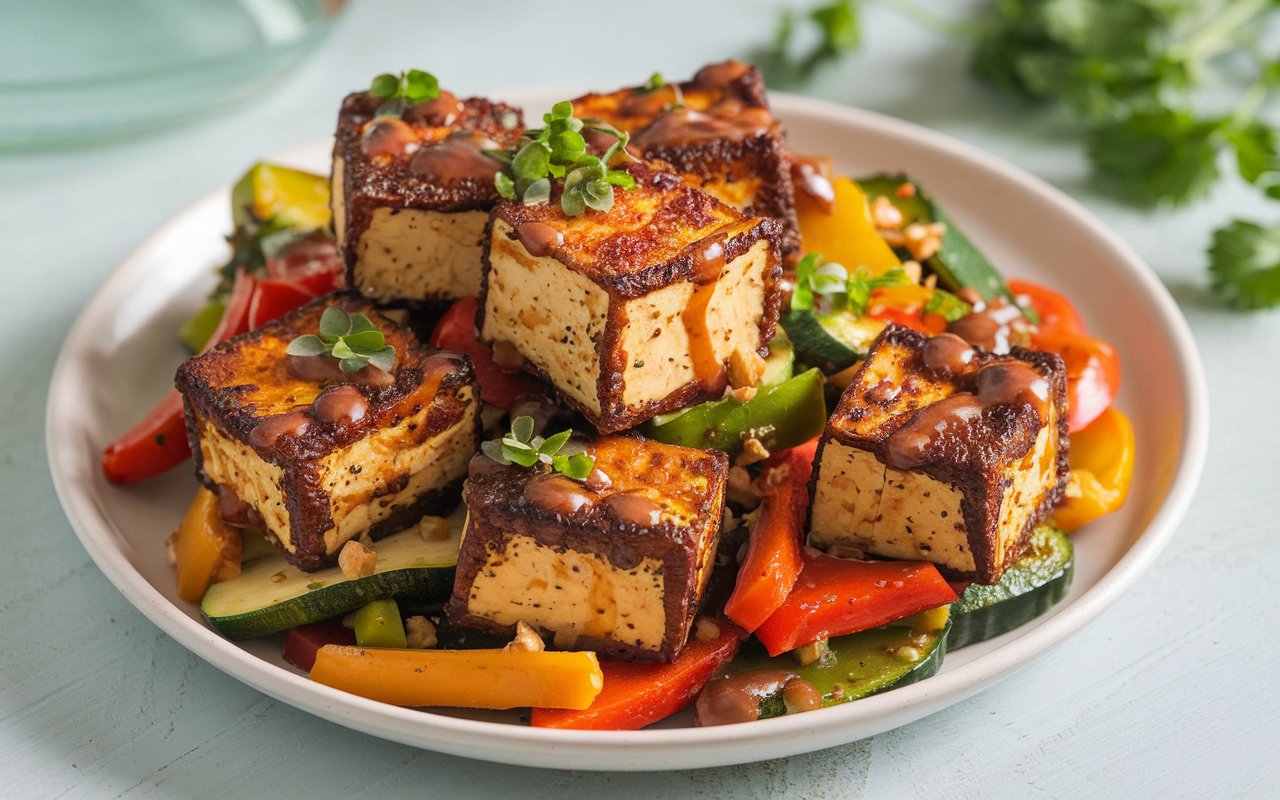
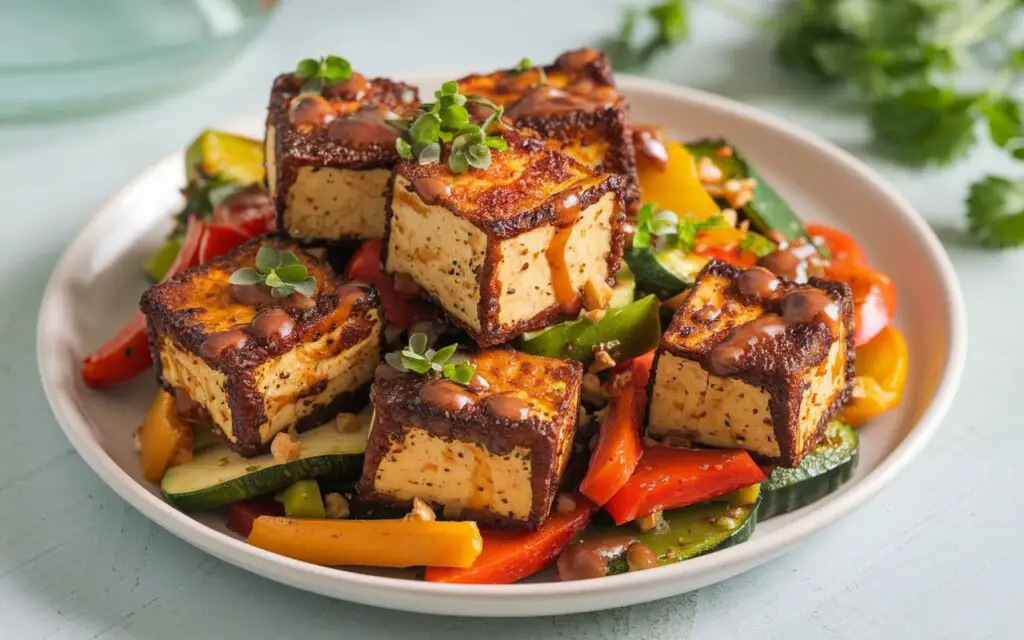
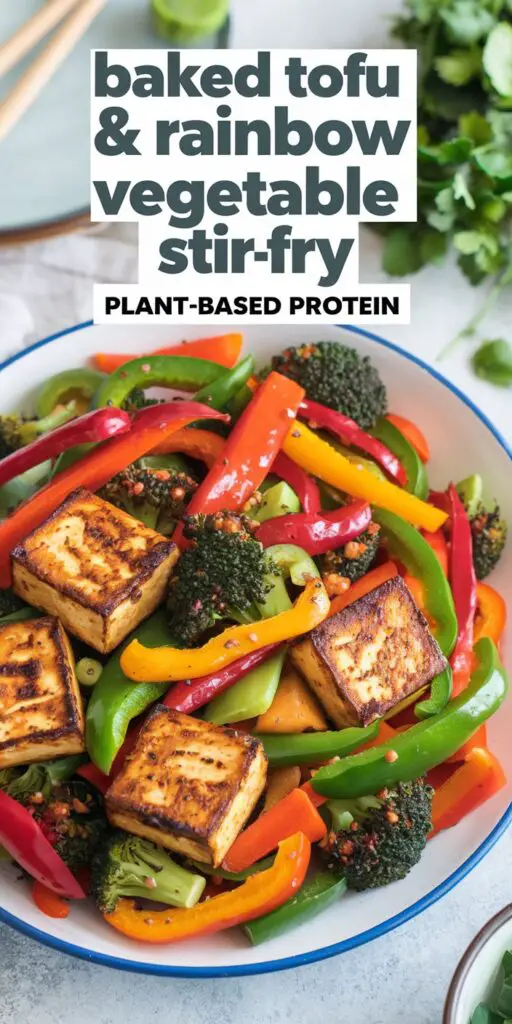
Craving a stir-fry’s vibrant flavors but want a lighter, plant-based approach? Baked Tofu & Rainbow Vegetable Stir-Fry could be your new go-to. Picture tofu cubes baked to a satisfying crisp outside and tender inside, then tossed with a kaleidoscope of peppers, carrots, broccoli, and other veggies—united by a savory sauce reminiscent of your favorite takeout. It’s a colorful feast for both the eyes and the taste buds, delivering a punch of protein while steering clear of heavy meats or overly oily cooking methods.
My own journey to tofu success wasn’t immediate. I first tried pan-frying tofu, but often ended up with soggy cubes or over-browned edges. Then, I stumbled upon the simple trick of baking tofu before stir-frying: letting the oven draw out moisture, yielding firm, golden pieces that hold up in a wok or skillet. Once I added in a rainbow of sliced peppers, onions, carrots, and more, the dish soared. Over time, I dialed in a sauce that merges soy sauce, ginger, garlic, and a hint of sweetness—just enough to coat everything in a glossy layer of umami. Now, whenever I yearn for a quick, plant-based dinner that doesn’t skimp on satisfaction, this tofu-and-vegetable combo stands out as a prime candidate.
In this article, we’ll break down how to bake tofu for optimal texture, select a colorful array of vegetables, and assemble a stir-fry sauce that hits all the right notes. Whether you’re a tofu newcomer or a seasoned plant-based eater hunting for fresh inspiration, prepare for a meal that proves healthy can still captivate the palate.
Why Baked Tofu & Rainbow Vegetable Stir-Fry Delivers

- Better Tofu Texture
Baking tofu before stir-frying removes excess moisture, ensuring each cube remains firm and lightly crisp around the edges. No more spongy, flavorless bites. - Colorful Nutritional Punch
The “rainbow” aspect—incorporating multiple differently hued vegetables—boosts nutrient variety. Vibrant produce also ensures you never get bored by monotony. - Sauce Control
Crafting your own sauce means you can moderate sodium, sweetness, or spiciness. Adjust each component to match your dietary goals or cravings. - Quick & Flexible
From start to finish, the meal can take around 30 minutes. The approach also welcomes any leftover or seasonal vegetables, so it’s easy to adapt to your fridge’s contents.
Ingredient Overview
Use this table to organize your shopping or pantry check:
| Ingredient | Quantity | Notes |
|---|---|---|
| Tofu (extra-firm) | 1 block (~14–16 oz) | Drained & pressed for best texture |
| Assorted Vegetables (e.g., bell peppers, carrots, onions, broccoli, zucchini) | ~4 cups total, sliced | Aim for color variety, cut into even pieces |
| Garlic (minced) | 2–3 cloves | Adds aromatic punch |
| Ginger (minced or grated) | 1–2 tbsp | Fresh ginger recommended for bright flavor |
| Soy Sauce (low-sodium recommended) | 3–4 tbsp | Forms the salty umami base of the sauce |
| Sesame Oil | 1 tbsp | Distinct nutty aroma, used in sauce or for finishing |
| Vinegar or Lime Juice (for acidity) | 1–2 tbsp | Rice vinegar, apple cider vinegar, or fresh lime |
| Sweetener (honey, brown sugar, or maple syrup) | 1–2 tbsp | Balances salty tang with mild sweetness |
| Cornstarch or Arrowroot (for thickening) | 1 tsp (optional) | If you prefer a thicker sauce |
| Oil (vegetable, canola) | 2–3 tbsp | For baking tofu & stir-frying vegetables |
| Chili Flakes or Sriracha (optional) | to taste | For those who crave extra heat |
| Salt & Pepper | to taste | Season carefully, especially if using regular soy sauce |
Step-by-Step Recipe (Approx. 30–40 Minutes)
- Press & Prep Tofu
- Remove tofu from its package. Wrap it in a clean towel or paper towels, placing it on a plate. Weigh it down with a heavy object (like a pan) for ~10–15 minutes to expel water. This step is key for better texture.
- Marinate or Season Tofu (Optional)
- After pressing, cut the tofu into 1-inch cubes. Season lightly with salt and pepper, or marinate in a spoonful of soy sauce if you want a base layer of flavor. Let it rest while you prepare veggies.
- Bake the Tofu
- Preheat oven to 400°F (200°C). Lightly oil a baking sheet or line it with parchment for easy cleanup.
- Arrange tofu cubes in a single layer. Drizzle or spray them with a small amount of oil to aid crisping.
- Bake for about 20–25 minutes, flipping halfway through. Tofu should appear lightly golden with slightly firm edges.
- Chop & Prep Veggies
- While tofu bakes, rinse and slice your chosen vegetables into uniform pieces. Keep in mind cooking times: carrots or broccoli florets might be smaller or pre-steamed to ensure even doneness.
- Construct the Stir-Fry Sauce
- In a small bowl, whisk together soy sauce, minced garlic, grated ginger, sesame oil, vinegar (or lime juice), and sweetener (like honey or sugar). If you want a thicker sauce, stir in 1 teaspoon of cornstarch or arrowroot. For extra spice, add chili flakes or a teaspoon of sriracha.
- Stir-Fry the Vegetables
- In a wok or large skillet over medium-high heat, warm 1–2 tablespoons of oil. Add your vegetables, starting with the ones that take longest to cook (e.g., carrots or broccoli stems), then the quicker-cooking ones (e.g., peppers, onions, zucchini).
- Season with a pinch of salt and pepper, stirring frequently. Aim for 5–7 minutes total, or until veggies are crisp-tender.
- Combine Tofu & Sauce
- Remove tofu from the oven. Add it to the skillet with stir-fried vegetables.
- Pour in the stir-fry sauce. Increase heat to high for 1–2 minutes, stirring so the sauce coats everything. If using cornstarch, the sauce should thicken slightly. Taste test—add more soy sauce or sweetener if desired.
- Serve Hot
- Transfer to a serving bowl or plates. Garnish with sesame seeds, sliced green onions, or fresh cilantro if you like. Pair with rice or noodles, or enjoy as is for a lighter, low-carb meal.
Tips for Textural Perfection
- Press the Tofu Thoroughly
- The more moisture you remove, the better tofu can crisp. If you skip pressing, you risk a mushier result.
- High Heat Stir-Fry
- Once you add veggies to the wok/skillet, maintain medium-high or high heat so they sear rather than steam. Work quickly, stirring constantly.
- Avoid Overcrowding
- If your skillet is too small, veggies may release moisture and become soggy. Stir-fry in batches if necessary.
- Tailor the Sauce’s Thickness
- If you prefer a drier stir-fry, reduce sauce components or skip cornstarch. For a saucier consistency, add more broth or water to the sauce but keep cornstarch to hold body.
Flavor Variations
- Coconut-Infused
- Swap some soy sauce for coconut milk, add a dash of curry powder or paste for a Thai-inspired spin. Tofu pairs well with creamy coconut flavors.
- Teriyaki Twist
- Stir in a tablespoon of teriyaki sauce or pineapple juice with soy sauce. Extra honey or sugar can replicate teriyaki’s sweetness.
- Peanut Kick
- Add a spoonful of peanut butter to your sauce for a nutty dimension. Perfect if you crave peanut sauce vibes.
- Crunch Factor
- Top the final dish with chopped peanuts, almonds, or cashews for a crunchy garnish that underscores the stir-fry’s texture variety.
Serving Suggestions
- Steamed Rice or Quinoa: If not low-carb, serve the stir-fry over a bed of fluffy white or brown rice, or protein-rich quinoa.
- Cauliflower Rice: Double down on a veggie-based approach, or help keep carbs lower if that’s your priority.
- Soba or Rice Noodles: Another starchy route, pairing well with sweet-salty sauces.
- Leftovers: This dish often reheats well, though tofu may soften. Keep an eye on reheat time to avoid overcooking veggies further.
FAQ – Baked Tofu & Rainbow Vegetable Stir-Fry
Q1: Can I skip baking tofu and stir-fry it directly?
A1: Yes, but it may not achieve the same level of crispness. You can pan-sear tofu cubes in oil until golden, though it takes watchful flipping and might still be softer.
Q2: What’s the best way to ensure tofu absorbs flavors?
A2: Pressing out water is key. You can marinate tofu in a portion of your sauce for 15–20 minutes before baking. The sauce then penetrates each cube more effectively.
Q3: Could I air-fry the tofu instead of baking?
A3: Absolutely. Air-fry tofu at ~375°F (190°C) for 10–15 minutes, shaking the basket once. This yields a crispy exterior similar to oven-baking.
Q4: Is it possible to use silken tofu?
A4: Silken tofu is too delicate for this method. Firm or extra-firm tofu stands up better to baking and stir-frying without breaking apart.
Q5: Can I freeze tofu to improve texture?
A5: Freezing tofu, then thawing and pressing, often results in an even firmer, more porous texture that soaks up sauce. It’s an optional but helpful technique if time allows.
Conclusion
The synergy of baked tofu’s golden-chewy exterior and a rainbow stir-fry’s crisp, colorful vegetables yields a meal that brims with both nutrition and indulgence. Baked Tofu & Rainbow Vegetable Stir-Fry harnesses plant-based protein to show that tofu isn’t bland or mushy—when handled well, it becomes a star ingredient, readily absorbing garlicky, gingery sauces and pairing seamlessly with a bright array of produce.
Now that you’ve gleaned the secrets—pressing tofu, quick-baking it, slicing a rainbow of veggies, and simmering a punchy sauce—why not give this method a spin for tonight’s dinner? After you bite into your first tofu cube swathed in sauce, come back and share your personal flair—did you choose a peanut butter–infused marinade, add a swirl of chili-garlic sauce, or garnish with crushed peanuts? Your creativity might spark other home cooks to discover how versatile and satisfying a veggie-forward, plant-based stir-fry can be.