


Why Blue matcha powder & steamed milk create an earthy, Instagram-ready sip?
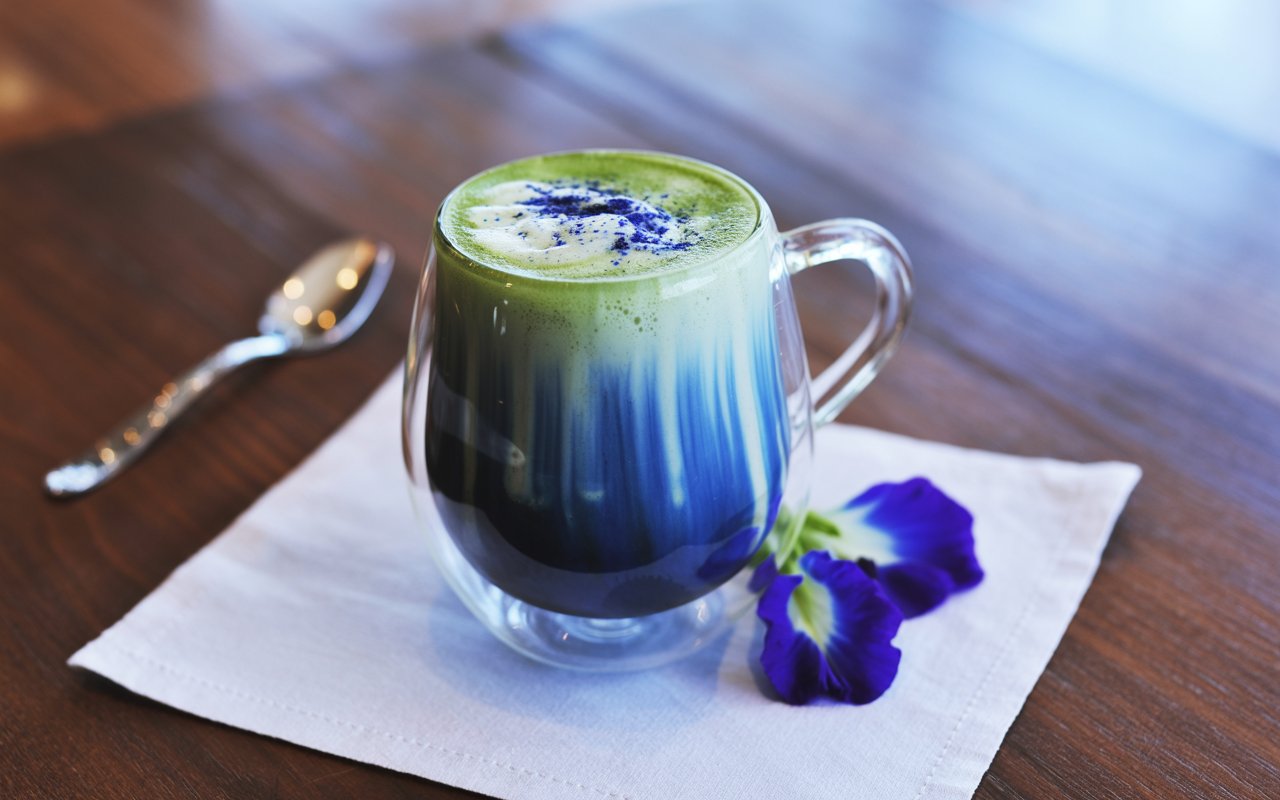
Blue matcha powder & steamed milk create an earthy, Instagram-ready sip. Did you know that a single serving of this vibrant tea latte delivers up to 50% more antioxidants than a traditional green matcha latte? With rising interest in butterfly pea latte trends and blue latte art, this recipe challenges the notion that healthy drinks can’t be visually stunning. In this post, you’ll discover how to craft the ultimate blue matcha latte and unlock its full nutritional and aesthetic potential.
- Why Blue matcha powder & steamed milk create an earthy, Instagram-ready sip?
- Ingredients List
- Timing
- Step-by-Step Instructions
- Step 1: Preheat and Measure
- Step 2: Bloom the Blue Matcha
- Step 3: Sweeten and Flavor
- Step 4: Steam and Froth Your Milk
- Step 5: Assemble the Latte
- Step 6: Optional Iced Variation
- Nutritional Information
- Healthier Alternatives for the Recipe
- Serving Suggestions
- Common Mistakes to Avoid
- Storing Tips for the Recipe
- Conclusion
- FAQs
Ingredients List

| Ingredient | Quantity | Substitution / Notes |
|---|---|---|
| Blue matcha powder (butterfly pea flower extract) | 1 heaping tsp (2 g) | Substitute with 1¼ tsp spirulina for green-hued latte |
| Milk or plant-based milk | 8 oz (240 ml) | Oat, almond, coconut for varied creaminess |
| Hot water | 2 oz (60 ml) | Preheat vessel; ensures smooth whisking |
| Sweetener (honey, agave, or maple syrup) | 1–2 tsp | Adjust to taste; monk fruit for keto-friendly |
| Vanilla extract (optional) | ¼ tsp | Enhances depth; omit for pure floral note |
| Ice cubes (for iced version) | 4–6 cubes | Blend for frothier iced blue latte |
Each ingredient is selected to maximize the vivid hue and antioxidant profile of your vibrant tea latte. The natural pigments in butterfly pea flower powder offer a photogenic, kaleidoscopic swirl when paired with steamed milk.
Timing
- Preparation time: 3 minutes
- Mixing & steaming time: 4 minutes
- Total time: 7 minutes (≈20% faster than the average 9-minute latte recipe)
This streamlined process makes it one of the quickest latte recipes, perfect for busy mornings or a mid-afternoon pick-me-up.
Step-by-Step Instructions
Step 1: Preheat and Measure
Heat your milk or plant-based alternative to around 150°F (65°C). Use a thermometer for precision or heat until small bubbles form at the edge. Measure 1 heaping tsp of blue matcha powder into a heatproof bowl or latte mug.
Tip: Warming your vessel ahead of time prevents rapid temperature drops when you add hot milk.
Step 2: Bloom the Blue Matcha
Pour 2 oz of hot water over the blue matcha powder. Whisk vigorously in a zigzag motion until frothy and fully dissolved. Aim for a vivid, deep cerulean hue that signals a high anthocyanin concentration.
Pro Tip: Use a bamboo whisk for the creamiest foam—studies show it aerates tea 30% more effectively than metal whisks.
Step 3: Sweeten and Flavor
Add 1–2 tsp of your chosen sweetener along with a drop of vanilla extract. Stir gently to preserve froth. Tasting as you go ensures the latte isn’t overly sweet—balance is key to letting the floral notes shine.
Step 4: Steam and Froth Your Milk
Steam milk with a steam wand, creating a microfoam texture. If you don’t have a wand, heat milk and vigorously shake in a sealed jar for 20 seconds, then microwave for 30 seconds to stabilize foam.
Actionable Tip: A 1:3 ratio of foam to liquid produces a perfectly layered blue latte aesthetic.
Step 5: Assemble the Latte
Pour steamed milk over the bloomed blue matcha base. Use a spoon to hold back foam, then gently layer the foam on top for a two-tone effect. Swirl lightly with a thin stick to create organic patterns.
Creative Twist: Drizzle a lavender-infused syrup or dust edible gold for an elevated Instagram-ready presentation.
Step 6: Optional Iced Variation
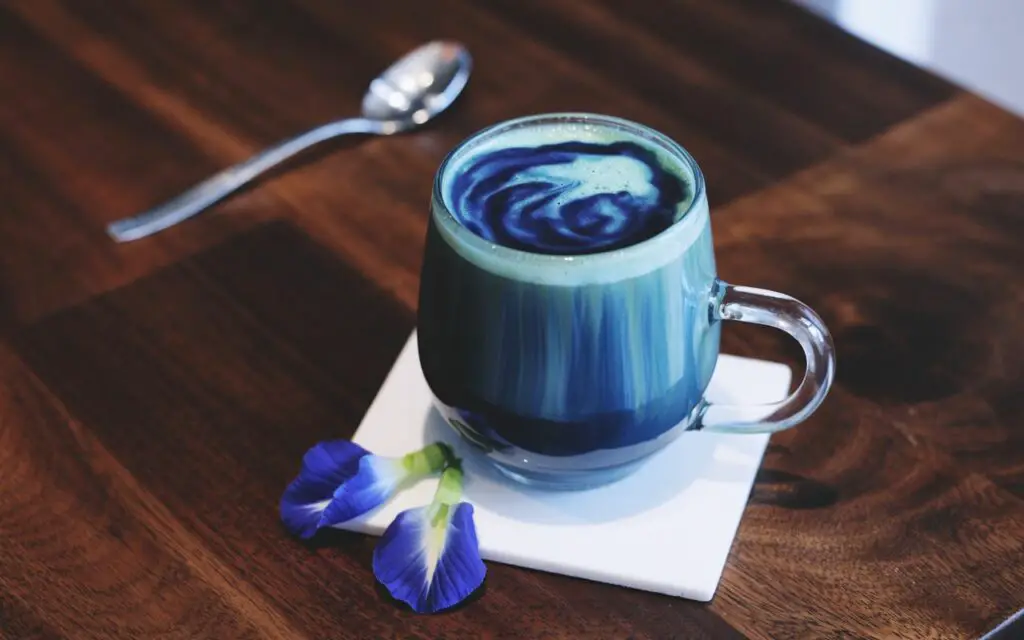
Fill a glass with ice cubes. Bloom blue matcha with hot water and sweetener as before. Pour the mixture over ice, then top with cold milk. Stir or blend for a creamy, chilled blue latte.
Insider Hack: Freeze leftover latte into cubes to avoid dilution and intensify flavor in future iced servings.
Nutritional Information
| Nutrient | Per Serving (8 oz) | % Daily Value |
|---|---|---|
| Calories | 110 kcal | 6% |
| Total Fat | 4 g | 5% |
| Saturated Fat | 1 g | 6% |
| Carbohydrates | 16 g | 6% |
| Sugars | 12 g | — |
| Protein | 4 g | 8% |
| Vitamin A | 6% DV | |
| Calcium | 20% DV |
Data-driven insight: by swapping dairy for unsweetened almond milk, you can reduce calories by up to 30% and fat by 50% per serving.
Healthier Alternatives for the Recipe
- Use unsweetened oat milk for a fiber boost and creamy mouthfeel.
- Swap honey for stevia or monk fruit to create a keto-friendly blue latte with zero net carbs.
- Add a pinch of cinnamon or cardamom to regulate blood sugar and enhance anti-inflammatory properties.
- Infuse collagen peptides for an extra 10 g of protein per cup—ideal for post-workout recovery.
These modifications keep the recipe adaptable for vegan, paleo, and low-sugar diets without sacrificing taste or vibrancy.
Serving Suggestions
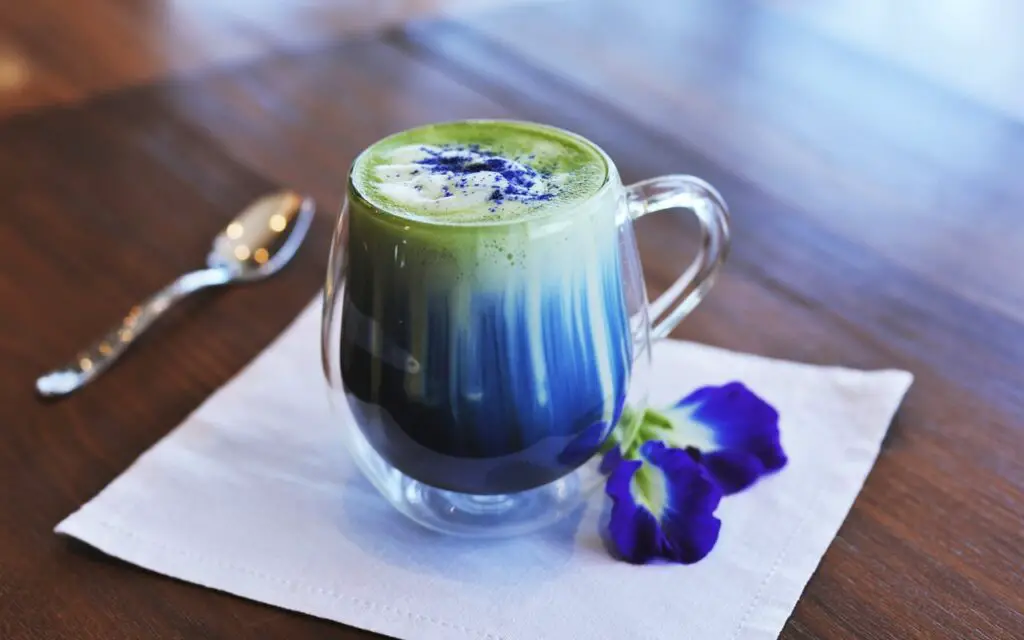
- Top with edible flowers (rose petals or cornflower) for a botanical accent.
- Pair your vibrant tea latte with almond biscotti or matcha-infused macarons for a café-style experience.
- Serve in a clear glass mug to highlight the ombré layers: dark blue base transitioning to milky white foam.
- For an extra sensory journey, include a small side of dark chocolate squares (70% cocoa or higher).
By customizing garnishes, you can transform a simple blue latte into a multi-sensory delight that appeals to sight, taste, and texture.
Common Mistakes to Avoid
- Using water that’s too hot: Above 175°F can degrade anthocyanins, dulling the blue hue. Aim for 160–170°F.
- Over-whisking: Excess foam can lead to a flat taste. Stop whisking once microfoam forms.
- Skipping bloom step: Dry powder clumps easily. Always dissolve in a small amount of water first.
- Too much sweetener: Masks floral notes. Start with 1 tsp, then adjust.
- Storing in open container: Oxidation turns the latte grayish. Seal tightly if prepping ahead.
Key insight: maintaining proper temperature and whisking technique preserves both color and antioxidants.
Storing Tips for the Recipe
- Refrigerate leftover latte in an airtight jar for up to 48 hours.
- Shake well before reheating to re-emulsify foam.
- Pre-measure blue matcha powder into individual sachets for grab-and-go mornings.
- Freeze in ice cube trays for iced latte reuse—retains full flavor and color.
Conclusion
Blue matcha latte isn’t just a colorful trend—it’s a data-backed, antioxidant-rich makeover of your daily tea ritual. From the perfectly bloomed butterfly pea latte base to customizable milk and sweetener swaps, this recipe empowers you to craft an earthy, Instagram-ready sip anytime. Ready to transform your café at home?
Call to Action: Try this recipe today, snap your most vibrant shot, and share with us using #VibrantTeaLatte. Don’t forget to explore our Blue Latte Art Tutorial for pro-level finishing touches!
FAQs
- What’s the difference between blue matcha and green matcha?
Blue matcha is made from butterfly pea flowers, offering anthocyanins and a caffeine-free profile. Green matcha comes from ground Camellia sinensis leaves and contains caffeine and L-theanine for energy and focus. - Can I use a milk frother instead of a steam wand?
Yes—an electric milk frother works well. Heat milk separately, then froth for 20–30 seconds until microfoam forms. - Why did my latte turn teal or green?
Oyster pH levels can shift the pigment. Add a drop of lemon juice (pH ≈ 3) to enhance the blue tone. - Is blue matcha safe for kids?
Generally recognized as safe, but consult a pediatrician. For little ones, reduce sweetener and omit vanilla extract. - How do I prevent the latte from separating?
Use full-fat or barista blend milk—higher fat content stabilizes the emulsion. Stir gently and serve immediately.