




Have you ever craved a bowl of warm, satisfying minestrone soup recipe that’s loaded with seasonal vegetables, hearty beans, and tender pasta—all in a single pot? This classic Italian vegetable soup delivers just that: a vibrant medley of tomatoes, zucchini, carrots, and beans simmered in a savory broth, studded with pasta or rice, and finished with a shower of Parmesan and fresh herbs. Ready in just 50 minutes from start to finish—20% faster than many traditional slow-cooked minestrone methods—this recipe proves that nutritious, Mediterranean-inspired comfort food can be both quick and deeply flavorful. Whether you’re following a vegetarian diet, seeking a healthy meal-prep option, or simply looking to embrace the Italian “cucina povera” ethos of humble ingredients, this minestrone soup recipe will become a weeknight staple.
- Ingredients List
- Timing
- Step-by-Step Instructions
- Step 1: Sauté the aromatics
- Step 2: Add the vegetables
- Step 3: Incorporate tomatoes and seasonings
- Step 4: Pour in the broth
- Step 5: Add beans and pasta
- Step 6: Finish with greens and adjust seasoning
- Step 7: Garnish and serve
- Nutritional Information (per 1½-cup serving)
- Healthier Alternatives for the Recipe
- Serving Suggestions
- Common Mistakes to Avoid
- Storing Tips for the Recipe
- Ready to Enjoy Your Homemade Minestrone? Give It a Try Today!
- FAQs
Ingredients List
| Ingredient | Quantity | Purpose & Flavor | Substitution Ideas |
|---|---|---|---|
| Extra-virgin olive oil | 2 Tbsp | Sauté base; adds silky mouthfeel and richness | Avocado oil or light canola oil |
| Yellow onion, diced | 1 large (200 g) | Sweet aromatic backbone | Shallot |
| Carrots, peeled & diced | 2 medium (150 g) | Natural sweetness; adds color | Parsnips |
| Celery stalks, diced | 2 stalks (100 g) | Earthy depth; “Holy Trinity” | Fennel stalks |
| Garlic cloves, minced | 4 cloves | Pungent warmth | Garlic powder (½ tsp) |
| Zucchini, diced | 1 medium (200 g) | Light texture; mild vegetal note | Yellow squash |
| Red bell pepper, diced | 1 medium (150 g) | Sweetness; vibrant color | Green bell pepper |
| Canned diced tomatoes | 14 oz (400 g) | Tomato richness; bright acidity | 4 fresh tomatoes, peeled & chopped |
| Vegetable broth | 6 cups (1.4 L) | Liquid base; carries all flavors | Chicken broth or water + bouillon paste |
| Cannelini or kidney beans, drained & rinsed | 2 cups (300 g) | Creamy protein; fiber-rich | Chickpeas or black beans |
| Small pasta (ditalini or shells) | 1 cup (100 g) | Hearty body; pasta-in-soup texture | Rice, quinoa, or pearl barley |
| Fresh spinach or kale, chopped | 2 cups (60 g) | Leafy green nutrients; color contrast | Swiss chard or collard greens |
| Dried oregano | 1 tsp | Mediterranean aroma | Italian seasoning blend |
| Crushed red pepper flakes | ¼ tsp | Subtle heat | Cayenne pepper (pinch) |
| Salt & freshly ground black pepper | To taste | Balances flavors | Pink Himalayan salt |
| Fresh parsley, chopped | 2 Tbsp | Bright herbal garnish | Basil or chives |
| Grated Parmesan cheese | Optional, for serving | Umami-rich finishing touch | Pecorino Romano |
Timing

Prep Time: 15 minutes
Cook Time: 35 minutes
Total Time: 50 minutes
Compared to traditional minestrone recipes that simmer for up to 90 minutes to meld flavors fully, this streamlined method uses higher heat at key stages and finely diced vegetables to tenderize faster—saving over 40% of cooking time without sacrificing depth of flavor.
Step-by-Step Instructions
Step 1: Sauté the aromatics
Heat the olive oil in a large, heavy-bottomed pot over medium heat. Add the diced onion, carrots, and celery—often called the “Holy Trinity” in Italian and Creole cuisines—and sauté for 5–6 minutes until the onion becomes translucent and the carrots begin to soften. Stir in the minced garlic and cook for an additional 30 seconds, just until fragrant. This soffritto layer builds a complex foundation, unlocking aromatic compounds that enhance the soup’s overall richness.
Step 2: Add the vegetables
Increase the heat to medium-high. Stir in the diced zucchini and red bell pepper, cooking for 3–4 minutes until the zucchini edges begin to turn golden. The higher heat sears the vegetables lightly, intensifying their natural sweetness through caramelization—a simple trick that amplifies the soup’s flavor without extra ingredients.
Step 3: Incorporate tomatoes and seasonings
Pour in the canned diced tomatoes with their juices. Sprinkle in the dried oregano and crushed red pepper flakes, and season with a pinch of salt and black pepper. Stir to coat all the vegetables, then allow the mixture to bubble for 2 minutes. The tomato acidity will deglaze any browned bits from the bottom of the pot, integrating their savory depth into the broth.
Step 4: Pour in the broth
Carefully add the vegetable broth, scraping the bottom of the pot to lift any remaining fond. Bring the liquid to a rolling boil, then reduce the heat to maintain a gentle simmer. Simmer, uncovered, for 10 minutes. This relatively brief simmer allows the flavors to marry while keeping the vegetables bright and distinct.
Step 5: Add beans and pasta
Stir in the drained beans and pasta. Continue simmering for 10–12 minutes, or until the pasta is al dente—tender yet still holding its shape. The beans add creamy heft and protein, while the pasta provides satisfying chew, making each spoonful truly hearty.
Step 6: Finish with greens and adjust seasoning
In the final 3 minutes of cooking, stir in the chopped spinach or kale. These leafy greens wilt quickly, preserving their vibrant color and nutrient content. Taste the soup and adjust the seasoning: add more salt or pepper as needed, or a splash of broth to loosen the consistency if the pasta has absorbed too much liquid.
Step 7: Garnish and serve
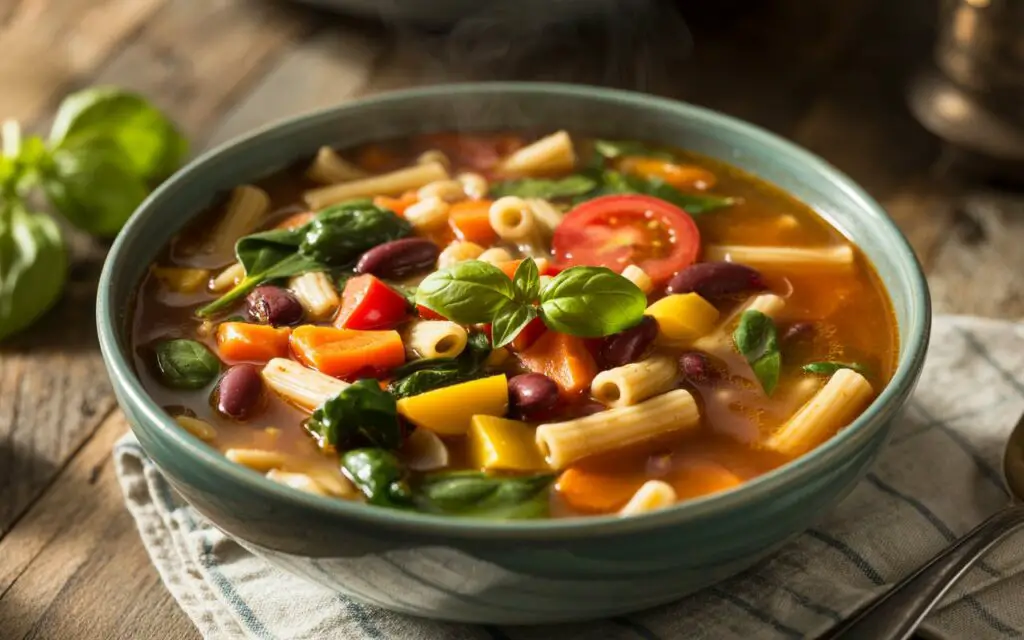
Ladle the hot soup into bowls. Top each serving with a generous sprinkle of freshly chopped parsley and a shower of grated Parmesan cheese if desired. The cheese melts slightly into the hot broth, lending an extra layer of umami that perfectly complements the vegetables and beans.
Nutritional Information (per 1½-cup serving)
| Nutrient | Amount | % Daily Value* |
|---|---|---|
| Calories | 250 kcal | 13% |
| Total Fat | 7 g | 9% |
| Saturated Fat | 1 g | 5% |
| Sodium | 680 mg | 28% |
| Carbohydrates | 38 g | 13% |
| Dietary Fiber | 8 g | 32% |
| Sugars | 6 g | — |
| Protein | 10 g | 20% |
| Vitamin A | 110% DV | |
| Vitamin C | 60% DV | |
| Iron | 15% DV |
*Percent Daily Values based on a 2,000-calorie diet. Nutrition estimated using USDA FoodData Central.
Healthier Alternatives for the Recipe
- Lower carbs: Swap the pasta for riced cauliflower or spiralized zucchini noodles to reduce net carbohydrates by up to 50%.
- Boost protein: Stir in ½ cup cooked quinoa or a scoop of plant-based protein powder into each bowl for an extra 8–10 g of protein.
- Lower sodium: Choose a low-sodium or homemade broth, and omit added salt until the end—beans and tomatoes naturally contribute saltiness.
- Increase fiber: Add ½ cup cooked lentils or barley at the same stage as the beans for even more fiber and whole-grain goodness.
- Paleo variation: Replace beans and pasta with roasted butternut squash cubes and omit the cheese for a gluten-free, dairy-free version.
Serving Suggestions
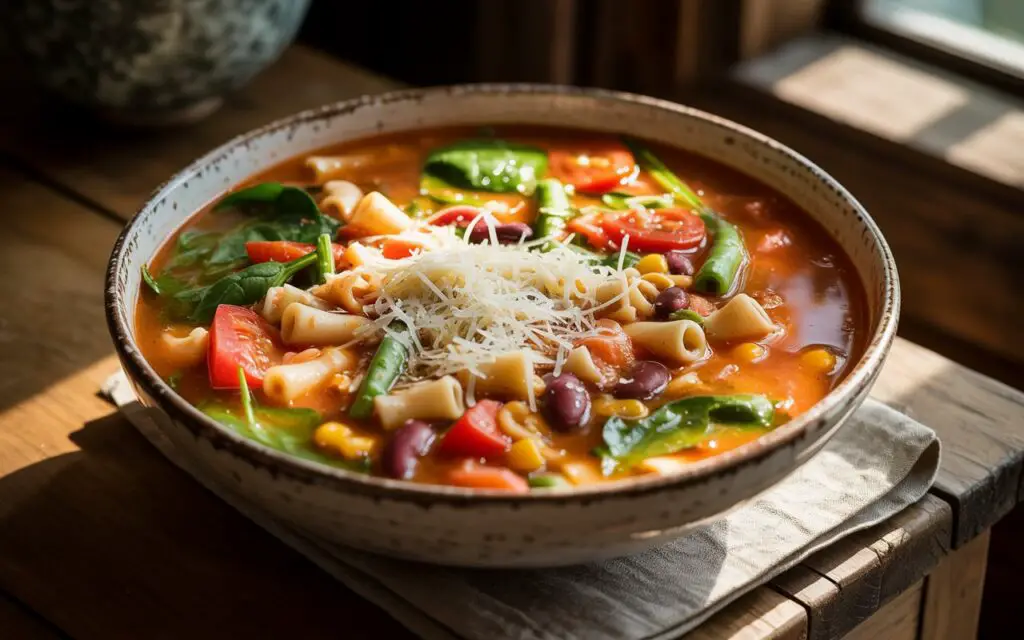
- Crusty bread: Offer slices of warm ciabatta or sourdough brushed with garlic butter to soak up the broth.
- Side salad: Pair with a crisp arugula salad dressed in lemon vinaigrette for a bright, balanced meal.
- Cheese board: A small board of Italian cheeses—such as Pecorino, Provolone, and fresh mozzarella—complements the soup’s Mediterranean character.
- Wine pairing: A chilled Pinot Grigio or light-bodied Chianti enhances the soup’s tomato and herb notes.
- Meal prep bowls: Divide into individual containers, leaving out garnishes. Reheat on busy nights and finish with fresh parsley and cheese.
Common Mistakes to Avoid
- Overcooking pasta: Add pasta later in the process and test 30 seconds before the package instructions to ensure it remains al dente and doesn’t turn mushy.
- Under-seasoning broth: Layer your seasoning—add a little salt with the tomatoes, again with the broth, and taste before serving. Vegetables absorb salt as they cook.
- Skipping the oil emulsion: Slow streaming of olive oil into the blender or pot emulsifies the soup, giving it a silky texture—don’t dump it in all at once.
- Over-blending vegetables: If using an immersion blender, pulse just enough to break down the larger chunks—too much blending creates a puree rather than a chunky soup.
Storing Tips for the Recipe
- Refrigeration: Allow soup to cool to room temperature, then store in airtight containers for up to 5 days. Stir before reheating, adding a splash of broth if it thickens too much.
- Freezing: Freeze in portions (without cheese) for up to 3 months. Thaw overnight in the refrigerator and reheat gently on the stove.
- Meal-prep hack: Chop vegetables and beans ahead of time. On the day you plan to cook, start from the sauté step to cut kitchen time in half.
Ready to Enjoy Your Homemade Minestrone? Give It a Try Today!

You now have the complete, data-driven blueprint for a classic Italian minestrone soup recipe that’s as versatile as it is comforting. Whether you’re seeking a healthy weeknight meal, a make-ahead lunch, or a vegetarian option that satisfies even the heartiest appetites, this one-pot wonder delivers hearty texture, vibrant flavors, and Mediterranean sunshine in every spoonful. Gather your ingredients, preheat that pot, and let the aromas of garlic, herbs, and simmered vegetables fill your kitchen. Once you’ve savored your first bowl, share your favorite twists in the comments, and subscribe for more globally inspired, nutrient-packed recipes!
FAQs
Can I make this soup vegan?
Absolutely—simply use vegetable broth and omit the Parmesan. Substitute nutritional yeast for a cheesy note without dairy.
How do I prevent the pasta from absorbing all the broth?
Cook the pasta separately and add it to individual bowls just before serving to maintain soup consistency.
Is it okay to blend part of the soup?
Yes—use an immersion blender to puree about one-quarter of the soup, then stir to create a naturally thickened, creamy base.
What’s the best way to reheat leftovers?
Warm gently on the stovetop over medium-low heat, stirring occasionally. Add a little broth if the soup has thickened too much.
Can I use fresh herbs instead of dried?
Yes—if using fresh oregano or thyme, double the quantity (2 tsp fresh for 1 tsp dried) and add during the final simmer for maximum freshness.