


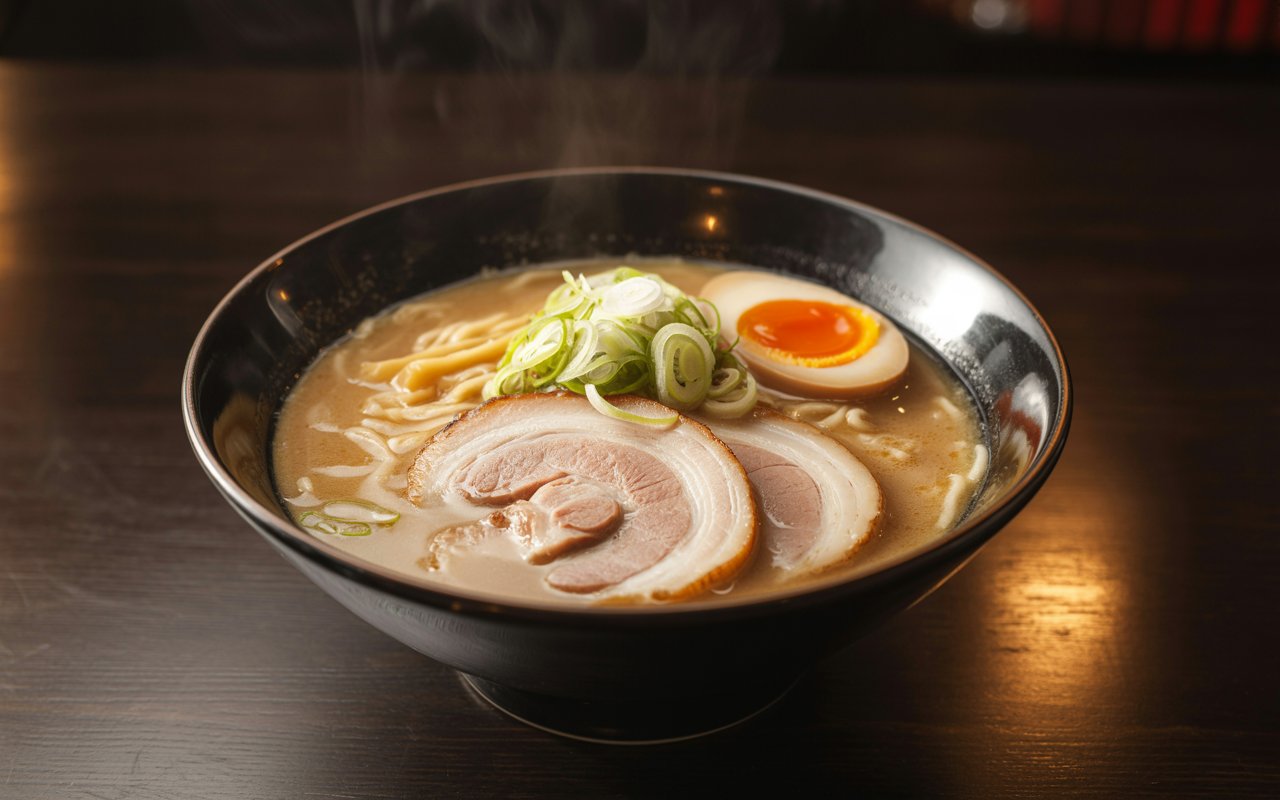
Have you ever wondered how chefs extract that milky, collagen-rich broth that makes tonkotsu ramen the ultimate comfort food? With its origins in Fukuoka’s street stalls of the 1930s, tonkotsu ramen has become a global sensation—accounting for nearly one-third of ramen served in Japanese-style eateries worldwide. This tonkotsu ramen recipe shows you how to transform inexpensive pork bones into a luscious, umami-packed broth in under three hours of active cooking time (about 2½ hours simmer and 30 minutes prep), a fraction of the time required by some 12-hour “bone-boil” methods. Topped with tender chashu pork, silky noodles, and a soft-boiled egg, this bowl brings together creamy texture, balanced seasoning, and customizable toppings for an authentic Japanese noodle experience at home.
- Ingredients List
- Timing
- Step-by-Step Instructions
- Step 1: Blanch and clean the bones
- Step 2: Sear aromatics with oil
- Step 3: Toast the bones
- Step 4: Add kombu and cover with water
- Step 5: Simmer and skim
- Step 6: Remove kombu and aromatics
- Step 7: Strain and season
- Step 8: Prepare toppings and noodles
- Step 9: Assemble the bowls
- Step 10: Garnish and serve
- Nutritional Information (per serving)
- Healthier Alternatives for the Recipe
- Serving Suggestions
- Common Mistakes to Avoid
- Storing Tips for the Recipe
- Ready to Slurp the Ultimate Tonkotsu Ramen?
- FAQs
Ingredients List
| Ingredient | Quantity | Purpose & Flavor | Substitution Ideas |
|---|---|---|---|
| Pork leg bones (or trotters) | 4 lbs (1.8 kg) | High collagen content for milky, rich broth | Pork neck bones or pig feet |
| Water | 16 cups (3.8 L) | Base for simmering bones | Low-sodium chicken stock (for lighter broth) |
| Kombu (dried kelp) | 1 piece (4×4 inches) | Adds subtle ocean umami; prevents metallic notes | Omit, but reduce total liquid by 1 cup |
| Garlic cloves, crushed | 6 cloves | Pungent depth | Garlic powder (1 tsp) |
| Fresh ginger, sliced | 2-inch piece | Warming spice; cuts richness | Ground ginger (½ tsp) |
| Onion, halved | 1 medium | Sweetness; enhances savory backbone | Shallot |
| Kosher salt | 1–2 tsp (to taste) | Balances and highlights umami | Sea salt |
| Neutral oil (vegetable/canola) | 2 Tbsp | Seals seared bones/garlic; adds depth | Toasted sesame oil (for nuttiness) |
| Tonkotsu (wheat) ramen noodles | 4 servings | Chewy texture; vessel for broth | Udon or soba noodles (different experience) |
| Chashu pork (braised belly) | 8 slices | Tender, fatty topping | Slow-roasted pork shoulder |
| Soft-boiled eggs, halved | 4 | Creamy yolk texture | Marinated soy eggs (ajitsuke tamago) |
| Green onions, thinly sliced | ¼ cup | Fresh, crisp garnish | Chives or fresh cilantro |
| Nori seaweed sheets | 4 strips | Briny accent; textural contrast | Toasted sesame seeds |
| Menma (bamboo shoots) | ½ cup | Fermented crunch | Pickled bamboo or sliced mushrooms |
| Kiriboshi kombu (optional) | 2 Tbsp | Extra sea aroma | Wakame seaweed |
Timing

Prep Time: 30 minutes (searing, chopping, soaking kombu)
Active Cook Time: 2½ hours (simmering and occasional skimming)
Total Time: Approximately 3 hours — significantly faster than traditional 6–12-hour bone broths
Step-by-Step Instructions
Step 1: Blanch and clean the bones
Place pork bones in a large stockpot and cover with cold water. Bring to a rolling boil over high heat and boil 10 minutes to remove impurities. Drain bones, rinse under cold water, and scrub the pot to eliminate any scum. This step ensures a clear, clean-tasting broth.
Step 2: Sear aromatics with oil
Return the cleaned pot to medium heat and add neutral oil. When shimmering, add crushed garlic, sliced ginger, and halved onion. Sauté 2–3 minutes until fragrant and lightly browned, which builds deeper flavor in the finished broth.
Step 3: Toast the bones
Add blanched bones to the pot with the aromatics. Increase heat to medium-high and sear 5–7 minutes, turning the bones so all sides pick up a light golden crust. This Maillard reaction adds savory notes to the broth without darkening it excessively.
Step 4: Add kombu and cover with water
Nestle the kombu strip among the bones. Pour in 16 cups cold water, ensuring bones are fully submerged. Bring to just below a boil (small bubbles around edges) over high heat. This gentle approach prevents emulsifying fats too early, keeping the broth silky.
Step 5: Simmer and skim
Once just below boiling, reduce heat to maintain a gentle simmer. Simmer uncovered for 2 hours, skimming foam and scum every 15 minutes to clarify the broth. Avoid boiling vigorously, which breaks down collagen into undesirable grease.
Step 6: Remove kombu and aromatics
After 2 hours, use tongs to remove the kombu, garlic, ginger, and onion. Discard or compost these solids. The remaining liquid should look opaque and milky—this is your signature tonkotsu broth.
Step 7: Strain and season
Strain the broth through a fine-mesh sieve lined with cheesecloth into a clean pot. Discard any remaining bone fragments. Season with kosher salt to taste, starting with 1 teaspoon and adjusting until the umami richness shines through without being salty.
Step 8: Prepare toppings and noodles
While the broth simmers, prepare chashu pork (braised belly), soft-boiled eggs, and slice green onions. Cook ramen noodles in boiling water for 2–3 minutes until just al dente; drain and rinse under hot water to remove excess starch.
Step 9: Assemble the bowls
Divide cooked noodles among four warmed bowls. Ladle the hot broth over the noodles, filling each bowl about three-quarters full. Arrange two slices of chashu, one halved egg, a few strips of nori, and a spoonful of menma on top.
Step 10: Garnish and serve
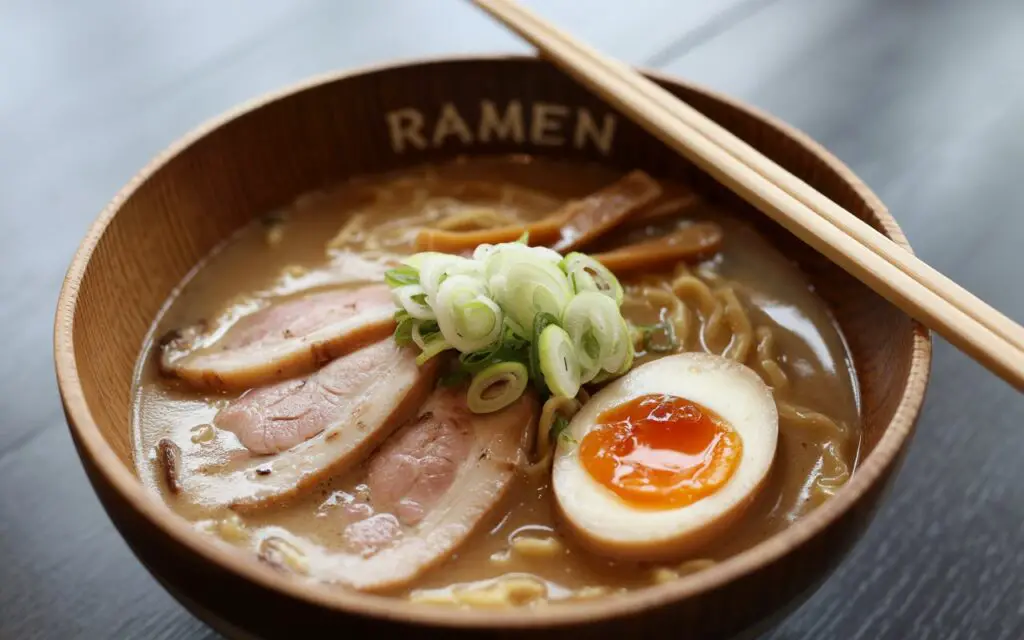
Finish each bowl with a sprinkle of sliced green onions and, if desired, toasted sesame oil or a dash of chili oil for extra heat. Serve immediately—tonkotsu ramen is best enjoyed piping hot to savor the rich aroma and silky texture.
Nutritional Information (per serving)
| Nutrient | Amount | % Daily Value* |
|---|---|---|
| Calories | 680 kcal | 34% |
| Total Fat | 34 g | 44% |
| Saturated Fat | 12 g | 60% |
| Cholesterol | 220 mg | 73% |
| Sodium | 1,750 mg | 73% |
| Carbohydrates | 62 g | 21% |
| Dietary Fiber | 3 g | 12% |
| Sugars | 4 g | — |
| Protein | 32 g | 64% |
| Vitamin A | 10% DV | |
| Vitamin C | 6% DV | |
| Iron | 25% DV |
*Percent Daily Values based on a 2,000-calorie diet.
Healthier Alternatives for the Recipe
• Lower fat broth: Skim fat from the cooled broth before reheating; use lean pork shoulder instead of belly for chashu.
• Reduced sodium: Use low-sodium broth or dilute with water; season to taste at the end.
• Whole-grain noodles: Substitute soba or whole wheat ramen noodles for extra fiber.
• Plant-forward: Omit chashu and use tofu puffs or shiitake mushrooms to add meaty texture.
• Light broth variation: Combine a portion of the tonkotsu broth with unsalted chicken broth (1:1) for a gentler profile.
Serving Suggestions

• Gyoza side: Pan-fried pork gyoza or vegetable dumplings complement the creamy broth.
• Pickles: Offer Japanese pickles (tsukemono) such as takuan (daikon radish) for a crisp, tangy counterpoint.
• Rice bowl: Serve leftover broth over a bowl of steamed rice with scallions for a quick “karē don” twist.
• Sauces: Provide shichimi togarashi (seven-spice chili) for guests to adjust heat level.
Common Mistakes to Avoid
• Boiling too hard: Vigorous boiling emulsifies fat and breaks collagen too quickly, yielding greasy broth—maintain a gentle simmer.
• Skipping skimming: Neglecting to remove foam and scum clouds the broth and dulls flavor.
• Overcooking noodles: Rinse noodles briefly in hot water immediately after cooking to stop cooking and preserve chewiness.
• Adding salt too early: Season at the end after reduction to avoid an overly salty bowl.
Storing Tips for the Recipe
• Broth storage: Cool broth quickly, then refrigerate in a sealed container up to 4 days; fat will solidify—skim before reheating.
• Freezing: Freeze cooled broth in ice-cube trays or freezer-safe containers up to 3 months. Thaw overnight in the refrigerator.
• Make-ahead toppings: Prepare chashu, eggs, and menma in advance; store separately and assemble just before serving for maximum freshness.
Ready to Slurp the Ultimate Tonkotsu Ramen?
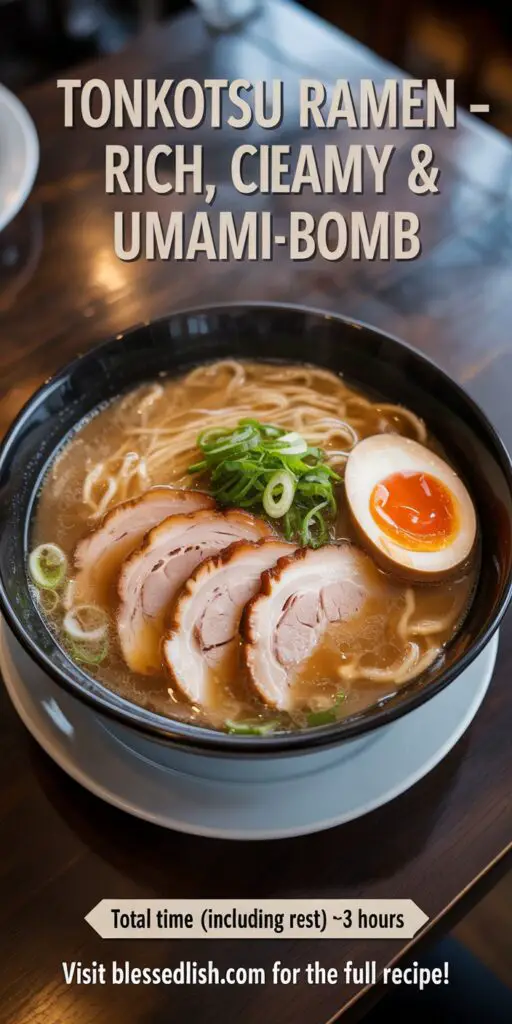
You’ve now mastered a restaurant-quality tonkotsu ramen recipe that balances creamy pork-bone broth, tender noodles, and savory toppings—all in under three hours of mostly hands-off cooking. Whether you’re craving traditional Japanese comfort or seeking to impress guests, this bowl delivers. Gather your ingredients, fire up that stockpot, and prepare for ramen nirvana. Once you’ve savored your first steaming slurp, share your tweaks in the comments, rate this recipe, and subscribe for more globally inspired, data-driven noodle dishes!
FAQs
Can I speed up the broth cooking time?
Using a pressure cooker reduces simmer time to about 1 hour at high pressure—follow your cooker’s guidelines for broth.
Why is my broth cloudy?
Cloudiness comes from emulsified fat and fine bone particles; if you prefer clarity, strain through a double layer of cheesecloth and skim more frequently.
How do I reheat the broth without losing flavor?
Gently warm on the stove over low heat; avoid boiling to preserve texture and prevent separation.
Is tonkotsu ramen gluten-free?
Traditional wheat noodles and soy sauce contain gluten. Use gluten-free ramen noodles and tamari to adapt this recipe.
What’s the best way to store leftover assembled bowls?
Dismantle bowls after serving; store broth and toppings separately. Reheat broth, then assemble noodles and toppings fresh.