


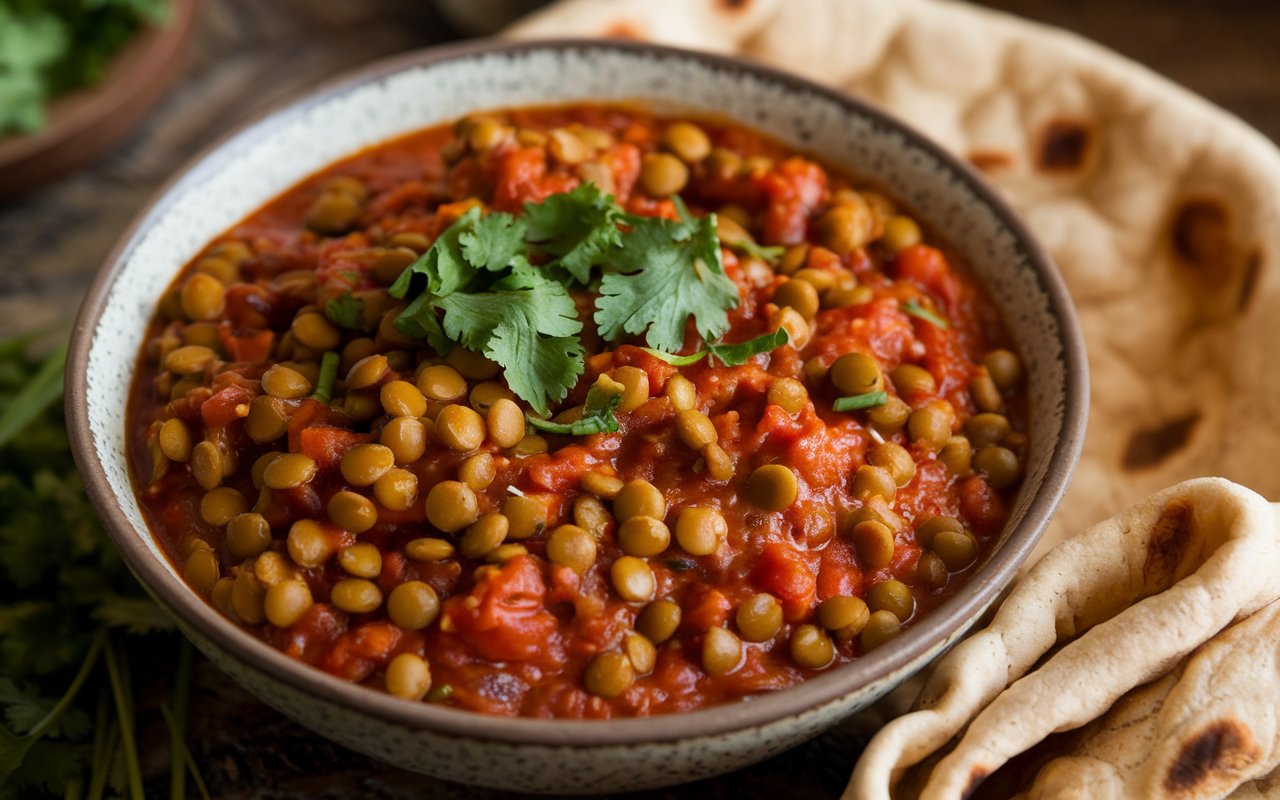
Ethiopian cuisine offers a tapestry of bold spices, slow-simmered stews, and communal dining traditions focusing on injera, a sour, spongy flatbread used to scoop up various “wats” or stews. Among these, Mesir Wat—an Ethiopian lentil stew—stands out for its robust flavor, derived from berbere, the signature spice blend combining chili peppers, garlic, ginger, fenugreek, and other aromatic components. Ethiopian Lentil Stew (Mesir Wat) – Rich Berbere Seasoning celebrates that deep, warming taste with gently simmered red lentils that transform into a creamy consistency, perfect for soaking up with injera or pairing with rice for a simpler approach.
- Why Ethiopian Lentil Stew (Mesir Wat)?
- Key Ingredients in Table Form
- Step-by-Step Mesir Wat Cooking
- 1. Rinse & Soak Lentils (2–5 minutes, optional)
- 2. Sauté Onions & Aromatics (5–7 minutes)
- 3. Incorporate Berbere & Tomato (3–5 minutes)
- 4. Add Lentils & Liquid (15–20 minutes)
- 5. Season & Serve (Immediate or Let Rest)
- Depth of Flavor Secrets
- Serving & Presentation
- Possible Variations
- Dietary & Health Notes
- Storing & Reheating
- Frequently Asked Questions
- Conclusion
In this article, you’ll uncover how to craft Mesir Wat using everyday ingredients (like onions and tomatoes) plus the special berbere blend that defines Ethiopian cooking. We’ll include a table of essential components, step-by-step guidelines, plus suggestions on how to serve the stew in a broader Ethiopian meal (with collard greens, doro wat, or more). By the end, you’ll see how to harness lentils’ protein and fiber, combine them with an intricate spice profile, and produce a soul-warming dish that stands out from typical lentil soups, bridging tradition and convenience with each bite.
Why Ethiopian Lentil Stew (Mesir Wat)?

- Bold Spice Blend
Berbere is a signature seasoning featuring chili heat plus a spectrum of aromatics—powerful, fragrant, and unique. - Creamy Lentil Texture
Red lentils cook down quickly, creating a thick, comforting stew base. - Hearty & Vegetarian
This stew is both nutritious and deeply satisfying, suited for both omnivores and vegetarians. - Cultural Exploration
Enjoying Mesir Wat introduces you to Ethiopian culinary traditions, typically served communal-style with injera bread.
Key Ingredients in Table Form
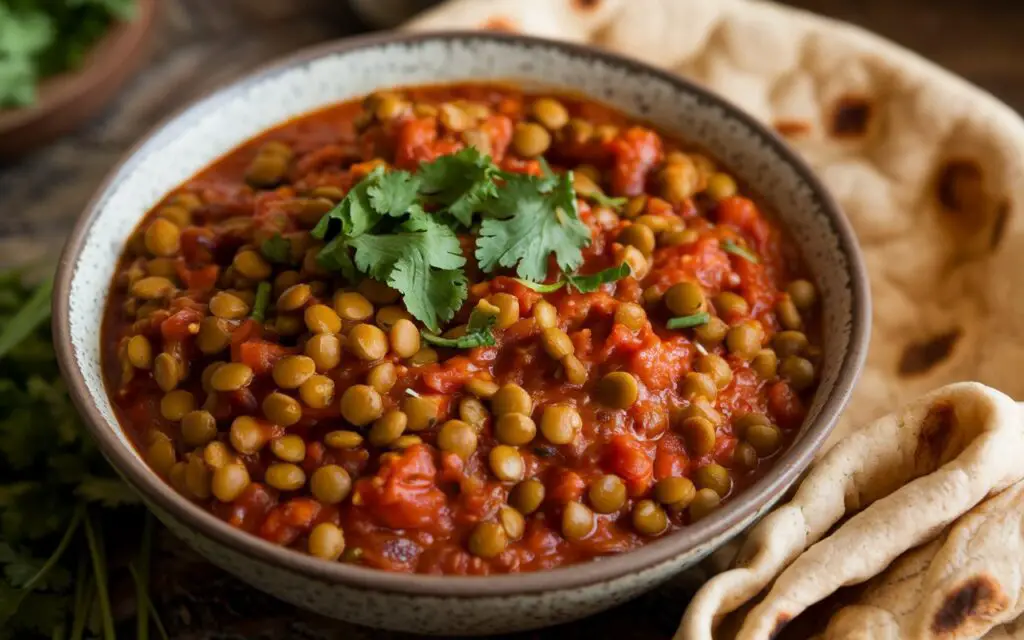
Below is a concise table for ~4–6 servings:
| Ingredient | Quantity (Approx.) | Purpose / Notes |
|---|---|---|
| Red Lentils (dry) | 1 cup | Base of stew; cook fast & break down to creamy texture. |
| Onion (chopped) | 1 large | Fundamental to Ethiopian “wat” stews. |
| Berbere Spice Blend | ~1–2 tbsp (to taste) | Key flavor driver (mix of chili, ginger, garlic, fenugreek, etc.). |
| Tomato (chopped/puree) | 1 (~1/2 cup) | Adds color, acidity, slight sweetness. |
| Garlic (minced) | 2–3 cloves | Additional aromatics for depth. |
| Ginger (minced) (optional if not in berbere) | 1 inch | Enhances fresh spiciness if needed. |
| Oil (vegetable/olive) | ~2–3 tbsp | Sautéing onions, forming stew base. |
| Salt & Pepper | To taste | Adjust after simmering. |
| Stock or Water | ~3–4 cups | Liquid to simmer lentils. |
| Optional: Niter Kibbeh (Ethiopian spiced butter) | 1–2 tbsp | Authentic flavor if available; can sub normal butter. |
| Injera or Rice | For serving | Traditional Ethiopian bread to scoop stew or a simpler grain-based approach. |
Step-by-Step Mesir Wat Cooking
1. Rinse & Soak Lentils (2–5 minutes, optional)
- Rinse: Under running water to remove any dust or debris.
- Soak: Some prefer soaking red lentils briefly (~10–15 minutes) for quicker cooking and improved digestibility. This step can be skipped if short on time.
2. Sauté Onions & Aromatics (5–7 minutes)
- Heat Oil: In a pot over medium heat, ~2 tablespoons oil (or niter kibbeh if you have it).
- Onions: Stir in 1 chopped onion. Sauté ~3–4 minutes until soft and golden.
- Garlic & Ginger: Add 2–3 cloves minced garlic, plus 1 inch minced ginger if not present in berbere. Cook ~1 minute, mindful not to burn.
3. Incorporate Berbere & Tomato (3–5 minutes)
- Berbere: Sprinkle ~1–2 tablespoons. Stir quickly, allowing spices to bloom. Adjust if you prefer milder or spicier.
- Tomato: Add 1 chopped tomato or ~1/2 cup puree. Simmer ~2–3 minutes, letting flavors meld.
4. Add Lentils & Liquid (15–20 minutes)
- Drain Lentils: If soaked, discard soak water.
- Pot: Stir lentils into the onion-tomato-spice mixture.
- Broth/Water: ~3–4 cups. Bring to a gentle boil, then reduce heat to low.
- Simmer: 15–20 minutes, stirring occasionally. Red lentils break down, forming a thick stew. If thickens too much, add liquid.
5. Season & Serve (Immediate or Let Rest)
- Taste: Add salt, pepper. A pinch of sugar or honey if it’s overly tangy/spicy.
- Texture: Some prefer it partially chunky, others fully creamy. Mash with a spoon or immersion blender if desired.
- Plate: Typically served on injera bread in Ethiopian cuisine or in a bowl with rice.
Depth of Flavor Secrets
- Sauté Onions Gently
Ethiopian stews often start with slow-cooked onions, building a sweet-savory foundation. - Berbere Quality
A fresh spice blend yields the best outcome—store-bought is fine but ensure it’s not stale. - Niter Kibbeh
This spiced clarified butter—infused with fenugreek, garlic, and herbs—offers an authentic aroma. Replacing normal oil with it elevates the stew.
Serving & Presentation
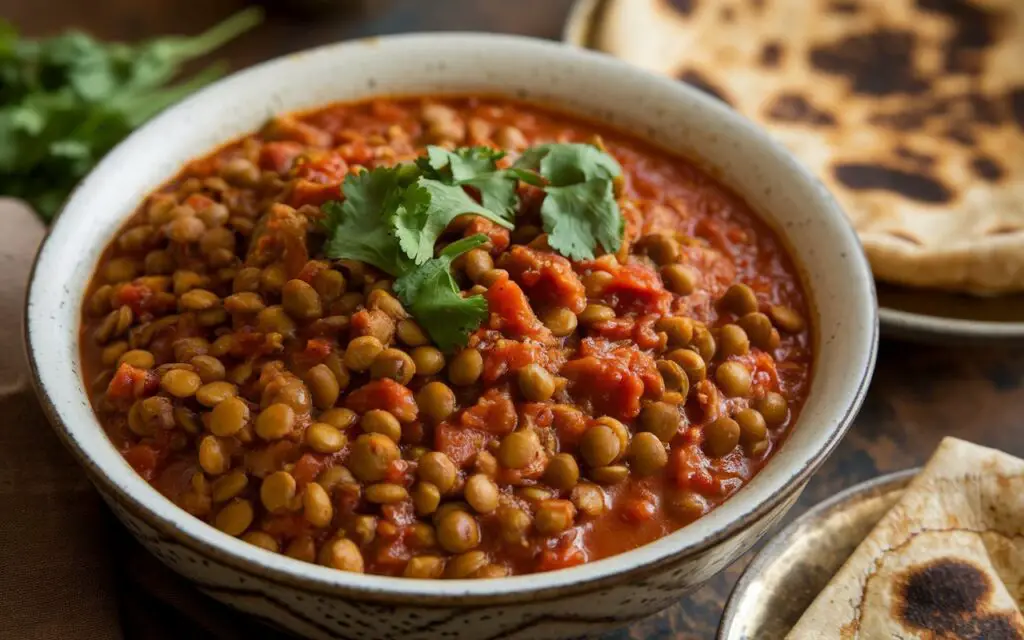
- Traditional: Spoon onto injera, letting the stew soak in. Eaten communally by tearing off bread to scoop the wat.
- Alternative: Serve in a bowl with a side of bread or rice.
- Garnish: A drizzle of olive oil or pinch of fresh cilantro if desired (though not strictly Ethiopian).
Possible Variations
- Additional Veggies
Some add carrots or bell peppers. - Mixed Lentils
Combining red with brown or green lentils changes texture. Adjust simmer time. - Less Spicy
Use less berbere, or sub part of it with mild paprika. - Creamier Finish
Blend some portion or swirl in a small spoon of yogurt at the end.
Dietary & Health Notes
- Vegan/Vegetarian
The base recipe is vegan if you skip niter kibbeh or use a non-dairy version. - High Protein & Fiber
Lentils supply ample plant protein, beneficial for muscle maintenance, plus fiber for digestion. - Spice Caution
Berbere can be potent. If you’re sensitive, start with less and add more later.
Storing & Reheating
- Refrigerate: Mesir Wat often tastes better next day—store up to 3–4 days.
- Reheat: Stove or microwave. Add water if it’s too thick.
- Freeze: Up to 2 months in sealed containers. Thaw overnight or warm gently.
Frequently Asked Questions
Q1: Is berbere essential?
Yes, for authenticity. But if unavailable, attempt a homemade spice mix (chili powder, paprika, fenugreek, garlic, ginger, etc.).
Q2: My stew is watery.
Red lentils often absorb water fast. Simmer uncovered to evaporate excess or reduce initial liquid.
Q3: Could I add meat or chicken?
Traditionally, mesir wat is lentil-based. Chicken or meat would turn it into a different stew (like doro wat for chicken). Stick to lentils if you want classic Mesir Wat.
Q4: Are green or brown lentils ok?
They won’t break down as easily, leading to a chunkier stew. Red lentils create that creamy consistency characteristic of Mesir Wat.
Q5: What if I find it too spicy?
Balance with extra tomato or add a spoon of yogurt at serving. That soothes the heat.
Conclusion
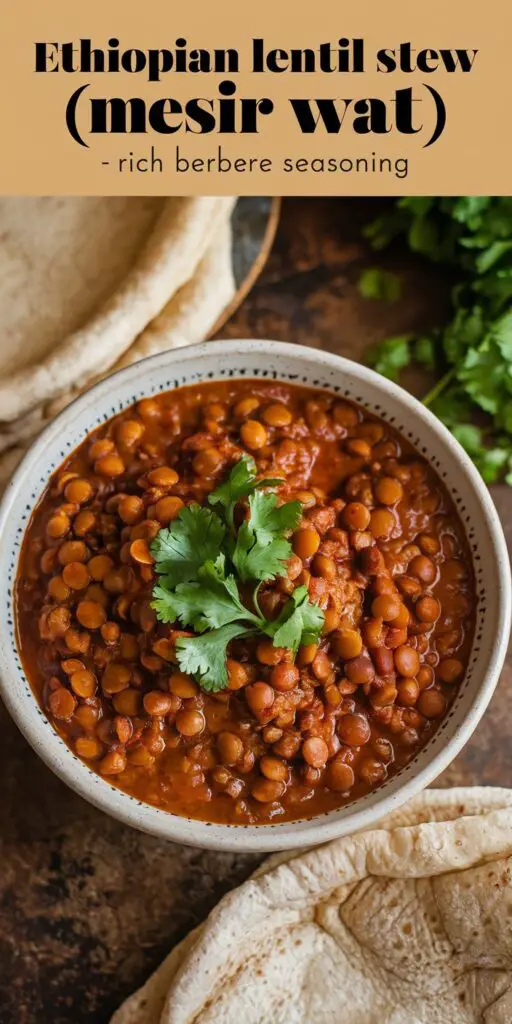
Ethiopian Lentil Stew (Mesir Wat) – Rich Berbere Seasoning stands as a testament to the depth and warmth of Ethiopian culinary traditions. By simmering red lentils with onion, tomato, and a potent blend of spices—namely berbere—you create a stew that defies simple labels like “lentil soup.” Instead, it’s an aromatic, robust creation that begs to be scooped up with injera or sipped from a spoon, delighting your palate with its slightly spicy, richly seasoned essence.
Whether you keep it classic or adapt the heat and consistency to your preference, mesir wat ensures a comforting, nutritionally dense meal, ideal for vegetarians, vegans, or anyone craving a break from standard bean or lentil dishes. Serve it as part of a broader Ethiopian platter or alone with bread or rice. Either way, each bowl merges age-old spices with modern convenience, reminding us that lentils can transcend their humble reputation when given the right mix of flavors and cultural flair.