



Step into a Filipino kitchen, and you might soon inhale the vinegary, garlicky aroma of adobo simmering on the stovetop—a method so iconic that it anchors the entire nation’s culinary identity. Chicken Adobo stands among the most beloved expressions of this style, blending meat (chicken or pork) with vinegar, soy sauce, garlic, and pepper for a tangy, savory braise. Each tender chicken piece emerges coated in a glossy sauce that’s simultaneously sharp, salty, and faintly sweet—best savored over a bed of warm rice, where every spoonful resonates with the distinctive adobo marinade.
I first encountered Filipino Chicken Adobo via a friend’s potluck dish, where the succulent chicken and aromatic sauce immediately captivated me—particularly the interplay of tang from vinegar and umami from soy. Replicating it at home, I discovered each household holds a personal spin: some add coconut milk, others incorporate sugar or sweet onions, and the ratio of vinegar to soy might shift across regions. At its heart, though, the primary flavors revolve around that marinade-braise approach: letting chicken soak or simmer in vinegar, soy, garlic, and spices, culminating in a spoon-licking sauce that calls for extra rice. Now, Filipino Chicken Adobo remains a steadfast weeknight option—both because it’s simple to prepare and each mouthful exudes comfort and warmth tied to Filipino traditions.
In this article, we’ll explain how to create Filipino Chicken Adobo—from marinating the chicken to simmering in a gently sweet-tangy sauce, culminating in a thick glaze that envelops each piece. Whether you’re new to Filipino flavors or an adobo aficionado craving a refresher, be ready for a braise that proves minimal, well-chosen ingredients can yield a powerful, unforgettable dish.

Why Filipino Chicken Adobo Delights
- Simple but Bold
Chicken Adobo is essentially 5–6 ingredients. Vinegar, soy sauce, garlic, bay leaves, and pepper form the marinade. Yet the layering of these basic flavors produces an undeniably captivating result. - Tender Meat, Glossy Sauce
Adobo’s slow simmer ensures chicken turns fork-tender while the sauce thickens into a tangy, savory coating. The marinade’s acidity also helps tenderize the meat. - Highly Adaptable
Some prefer a drier adobo (reduced sauce) or a saucier version to ladle over rice. Others add coconut milk, sugar, or chili for a unique spin. Yet the backbone—vinegar and soy—remains consistent. - Long-Standing Tradition
Adobo’s presence in Filipino households is near-universal, signifying comfort, routine, and pride. The aroma is easily recognized, bridging everyday meals and special gatherings.
Ingredient Overview
Makes ~4–6 servings:
| Ingredient | Quantity | Notes |
|---|---|---|
| Chicken (bone-in pieces, e.g., thighs/drumsticks) | ~2–3 lbs | Bone-in, skin-on is common for deeper flavor, but boneless works if you prefer |
| Soy Sauce (Filipino brands often used) | ~½ cup | Adjust to salt preference |
| Vinegar (cane, white, or coconut) | ~½ cup | The tang is crucial; white vinegar is typical, cane or coconut can add mild nuances |
| Garlic (crushed or minced) | ~6–8 cloves | Generous garlic is standard. Some slice it for bigger pieces |
| Bay Leaves | 2–3 | Provides subtle herbal note |
| Pepper (whole peppercorns or ground) | 1 tsp or to taste | Whole peppercorns are often used, or coarse ground for robust flavor |
| Water or Stock (optional) | ~½–1 cup | If you prefer more sauce or to reduce saltiness, add water or stock |
| Sugar or Sweetener (optional) | 1–2 tsp | If you like a slightly sweeter adobo |
| Oil | 1–2 tbsp | For browning the chicken, if desired |
| Optional Extras (onion, chili) | Varies | Some recipes add onions, a dash of chili flakes, or coconut milk for adobo variations |
(Note: The ratio of vinegar to soy sauce is personal. A 1:1 ratio is common, though some prefer 2:1 vinegar to soy or vice versa. Tweak to taste. The type of vinegar used can significantly affect flavor—white vinegar is sharper, cane vinegar mild, coconut vinegar even gentler.)
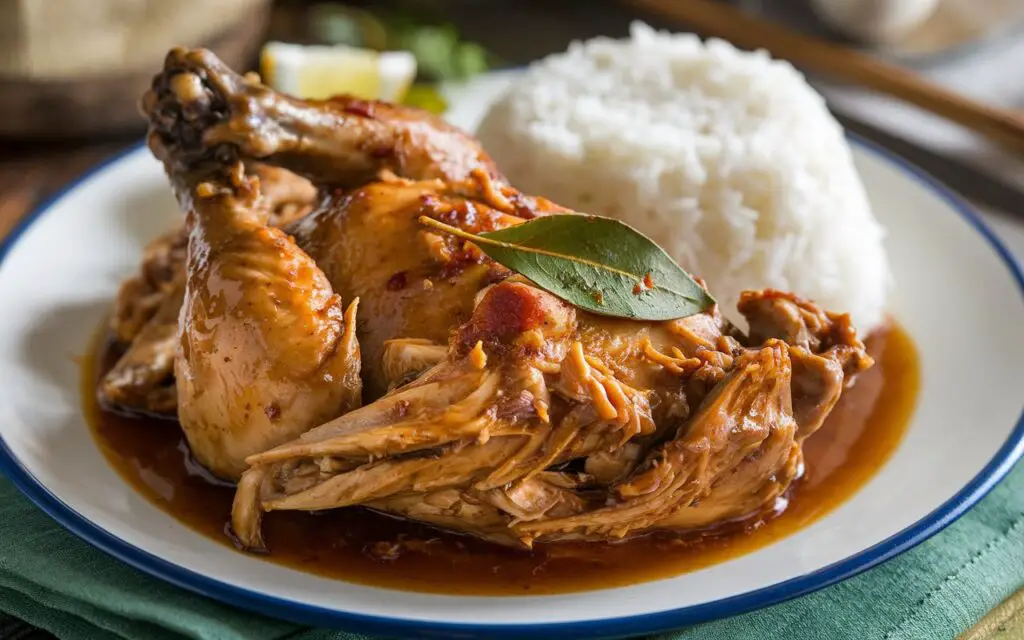
Step-by-Step Recipe (Approx. 45–60 Minutes)
- Marinate Chicken (Optional)
- Some cooks prefer an initial marination for deeper flavor. In a large bowl or zip-top bag, combine chicken pieces, ~½ cup soy sauce, half the garlic, and a pinch of pepper. Let rest ~30 minutes to 1 hour. This step is optional but can intensify flavor.
- Brown Chicken (Optional)
- If you prefer a browned exterior, heat 1 tablespoon oil in a pot or Dutch oven over medium-high. Sear chicken pieces ~2–3 minutes per side until lightly golden. This browning step is optional—some skip it for a purer braised flavor. Set chicken aside.
- Assemble Adobo in Pot
- In the same pot, if not browning, add chicken directly. Pour in marinade if used, or combine in the pot: ~½ cup soy sauce, ~½ cup vinegar, remaining garlic, 2–3 bay leaves, and 1 teaspoon pepper (or 1 teaspoon peppercorns). If sauce looks too concentrated, add ~½ cup water or stock. Stir gently. If you want onion or chili, add them now. Some recipes add sugar (~1–2 tsp) for a mild sweet note.
- Simmer
- Bring to a boil over medium heat. Then reduce to low, cover, and let the chicken simmer ~20 minutes. Flip chicken halfway for even cooking. The vinegary aroma is strong initially—ventilate your kitchen if needed!
- Reduce Sauce
- If chicken is near done but sauce is still thin, remove lid. Increase heat to medium, reduce sauce until it’s thicker, about ~5–10 more minutes. If you want a drier adobo, simmer longer until sauce clings to the chicken. For a saucier version, turn off heat when it’s moderately thick.
- Taste & Adjust
- Sample the sauce. If it’s too salty, add a splash more water or a pinch of sugar. If not tangy enough, drizzle extra vinegar. The final flavor is a bright, savory tang balanced by the soy sauce’s saltiness.
- Serve Over Rice
- Transfer chicken pieces to a serving dish, spoon sauce generously. Commonly served with steamed white rice to absorb the tangy, savory sauce. Some garnish with fresh chili or green onions, though that’s optional.
(Note: The biggest hallmark of Filipino Adobo is the interplay of vinegar and soy sauce. If you prefer a strong vinegar punch, maintain that ratio. For more savory depth, up the soy sauce or add onions and a bit of sugar. Cooking time can be extended for a more tender, fall-off-the-bone result or a thicker sauce that glazes the chicken.)
Flavor Variations
- Coconut Milk Adobo (Adobo sa Gata)
- Add ~½–1 cup coconut milk near the end for a creamier, milder sauce. This approach reduces the sharpness of vinegar, offering a lush mouthfeel.
- Frying Step
- Some do a two-step method: after braising, remove chicken, pat dry, pan-fry until crispy, then return to the sauce. This yields a crisp outer layer on the chicken with the adobo sauce spooned over.
- Adobo Flakes
- If leftover, shred the chicken and fry until crispy. Adobo flakes are a popular breakfast item, typically served with garlic fried rice and eggs.
- Vegetarian or Vegan
- Sub tofu or mushroom for chicken. The marinade approach remains the same. Adjust cooking times for the chosen protein.
Serving & Storage
- Plate Presentation
- Often served in a shallow bowl or plate with plenty of sauce, plus a side of rice. Some garnish with extra chopped garlic or chili.
- Side Dishes
- Many pair adobo with a simple tomato salad or sautéed vegetables for color. Fried plantains or sweet potatoes can offset the tang.
- Leftovers
- Refrigerate up to 3 days. Reheat on the stovetop, adding a splash of water if the sauce thickened too much. The flavor often deepens overnight.
- Freezer
- Adobo freezes fairly well for ~1 month. Thaw in the fridge, reheat gently. The chicken’s texture can remain tender, though the sauce may require a quick re-season.
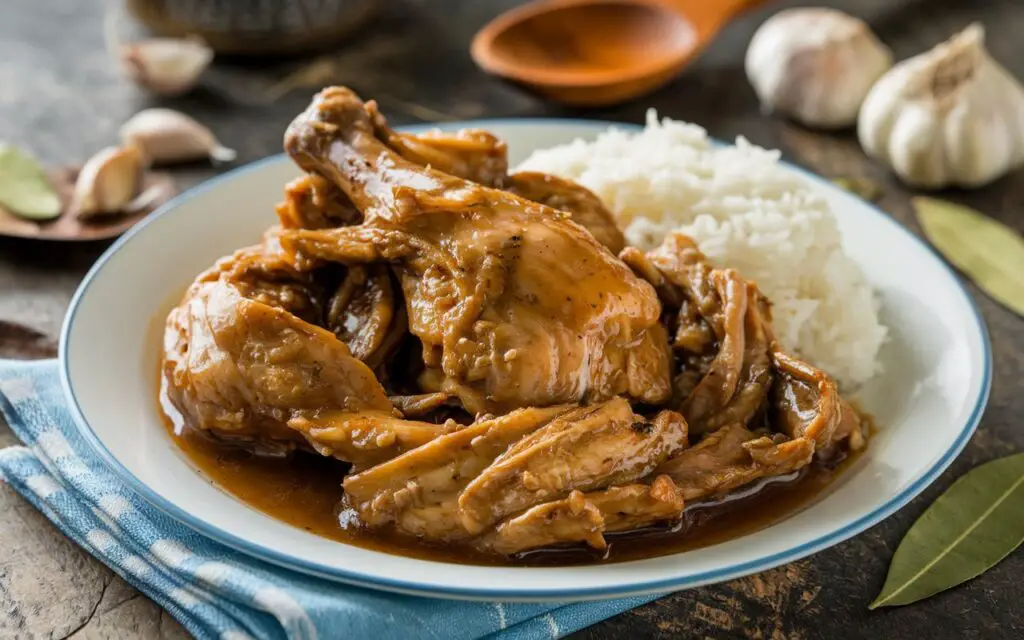
Mastering Adobo’s Balance
- Vinegar to Soy Ratio
- The standard baseline is about 1:1. Modify as you prefer: more vinegar for tang, more soy for saltiness, or extra water to reduce intensity.
- Sautéing Garlic
- Some prefer to lightly sauté garlic in oil before adding liquids. Others throw it directly into the braise. Both yield garlicky depth—choose based on time and preference.
- Marinate vs. Direct Braise
- Marinating chicken beforehand imparts deeper flavor. If short on time, going straight to braise still tastes amazing, but less intense.
- Sauce Consistency
- The final sauce typically aims for a not-too-thin, not-too-thick gravy. If you want a sticky glaze, reduce thoroughly at the end. For a more spoonable sauce, keep it moderately liquid.
FAQ – Filipino Chicken Adobo
Q1: Must it be chicken?
A1: Pork adobo is equally popular, or a mix of chicken and pork. Some use fish or other meats. The concept remains: braise in vinegar-soy sauce marinade. Cooking times vary by protein.
Q2: White vinegar or cane vinegar?
A2: White vinegar yields a sharper tang. Cane vinegar or coconut vinegar can be milder. If uncertain, white vinegar is the classic fallback, adjusting sugar or water if it’s too strong.
Q3: Do I remove the skin for a leaner adobo?
A3: That’s optional. Chicken skin adds richness, but if you prefer less fat, remove it or skim fat from the sauce after cooking. The flavor might shift slightly.
Q4: Is it always this dark color?
A4: Typically, yes, from soy sauce. If you prefer a lighter sauce, use less soy or a lighter variant. The color is part of the dish’s visual identity, though.
Q5: Can I add vegetables to the pot?
A5: Not standard for classic adobo, but some add potatoes or carrots for a stew-like dish. The core remains the chicken, vinegar, soy, and garlic, with veggies absorbing the tangy sauce if included.
Conclusion
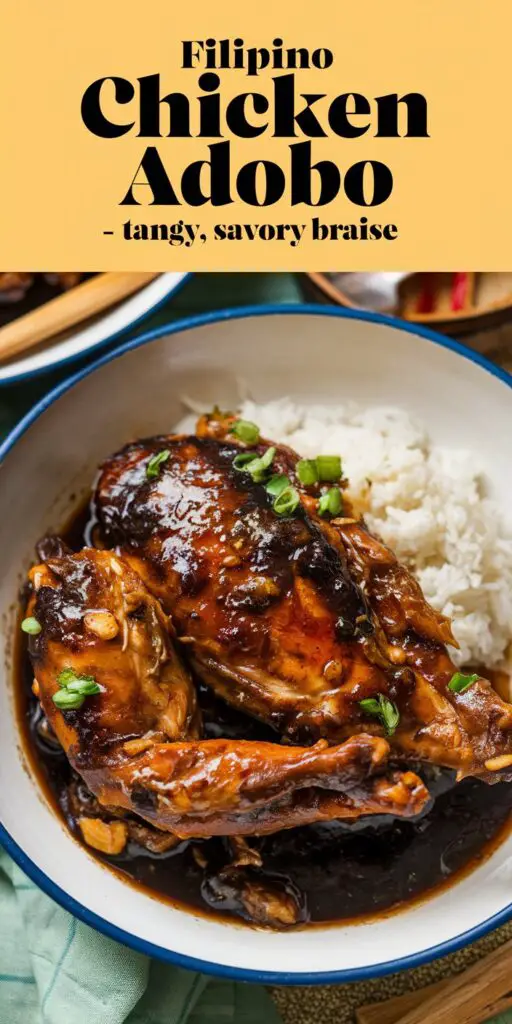
Melding vinegar, soy sauce, and garlic around braised chicken, Filipino Chicken Adobo reveals how a few pantry staples can create a globally adored meal. Each tender chicken piece soaks in the marinade’s tangy, savory essence, culminating in a dish that’s as comforting as it is straightforward. Typically paired with white rice to capture the sauce’s boldness, adobo also resonates with day-after transformations—shredded or flaked, it morphs into a new breakfast or sandwich filling.
Now that you’ve learned how to manage the marinade, simmer to your ideal sauce thickness, and adapt the vinegar-soy ratio for personal taste, why not recreate this national favorite at your next dinner? After you enjoy the final succulent bite—perhaps with a drizzle of sauce or a side of fresh vegetables—pop back to share your spin. Did you incorporate coconut milk, fry the chicken post-braise, or skip marination for speed? Your approach might guide others seeking that cozy, tangy-salty-sweet note embedded in every comforting spoonful of Filipino Chicken Adobo.