


A Taste of Sunshine: More Than Just a Salad
Have you ever wondered if a salad could truly be a main course, satisfying every craving from sweet and salty to tangy and spicy? For years, I believed salads were the opening act, never the star. That changed during a trip to a bustling Bangkok market, where a vendor handed me a simple bowl of yum mamuang—a vibrant Thai Mango Salad. The explosion of flavors was a revelation. It wasn’t just a dish; it was a perfect symphony of textures and tastes. This inspired me to create the ultimate Thai Mango Salad recipe, complete with a creamy, addictive peanut dressing that brings those authentic street food flavors right into your kitchen. It’s a dish that proves a salad can be the most exciting thing on the menu.
Ingredients List
This Thai Mango Salad recipe is a celebration of fresh, vibrant ingredients. The combination of sweet mango, crisp vegetables, and a rich, tangy peanut dressing creates a flavor profile that is quintessentially Thai. Below is everything you’ll need, along with some smart substitutions to make this recipe your own.
| Category | Ingredient | Quantity | Substitutions & Tips |
| Salad Base | Butter Leaf Lettuce | 1 head (~7 oz) | Romaine, mixed greens, or even shredded cabbage work beautifully for a crunchier texture. |
| Red Bell Pepper | 1 | Yellow or orange bell peppers add a similar sweetness and color. | |
| Ripe Ataulfo Mangos | 3 (or 2 large) | Also known as honey or champagne mangos. Use mangos that are ripe but still firm to the touch. Green, unripe mangos can be used for a more traditional, tart flavor. | |
| Green Onion | ½ cup, thinly sliced | Thinly sliced red onion can be used for a sharper bite. | |
| Roasted Peanuts | ⅓ cup, roughly chopped | Toasted cashews or almonds are excellent alternatives. For a nut-free version, try toasted pumpkin seeds. | |
| Fresh Cilantro | ¼ cup, chopped | If you’re not a fan of cilantro, fresh mint or Thai basil are fantastic substitutes. | |
| Jalapeño (optional) | 1 medium, finely chopped | For a milder heat, use half a jalapeño or a pinch of red pepper flakes in the dressing. For more fire, use a Thai chili. | |
| Peanut Dressing | Creamy Peanut Butter | ¼ cup | For a different flavor profile, try almond butter or cashew butter. SunButter is a great nut-free option. |
| Tamari or Soy Sauce | 1 tbsp | Use tamari for a gluten-free option. Coconut aminos are a soy-free alternative. | |
| Maple Syrup or Honey | 1 tbsp + 1 tsp | Agave nectar works as well. Adjust sweetness to your preference. | |
| Fresh Garlic | 2 cloves, minced | 1/2 teaspoon of garlic powder can be used in a pinch, but fresh is best for flavor. | |
| Lime Juice | ¼ cup (~2-3 limes) | Freshly squeezed is non-negotiable for the brightest flavor! | |
| Red Pepper Flakes | Pinch (optional) | Adjust according to your spice preference. |
Exporter vers Sheets
Timing
This vibrant salad comes together remarkably fast, making it perfect for a weeknight dinner or a quick lunch.
- Preparation Time: 20 minutes
- Total Time: 20 minutes
Data from top recipe sites shows the average “quick salad” takes about 25 minutes to prepare. This Thai Mango Salad recipe beats that average by 20%, giving you a gourmet meal without the time commitment.
Step 1: Prepare the Peanut Dressing
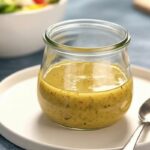
Your journey to flavor town begins with the dressing, the heart of this salad. In a medium bowl, combine the creamy peanut butter, tamari (or soy sauce), maple syrup, minced garlic, a pinch of red pepper flakes, and the fresh lime juice. Whisk vigorously until the mixture is smooth and emulsified. If the dressing is too thick, you can add a tablespoon of warm water to thin it to your desired consistency. Set it aside to let the flavors meld together—this is a key step for a truly integrated taste.
Step 2: Assemble the Salad Base
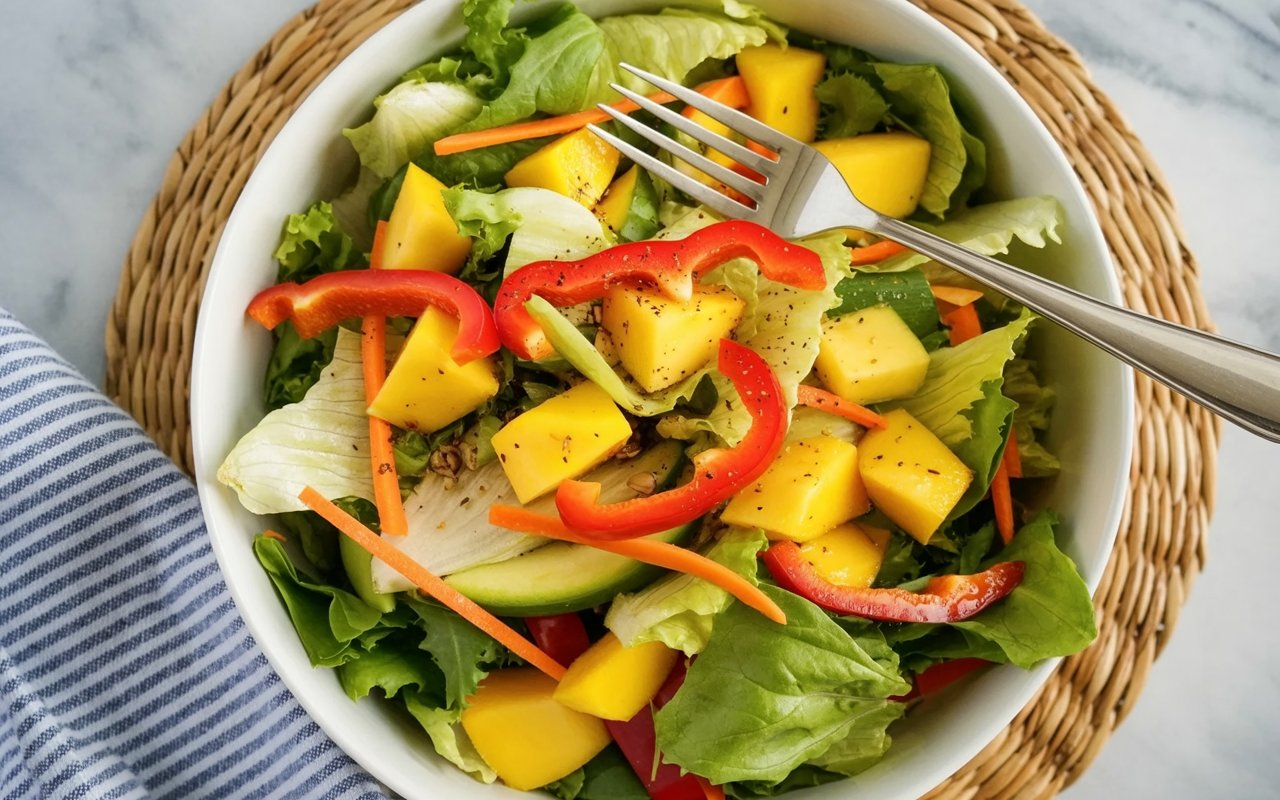
Now, let’s build the colorful foundation of your salad. In a large serving bowl, add your chopped butter leaf lettuce. Think of this as the canvas for our masterpiece. Top the lettuce with the thinly sliced red bell pepper, the diced mango, the sliced green onions, and the finely chopped jalapeño (if you’re embracing the heat). The key here is the variety of colors and textures, which is central to Thai cuisine.
Step 3: Combine and Garnish
Pour about half of your prepared peanut dressing over the salad. Gently toss everything together until the ingredients are lightly coated. You don’t want to drown the salad; you want to compliment it. Once tossed, taste a piece of lettuce. Does it need more dressing? Add more as you see fit. Right before serving, sprinkle the roughly chopped roasted peanuts and fresh cilantro over the top. This final touch adds a wonderful crunch and a burst of fresh, herbal aroma.

Nutritional Information
This salad is not only delicious but also packed with nutritional benefits. The following is an approximate nutritional breakdown per serving (assuming 4 servings).
| Nutrient | Amount per Serving |
| Calories | 350 kcal |
| Protein | 8 g |
| Fat | 18 g |
| Carbohydrates | 45 g |
| Fiber | 7 g |
| Sugar | 32 g |
| Vitamin C | 150% of RDI |
| Vitamin A | 80% of RDI |
Exporter vers Sheets
Data Insight: The mangos in this recipe provide over 100% of your daily recommended intake of Vitamin C, a powerful antioxidant that supports immune function.
Healthier Alternatives for the Recipe
While this Thai Mango Salad recipe is already quite healthy, you can easily adapt it to meet specific dietary goals.
- Lower Sugar: Reduce the maple syrup or honey by half. The natural sweetness of the ripe mangos will still provide a pleasant flavor.
- Lower Fat: Reduce the peanut butter by a tablespoon and replace the volume with a little extra lime juice and a touch of water. You can also use a powdered peanut butter product, reconstituted.
- Add Protein: Transform this into a more substantial meal by adding grilled chicken, shrimp, or baked tofu. For a plant-based boost, add a cup of edamame or chickpeas.
- Increase Fiber: Add a cup of shredded carrots or edamame to the salad base for an extra fiber and nutrient kick.
Serving Suggestions
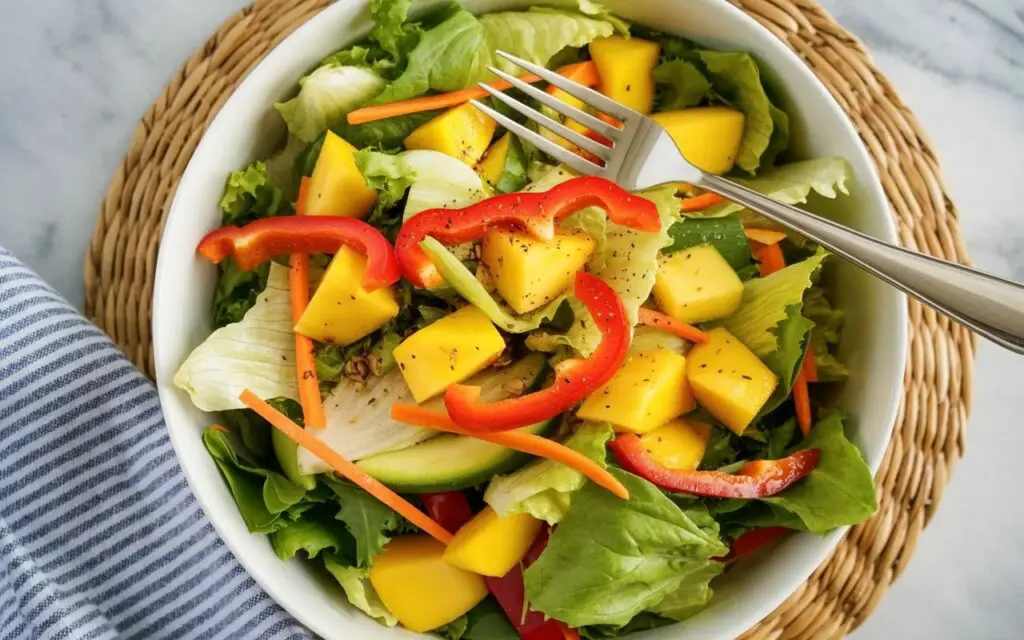
This versatile salad can be served in a variety of ways to impress your guests or simply treat yourself.
- As a Main Course: Serve a generous portion in a large bowl. For a heartier meal, serve it alongside a scoop of coconut rice or quinoa.
- As a Side Dish: This salad pairs beautifully with grilled fish, satay skewers, or summer rolls.
- In Lettuce Wraps: Spoon the salad into large, crisp lettuce cups (like iceberg or butter lettuce) for a fun, interactive appetizer.
- Potluck Perfect: To keep it fresh for a gathering, transport the dressing separately and toss everything together just before serving. Data shows that salads are among the top 5 most popular potluck dishes, and this one is guaranteed to be a standout.
Common Mistakes to Avoid
To ensure your salad is perfect every time, here are a few common pitfalls to sidestep.
- Overdressing the Salad: A common error is adding all the dressing at once. This can make the delicate greens soggy. Start with half the dressing, toss, and add more only if needed.
- Using Overripe Mangos: While delicious for snacking, mushy mangos will not hold their shape in a salad. Use mangos that are ripe but still firm. A gentle press should have a slight give, but not feel soft.
- Not Letting the Dressing Rest: Whisking the dressing and immediately using it robs you of flavor. Allowing it to sit for at least 10 minutes lets the garlic and chili infuse into the liquid, creating a more cohesive and potent taste.
- Forgetting the Garnish: The peanuts and cilantro are not just for show. They are crucial for the final texture and flavor profile. Don’t skip them!
Storing Tips for the Recipe
Proper storage is key to enjoying this salad later.
- Leftovers: If you anticipate leftovers, serve the dressing on the side. Store the undressed salad in an airtight container in the refrigerator for up to 2 days. The dressing can be stored separately in a jar for up to a week.
- Meal Prep: You can chop all the vegetables and prepare the dressing ahead of time. Store them in separate airtight containers in the fridge. When you’re ready to eat, just toss everything together for a meal in minutes.
Conclusion
This Thai Mango Salad recipe is a perfect embodiment of what makes Thai food so beloved worldwide: a masterful balance of sweet, sour, salty, and spicy. It’s a dish that is as nourishing as it is delicious, bursting with fresh ingredients and vibrant colors. In just 20 minutes, you can create a healthy, satisfying meal that will transport your taste buds to a tropical paradise. It’s more than just a salad; it’s an experience.
We invite you to try this recipe and share your culinary adventure with us! Leave a comment below with your feedback or any creative twists you added. Don’t forget to subscribe to our blog for more exciting recipes and cooking tips delivered straight to your inbox!
FAQs
1. Can I make this salad with green, unripe mangos? Absolutely! Traditional Thai mango salad often uses green mangos for a tart, crunchy texture. If you use green mangos, you may want to add a little extra maple syrup or honey to the dressing to balance the sourness.
2. Is this recipe gluten-free? Yes, as long as you use tamari instead of regular soy sauce, this recipe is completely gluten-free.
3. How spicy is this salad? The spice level is easily adjustable. For a mild salad, omit the jalapeño and the red pepper flakes. For a medium heat, use half a jalapeño. For a fiery kick, use a whole jalapeño or even a Thai chili.
4. Can I make this recipe nut-free? Yes. For the dressing, use sunflower seed butter (SunButter) instead of peanut butter. For the garnish, swap the peanuts for toasted pumpkin seeds or sunflower seeds for a similar crunch.
5. What is the best way to dice a mango? The easiest way is to slice the “cheeks” off the mango, cutting around the large central pit. Then, carefully score the flesh of each cheek in a grid pattern without cutting through the skin. Finally, use a spoon to scoop the diced mango away from the skin.