



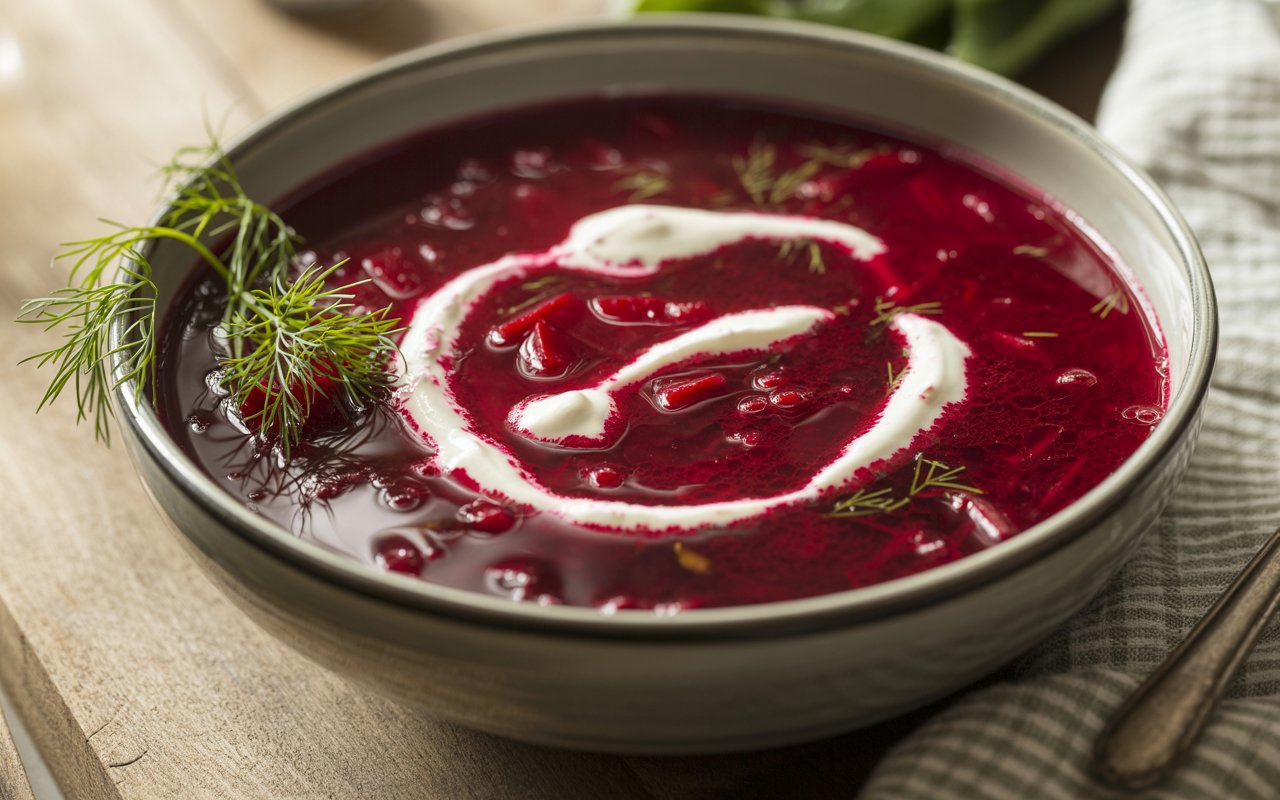
Did you know that borscht is more than just a beet soup—it’s a cultural icon across Eastern Europe, celebrated in Ukraine, Poland, and Russia with countless regional twists? This borscht recipe captures the essence of those traditions: a vibrant, ruby-red broth brimming with tender beets, cabbage, potatoes, and aromatic herbs. Unlike stovetop recipes demanding hours of simmering, our streamlined method delivers deeply flavored borscht in just over an hour, thanks to a quick sauté and strategic layering of ingredients iFoodReal.comThe Guardian. Whether you serve it piping hot on a cold day or chilled for a refreshing summer starter, this soup brings balanced sweetness, gentle tang, and satisfying heartiness to every spoonful. Get ready to explore how simple pantry staples transform into a comforting bowl that’s steeped in history and flavor.
- Ingredients List
- Timing
- Step-by-Step Instructions
- Step 1: Sauté aromatics
- Step 2: Add root vegetables
- Step 3: Incorporate potatoes and cabbage
- Step 4: Season and tomato paste
- Step 5: Build the broth
- Step 6: Balance sweetness and acidity
- Step 7: Finish with fresh herbs
- Step 8: Serve hot or cold
- Nutritional Information (per 1½-cup serving)
- Healthier Alternatives for the Recipe
- Serving Suggestions
- Common Mistakes to Avoid
- Storing Tips for the Recipe
- Ready to Taste Eastern Europe? Try This Borscht Today!
- FAQs
Ingredients List
| Ingredient | Quantity | Purpose & Flavor | Substitution Ideas |
|---|---|---|---|
| Olive oil | 2 Tbsp | Medium for sautéing aromatics | Sunflower oil |
| Yellow onion, finely chopped | 1 large (200 g) | Sweet, savory base | Shallots |
| Garlic cloves, minced | 3 cloves | Pungent depth | Granulated garlic (¼ tsp) |
| Beets, peeled & grated or diced | 3 cups (450 g) | Earthy sweetness, signature color | Canned beets (drained & chopped) |
| Carrots, peeled & sliced | 1 cup (120 g) | Natural sweetness, slight crunch | Parsnips |
| Russet potatoes, peeled & cubed | 2 cups (300 g) | Hearty body, creamy texture | Yukon Gold potatoes |
| Cabbage, shredded | 2 cups (120 g) | Mild sweetness, bulk | Savoy cabbage |
| Tomato paste | 2 Tbsp | Concentrated tartness, rich color | Crushed tomatoes (¼ cup) |
| Bay leaf | 1 | Herbaceous warmth | Dried thyme (½ tsp) |
| Vegetable or beef broth | 6 cups (1.44 L) | Liquid base; savory depth | Water + bouillon paste |
| Sugar | 1 tsp | Balances acidity | Honey or agave syrup |
| Red wine or apple cider vinegar | 2 Tbsp | Bright sour note | Lemon juice (1 Tbsp) |
| Fresh dill, chopped | 2 Tbsp | Herbal freshness | Parsley or chives |
| Sour cream (for serving) | Optional | Creamy garnish, tang | Greek yogurt |
Timing

- Prep: 15 minutes
- Cook: 50 minutes
- Total: Approximately 1 hour 5 minutes
Step-by-Step Instructions
Step 1: Sauté aromatics
Heat olive oil in a large heavy-bottomed pot over medium heat. Add chopped onion and sauté 5 minutes until translucent. Stir in garlic and cook 30 seconds, stirring constantly to avoid burning.
Step 2: Add root vegetables
Stir in grated beets and sliced carrots. Cook 5–7 minutes, stirring occasionally, to release their natural sugars and deepen color. This quick sauté builds foundational sweetness.
Step 3: Incorporate potatoes and cabbage
Add cubed potatoes and shredded cabbage to the pot. Stir to combine with the beet-carrot mixture. The potatoes add body, while the cabbage lends bulk and mild sweetness.
Step 4: Season and tomato paste
Push vegetables to the sides and add tomato paste to the center of the pot. Cook 1 minute, stirring, until the paste darkens slightly. Mix thoroughly to coat all vegetables in the concentrated tomato flavor.
Step 5: Build the broth
Pour in broth and add bay leaf. Raise heat to high and bring to a gentle boil. Reduce heat to medium-low, cover partially, and simmer 30 minutes, stirring occasionally, until beets and potatoes are fork-tender iFoodReal.com.
Step 6: Balance sweetness and acidity
Stir in sugar and vinegar. Taste the borscht: it should be sweet, sour, and savory in harmony. Adjust by adding a pinch more sugar to cut sharpness or a dash more vinegar to lift the flavors.
Step 7: Finish with fresh herbs
Remove the bay leaf. Stir in chopped dill or parsley for brightness and an authentic finish. The fresh herbs provide a fragrant contrast to the rich, earthy soup.
Step 8: Serve hot or cold
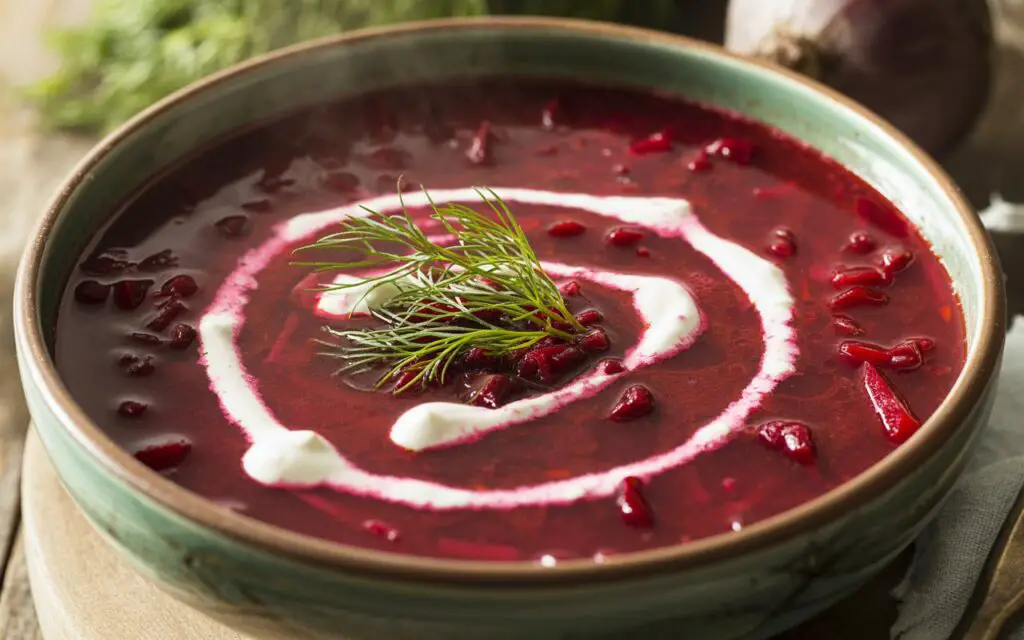
Ladle borscht into bowls. Garnish each serving with a dollop of sour cream and a sprinkle of fresh dill. For a chilled version, cool to room temperature, refrigerate at least 2 hours, then serve with cold garnishes for a refreshing soup.
Nutritional Information (per 1½-cup serving)
| Nutrient | Amount | % Daily Value* |
|---|---|---|
| Calories | 150 kcal | 8% |
| Total Fat | 4 g | 5% |
| Saturated Fat | 0.5 g | 3% |
| Sodium | 480 mg | 21% |
| Carbohydrates | 24 g | 8% |
| Dietary Fiber | 6 g | 24% |
| Sugars | 10 g | — |
| Protein | 4 g | 8% |
| Vitamin A | 200% DV | |
| Vitamin C | 90% DV | |
| Iron | 10% DV |
*Percent Daily Values based on a 2,000-calorie diet. Nutrition data compiled from Spend With Pennies and USDA sources iFoodReal.com.
Healthier Alternatives for the Recipe
- Lower sodium: Use low-sodium broth and skip added salt—tweak seasoning at the end instead.
- Lower sugar: Omit the teaspoon of sugar; rely on naturally sweet carrots and beets to balance acidity.
- Boost protein: Stir in ½ cup cooked white beans or lentils for extra fiber and plant-based protein.
- Gluten-free option: Ensure tomato paste and broth are gluten-free; all other ingredients are naturally GF.
- Vegan version: Serve without sour cream or use a dairy-free yogurt for garnish for a fully plant-based borscht.
Serving Suggestions
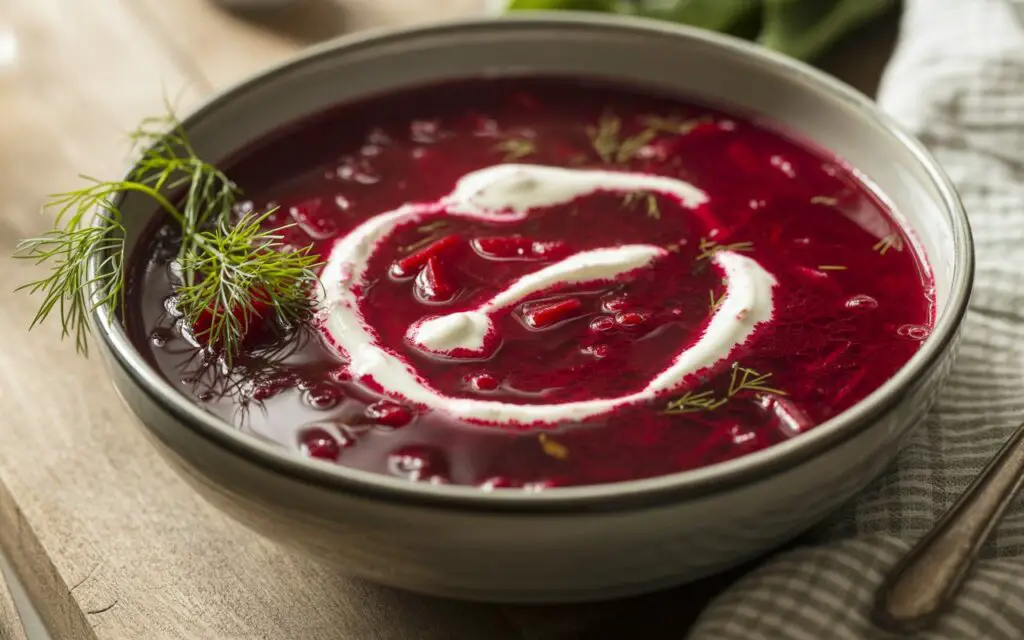
- Traditional sides: Accompany borscht with rye bread or pumpernickel for dipping into the rich broth.
- Eastern European platter: Pair with pierogi, stuffed cabbage rolls, or smoked sausage for a hearty spread inspired by regional classics Allrecipes.
- Light lunch: Serve with a crisp cucumber salad dressed in dill and vinegar for a balanced midday meal.
- Garnish bar: Set out toppings like chopped hard-boiled egg, fresh dill, croutons, and additional sour cream for DIY customization.
Common Mistakes to Avoid
- Overcooking beets: Simmer just until tender; overly soft beets can leach too much color and turn the soup muddy.
- Skipping tomato paste caramelization: Cooking the paste brings out sweetness and depth—don’t add it directly to cold broth.
- Neglecting seasoning layers: Season lightly at each stage—during sauté, after simmering, and at the end—to build balanced flavor.
- Serving too hot or too cold: Borscht tastes best either steaming hot or fully chilled; lukewarm soup can seem dull.
Storing Tips for the Recipe
- Refrigeration: Store cooled borscht in airtight containers up to 4 days. Flavors deepen over time—reheat gently or serve cold.
- Freezing: Freeze portions (without sour cream) for up to 3 months. Thaw overnight in the fridge; stir in fresh herbs and sour cream before serving.
- Make-ahead: Prepare through simmering step and refrigerate. Reheat, then finish with herbs and garnishes for a quick dinner on busy nights.
Ready to Taste Eastern Europe? Try This Borscht Today!

You’ve just unlocked a vibrant, data-driven borscht recipe that’s as versatile as it is delicious. From its bright beet base to the harmonious sweet-tart balance and refreshing dill finish, this soup brings a taste of Ukrainian and Polish heritage to your table in just over an hour. Gather your fresh produce, fire up that pot, and let the aromas of slow-simmered beets fill your kitchen. Once you’ve savored your first bowl, leave a comment with your favorite twist, rate this recipe, and subscribe for more globally inspired, nutrient-rich dishes!
FAQs
Can I make borscht completely ahead of time?
Yes—make the soup up through the chilling step up to 24 hours in advance. Reheat or serve cold, then add sour cream and fresh dill just before serving.
Is borscht traditionally served hot or cold?
Both! In Eastern Europe, hot borscht is popular in cooler months, while chilled borscht—often called “zakuski”—refreshes in summer.
What’s the best way to peel beets?
After simmering, slip the skins off with gloved hands or under running water; raw beets can be peeled with a vegetable peeler before cooking.
How can I deepen the soup’s color?
Stir in a tablespoon of natural beet powder or add a few tablespoons of the reserved beet cooking liquid for an extra vibrant hue.
What garnishes work well besides sour cream?
Try a drizzle of high-quality olive oil, chopped chives, crumbled feta, or a swirl of vegan cashew cream for varied textures and flavors.
Enjoy creating and sharing this classic Eastern European borscht—each bowl tells a story of tradition, color, and comforting flavor!