


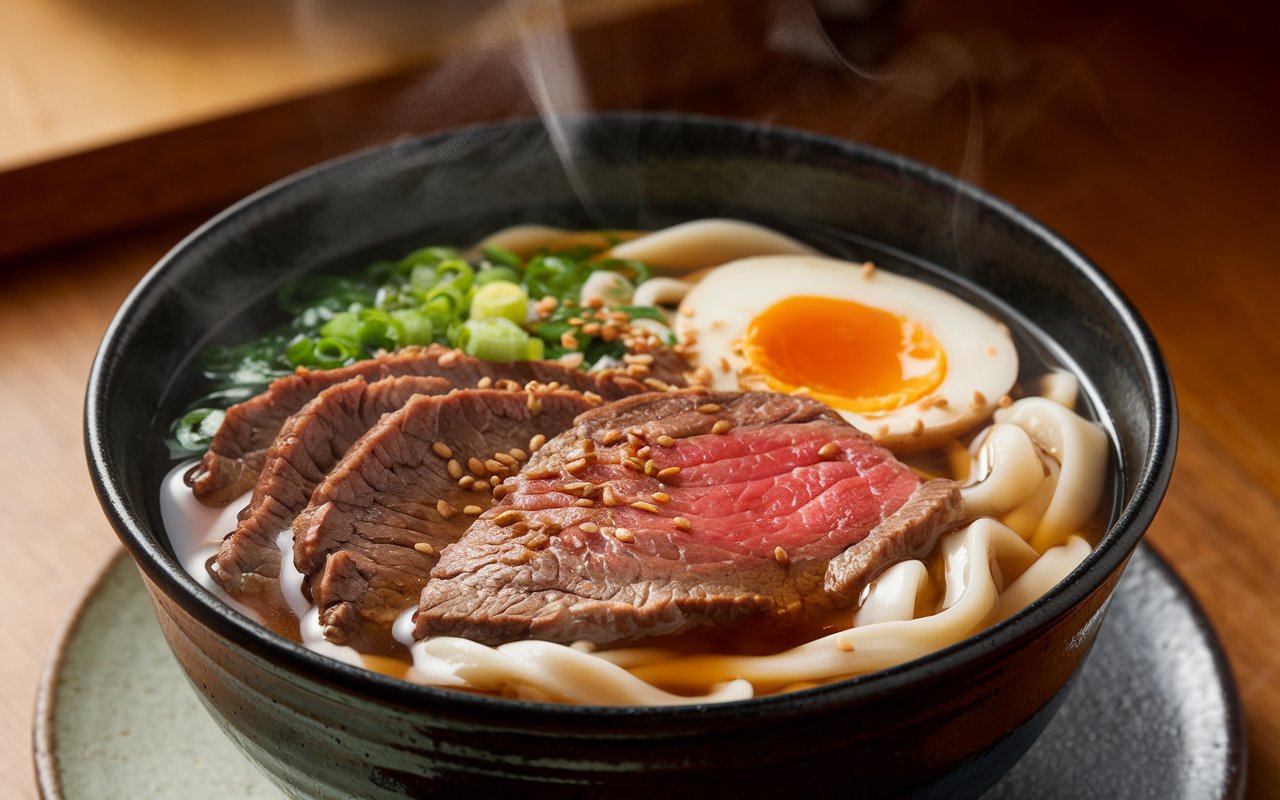
Imagine a steaming bowl of tender beef slices, thick, chewy udon noodles, and a comforting broth that mingles soy sauce, dashi, and subtle aromatics. Japanese Beef & Udon Noodle Soup – Warm Savory Broth brings these elements together in a single pot, embodying the essence of home-style Japanese cooking. Whether you’re battling a chilly day or seeking a quick but hearty meal, this soup balances satisfaction, ease, and authentic flavors.
- Why Udon Noodles and Beef?
- Key Ingredients in Table Form
- Step-by-Step Preparation
- 1. Broth Setup (10–15 minutes)
- 2. Cook or Reheat Udon (2–10 minutes)
- 3. Prepare Beef (3–5 minutes)
- 4. Combine & Serve (Immediate)
- Achieving Savory Depth
- Serving & Presentation
- Possible Variations
- Dietary & Health Notes
- Storing & Reheating
- Frequently Asked Questions
- Conclusion
In this comprehensive guide, you’ll learn how to prepare or select the right beef cut, cook udon noodles for ideal chew, and craft a mild-yet-savory broth that sets Japanese noodle soups apart. We’ll present a table of essential ingredients, step-by-step instructions, plus tips for adding garnishes like green onions or a soft-boiled egg. By the end, you’ll be able to re-create a bowl reminiscent of Japanese family kitchens and noodle shops, bridging comfort and culture in every spoonful.
Why Udon Noodles and Beef?

- Hearty & Filling
Udon noodles boast a thick, chewy texture that helps the soup feel substantial. Coupled with tender beef slices, it becomes a protein-rich, soul-warming meal. - Gentle Flavors, Versatile
Typical Japanese soup bases (dashi, soy sauce, mirin) impart umami without overpowering. That subtlety allows each component—noodles, meat, vegetables—to shine. - Quick Cooking
Udon noodles often cook in minutes. Thinly sliced beef also takes minimal time to sear or simmer in broth, leading to a relatively fast dish. - Comfort Food Appeal
Similar to chicken noodle soup in Western cuisine, a steaming bowl of beef udon can soothe, nourish, and satisfy cravings for something warm and savory.
Key Ingredients in Table Form
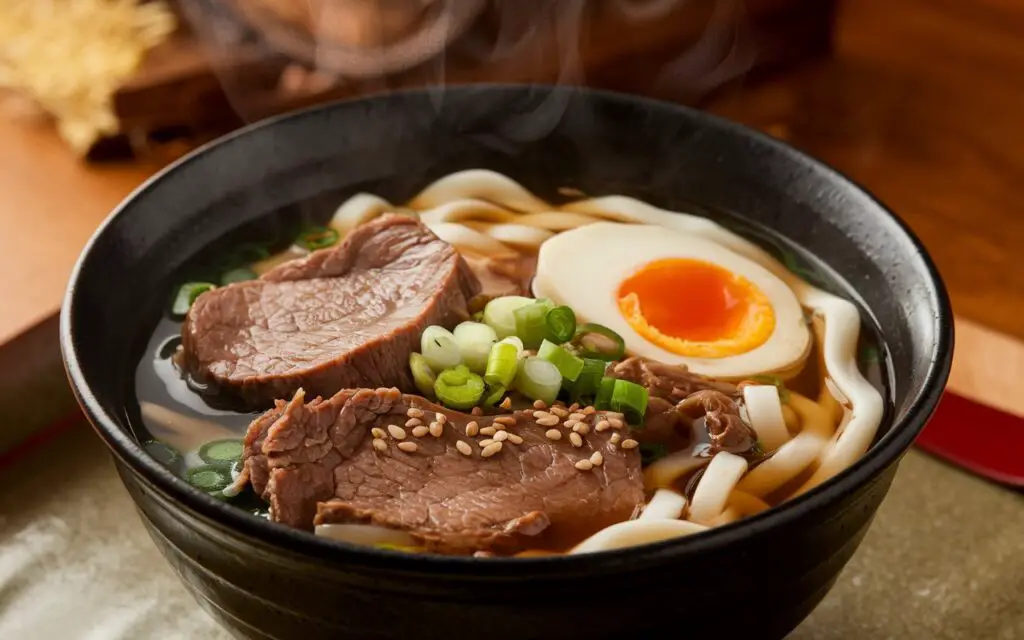
Here’s a concise overview for ~4 servings:
| Ingredient | Quantity (Approx.) | Purpose / Notes |
|---|---|---|
| Beef (thinly sliced) | ~3/4 lb (sirloin/ribeye) | Slices cook quickly; a marbled cut ensures tenderness and flavor. |
| Udon Noodles (fresh/frozen/dry) | ~3–4 packs (8 oz total) | Thick Japanese noodles for chewy texture. Adjust quantity for portion size. |
| Dashi or Beef Broth | ~6 cups | Base liquid; dashi imparts authentic Japanese flavor, or use beef stock if none. |
| Soy Sauce (low-sodium) | ~3 tbsp | Salty element for the soup base. |
| Mirin or Rice Vinegar | 2 tbsp | Adds mild sweetness or tang (mirin is sweeter). |
| Onion (thinly sliced) | 1 medium | Common in beef udon for extra sweetness. |
| Ginger (minced) | 1 inch piece | Subtle aromatic; can skip if you prefer a simpler broth. |
| Oil (sesame/vegetable) | 1–2 tbsp | Light sear for beef, if needed. |
| Salt & Pepper | To taste | Basic seasoning. |
| Green Onions (chopped) | ~2–3 (garnish) | Fresh pop of color/flavor. |
| Optional Toppings (egg, mushrooms) | Varies | Soft-boiled egg, sliced mushrooms, or spinach for extra dimension. |
Step-by-Step Preparation
1. Broth Setup (10–15 minutes)
- Dashi or Broth: If using dashi, prepare it by steeping kombu and bonito flakes (classic method) or use instant dashi powder in ~6 cups water. Alternatively, choose beef or vegetable broth.
- Flavor Infusion: Add 3 tablespoons soy sauce, 2 tablespoons mirin (or a pinch of sugar + 1 tablespoon vinegar if no mirin), plus salt or pepper to adjust taste.
- Onion & Ginger: Stir in 1 sliced onion and 1 teaspoon minced ginger. Bring to a gentle simmer, letting flavors merge ~5–10 minutes.
2. Cook or Reheat Udon (2–10 minutes)
- Fresh/Frozen: Typically 1–2 minutes in boiling water or a quick microwave.
- Dried: Follow package instructions (usually ~8 minutes). Drain thoroughly.
- Prevent Sticking: If not adding immediately to soup, rinse with cold water and toss with a tiny bit of oil or place in room-temperature water until needed.
3. Prepare Beef (3–5 minutes)
- Thin Slicing: If not pre-sliced, partially freeze the beef for 15 minutes, then slice across the grain as thin as possible (~1/8 inch).
- Sear or Poach:
- Sear Method: Briefly cook beef slices in a hot skillet with 1 tablespoon oil, 1–2 minutes per side. Then set aside.
- Poach in Broth: Another approach is to slip raw slices into the simmering broth near the end. Cook until just opaque, ~1–2 minutes.
4. Combine & Serve (Immediate)
- Noodle Bowls: Divide cooked udon among 4 bowls.
- Add Broth: Ladle the hot broth with onions over noodles.
- Top with Beef: Place seared or poached beef slices on top.
- Garnish: Sprinkle chopped green onions, optional drizzle of sesame oil, or place a soft-boiled egg if desired.
Achieving Savory Depth
- Dashi Authenticity
Using real dashi (kombu + bonito flakes) supplies a distinct Japanese umami. If not available, a mix of half beef stock / half water can approximate meaty depth. - Marinate Beef
Some prefer a short marinade in soy sauce, mirin, and ginger to intensify flavor. Don’t over-marinate or the beef might toughen. - Onion Caramelization
For a sweeter note, sauté onions in a little oil before adding to broth. This step is optional but can enhance the soup’s complexity.
Serving & Presentation
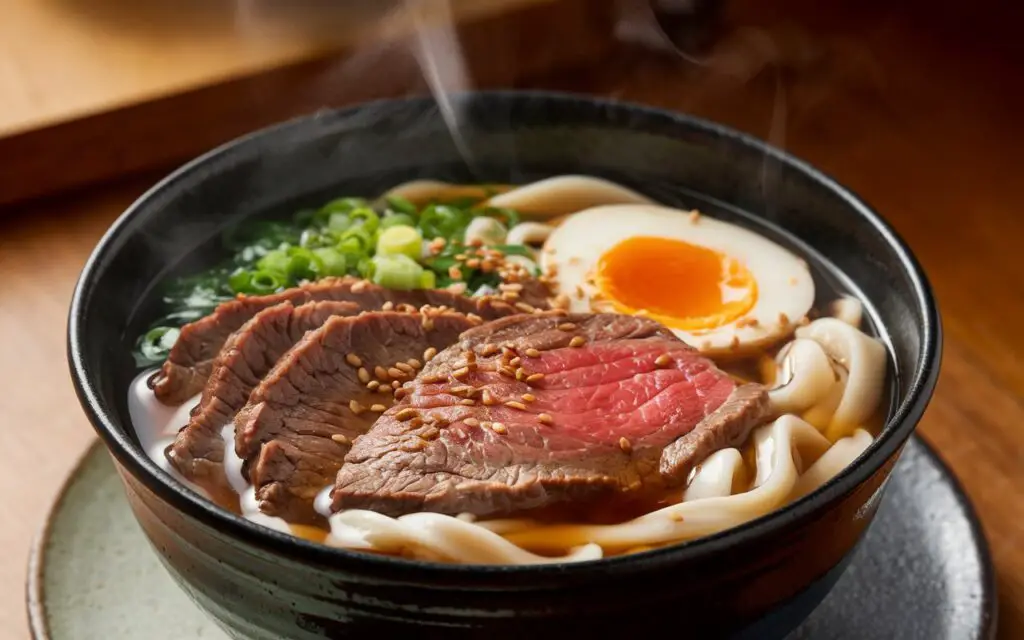
- Individual Bowls: Let each diner enjoy the layered presentation—udon at the bottom, beef slices, garnishes on top.
- Condiments: Offer soy sauce, chili oil, shichimi togarashi (Japanese chili seasoning), or even grated daikon radish for customization.
- Slurping Etiquette: In Japanese culture, slurping noodles is a sign of enjoyment. Encourage diners to savor the soup authentically.
Possible Variations
- Vegetables
Add bok choy, spinach, or mushrooms for a more veggie-laden soup. - Different Proteins
Swap beef for chicken, pork, or even tofu. The cooking method remains similar, though times vary. - Spicy Kick
A spoonful of chili-garlic paste or a drizzle of la-yu (Japanese chili oil) can bring heat. - Richer Broth
A dash of miso paste or a swirl of cream can produce a more decadent mouthfeel, though less traditional.
Dietary & Health Notes
- Protein & Carbs
Udon noodles are wheat-based, providing carbs. Beef ensures ample protein. - Lower Carb Option
Replace udon with shirataki noodles or zucchini noodles if you’re cutting carbs, though it changes the classic texture. - MSG or Not
Some dashi powders contain MSG. If you’re sensitive, choose MSG-free brands or rely on homemade stock.
Storing & Reheating
- Separate Components: For best leftover results, keep broth, noodles, and beef separate in the fridge up to 2 days.
- Reheat Gently: Bring broth to a simmer, warm the beef in the broth, and add noodles briefly to re-soften. Overcooking noodles = mushy texture.
- Freezing: Not ideal. Cooked udon and beef can degrade in texture after thawing.
Frequently Asked Questions
Q1: Could I use store-bought beef broth if I don’t have dashi?
Yes. It won’t be as authentically Japanese, but the result remains delicious.
Q2: Is there a leaner beef cut recommended?
Sirloin or top round can work if sliced paper-thin, but marbled cuts like ribeye ensure more flavor. Trim excess fat if desired.
Q3: Any gluten-free noodle substitute?
Rice noodles or gluten-free ramen can replicate a similar soup structure, though it’s no longer “udon” in the strict sense.
Q4: Why do my noodles get soggy?
Avoid overboiling. Cook them just to al dente, rinse with cold water if not serving immediately, then rewarm lightly in broth.
Q5: Could I make it more shabu-shabu style?
Yes—keep the broth hot in a pot, and swish very thin beef slices in it briefly at the table. The communal approach is fun, but it shifts the serving style.
Conclusion

Japanese Beef & Udon Noodle Soup – Warm Savory Broth merges tender beef slices, thick and springy udon noodles, and a gentle yet savory broth for a bowl that exemplifies comforting Japanese home cooking. The interplay of beef’s richness, the onion-ginger undertones, and the satisfying chew of udon creates a meal that warms both body and soul—perfect for cooler evenings or whenever you crave a nourishing, umami-laced delight.
From selecting the right cut of beef to preparing or buying udon, each step fosters a harmony of textures and flavors reminiscent of Japanese noodle shops. Whether you add extra vegetables, spice it up with chili oil, or garnish with a soft-boiled egg, you’ll find endless ways to personalize the soup while retaining its core essence. Serve it piping hot, encouraging diners to slurp the noodles in true Japanese fashion—and experience a take on classic udon that’s at once familiar, soul-satisfying, and undeniably hearty.