


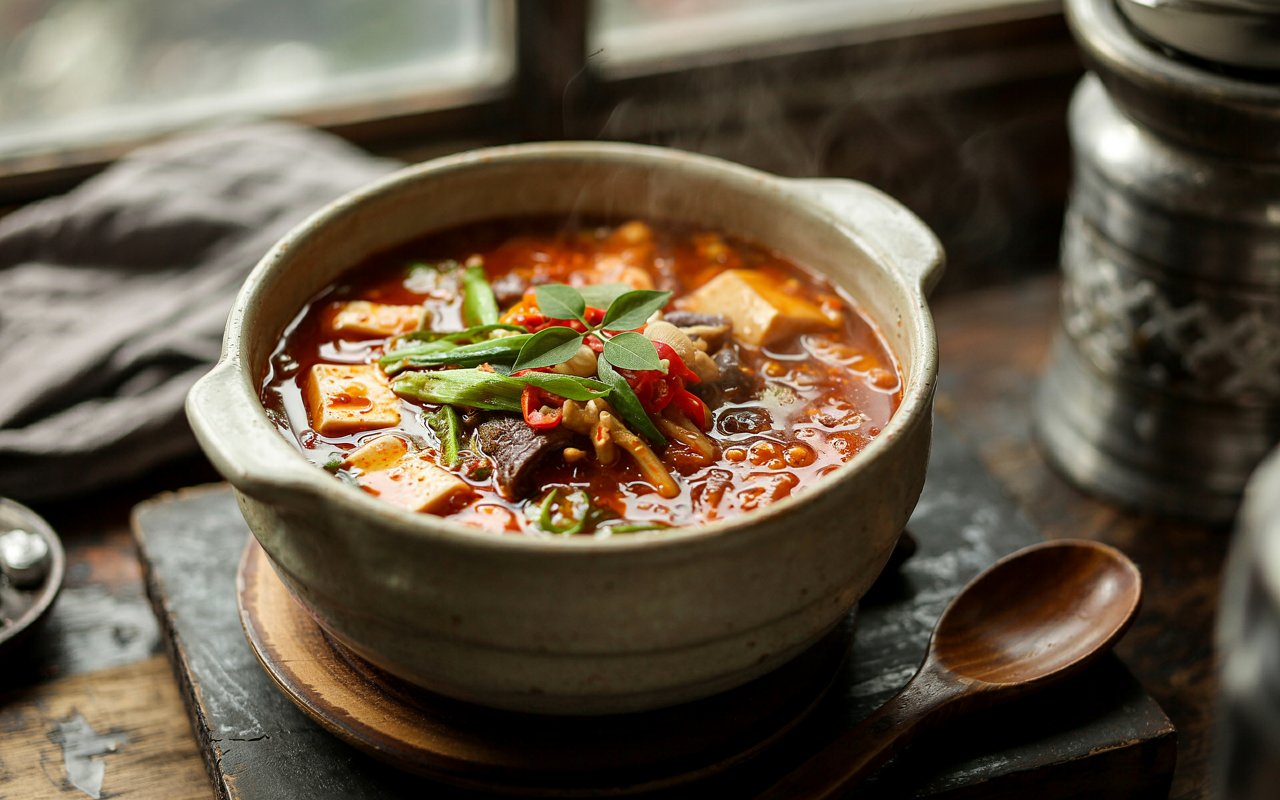
Imagine a bubbling stew that warms you from the inside out—a vibrant, spicy broth featuring silky soft tofu, crisp vegetables, and an optional burst of protein that elevates every spoonful. Korean Spicy Tofu Stew (Soondubu Jjigae) is a comforting Korean classic that marries fiery flavors with delicate textures, offering both intense heat and soothing creaminess. Every bowl tells a story of tradition and innovation: the broth is infused with aromatic garlic, ginger, and robust gochugaru and gochujang, while the soft tofu melts in your mouth. I vividly recall the first time I savored an authentic Soondubu Jjigae—the steamy aroma, the harmonious blend of spice and subtle tang, and the satisfying contrast between tender vegetables and velvety tofu. Whether you’re craving a quick, hearty lunch or a soul-soothing dinner on a chilly evening, this stew delivers a culinary embrace that nourishes both body and spirit.
The Inspiration Behind the Dish
My journey into the world of Korean cuisine introduced me to a realm where food is not merely sustenance but an art form that balances heat, texture, and deep umami. Soondubu Jjigae, traditionally served bubbling in a hot stone pot, captured my heart with its unpretentious yet layered complexity. Rooted in home-style cooking and street food traditions, this dish was inspired by the idea of transforming humble ingredients—like soft tofu and seasonal vegetables—into an extraordinary symphony of flavors. Over time, I experimented by adding my own twists, such as a dash of fish sauce or a sprinkle of toasted sesame seeds, while remaining true to the dish’s authentic soul. The result is a stew that is accessible to everyday cooks but feels sophisticated enough to be served at a family gathering, embodying the spirit of Korean culinary heritage.
Ingredient Insights & Nutritional Harmony

Every component in Korean Spicy Tofu Stew is chosen for its flavor and health benefits. Soft tofu, known for its gentle texture and high-quality plant protein, forms the heart of the dish, providing both creaminess and subtle nourishment. The robust spices like gochugaru (Korean red pepper powder) and gochujang (fermented chili paste) not only deliver a spicy kick but are also renowned for their metabolism-boosting properties. Fresh vegetables such as zucchini, mushrooms, and onions add essential vitamins, minerals, and fiber, ensuring that the stew is as nutritious as it is satisfying. Optional protein additions—whether seafood, pork, or even a poached egg—can further enhance the dish’s protein profile while keeping it versatile. Together, these ingredients form a dish that is balanced in macronutrients and rich in antioxidants, making it an ideal comfort food that supports a healthy lifestyle.
Key Ingredients & Their Role
- Soft Tofu: The star ingredient, soft tofu contributes a delicate, melt-in-your-mouth quality, absorbing the spicy broth to become a harmonious part of every bite.
- Gochugaru & Gochujang: These red pepper products are essential for creating the stew’s signature heat and depth, lending both vibrant color and a robust umami flavor.
- Aromatics (Garlic & Ginger): Provide a warm, fragrant base that enhances the overall complexity of the stew and supports digestion.
- Vegetables (Zucchini, Mushrooms, Onions): Offer texture, moisture, and a variety of nutrients, balancing the richness of the broth while adding an earthy depth.
- Optional Protein: For those desiring an extra layer of heartiness, protein options such as seafood, pork slices, or even a soft-cooked egg can be incorporated, making the dish more substantial.
- Broth Base (Water or Stock): Acts as the canvas upon which all these dynamic flavors converge, ensuring that every spoonful is aromatic and full-bodied.
- Seasonings (Soy Sauce, Fish Sauce, Sesame Oil): These ingredients help to round out the flavors, adding saltiness, complexity, and a final nutty aroma to the finished stew.
Ingredients Table
| Ingredient | Quantity | Purpose/Notes |
|---|---|---|
| Soft Tofu | 1 (14-16 oz) package, drained and cubed | The centerpiece of the stew; choose silken or soft tofu for authentic texture |
| Gochugaru (Korean Red Pepper Powder) | 1-2 tablespoons, adjust to taste | Provides the characteristic heat and vibrant color |
| Gochujang (Korean Chili Paste) | 1-2 tablespoons | Adds depth, umami, and a slight sweetness to balance the spice |
| Garlic Cloves | 4 cloves, minced | Infuses the broth with rich, aromatic flavor |
| Fresh Ginger | 1 tablespoon, grated | Offers a zingy, warming spice that complements the garlic |
| Zucchini | 1 medium, sliced into half-moons | Adds a tender crunch and moisture to the stew |
| Mushrooms (shiitake or button) | 1 cup, sliced | Contributes earthy flavors and a satisfying texture |
| Yellow Onion | 1 small, thinly sliced | Provides sweetness and depth once softened |
| Optional Protein (Seafood, Pork, Egg) | 8-10 oz (as desired) | Can be added for extra heartiness; if using egg, add after cooking; if seafood/pork, sear first |
| Water or Chicken/Vegetable Broth | 4 cups | The base of the stew; broth adds more flavor than water alone |
| Soy Sauce | 2 teaspoons | Enhances umami and balances the heat |
| Fish Sauce (optional) | 1 teaspoon | Adds extra depth of flavor and saltiness (optional for vegetarians) |
| Sesame Oil (optional) | 1 teaspoon | Drizzle at the end for a nutty aroma |
| Salt and Black Pepper | To taste | Essential for balancing and enhancing flavors |
| Scallions (for garnish) | 1/4 cup, thinly sliced | Adds a fresh, crisp finish |
| Toasted Sesame Seeds (for garnish) | 1 teaspoon | Provides extra texture and a subtle nutty flavor |
Step-by-Step Recipe Instructions
- Prepare the Ingredients:
- Begin by draining the tofu and cutting it into 1-inch cubes. If desired, gently pat the tofu dry with paper towels to remove excess moisture, which helps it absorb the flavors better.
- Clean and slice the zucchini into half-moons, mushrooms into slices, and onion into thin strips. Mince the garlic and grate the fresh ginger.
- If you plan to add an optional protein (such as thinly sliced pork or seafood), prepare these ingredients by slicing them into bite-sized pieces. For a soft egg, you can set aside a soft-boiled egg to add later.
- Heat the Broth:
- In a large, deep pot or a traditional Korean earthenware bowl (ttukbaegi), bring 4 cups of water or chicken/vegetable broth to a gentle simmer over medium heat. This forms the flavorful base of the stew.
- Infuse the Broth with Aromatics & Spices:
- Add the minced garlic, grated ginger, and sliced onions to the simmering broth. Allow these aromatics to infuse for 3-4 minutes, stirring occasionally.
- Stir in 1-2 tablespoons of gochugaru and 1-2 tablespoons of gochujang, adjusting the quantities based on your desired level of heat. Allow the spices to meld into the broth for another 2 minutes.
- Add Vegetables:
- Toss in the sliced zucchini and mushrooms. Let the stew simmer for an additional 5-7 minutes until the vegetables begin to soften but still retain a slight crunch. This step creates a wonderful textural balance in the dish.
- Incorporate Soft Tofu:
- Gently add the cubed tofu to the simmering broth. Stir carefully to ensure the tofu is evenly distributed, taking care not to break it up. Let the stew continue to simmer for another 3-4 minutes, allowing the tofu to warm through and absorb the spicy broth’s flavors.
- Optional Protein Addition:
- If you are including an optional protein like seared pork or seafood, add it now and let it simmer briefly until heated through. If you choose to top the stew with a soft-boiled egg, you can add it at the very end by placing the halved egg gently on top of the stew.
- Final Seasoning and Garnish:
- Taste the stew and adjust seasoning with salt, a dash of soy sauce, and, if using, fish sauce for an extra layer of depth. For a final burst of flavor, you may drizzle a teaspoon of sesame oil over the stew.
- Garnish with a generous scattering of thinly sliced scallions and toasted sesame seeds for an added crunchy, aromatic finish.
- Serve Immediately:
- Ladle the steaming Korean Spicy Tofu Stew into individual bowls. Serve hot, ideally with a side of steamed rice or with a small dish of kimchi to complement the bold, spicy flavors.
Presentation & Serving Suggestions
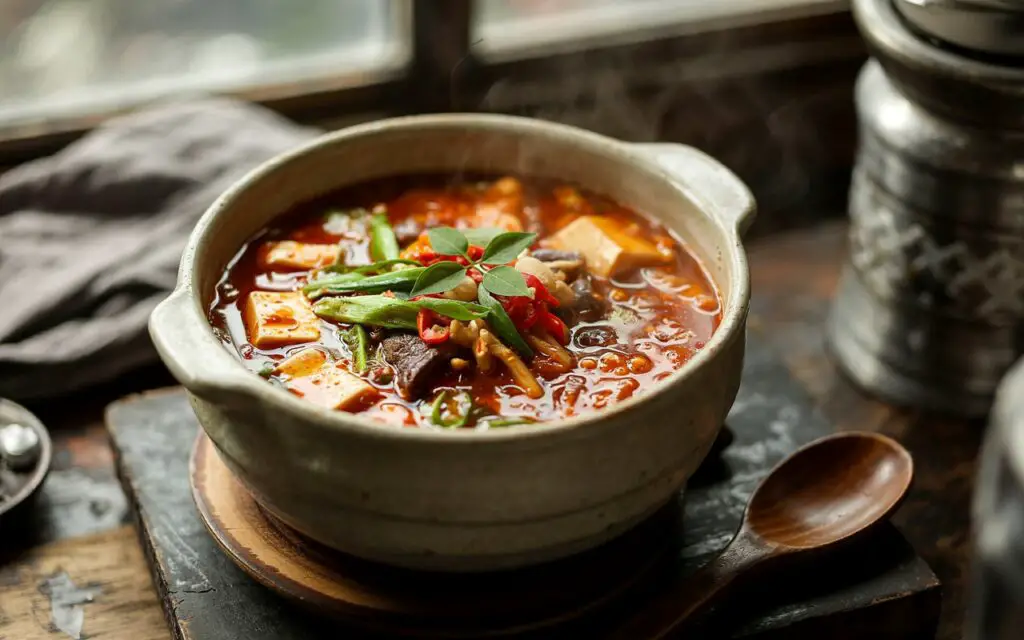
For a restaurant-style presentation, serve the stew in traditional Korean earthenware bowls to keep it piping hot and visually appealing. Accompany the stew with a side of fluffy steamed rice to balance the spice, and offer small side dishes like pickled radish, kimchi, or a crisp cucumber salad to enhance the meal’s freshness. A drizzle of extra sesame oil or a sprinkle of red chili flakes on the top can further personalize the flavor according to individual taste.
Tips & Tricks for Maximum Flavor
- Maintain High Heat Initially:
Ensure that your pot is sufficiently hot when adding the tofu to help it absorb the flavor of the broth without disintegrating. - Gentle Handling:
Stir the tofu very gently to maintain its integrity; it should remain in distinct, soft cubes that contrast beautifully with the spicy broth. - Adjusting Spice Levels:
Gochugaru and gochujang vary in heat intensity depending on the brand. Start with lower amounts if you’re sensitive to spice, and gradually increase after tasting. - Optional Protein:
For a heartier stew, consider adding a modest amount of sliced pork, seafood, or even a poached egg. Each variation introduces a different layer of flavor while keeping the dish balanced. - Aromatic Finish:
Garnish with fresh scallions and toasted sesame seeds just before serving to preserve their texture and vibrant taste. - Broth Consistency:
If you prefer a slightly thicker broth, allow the stew to simmer uncovered for an extra few minutes, but be cautious not to over-reduce and lose the delicate balance.
Frequently Asked Questions (FAQs)
Q: Can I make this stew completely vegan?
A: Absolutely. Simply omit any animal-based proteins and fish sauce. Use water or vegetable broth as your base, and the dish will retain its full flavor from the spices and vegetables.
Q: What type of tofu works best?
A: Soft or silken tofu is ideal for this dish as it offers a delicate texture that contrasts well with the hearty broth. However, if you prefer a firmer texture, you can use medium tofu—just be careful not to stir too roughly.
Q: Can I prepare this stew ahead of time?
A: Soondubu Jjigae is best enjoyed fresh to preserve the texture of the tofu. If you need to prepare it in advance, store the broth and vegetables separately and gently combine just before serving. Tofu should be added at the last minute to maintain its silky consistency.
Q: How can I control the spice level?
A: Adjust the amounts of gochugaru and gochujang based on your preference. You can always start with a smaller quantity and add more after tasting. If the stew is too spicy, a small squeeze of lime juice can help balance the heat.
Q: What sides complement this stew?
A: Traditional steamed white rice is the perfect complement, as it soaks up the flavorful broth. Additionally, serving a side of kimchi or a light, crisp salad helps balance the spice and adds a refreshing contrast.
Conclusion
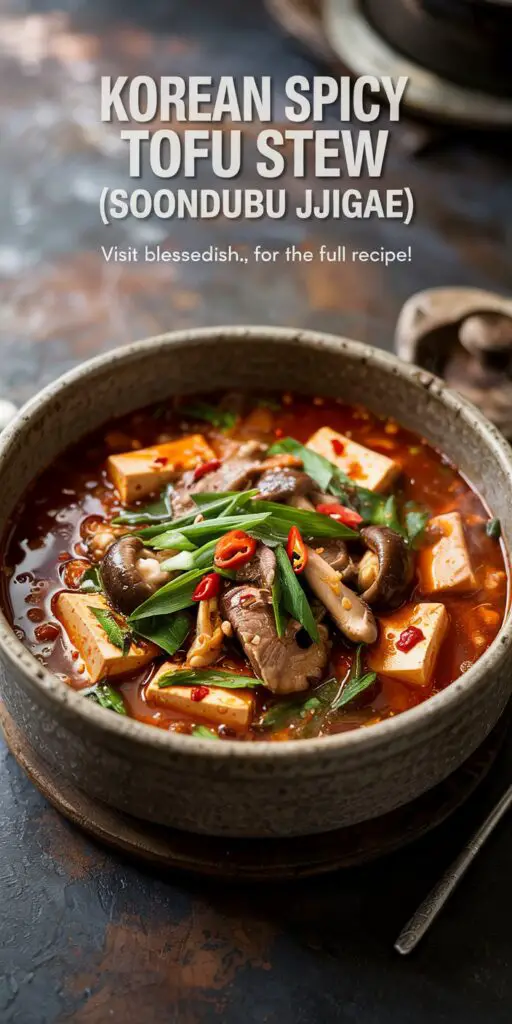
Korean Spicy Tofu Stew (Soondubu Jjigae) is a soul-warming dish that perfectly embodies the dynamic spirit of Korean cuisine. Its silky soft tofu, combined with a robust, spicy broth and vibrant vegetables, creates a comforting and energizing meal ideal for any occasion. Whether you’re a longtime fan of Korean flavors or new to this style of cooking, this stew promises a satisfying burst of heat and heartwarming comfort in every bowl.
I invite you to try this recipe in your kitchen, experiment with your favorite proteins or spice levels, and share your culinary creations with our community. Leave your comments below or tag your photos on social media with #SoondubuJjigaeMagic to connect with fellow food enthusiasts who celebrate the rich, bold flavors of authentic Korean cuisine.
Enjoy your Korean Spicy Tofu Stew, savor every spicy, soothing spoonful, and happy, flavorful cooking!
Bon Appétito!