



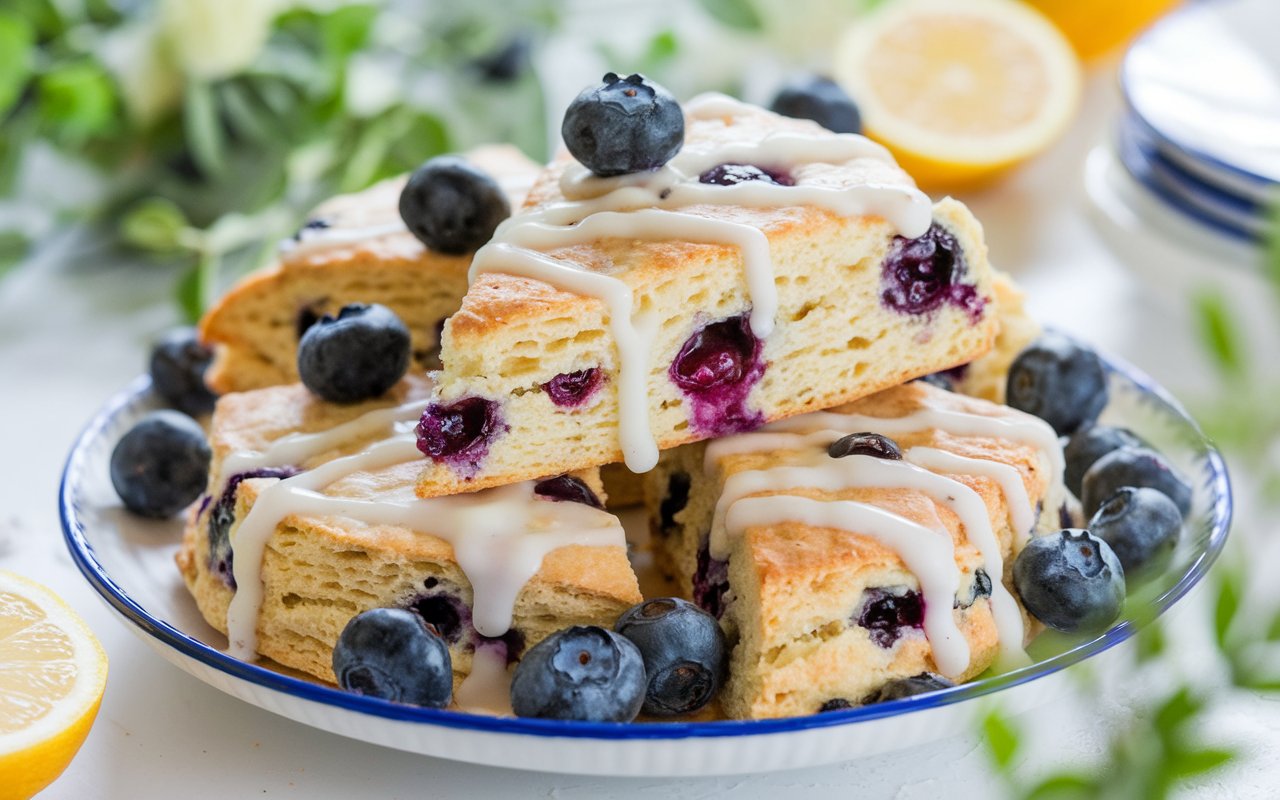
If you’ve ever strolled through a bakery early in the morning, you might have encountered the dreamy aroma of freshly baked scones. Now imagine a batch that pairs tangy lemon zest with bursts of blueberries, forming a pastry that’s crisp on the outside, tender inside, and studded with fruity pockets. Lemon Blueberry Scones exemplify a breakfast treat that’s indulgent yet not overly sweet, perfect for pairing with coffee or tea. With each bite, you get a sparkle of lemon fragrance complementing the warm, juicy blueberries—a combination that can brighten even the grayest morning.
I discovered these scones while craving a pastry that balanced tartness and sweetness. Classic blueberry scones are lovely, but the lemon twist catapults them to a new level, bridging a subtle tang that interplays with the berry’s sweetness. After repeated attempts in my kitchen, I found that chilling the dough, zesting fresh lemons, and using cold butter were key to achieving that classic scone texture—flaky and not doughy. Now, lemon blueberry scones are my go-to for brunch gatherings or a weekend breakfast treat, providing that sophisticated touch without requiring elaborate pastry skills.
In this article, we’ll detail how to create Lemon Blueberry Scones—from choosing your flour and chilling your ingredients, to shaping, baking, and finishing them for maximum flavor. Whether you’re new to scone-making or simply want a vibrant pastry that merges fresh fruit and citrus tang, get ready for a breakfast delight that outshines ordinary muffins or biscuits.
Section 1: Why Lemon Blueberry Scones Work

- Bright Flavor Duo
Blueberries are sweet, yet mild; lemon zest and juice infuse a sharp, fragrant counterpoint. This synergy ensures each scone has dimension, not just a sugary note. - Tender, Flaky Texture
Properly chilled, butter-laden dough yields layers akin to a biscuit—moist and crumbly without being dense. The technique of minimal handling preserves the airy crumb. - Flexible for Sweetness & Toppings
While they’re delightful plain, you can drizzle a simple lemon glaze or top with coarse sugar for a sparkly crunch if you prefer a more dessert-like pastry. - Make-Ahead Adaptability
Scones freeze well before baking, letting you store the shaped dough. Then you can pop them into the oven fresh on a busy morning.
Section 2: Ingredient Overview
Use this table for about 8–10 scones:
| Ingredient | Quantity | Notes |
|---|---|---|
| All-Purpose Flour | 2 cups (~250 g) | Can sub partial whole wheat, though texture changes |
| Sugar (granulated) | ¼–½ cup | Adjust sweetness preference; typically ~¼–1/3 cup is standard |
| Baking Powder | 1 tbsp | Ensures rise and fluff |
| Salt | ½ tsp | Balanced flavor |
| Butter (cold, unsalted) | 6 tbsp (~85 g) | Cut into small cubes; keep chilled |
| Lemon (zest + juice) | 1–2 lemons | Zest provides aroma, juice for tang and optional glaze |
| Blueberries (fresh or frozen) | ~1 cup | If using frozen, don’t thaw; can color dough but still workable |
| Egg (large) | 1 | Helps bind the dough |
| Heavy Cream (or buttermilk) | ½ cup | Liquid portion that moistens the dough |
| Optional Glaze (powdered sugar + lemon juice) | ~½ cup sugar + 1–2 tbsp juice | If you want a sweet lemon drizzle |
| Optional Topping (coarse sugar, etc.) | A sprinkle | For finishing prior to baking, or a post-bake garnish |

Section 3: Step-by-Step Recipe (Approx. 30–40 Minutes + Cooling)
- Pre-Chill Key Ingredients
- Place your butter cubes in the freezer for ~10 minutes to ensure they’re extra cold. Keep blueberries chilled if fresh. If frozen, keep them in the freezer until needed.
- Combine Dry Ingredients
- In a large mixing bowl, whisk 2 cups flour, ¼–½ cup sugar (depending on sweetness desired), 1 tablespoon baking powder, and ½ teaspoon salt. Grate 1 tablespoon lemon zest into the mix for a pop of citrus aroma.
- Cut in Butter
- Add cold butter cubes to the dry mixture. Using a pastry cutter or your fingertips, work the butter in until the largest pieces are pea-sized. The mixture should appear crumbly. Avoid overworking; you want small butter pockets for flakiness.
- Mix Wet Ingredients
- In a separate bowl, beat 1 egg with ½ cup cream (or buttermilk) and 1 tablespoon of lemon juice if you want extra tang. Stir briefly into the flour-butter mixture until it starts forming a shaggy dough.
- Gently Fold in Blueberries
- Add ~1 cup blueberries, carefully folding them in with minimal stirring to avoid crushing them. If using frozen, do this quickly so they don’t leak too much color. The dough may be sticky, but that’s acceptable.
- Shape & Chill
- Turn the dough out onto a lightly floured surface. Pat it into a circle or rectangle ~1 inch thick. Cut into wedges or squares (~8–10 pieces).
- Place scones on a parchment-lined baking sheet. If time allows, chill them in the fridge or freezer for ~15 minutes to firm up butter and help maintain shape.
- Preheat & Bake
- Preheat oven to 400°F (200°C). For extra browning, brush scones with a little cream or egg wash. If you like crunchy tops, sprinkle coarse sugar.
- Bake ~15–20 minutes until golden at edges and lightly browned on top. The center should be cooked but not dry. If your scones are large, you might need an extra 2–3 minutes.
- Cool & Optional Glaze
- Transfer scones to a rack to cool slightly. For a zesty glaze, whisk ½ cup powdered sugar with 1 tablespoon lemon juice, adjusting thickness. Drizzle over warm or cooled scones.
- Enjoy fresh. Scones are best the day they’re baked, though you can store them in an airtight container for 1–2 days.
Section 4: Tips for The Perfect Scone
- Cold Everything
- The hallmark of scone success is cold butter. Minimizing warmth ensures the butter creates steam pockets when baking, forming that tender crumb.
- Minimal Mixing
- Overhandling leads to tougher scones. Combine wet and dry until just moistened. It’s okay if the dough seems slightly rustic.
- Chill Before Baking
- If possible, chill shaped scones. This solidifies the butter further, aiding flakiness and preventing excessive spread.
- Freshness of Baking Powder
- Check that your baking powder is fresh. Scones rely on it for rise. Old baking powder can yield dense results.
Section 5: Flavor Variations
- Double Lemon
- Incorporate 1 tablespoon of lemon juice plus extra zest directly in the dough. Pair with a lemony glaze for an intense citrus flavor.
- Almond Accents
- Replace some flour with almond flour or add sliced almonds to the dough/topping. Almond’s nutty sweetness complements blueberries.
- Herb Twist
- Chop a hint of thyme or rosemary into the dough if you enjoy a mild savory note offsetting the sweet, tangy fruit.
- Swap the Fruit
- If short on blueberries, you can use raspberries, blackberries, or a mix. Frozen berries might color the dough more but still taste great.
Section 6: Serving Suggestions
- Breakfast or Brunch: Pair your scones with coffee, tea, or a fruit salad.
- Afternoon Snack: A perfect mid-day treat, possibly warmed slightly with a small pat of butter or jam.
- Freezing: Freeze unbaked scones on a tray until solid, then store in freezer bags. Bake from frozen with a few extra minutes in the oven.
- Leftover Scone Reheating: Pop in a 300°F (150°C) oven for ~5 minutes to revive crisp edges.

Section 7: FAQ – Lemon Blueberry Scones
Q1: Can I use frozen blueberries?
A1: Absolutely. Keep them frozen until mixing in—excess thawed juice can discolor the dough. Bake times remain similar, though watch for extra moisture.
Q2: Why did my scones spread and lose shape?
A2: Possibly the dough was too warm. Next time, chill shaped scones before baking, and ensure your butter remains cold throughout mixing.
Q3: Do I need buttermilk instead of cream?
A3: Either works. Buttermilk adds a tangy note, complementing lemon. Cream yields richer scones. Some prefer half cream, half buttermilk for a middle ground.
Q4: My scones are dense, not flaky—why?
A4: Overworking dough or letting butter melt can lead to denser texture. Also check the freshness of baking powder, and avoid skipping the chill step.
Q5: Is there a gluten-free option?
A5: Sub an all-purpose gluten-free flour blend, adding a binder like xanthan gum if not in the mix. Texture may differ, but you can still achieve a satisfactory crumb with proper technique.
Conclusion

Bright, tangy lemon essence plus juicy blueberries in a tender, flaky pastry—Lemon Blueberry Scones unify the best of sweet and citrus, delivering a breakfast or tea-time treat that stands out from average bakery fare. Each scone exudes a gentle crispness outside, giving way to a soft, fruit-studded interior that begs to be savored slowly, perhaps with a warm cup of coffee or earl grey tea.
Now that you know the secrets—chilled butter, minimal mixing, a quick rest in the fridge, and an optional lemony drizzle—why not gather your ingredients for a weekend baking session? Once you taste that first crumbly, fruit-filled wedge—fresh from your oven—pop back and share your personal touches: Did you load them with extra lemon zest, add a sprinkling of coarse sugar, or try a blueberry-raspberry combo? Your creativity might kindle other scone lovers to explore the vibrant harmony of lemon and berries in their own kitchens.