



There is perhaps no centerpiece more iconic, intimidating, or rewarding than a massive standing rib roast. It is the king of holiday tables and the gold standard for Sunday suppers. Many home cooks shy away from this cut because of the price tag and the fear of overcooking it. However, I’m here to tell you that with the right technique, making the Perfect Garlic Herb Rib Roast is actually easier than roasting a turkey.
- Ingredients List
- Timing
- Step-by-Step Instructions
- Step 1: The Overnight Dry Brine
- Step 2: Temper the Meat
- Step 3: Preheat and Prep the Butter
- Step 4: Sear the Roast
- Step 5: Low and Slow Roasting
- Step 6: The Crucial Rest
- Step 7: Make the Horseradish Crème
- Nutritional Information
- Healthier Alternatives
- Serving Suggestions
- Common Mistakes to Avoid
- Storing Tips
- Conclusion
- FAQs
- Q1. What is the difference between Prime Rib and Ribeye?
- Q2. Can I use dried herbs if I don’t have fresh garlic?
- Q3. My roast is cooking too fast! What do I do?
- Q4. How much horseradish should I use?
- Perfect Garlic Herb Rib Roast with Horseradish Cream
The secret lies in a two-step temperature process and a flavorful “dry brine” started the night before. This method ensures a dark, savory crust loaded with garlic and herbs, while the inside remains meltingly tender and perfectly medium-rare. When paired with a zesty, homemade horseradish crème, the richness of the beef is balanced perfectly.
In this guide, we will walk through every step of selecting, prepping, and roasting your beef. We’ll skip the guesswork and rely on temperature and timing to ensure your Garlic Herb Rib Roast is the star of the show.
Ingredients List
To create a restaurant-quality roast, quality ingredients are non-negotiable. Here is what you will need for the beef and the accompanying sauce.
| Ingredient | Quantity | Notes |
| Prime Rib Roast | 1 Roast | Bone-in preferred; size depends on guest count |
| Sea Salt | 4 tsp + extra | Coarse grain works best for the crust |
| Black Pepper | To taste | Freshly ground for maximum aroma |
| Unsalted Butter | 8 Tbsp (1 stick) | Softened to room temperature for the paste |
| Garlic | 5 cloves | Mashed or crushed into a paste |
| Dried Italian Herbs | 1 Tbsp | A blend of oregano, thyme, and rosemary |
| Sour Cream | 3/4 cup | Full-fat provides the best texture |
| Horseradish | 3 Tbsp | Freshly grated (hotter) or prepared (milder) |
| Lemon Juice | 1 Tbsp | Freshly squeezed to cut the richness |


Timing
Good things take time, especially when it comes to large cuts of meat. Plan ahead, as this recipe starts the day before you intend to serve it.
- Prep Time (Active): 20 minutes
- Prep Time (Passive): Overnight brining + 2 hours tempering
- Cooking Time: ~1 hour 50 minutes (varies by size)
- Resting Time: 30 minutes
- Total Time: ~24 hours (mostly hands-off)(Context: While the total time seems long, the active work is minimal—about the same effort as making a batch of cookies!)
Step-by-Step Instructions
Step 1: The Overnight Dry Brine
The day before you plan to cook, place your prime rib on a baking sheet. Rub the entire surface of the meat with 4 teaspoons of salt. Place it in the refrigerator, uncovered, overnight.
- Why this works: This process, known as dry brining, draws moisture out to the surface, which dissolves the salt, and is then reabsorbed into the meat. It seasons the beef deep inside and dries out the exterior for a better crust.
Step 2: Temper the Meat
On the day of cooking, remove the beef from the refrigerator 2 to 3 hours before roasting. Let it sit at room temperature.
- Tip: Pat the beef dry with a paper towel if any moisture remains. Cooking a cold roast leads to uneven doneness (gray ring on the outside, raw in the middle).
Step 3: Preheat and Prep the Butter
Preheat your oven to 475°F (245°C). Adjust your oven racks so the roast will sit in the exact middle of the oven.
In a small bowl, mix together the softened butter, garlic paste, and dried Italian herb blend. Season this mixture with 2 teaspoons of salt and 1 teaspoon of pepper.
Step 4: Sear the Roast
This step creates the crust. Slather about 1/3 of the garlic butter on the underside of the beef (the bone side). Place the beef in a heavy roasting pan or cast-iron skillet, bone-side down.
Spread another 1/3 of the butter mixture over the top and sides of the roast. Save the remaining butter for basting later.
Roast for 20 minutes at the high temperature (475°F). You should see the fat sizzling and browning.
Step 5: Low and Slow Roasting
Reduce the oven temperature down to 275°F (135°C). Do not open the oven door immediately; let the temp drop naturally.
Spread the remaining seasoned butter over the top of the beef. Continue roasting. Baste the meat with the pan juices every 30 minutes.
- The Target: You are roasting until the internal temperature reaches 120°F (50°C) for medium-rare. This typically takes about 90 minutes, but start checking early.
Step 6: The Crucial Rest
Transfer the beef to a carving board or serving platter. Cover it loosely with aluminum foil (like a tent). Let it rest for 25 to 30 minutes.
- Note: During this time, carryover cooking will cause the internal temperature to rise to a perfect 125°F (52°C).
Step 7: Make the Horseradish Crème
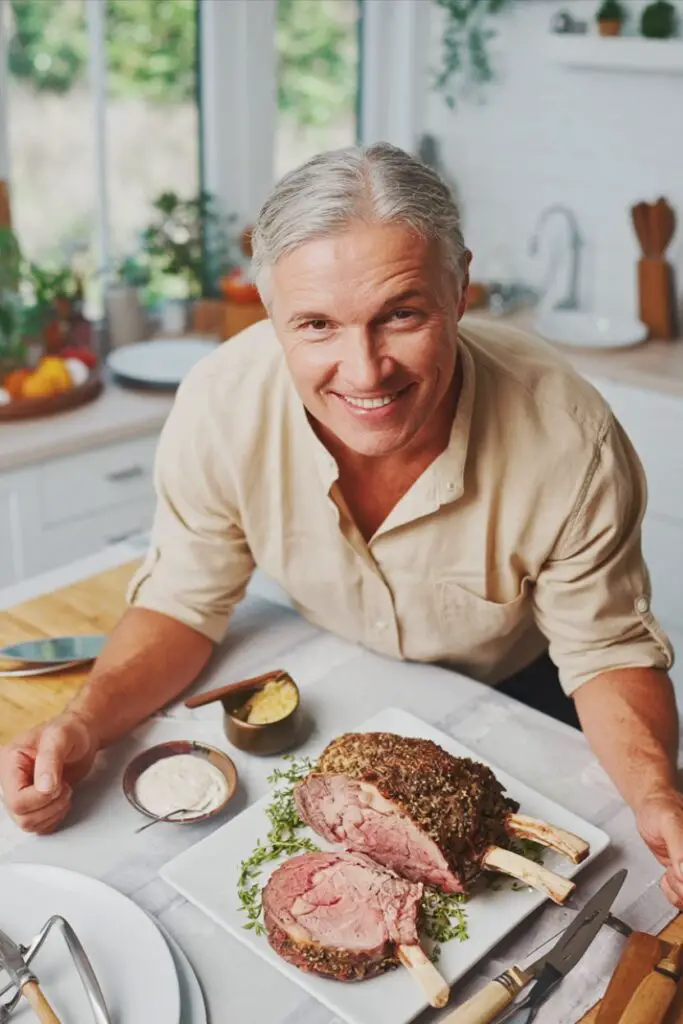
While the meat rests, prepare the sauce. In a medium bowl, whisk together the sour cream, grated horseradish, and fresh lemon juice. Season with 1/2 teaspoon of black pepper.
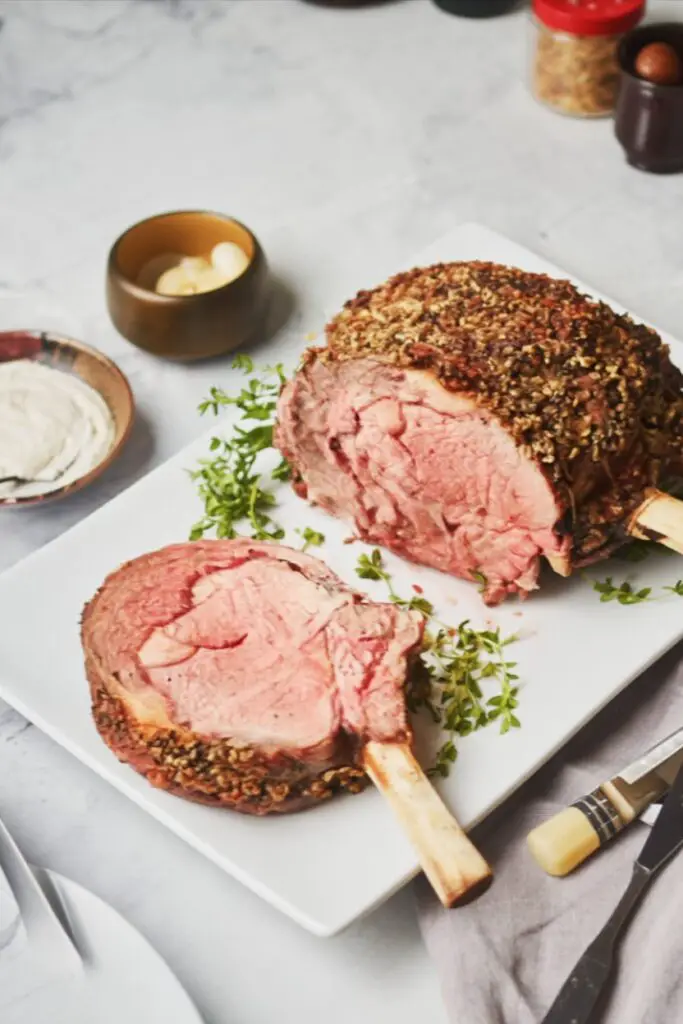
Slice the beef against the grain and serve alongside the cool, tangy sauce.
Nutritional Information
Prime rib is a decadent treat, rich in protein and healthy fats. Here is an estimated breakdown per 6oz serving:
- Calories: ~650 kcal
- Protein: 45 g
- Fat: 52 g (Saturated: 22 g)
- Carbohydrates: 2 g
- Net Carbs: 1.5 g (Excellent for Keto/Carnivore diets)
- Sodium: 600 mg
- Zinc & Iron: Excellent source for immune support and energy.
Healthier Alternatives
If you love the flavor of a Sunday roast but need to adjust for dietary goals, here are some smart swaps:
- Lighter Sauce: Swap the sour cream for Greek Yogurt or a mix of Greek yogurt and low-fat cottage cheese (blended). This boosts protein and cuts fat significantly without losing the tang needed to balance the beef.
- Leaner Cut: If the fat content of prime rib is too high, use this same “high-low” roasting method on a Top Loin Roast or Eye of Round. These cuts are leaner but can dry out, so be vigilant with your meat thermometer.
- Reduce Sodium: Use unsalted butter and reduce the added salt in the butter paste. The overnight salting is the most important step for flavor, so keep that, but reduce the surface salt later.
Serving Suggestions
A Perfect Garlic Herb Rib Roast deserves sides that can stand up to its richness.
- Classic Pairing: Serve with Yorkshire Puddings to soak up the au jus and garlic butter drippings.
- Vegetable Sides: Roasted Brussels sprouts with bacon or simple steamed asparagus with lemon zest provide a bitter/acidic contrast to the fatty meat.
- Starch: Creamy mashed potatoes or a gratin dauphinois are traditional favorites.
- Wine Pairing: A bold, tannic red wine like a Cabernet Sauvignon or a Syrah cuts through the marbling of the rib eye beautifully.
Common Mistakes to Avoid
Roasting a large cut of meat can be tricky. Avoid these pitfalls to ensure perfection:
- Trusting the “Minutes per Pound” Rule: Ovens vary wildly. Solution: Invest in a digital instant-read thermometer. It is the only way to guarantee doneness.
- Skipping the Tempering: Putting a cold roast in a hot oven results in a cooked exterior and raw center. Solution: Let the meat sit on the counter for at least 2 hours before cooking.
- Cutting Too Soon: Slicing the meat immediately stops the juices from redistributing, leading to dry meat. Solution: Rest the meat for at least 25 minutes. The internal temp will stabilize, and the juices will lock in.
- Overcrowding the Pan: If you pack vegetables tight around the roast, it will steam instead of roast. Solution: If roasting veggies, do them on a separate tray or ensure there is plenty of airflow around the beef.
Storing Tips
Leftover prime rib is a luxury! Here is how to keep it fresh.
- Fridge: Store leftovers in an airtight container for up to 3 days. Keep the roast whole if possible and slice only when serving to retain moisture.
- Freezer: You can freeze cooked prime rib, but the texture may change slightly. Wrap tightly in plastic wrap and foil. Freeze for up to 2 months.
- Reheating: Do not microwave prime rib; it will turn gray and rubbery. Instead, place slices in a baking dish with a splash of beef broth, cover with foil, and warm in a 250°F oven until just heated through.
Conclusion
Mastering the Perfect Garlic Herb Rib Roast is a culinary milestone. It transforms a simple piece of meat into a celebration. The contrast between the salty, herb-encrusted exterior and the buttery, pink interior is unmatched. By following the dry brine method and monitoring your temperatures, you eliminate the stress and guarantee a result that will have your guests asking for seconds.
Whether it’s Christmas dinner or a special anniversary, this dish delivers elegance with surprisingly little active effort.
Try it out and let us know! Did you use fresh or prepared horseradish? We’d love to hear your feedback in the comments below. Don’t forget to rate the recipe and subscribe to our blog for more delicious, hearty recipes delivered straight to your inbox.
FAQs
Q1. What is the difference between Prime Rib and Ribeye?
They actually come from the same part of the cow! A Prime Rib (or Standing Rib Roast) is the large roast cut with the bones still attached. A Ribeye is essentially a steak sliced from that roast before or after cooking. Roasting it whole (Prime Rib) generally results in a more tender, flavorful eating experience due to the slow cooking method.
Q2. Can I use dried herbs if I don’t have fresh garlic?
For the garlic, fresh is best because it creates a paste that melts into the meat. Garlic powder tends to burn at 475°F. However, for the green herbs, the recipe calls for a dried Italian herb blend, which stands up to the high heat better than delicate fresh herbs like parsley or basil.
Q3. My roast is cooking too fast! What do I do?
If your thermometer shows the temp rising too quickly, simply turn the oven off and open the door for a minute to vent heat. You can let the roast sit in the cooling oven, or remove it and tent it with foil on the counter until you are closer to dinner time. It holds heat for a very long time!
Q4. How much horseradish should I use?
This depends on your heat tolerance. Freshly grated horseradish is significantly more pungent and spicy than jarred, prepared horseradish. If using fresh root, start with 2 tablespoons and taste. If using jarred, 3 tablespoons usually provides a nice, mild kick.
Print
Perfect Garlic Herb Rib Roast with Horseradish Cream
- Total Time: 24 hours
- Yield: Varies by roast size
- Diet: Gluten Free
Description
There is no centerpiece more iconic than a standing rib roast. This recipe uses a two-step temperature process and an overnight “dry brine” to ensure a dark, savory crust loaded with garlic and herbs, while the inside remains meltingly tender and perfectly medium-rare. Paired with a zesty homemade horseradish crème, this is the gold standard for holiday meals and Sunday suppers.
Ingredients
The Roast & Rub:
- 1 Bone-in Prime Rib Roast
- 4 tsp Coarse Sea Salt (plus extra for seasoning)
- To taste Freshly Ground Black Pepper
- 8 Tbsp (1 stick) Unsalted Butter, softened
- 5 cloves Garlic, mashed into a paste
- 1 Tbsp Dried Italian Herbs
The Horseradish Cream:
- 3/4 cup Full-fat Sour Cream
- 3 Tbsp Horseradish (freshly grated or prepared)
- 1 Tbsp Fresh Lemon Juice
Instructions
- Overnight Dry Brine: The day before cooking, rub the entire surface of the meat with 4 teaspoons of salt. Place it in the refrigerator, uncovered, overnight.
- Temper the Meat: Remove the beef from the refrigerator 2 to 3 hours before roasting to let it reach room temperature. Pat dry with a paper towel if moisture remains.
- Preheat & Prep Butter: Preheat oven to 475°F (245°C). In a small bowl, mix the softened butter, garlic paste, Italian herbs, 2 teaspoons of salt, and 1 teaspoon of pepper.
- Sear the Roast: Slather 1/3 of the butter mixture on the underside (bone side). Place beef in a roasting pan bone-side down. Spread another 1/3 of the butter on top/sides. Roast for 20 minutes at 475°F.
- Low and Slow: Reduce oven to 275°F (135°C). Spread the remaining butter over the top. Continue roasting, basting every 30 minutes, until internal temperature reaches 120°F (50°C) for medium-rare (approx. 90 minutes).
- The Crucial Rest: Transfer beef to a board and tent loosely with foil. Let rest for 25-30 minutes. (Carryover cooking will raise temp to 125°F).
- Make Sauce & Serve: Whisk together sour cream, horseradish, lemon juice, and 1/2 tsp pepper. Slice beef against the grain and serve with the sauce.
Notes
- Dry Brining: This process draws moisture out to dissolve the salt, which is then reabsorbed, seasoning the meat deep inside while drying the exterior for a better crust.
- Tempering: Do not skip letting the meat sit at room temp before cooking! Cooking a cold roast leads to uneven doneness.
- Carryover Cooking: Pull the meat at 120°F; the temperature will rise to a perfect medium-rare (125°F-130°F) while it rests.
- Basting: Basting every 30 minutes keeps the meat moist and adds layers of flavor to the crust.
- Prep Time: 20 minutes (Active)
- Cook Time: 1 hour 50 minutes
- Category: Main Course, Roast, Holiday
- Method: Roasting, Dry Brining
- Cuisine: American, British
Nutrition
- Serving Size: 6 oz
- Calories: 650 kcal
- Sugar: 1 g
- Sodium: 600 mg
- Fat: 52 g
- Saturated Fat: 22 g
- Unsaturated Fat: 25 g
- Trans Fat: 0 g
- Carbohydrates: 2 g
- Fiber: 0 g
- Protein: 45 g
- Cholesterol: 150 mg