


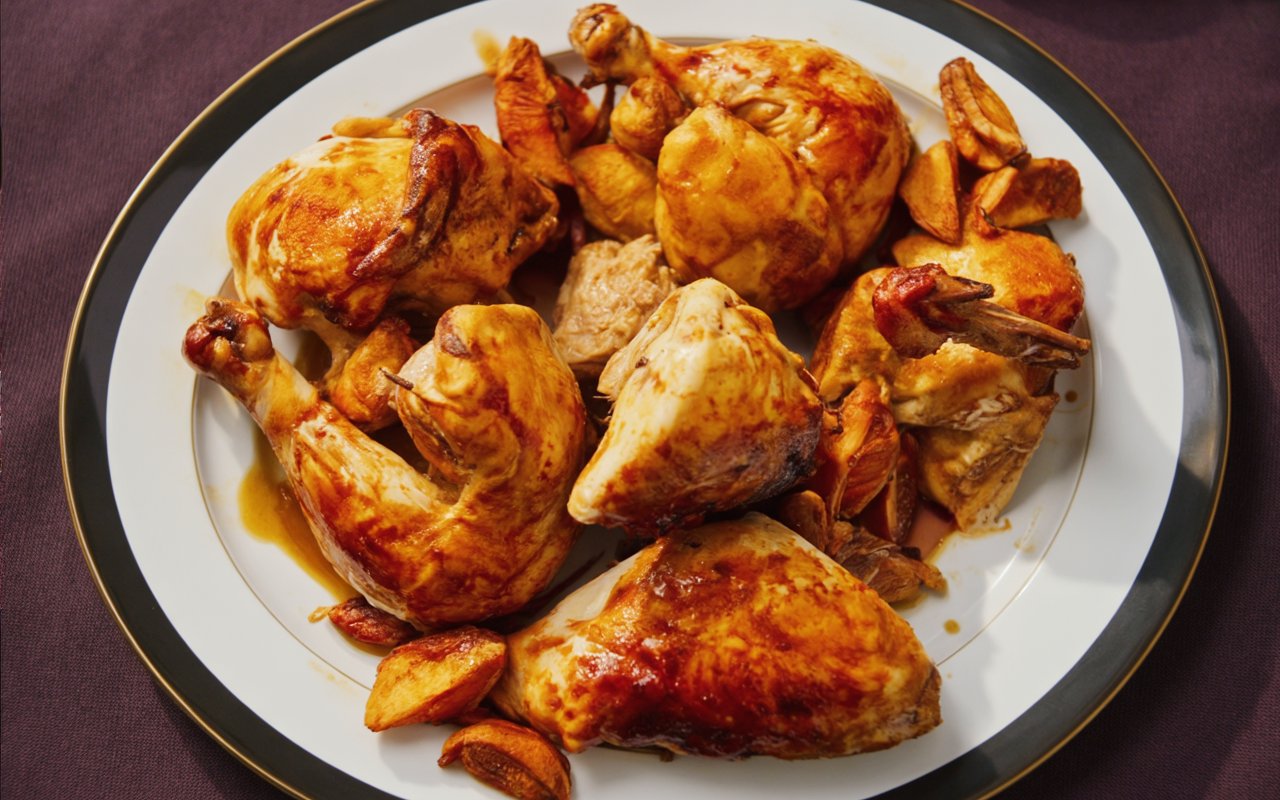
There is something undeniably comforting about the smell of a roasting bird filling the house on a Sunday afternoon. While many of us associate “orange chicken” with the deep-fried, bite-sized takeout classic, this Roasted Orange Chicken recipe elevates those familiar flavors into a sophisticated, one-pan centerpiece. Imagine a whole golden bird, skin crisp and caramelized, bathed in a sticky, spicy-sweet glaze made from fresh tangerines and ginger.
- Ingredients
- Timing
- Step-by-Step Instructions
- Step 1: Preheat the Oven
- Step 2: Create the Citrus Marinade
- Step 3: Season and Stuff the Chicken
- Step 4: The Initial Roast
- Step 5: Basting to Perfection
- Step 6: Rest and Reduce the Glaze
- Step 7: Serve and Enjoy
- Nutritional Information
- Healthier Alternatives
- Serving Suggestions
- Common Mistakes to Avoid
- Storing Tips
- Conclusion
- FAQs
- Q1. Can I use regular oranges instead of tangerines?
- Q2. Is this recipe gluten-free?
- Q3. Can I make this in a slow cooker?
- Q4. What if I don’t have an ovenproof skillet?
- Sticky Roasted Orange Chicken: A Sweet & Spicy Citrus Delight
I remember the first time I tried roasting a chicken with citrus; I was skeptical that the flavors would penetrate the meat. I was wrong. The heat of the oven transforms the sugars in the fruit and the marinade into a glossy, aromatic sauce that rivals any restaurant glaze. This dish strikes the perfect balance between the acidity of the citrus, the warmth of the ginger, and the kick of cayenne pepper. It’s an impressive meal that looks complicated but is surprisingly hands-off. Whether you are cooking for a festive holiday gathering or a cozy family dinner, this recipe is guaranteed to be a hit.
Ingredients
The secret to this recipe lies in using fresh citrus and bold aromatics. While the title says “orange,” we are actually using tangerines or clementines for a sweeter, more concentrated flavor profile.
| Ingredient | Amount/Quantity | Notes |
| Tangerines or Clementines | 5 small | 2-3 juiced, rest wedged |
| Dark Brown Sugar | ½ cup (packed) | Provides the sticky caramelization |
| Soy Sauce | ¼ cup | Adds savory umami depth |
| Rice Vinegar | 1½ teaspoons | Can sub distilled white vinegar |
| Cayenne Pepper | 1 teaspoon | Ground; adjust for heat preference |
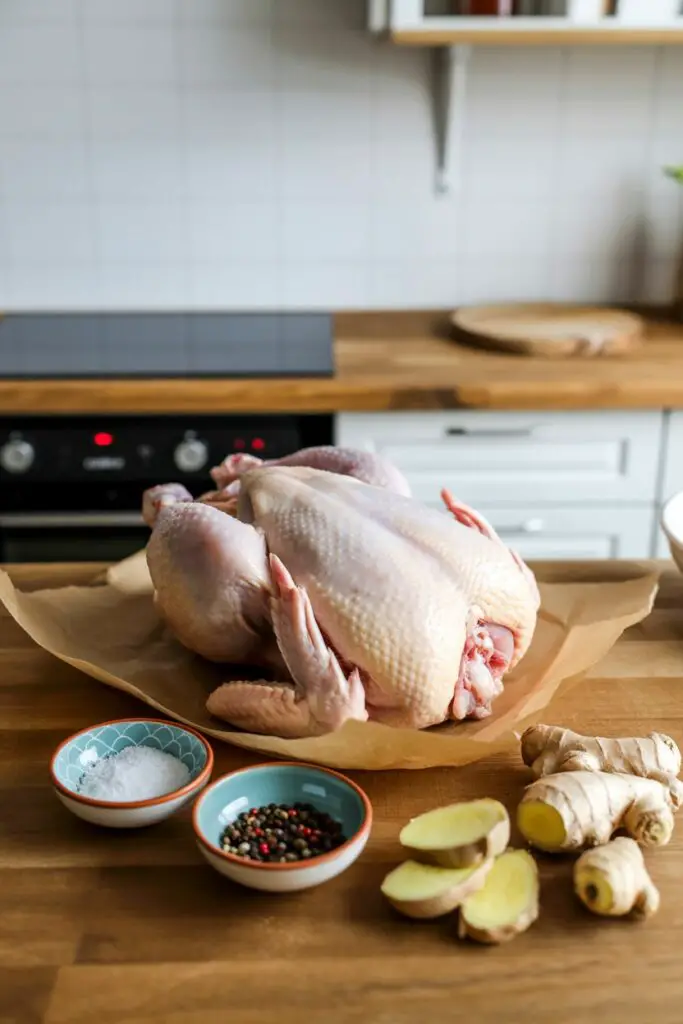
| Whole Chicken | 1 (4-pound) bird | Thawed and giblets removed |
| Fresh Ginger | 8 slices | Peeled; divided use |
| Salt & Black Pepper | Generous amount | To season the bird inside and out |

Timing
This recipe is efficient because the sauce reduces while the chicken rests, utilizing every minute of your time effectively.
- Prep Time: 20 minutes
- Cook Time: 60 minutes
- Resting/Glazing Time: 10 minutes
- Total Time: 90 minutes (About the same time as a standard meatloaf, but far more elegant)
Step-by-Step Instructions
Step 1: Preheat the Oven
Heat your oven to 400°F (200°C). Ensure your rack is positioned in the center of the oven to allow for even browning without burning the top of the chicken.
Step 2: Create the Citrus Marinade
Juice 2 to 3 of the tangerines into a small bowl until you have about ¼ cup of juice. Keep the spent peels—don’t throw them away! Cut the remaining whole tangerines into wedges, keeping the peels on, and set them aside.
In the bowl with the juice, whisk together the packed dark brown sugar, soy sauce, rice vinegar, and cayenne pepper. Continue mixing until the sugar has fully dissolved and the mixture is smooth.
- Tip: If your brown sugar is hard, microwave it with a damp paper towel for 20 seconds to soften it before measuring.
Step 3: Season and Stuff the Chicken
Season the chicken generously inside the cavity and all over the skin with salt and black pepper. Tuck the wingtips behind the body to prevent them from burning.
Stuff the reserved spent tangerine peels and 6 slices of the fresh ginger into the cavity. Tie the legs together firmly using kitchen twine. Place the bird in a large ovenproof skillet (cast iron works beautifully here). Scatter the fresh tangerine wedges and the remaining 2 ginger slices around the chicken in the pan.
Step 4: The Initial Roast
Slowly pour the brown sugar and juice mixture all over the chicken. Try to coat as much of the skin as possible. Slide the skillet into the oven and roast undisturbed for 30 minutes.
Step 5: Basting to Perfection
After the first 30 minutes, carefully pull the rack out. Using a large spoon or a turkey baster, quickly coat the chicken with the pan sauce.
Continue roasting, basting every 10 minutes. This layering of the sauce is what builds that irresistible sticky glaze. Roast for another 20 to 30 minutes. The chicken is done when the skin is deeply browned and an instant-read thermometer registers 155°F in the thickest part of the breast and 170°F in the thigh.
Step 6: Rest and Reduce the Glaze
Transfer the chicken to a cutting board to rest for at least 5 minutes. This allows the juices to redistribute.
While the chicken rests, check your pan sauce. If it isn’t syrupy yet, place the skillet on the stovetop over medium-high heat. Caution: The handle will be extremely hot—use an oven mitt! Boil the sauce, stirring occasionally, for about 5 minutes. You are looking for large, pale bubbles and a syrup-like consistency. Discard the cooked ginger slices.
Step 7: Serve and Enjoy
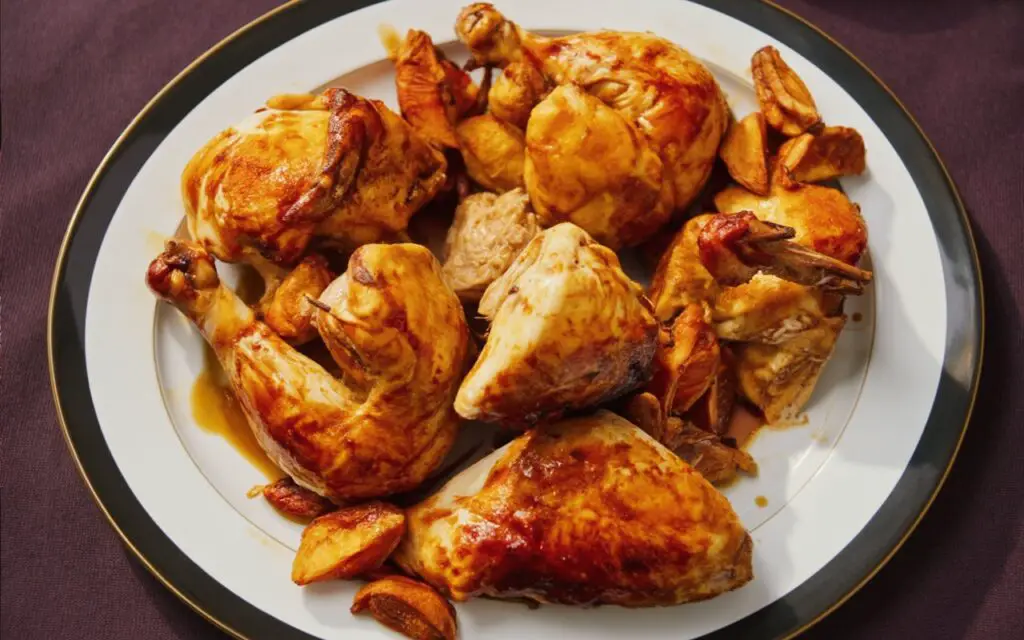
Carve the chicken or serve it whole for a dramatic presentation. Pour the thickened, sticky glaze generously over the meat. Arrange the roasted tangerine wedges from the pan around the bird—they are edible and delicious!
Nutritional Information
This dish is protein-rich, though the glaze does add sugar. Here is an estimation per serving (based on 4-6 servings):
- Calories: ~450 kcal
- Protein: 35 g
- Fat: 22 g (Saturated: 6 g)
- Carbohydrates: 25 g (Sugar: 20 g)
- Sodium: 680 mg
- Fiber: 1 g
Note: Much of the fat renders out during cooking, and not all the glaze is consumed if you don’t pour all of it on the plate.
Healthier Alternatives
If you are looking to lighten up this Roasted Orange Chicken or adapt it for dietary restrictions, try these swaps:
- Cut the Sugar: Swap the dark brown sugar for a brown sugar alternative like Swerve Brown or Monkfruit Sweetener. This drastically reduces the carbs and calories while keeping the flavor profile.
- Lower Sodium: Use Low-Sodium Soy Sauce or Coconut Aminos. Coconut aminos are also a great gluten-free and soy-free alternative that adds a natural sweetness.
- Leaner Meat: Apply this same method to a turkey breast or skinless chicken thighs to reduce the fat content, though you will need to adjust cooking times (roast thighs for about 35-40 minutes).
- Spice Control: If you are sensitive to spice or cooking for kids, reduce the cayenne to ¼ teaspoon or omit it entirely.
Serving Suggestions
To turn this roasted bird into a complete meal, consider these pairings:
- The Classic Bed: Serve the carved meat over fluffy Jasmine rice or nutty brown rice to soak up that incredible ginger-citrus sauce.
- Green Contrast: A side of garlic sautéed bok choy or roasted broccoli adds a nice crunch and bitterness to cut through the sweet glaze.
- Refreshing Salad: A crisp cucumber salad with sesame oil and vinegar complements the Asian-inspired flavors of the marinade.
- Drink Pairing: An off-dry Riesling or a crisp lager pairs beautifully with the spicy and sweet notes of the dish.
Common Mistakes to Avoid
Roasting a chicken with a sugar-based glaze can be tricky. Avoid these pitfalls:
- Burning the Glaze: Sugar burns easily at 400°F. Solution: If the skin gets too dark before the meat is cooked, tent the chicken loosely with aluminum foil for the last 15 minutes.
- Dry Breast Meat: Overcooking is the enemy. Solution: Rely on your meat thermometer, not the timer. Pull the chicken at 155°F; the residual heat will carry it to the safe 165°F zone while resting.
- Soggy Skin: If the chicken is wet when the sauce goes on, it won’t crisp. Solution: Pat the chicken thoroughly dry with paper towels before seasoning.
- Forgetting the Hot Handle: This is a classic kitchen injury. Solution: Leave a dry kitchen towel draped over the skillet handle while it sits on the stove to remind yourself it is hot.
Storing Tips
This chicken makes for fantastic leftovers!
- Refrigerate: Store leftover meat in an airtight container for up to 3 days. Keep the extra sauce in a separate small container.
- Freeze: Shred the meat and freeze it in a freezer-safe bag for up to 3 months. The sauce can also be frozen in an ice cube tray.
- Reheat: To keep the skin palatable, reheat chicken pieces in a 350°F oven covered with foil until warm (about 15 mins). Avoid the microwave if possible, as it tends to dry out the meat and make the skin rubbery.
Conclusion
This Roasted Orange Chicken recipe proves that you don’t need a deep fryer to achieve that crave-worthy sweet and sticky flavor. By using whole ingredients like fresh tangerines, ginger, and a whole bird, you create a meal that is wholesome, impressive, and bursting with flavor. The caramelized skin and the rich pan sauce are truly a match made in heaven.
We hope you enjoy making and savoring this dish as much as we do. Try it out and let us know in the comments how it turned out for you! Did you stick to the spicy cayenne or keep it mild? We’d love to hear your feedback. Don’t forget to rate the recipe and subscribe to our blog for more delicious, healthy recipes delivered straight to your inbox.
FAQs
Q1. Can I use regular oranges instead of tangerines?
Absolutely. While tangerines and clementines are sweeter and have thinner skins, regular Navel or Valencia oranges work well. You may want to add an extra tablespoon of sugar to the marinade if your oranges are on the tart side.
Q2. Is this recipe gluten-free?
It can easily be made gluten-free! The only ingredient to watch out for is the soy sauce, which typically contains wheat. Simply swap the soy sauce for Tamari or Coconut Aminos to make this safe for celiacs.
Q3. Can I make this in a slow cooker?
While you can cook chicken with these ingredients in a slow cooker (Low for 6-7 hours), you will lose the crispy, caramelized skin that makes this Roasted Orange Chicken so special. If you do use a slow cooker, we recommend broiling the chicken for 5 minutes at the end to crisp it up.
Q4. What if I don’t have an ovenproof skillet?
No problem. You can prepare the chicken in a regular roasting pan or a baking dish. When it comes time to reduce the sauce (Step 6), simply pour the liquid from the roasting pan into a small saucepan to boil it on the stovetop.
Print
Sticky Roasted Orange Chicken: A Sweet & Spicy Citrus Delight
- Total Time: 1 hour 30 minutes
- Yield: 4–6 Servings 1x
Description
While many associate “orange chicken” with the deep-fried takeout classic, this Roasted Orange Chicken elevates those familiar flavors into a sophisticated, one-pan centerpiece. Imagine a whole golden bird, skin crisp and caramelized, bathed in a sticky, spicy-sweet glaze made from fresh tangerines and ginger. It strikes the perfect balance between the acidity of the citrus, the warmth of ginger, and the kick of cayenne pepper. An impressive meal that looks complicated but is surprisingly hands-off.
Ingredients
- 1 (4-pound) Whole Chicken; thawed, giblets removed
- 5 small Tangerines or Clementines (divided use)
- 1/2 cup Dark Brown Sugar, packed
- 1/4 cup Soy Sauce
- 1 1/2 teaspoons Rice Vinegar
- 1 teaspoon Ground Cayenne Pepper
- 8 slices Fresh Ginger, peeled (divided use)
- Generous amount Salt & Black Pepper
Instructions
- Preheat Oven: Heat oven to 400°F (200°C). Position the rack in the center to ensure even browning.
- Create Citrus Marinade: Juice 2-3 tangerines to get ¼ cup juice. Save the spent peels! Whisk the juice with brown sugar, soy sauce, rice vinegar, and cayenne pepper until sugar dissolves. Cut remaining tangerines into wedges.
- Season and Stuff: Season chicken generously inside and out with salt and pepper. Tuck wingtips back. Stuff the cavity with the reserved spent peels and 6 slices of ginger. Tie legs together.
- Arrange: Place chicken in a large ovenproof skillet (cast iron is best). Scatter fresh tangerine wedges and remaining 2 ginger slices around the pan.
- Initial Roast: Pour the marinade all over the chicken, coating the skin. Roast undisturbed for 30 minutes.
- Baste: After 30 minutes, baste the chicken with the pan sauce. Continue roasting for another 20-30 minutes, basting every 10 minutes to build the sticky glaze. Chicken is done when breast reaches 155°F and thigh reaches 170°F.
- Rest and Reduce: Transfer chicken to a board to rest for 5 minutes. If the pan sauce isn’t syrupy, boil it on the stovetop for 5 minutes until it bubbles and thickens. Discard cooked ginger.
- Serve: Carve or serve whole, pouring the thick glaze generously over the meat. Serve with the roasted tangerine wedges.
Notes
- Citrus Choice: While called “orange” chicken, using tangerines or clementines provides a sweeter, more concentrated flavor profile that works better for the glaze.
- Basting is Key: Do not skip the basting step every 10 minutes during the second half of roasting. This layering of the sauce is what creates that irresistible, glossy, sticky finish.
- Brown Sugar Tip: If your brown sugar is hard, microwave it with a damp paper towel for 20 seconds to soften it before measuring.
- Pan Sauce: Be careful when reducing the sauce on the stovetop; the skillet handle will be scorching hot from the oven.
- Prep Time: 20 minutes
- Resting Time: 10 minutes
- Cook Time: 60 minutes
- Category: Main Course, Dinner, Roast
- Method: Roasting
- Cuisine: Asian-Fusion / American
Nutrition
- Serving Size: 1 serving
- Calories: 450 kcal
- Sugar: 20 g
- Sodium: 680 mg
- Fat: 22 g
- Saturated Fat: 6 g
- Carbohydrates: 25 g
- Fiber: 1 g
- Protein: 35 g