


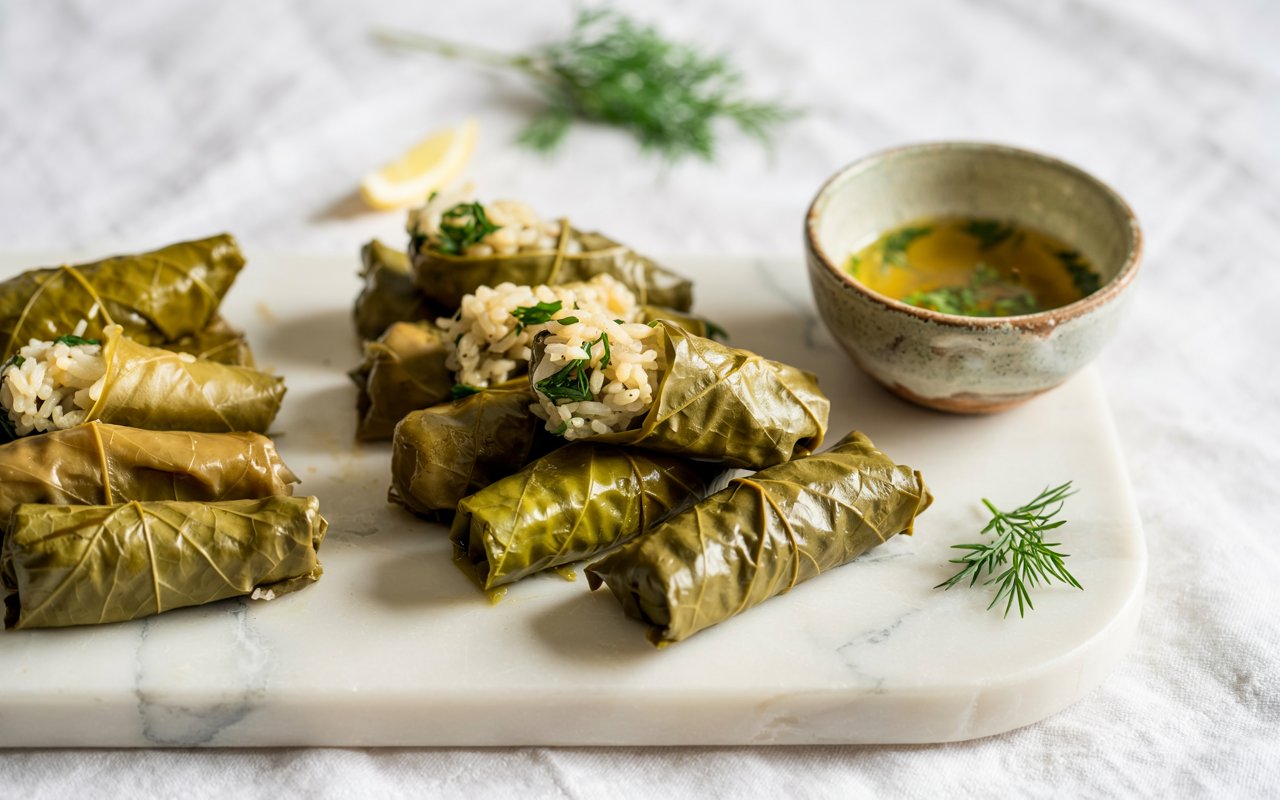
Imagine gathering around a sun‑dappled table beneath swaying olive trees, the air perfumed with the scent of lemon, herbs, and vine leaves. That’s the essence of Greek Dolmades with Lemon Rice—delicate grape leaves snugly wrapped around fragrant, herbed rice, kissed by bright lemon and silky olive oil. My first taste of dolmades came during a family trip to Rhodes: village grandmothers served them alongside feta and olives, each bite a perfect harmony of tangy, savory, and slightly sweet. Ever since, I’ve pursued that idyllic flavor—balancing fresh dill and mint, cooking rice to just the right tenderness, and rolling each leaf with care. Today, I’m thrilled to share my ultimate Greek Dolmades with Lemon Rice recipe, so you can recreate a taste of the Aegean at home, whether as an elegant appetizer, a light vegetarian entrée, or a stunning addition to your next mezze spread.
- Why You’ll Love These Greek Dolmades
- A Brief History of Dolmades
- Ingredients You’ll Need
- Equipment Needed
- Step‑by‑Step Instructions
- 1. Prepare the Rice Filling (10 minutes)
- 2. Rinse & Prep Grape Leaves (5 minutes)
- 3. Roll the Dolmades (20–30 minutes)
- 4. Steam the Dolmades (25–30 minutes)
- 5. Serve & Garnish (2 minutes)
- Nutrition Facts (per dolmadaki)
- Tips for Perfect Dolmades
- Delicious Variations
- Make‑Ahead & Storage
- Frequently Asked Questions
- Conclusion
Why You’ll Love These Greek Dolmades
- Bursting with Flavor: Zesty lemon and fresh herbs permeate every grain of rice.
- Vegetarian & Gluten‑Free: A naturally plant‑based crowd‑pleaser.
- Make‑Ahead Magic: Prepare in advance; flavors deepen overnight.
- Elegant Presentation: Hand‑rolled parcels add sophistication to any table.
- Healthy & Light: Low in fat, high in fiber, and loaded with micronutrients.
- Cultural Connection: Experience a time‑honored Eastern Mediterranean tradition.
A Brief History of Dolmades

The word “dolmades” stems from the Greek “dolmadakia,” meaning “stuffed things.” Across the Eastern Mediterranean and Middle East, various cultures fill grape leaves, cabbage, and vegetables with rice, meat, or bulgur. In Greece, vegetarian grape‑leaf dolmades—known as dolmades yiaprakia—are often served during Lent, festive gatherings, and everyday meals. Wrapped in tender leaves, they embody the resourcefulness of home cooks who transformed humble ingredients into beloved classics passed down through generations.
Ingredients You’ll Need
| Ingredient | Quantity |
|---|---|
| Grape leaves in brine, rinsed | 1 jar (approx. 60 leaves) |
| Long‑grain white rice | 1 cup |
| Extra‑virgin olive oil | 3 tablespoons |
| Yellow onion, finely chopped | 1 small (about ½ cup) |
| Garlic cloves, minced | 2 |
| Fresh dill, finely chopped | 3 tablespoons |
| Fresh mint, finely chopped | 2 tablespoons |
| Lemon zest | 1 teaspoon |
| Lemon juice | ¼ cup + extra for serving |
| Vegetable broth or water | 1½ cups |
| Salt and freshly ground black pepper | To taste |
| Greek yogurt or tzatziki (for serving) | Optional garnish |
Pro Tip: If fresh grape leaves aren’t available, substitute with dried—soak per package instructions before using.
Equipment Needed
| Equipment | Purpose |
|---|---|
| Large skillet or saucepan | To sauté aromatics and cook rice |
| Cutting board & chef’s knife | To prep vegetables and herbs |
| Mixing bowl | To combine rice filling |
| Shallow bowl | To hold rinsed grape leaves |
| Plate or platter | To arrange rolled dolmades |
| Saucepan with lid | To steam the dolmades |
Step‑by‑Step Instructions
1. Prepare the Rice Filling (10 minutes)
- Heat oil: In a medium saucepan or deep skillet, warm 2 tablespoons olive oil over medium heat.
- Sauté onion & garlic: Add chopped onion; cook until softened and translucent, about 4 minutes. Stir in minced garlic and cook 30 seconds until fragrant.
- Toast rice: Stir in 1 cup rice; cook 1–2 minutes, stirring, until grains are glossy and translucent at edges.
- Add liquid & herbs: Pour in 1½ cups broth (or water), ¼ cup lemon juice, lemon zest, chopped dill, and mint. Season with salt and pepper.
- Simmer: Bring to a gentle boil, then cover, reduce heat to low, and cook 15 minutes—rice should be slightly underdone. Remove from heat and let sit, covered, 5 minutes.
2. Rinse & Prep Grape Leaves (5 minutes)
- Rinse leaves: Drain jar of grape leaves and rinse thoroughly under cold water to remove excess brine.
- Trim stems: Lay each leaf on a clean surface; use scissors or a knife to trim any tough stems for easy rolling.
3. Roll the Dolmades (20–30 minutes)
- Assemble station: Place a shallow bowl of warm water next to your work area to keep leaves supple.
- Layer leaf: On a flat surface, place one leaf, vein‑side up, longer axis toward you.
- Add filling: Spoon about 1 tablespoon of rice mixture near the base of the leaf, just above the stem end.
- Fold & roll: Fold bottom edge over filling, tuck in side edges, then roll toward the tip to form a neat cylinder.
- Arrange: Place seam‑side down in a snug single layer in a saucepan or deep skillet; repeat with remaining leaves and filling. Drizzle remaining 1 tablespoon olive oil over the top and add a few lemon slices for flavor.
4. Steam the Dolmades (25–30 minutes)
- Add weight: Cover dolmades with a heatproof plate to keep them submerged and prevent unrolling.
- Simmer: Pour enough broth or water to just cover the plate’s edge. Bring to a gentle simmer, cover pot, and cook 25–30 minutes until leaves are tender and rice is fully cooked.
- Rest: Remove from heat and let stand 10 minutes to allow flavors to meld.
5. Serve & Garnish (2 minutes)
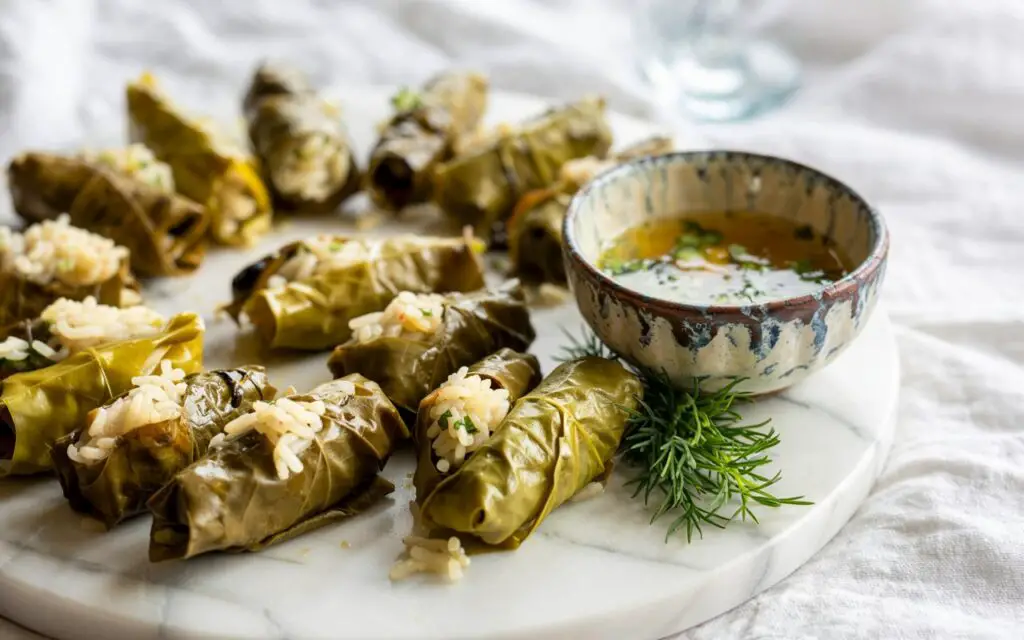
- Plate: Transfer dolmades to a serving platter, stacking artfully.
- Garnish: Drizzle with extra lemon juice and olive oil. Serve with lemon wedges and a dollop of Greek yogurt or tzatziki on the side.
(Total time: approx. 1 hour)
Nutrition Facts (per dolmadaki)
(Makes 30 dolmades; serving size 5 pieces)
| Nutrient | Amount |
|---|---|
| Calories | 110 kcal |
| Total Fat | 3 g |
| – Saturated Fat | 0.5 g |
| Sodium | 230 mg |
| Carbohydrates | 18 g |
| – Dietary Fiber | 1.5 g |
| – Sugars | 1 g |
| Protein | 2 g |
| Vitamin A | 4% DV |
| Vitamin C | 8% DV |
| Calcium | 2% DV |
| Iron | 6% DV |
Tip: Adjust sodium by rinsing leaves thoroughly and using low‑sodium broth.
Tips for Perfect Dolmades
- Keep leaves supple: If leaves tear, dip briefly in hot water before rolling.
- Tight rolls: Tuck edges snugly to prevent filling from escaping during cooking.
- Layering: Arrange in a single layer, seam‑side down, to ensure even cooking.
- Flavor boost: Add a strip of lemon zest or a few pine nuts to the filling for extra aroma.
- Herb variations: Substitute or add parsley, chives, or tarragon for nuanced flavor.
Delicious Variations
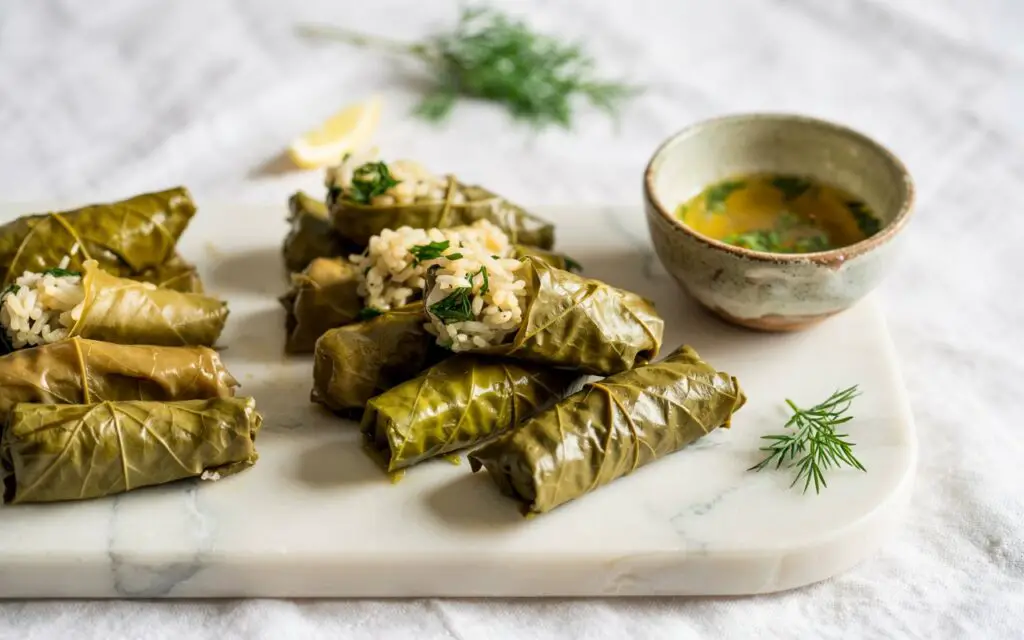
- Meat‑Filled Dolmades: Mix ½ lb ground lamb or beef with rice; brown before combining with herbs.
- Vegan Bulgur Dolmades: Swap rice for fine bulgur; soak until tender before filling.
- Spicy Twist: Stir in ½ teaspoon Aleppo pepper or red chili flakes.
- Nutty Crunch: Add 2 tablespoons toasted pine nuts or walnuts to the filling.
- Sweet‑Sour Glaze: Drizzle with pomegranate molasses and sprinkle pomegranate arils.
Make‑Ahead & Storage
- Refrigerate: Store cooked dolmades in an airtight container with some cooking liquid for up to 3 days.
- Freeze: Freeze in a single layer on a tray, then transfer to bags. Thaw in fridge and reheat gently.
- Reheat: Warm covered in a saucepan over low heat with a splash of broth to prevent drying.
Frequently Asked Questions
Q1: Can I use dried grape leaves?
A1: Yes—soak per package instructions (usually in hot water then rinse) before using.
Q2: What if I can’t find fresh herbs?
A2: Use 1 tablespoon dried dill and 1 tablespoon dried mint—add with rice before cooking.
Q3: How do I prevent rice from being mushy?
A3: Slightly undercook rice in step 1; it finishes cooking inside the leaves without becoming gummy.
Q4: Can I steam instead of simmer?
A4: Yes—place dolmades on a rack above simmering water, cover, and steam 30 minutes.
Q5: Are dolmades gluten‑free?
A5: Naturally, yes—just ensure your broth and any added ingredients are gluten‑free.
Q6: How do I make them less tangy?
A6: Reduce lemon juice in filling to 2 tablespoons and omit extra drizzle.
Conclusion
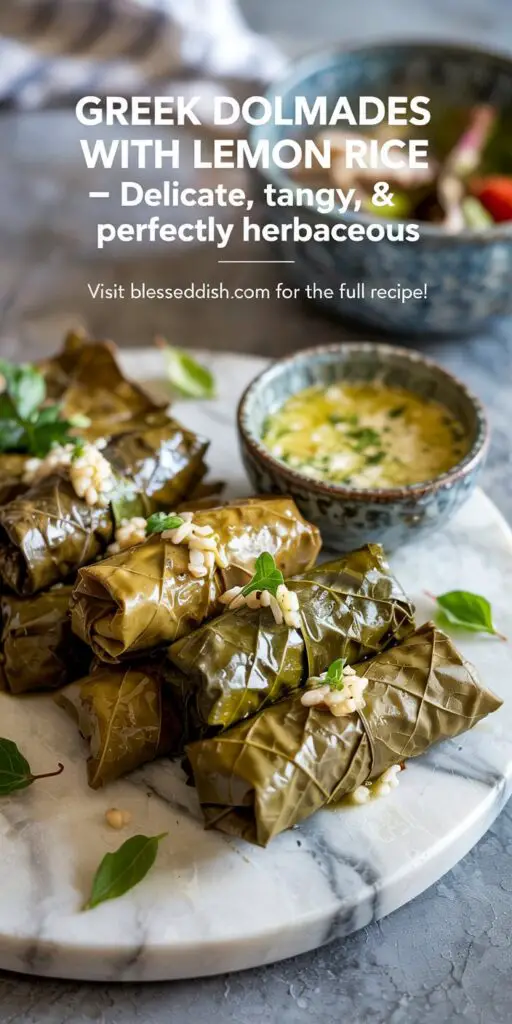
These Greek Dolmades with Lemon Rice capture the heart of Mediterranean cuisine—a blend of simple, high‑quality ingredients transformed into a timeless classic. Perfect for appetizers, mains, or mezze spreads, they bring elegance and healthy flavor to any occasion. Ready to roll? Visit BlessedDish.com for more authentic, chef‑inspired recipes. If you love these dolmades, please leave a ★★★★★ review, snap a photo and share on Instagram with #BlessedDish, and subscribe for weekly culinary inspiration straight to your inbox. Kali orexi! (Enjoy your meal!)