




When chilly weather calls for a bowl of soothing soup or you simply yearn for a taste of Southeast Asian flavor, Thai Coconut Chicken Soup rises to the occasion. Often reminiscent of Thailand’s beloved Tom Kha Gai, this dish merges the creaminess of coconut milk with aromatic ingredients like lemongrass, ginger, or galangal, plus a gentle undercurrent of heat from chili. Shredded chicken (or quick-simmered chunks) ensures a protein presence that transforms it into a fulfilling meal rather than just a starter. Each spoonful presents a tangy, soothing, lightly spiced experience that can warm both your body and your spirit in mere minutes.
My introduction to Thai coconut soup occurred in a small eatery downtown. The soup’s balance of salty-sour-sweet-spicy components captivated me, and I found myself craving it repeatedly. However, I worried about replicating those flavors at home—did I need specialized ingredients or years of practice with Thai cuisine? As it turned out, you can approximate Tom Kha Gai’s essence with a few strategic elements: coconut milk, fresh or dried lemongrass, ginger (or galangal if you can find it), and some fish sauce. Chicken (or even tofu) plus veggies fit seamlessly into the broth, making it a near-complete meal. Over time, I experimented with chili levels, discovering that even a mild pepper can provide a bright lift. Now, this dish stands out as one of my favorite one-pot dinners, offering an exotic yet approachable flavor profile.
In this article, we’ll walk through crafting a Thai Coconut Chicken Soup that’s light, fragrant, and comforting, ensuring you can indulge in the perks of Thai cooking without the intimidation factor. Whether you’re a soup devotee or someone who loves coconut-based dishes, prepare to expand your repertoire with a bright, aromatic recipe that nails the interplay of sweet, sour, salty, and spicy.
Why Thai Coconut Chicken Soup Captivates

- Aromatic Complexity
Classic Thai flavors revolve around layering ginger or galangal, lemongrass, lime juice, fish sauce, and chili. Each element accentuates the others, resulting in a distinctive taste that’s far from monotone. - Coconut Milk’s Creamy Contrast
While the broth is spiked with zesty aromatics, the coconut milk counters with a soft sweetness, rounding off potential edges from spice or acidity, making the soup luscious yet light. - Versatile Protein
Chicken is common in Tom Kha Gai–style soups, but you can easily swap in shrimp, tofu, or even fish if you prefer. The coconut broth supports various proteins without overshadowing them. - One-Pot Simplicity
Despite the layered taste, the process is relatively straightforward: simmer aromatics, add coconut milk and stock, incorporate chicken and optional veggies, then adjust seasoning. Cooking everything in one pot cuts cleanup time.
Ingredient Overview
Use this table for at-a-glance planning:
| Ingredient | Quantity | Notes |
|---|---|---|
| Chicken (breast or thigh, sliced or shredded) | ~1 lb (450 g) | Thighs remain moist, breasts are leaner |
| Coconut Milk (full-fat or light) | 1 can (13–14 oz) | Full-fat for richer flavor, light if counting calories |
| Chicken Broth or Stock | ~2–3 cups | Adjust to desired consistency |
| Lemongrass (optional but recommended) | 1 stalk or 1 tsp paste | Smash or bruise if fresh, or use pre-made lemongrass paste |
| Ginger or Galangal (minced or sliced) | 1–2 tbsp (fresh) | Distinct aromatic; fresh is best for authenticity |
| Garlic (minced) | 2–3 cloves | Enhances the savory undertone |
| Onion or Shallots (chopped) | 1 small | Adds base sweetness |
| Vegetables (mushrooms, peppers, etc.) | ~1–2 cups, sliced | E.g., button mushrooms, red peppers, or bok choy |
| Fish Sauce | 1–2 tbsp | Key to Thai savory taste, but can omit if allergic to fish |
| Lime Juice | 1–2 tbsp | Crisp sour note for final balancing of flavors |
| Chili (fresh, dried flakes, or paste) | To taste | Bird’s eye chili for authenticity, or mild peppers for gentler heat |
| Cilantro or Thai Basil (for garnish) | ¼ cup, chopped | Fresh herbal top note |
| Oil (vegetable or coconut) | 1 tbsp | For sautéing aromatics |
| Salt & Pepper | To taste | Season carefully, especially if using fish sauce |
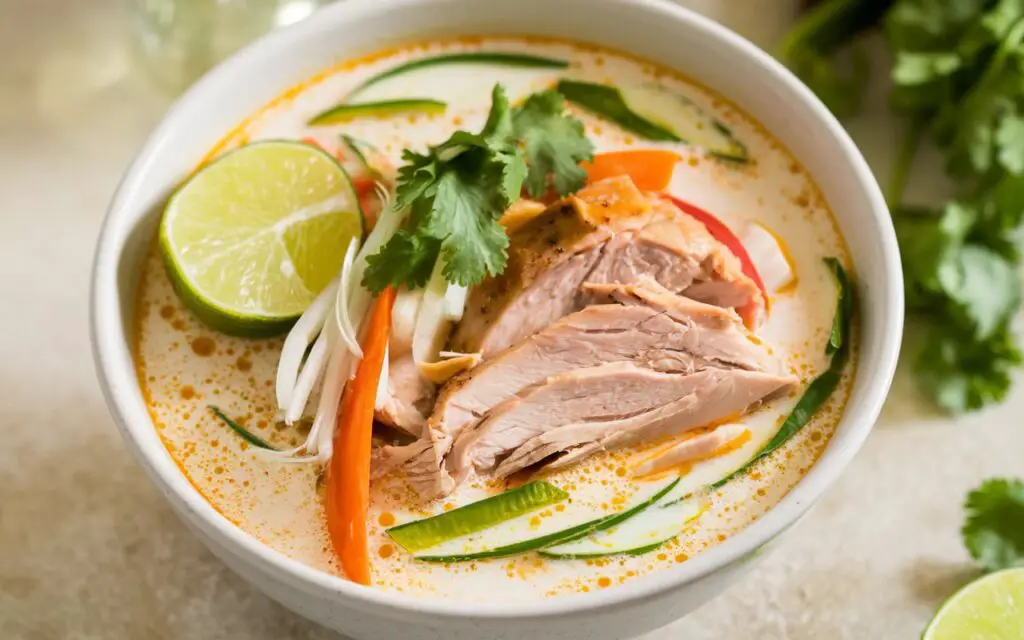
Step-by-Step Recipe (Approx. 30–35 Minutes)
- Sauté the Aromatics
- In a large soup pot over medium-high heat, warm 1 tablespoon of oil.
- Add chopped onion (or shallots). Sauté for 3–4 minutes until softened. Then stir in minced ginger (or sliced galangal), lemongrass (if using fresh, bruise the stalk by lightly crushing it), and garlic. Cook for another 1–2 minutes without browning them.
- Incorporate Chicken
- If using raw sliced chicken, add it now. Sauté for a few minutes until the exterior is mostly opaque. If using pre-cooked shredded chicken, you’ll add it later.
- Pour in Liquids
- Once chicken is lightly seared (or skip if you have pre-cooked), add the can of coconut milk, stirring to meld with aromatics. Then pour in about 2 cups of chicken broth. Keep an extra cup on hand to adjust thickness later.
- Bring the mixture to a gentle boil, then reduce to a simmer.
- Flavor with Fish Sauce & Chili
- Stir in 1 tablespoon of fish sauce to start, plus your preferred chili element—fresh chilies sliced thin, dried flakes, or a spoonful of chili paste.
- If you’re using pre-cooked chicken, add it now to warm through. For mushrooms or other vegetables, add them now if you want them fully cooked, or later if you like a firmer bite.
- Simmer & Taste
- Let the soup simmer gently for about 10 minutes. If you want the chicken further cooked and the flavors more deeply integrated, allow a bit more time.
- Check consistency; if it’s too thick, splash in extra broth. If it’s too thin, simmer uncovered to reduce. Taste test: add more fish sauce for salt, more chili for spice, or a bit more coconut milk if it’s too strong.
- Finalize with Lime & Herbs
- Turn off the heat or keep it very low. Squeeze in lime juice (start with 1 tablespoon, then go up if you enjoy tangier soups). This brightens the soup considerably.
- Ladle into bowls. Garnish with chopped cilantro or Thai basil. Some also swirl in a dash of sugar if the soup is overly spicy or sour.
Tips for Key Authentic Notes
- Use Galangal if Possible
- Galangal, a relative of ginger, is iconic in Thai cooking, but fresh ginger is an acceptable substitute if it’s hard to find.
- Lemongrass Trick
- Peel off the tough outer layers, slice the pale core, or keep it whole and bruised so it imparts flavor but is easily removed. Lemongrass offers a citrusy lift that’s hard to replicate otherwise.
- Balance the Big Four
- Thai cooking often strives for sweet, sour, salty, and spicy harmony. Sweetness can come from coconut milk or a pinch of sugar; sour from lime juice; salty from fish sauce; and spicy from chili. Adjust each quadrant to reach your personal ideal.
- Don’t Overcook Chicken
- Chicken can become rubbery if boiled vigorously for long. A low simmer ensures tenderness. If using leftover cooked chicken, add it later in the process, so it just warms up without toughening.
Flavor Variations
- Shrimp Substitution
- Swap chicken for shrimp. Add them near the end, cooking until pink. This yields a briny sweetness that pairs beautifully with coconut.
- Vegetarian/Vegan
- Omit the chicken and fish sauce, replacing with tofu cubes or extra veggies, plus a tablespoon of soy sauce for savory depth. A dash of mushroom powder can mimic fish sauce’s umami.
- Extra Veggie Boost
- Add bell peppers, bok choy, or baby corn if you crave more produce. Sliced jalapeños or spinach also integrate nicely.
- Creamier vs. Lighter
- For a richer mouthfeel, use full-fat coconut milk. For a lighter soup, go with light coconut milk or half the can’s amount, bulking up with more broth.
Serving Suggestions
- Serve with Jasmine Rice: Traditional Thai coconut soups are often accompanied by rice to soak up the fragrant broth.
- Side of Rice Noodles: If you prefer noodles, cook them separately, then ladle soup over them in bowls.
- Herbal Garnish: Offer extra lime wedges, cilantro, Thai basil, or even mint so each diner can personalize.
- Leftovers: Refrigerate up to 3 days. Reheat gently to avoid overcooking the chicken or diminishing the coconut’s flavor.

FAQ – Thai Coconut Chicken Soup
Q1: Is fish sauce mandatory?
A1: It’s highly recommended for authenticity and depth. But if you can’t eat fish products, use soy sauce or a vegetarian fish-sauce substitute (some exist made from seaweed or mushrooms).
Q2: Can I skip lemongrass if I can’t find it?
A2: Yes, though you lose a signature citrus note. Use extra lime zest or some lemongrass paste (often sold in tubes). The soup remains tasty but slightly less “Thai” in profile.
Q3: How can I reduce the soup’s heat if I accidentally add too many chilies?
A3: More coconut milk or a bit of sugar can help tone down excessive spice. Serving with extra rice also dilutes the heat per bite.
Q4: Will the soup separate if I reheat it?
A4: Coconut milk can separate upon boiling. Reheat gently—avoid a rolling boil and stir frequently. The flavor stays fine, though the texture might be slightly different.
Q5: Are mushrooms used in Thai coconut soup?
A5: Often yes, straw mushrooms are typical in Thai cuisine, but button or shiitake mushrooms also work. They can be added at the same time as the chicken or near the end if you want them to retain some chew.
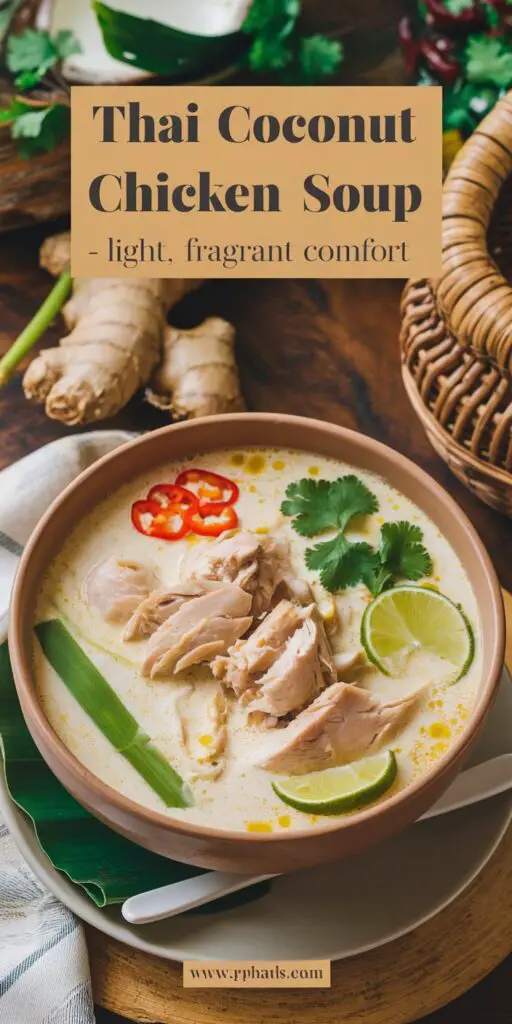
Marrying the aromatic wonders of Thai cuisine—ginger, lemongrass, chili, coconut milk—with tender chicken, Thai Coconut Chicken Soup emerges as a graceful swirl of comfort and vibrancy. Each slurp reveals tangy, creamy, and faintly sweet notes, underscored by optional chili heat. It’s a dish that feels simultaneously soothing and exotic, perfect for both chilly nights or when you crave a refreshing break from standard soup fare.
Armed with knowledge of balancing sweet, sour, salty, and spicy, you’re ready to orchestrate your own version of this Southeast Asian delight. Grab a fresh bunch of cilantro, a can of coconut milk, and your favorite protein. Then watch as your kitchen fills with the fragrance of ginger, lemongrass, and gently simmering chicken. After you’ve savored that last comforting spoonful, circle back to share your personal touches—did you spike it with extra lime, sub tofu, or add a swirl of peanut butter? Your creativity might encourage others to see just how adaptable (and enchanting) Thai soups can be when approached with an open mind and a love for layered flavors.