


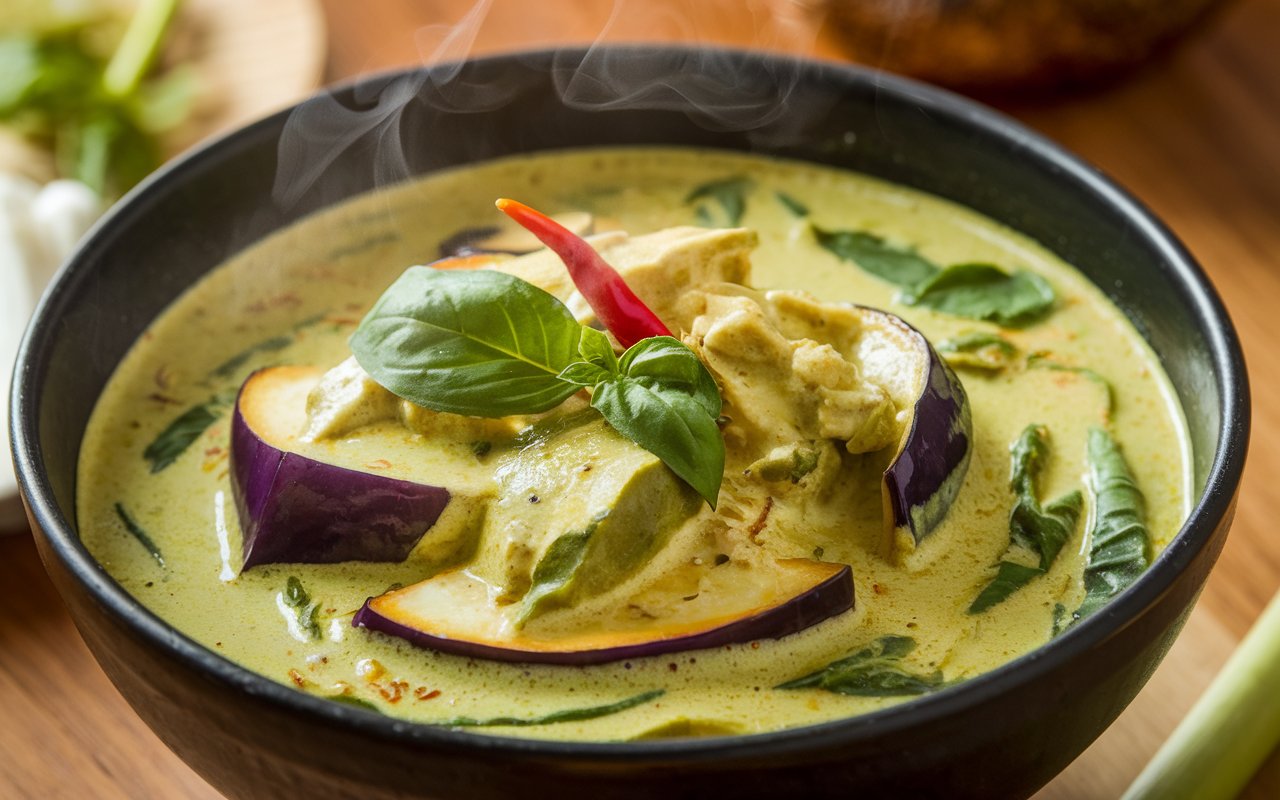
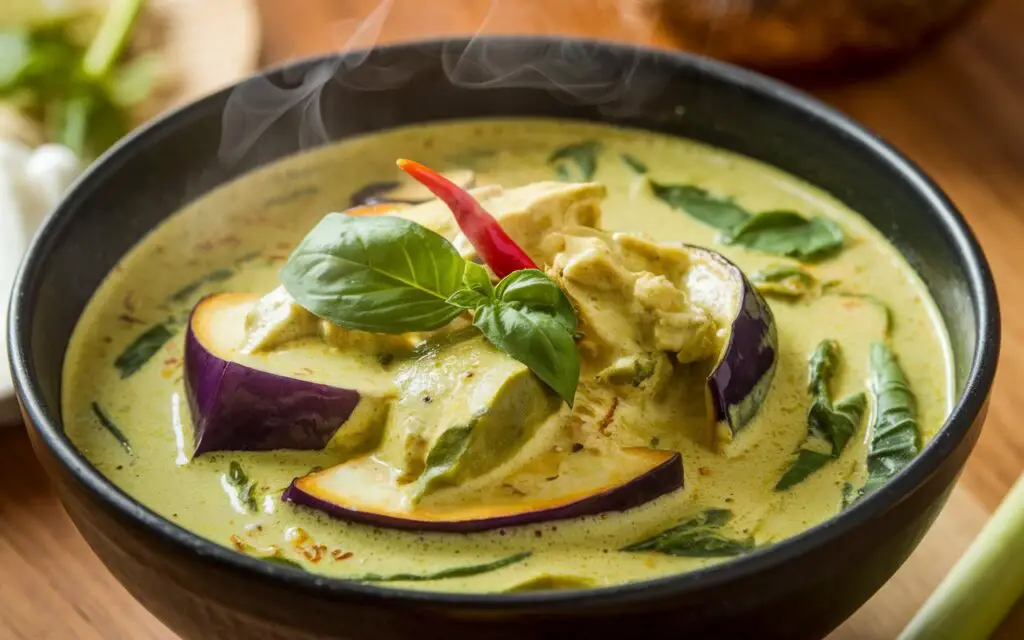
If you’ve ever ventured into the depths of Thai cuisine, you know the allure of Thai Green Curry—that creamy, coconut-infused broth brimming with fresh herbs, spices, and a fiery kick. Now, imagine pairing that velvety sauce with tender chunks of eggplant, which soak up the curry’s zingy flavors like a sponge. Thai Green Curry with Eggplant captures the essence of Thailand’s aromatic harmony: the balance of spicy chilies, fragrant lemongrass, and the gentle sweetness of coconut milk. It’s a dish that can transform even a humble midweek dinner into an exotic culinary journey—without requiring a plane ticket to Bangkok.
My personal affection for this curry began when I was introduced to Thai cuisine’s signature interplay of spicy, sweet, sour, and savory. Despite trying various green curries with chicken or seafood, I discovered that eggplant offered a unique texture, melding with the sauce to create a luscious bite. Over time, I learned the subtleties of layering in green curry paste, fresh herbs like Thai basil, and optional veggies or proteins. The outcome was always the same: a warm, invigorating stew that left my taste buds singing. Now it’s one of my go-to dishes for a quick but flavor-packed meal that satisfies cravings for both spice and creaminess.
In this article, we’ll walk through how to assemble Thai Green Curry with Eggplant—selecting the right eggplant variety, handling your curry paste, and mastering that sweet-heat balance so characteristic of Thai cuisine. Whether you’re an eggplant enthusiast or just dipping your spoon into Thai flavors for the first time, prepare for a dish that delivers a bold coconut-based spice with minimal fuss.

Section 1: Why Thai Green Curry with Eggplant Stands Out
- Eggplant’s Absorptive Magic
Eggplant acts like a sponge, soaking up the curry’s spicy, herbal qualities. Its tender flesh ensures each mouthful is loaded with the complexity of coconut milk, chilies, and aromatics. - Vibrant Curry Paste
Thai green curry paste typically features green chilies, lemongrass, galangal, and other herbs. Once simmered in coconut milk, the paste infuses layers of depth far beyond standard stew or soup broths. - Customizable Heat
From mild to scorching, you can tailor the spiciness by controlling the amount of curry paste or adding fresh chilies. Even non-spicy eaters can enjoy a milder version by choosing a gentler curry paste or adding extra coconut milk. - Quick, One-Pot Meal
With a jar of green curry paste or a homemade batch on hand, this dish often comes together in under 30 minutes. Perfect for nights when you’re craving something exotic yet stress-free.
Section 2: Ingredient Overview
Below is a table to help plan your Thai Green Curry with Eggplant:
| Ingredient | Quantity | Notes |
|---|---|---|
| Eggplant (Asian or small globe) | ~2 medium (about 1 lb) | Cut into bite-sized chunks; prefer firm, not overripe |
| Green Curry Paste (store-bought or homemade) | 2–3 tbsp (to taste) | Adjust for spice preference; brand differs in heat |
| Coconut Milk (full-fat recommended) | 1 can (13–14 oz) | Full-fat yields richer sauce, light if you want fewer calories |
| Vegetables (optional: bell peppers, zucchini, green beans) | 1–2 cups, sliced | Additional color and texture variations |
| Protein (optional: chicken, tofu, shrimp) | ~½–1 lb (if desired) | Skip or swap if you want a vegetarian or different protein |
| Onion or Shallots (thinly sliced) | 1 small | Adds a savory aromatic base |
| Garlic (minced) | 2–3 cloves | Optional but deepens flavor |
| Fish Sauce or Soy Sauce | 1–2 tbsp | Salty, umami note—fish sauce is classic in Thai dishes |
| Lemongrass (optional, bruised) | 1 stalk or 1 tsp paste | Extra citrusy layer if you have it |
| Ginger or Galangal (optional) | 1–2 tsp, minced | Alternative or addition to lemongrass if not in curry paste |
| Sugar or Palm Sugar | 1–2 tsp (optional) | Balances heat and salt, common in Thai recipes |
| Thai Basil or Cilantro (for garnish) | ~¼ cup, chopped | Fresh herbal finishing note |
| Oil (vegetable or coconut) | 1–2 tbsp | For sautéing curry paste, onion, or protein |
| Salt & Pepper | To taste | Season carefully, especially if using salty curry paste |
| Lime Wedges | (optional garnish) | Citrus pop for finishing |
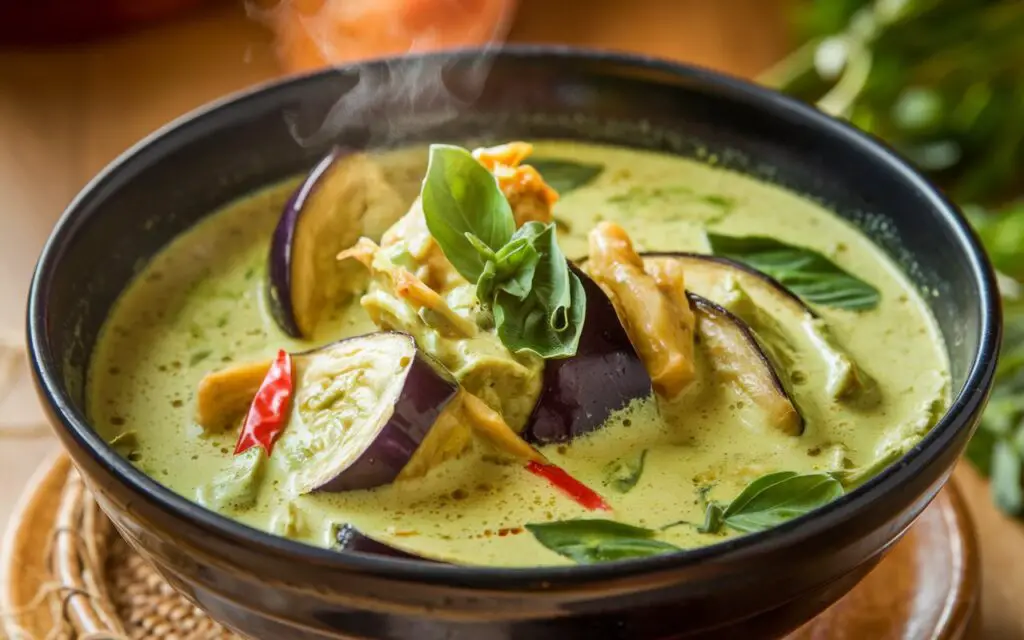
Section 3: Step-by-Step Recipe (Approx. 30 Minutes)
- Prepare Eggplant & Optional Protein
- Wash eggplants. If using Asian eggplants, you can slice them into thick rounds or half-moons. For globe eggplants, cut into cubes, around 1 inch. Sprinkle with a bit of salt and let them rest ~5 minutes, then pat dry to remove bitterness.
- If adding protein like chicken (bite-sized pieces) or shrimp, season lightly with salt and pepper.
- Sauté Aromatics & Curry Paste
- Warm 1 tablespoon oil in a large skillet or wok over medium-high heat. If adding onions/shallots, sauté them for ~2–3 minutes until they soften. Stir in minced garlic if you like, cooking another 30 seconds without browning.
- Add the green curry paste, pressing it into the oil. Let it sizzle for about 1 minute—this “blooms” the spices. If using lemongrass or ginger, add now to infuse flavor.
- Combine Coconut Milk & Broth
- Pour in the coconut milk slowly, stirring to incorporate it with the curry paste. If you prefer a soupier consistency or have multiple veggies, add ~1 cup vegetable or chicken broth to stretch the sauce.
- Reduce heat to medium. Bring to a gentle simmer, letting the paste dissolve fully in the coconut milk.
- Add Eggplant & Protein
- Stir in the eggplant pieces. If using uncooked protein (chicken, shrimp), add them now. Tofu can also go in now if you’d like it to absorb the sauce.
- Season with fish sauce (or soy sauce for a vegetarian version), plus 1 teaspoon sugar/palm sugar if you like a mild sweet note. Mix well.
- Simmer & Adjust
- Let the curry simmer for ~10 minutes, or until eggplant is tender but not mushy. Chicken or tofu should be fully cooked, shrimp should be pink and opaque.
- If the sauce thickens too much, add a splash of water or broth. If it’s too thin, simmer uncovered to reduce. Taste for saltiness, heat, and sweet balance. Adjust with extra curry paste for spiciness, fish sauce for salt, or sugar for sweetness.
- Add Additional Veggies
- If you want other veggies like bell peppers, zucchini, or green beans, toss them in about 5 minutes before finishing to avoid overcooking. For crunchy green beans, add them earlier or par-cook if you prefer them softer.
- Garnish & Serve
- Once the eggplant is tender and the proteins are done, turn off the heat. Stir in fresh Thai basil or cilantro.
- Serve the curry in bowls with steamed jasmine rice or noodles. Offer lime wedges for a final spritz of tang. Enjoy piping hot.
Section 4: Ensuring Authenticity & Flavor
- Pick a Good Curry Paste
- Different brands vary widely in heat and herbs. Maesri, Mae Ploy, or homemade can drastically change your outcome. Start with 2 tablespoons, adding more if it’s too mild.
- Eggplant Variety
- Thai eggplants (small, greenish-white) are often used in Thailand. If not available, Japanese or Chinese eggplants are decent substitutes, or even small globe eggplants, salted to remove bitterness.
- Balancing the Big Four
- Thai cuisine famously juggles salty (fish sauce), sweet (sugar, coconut milk), sour (lime, lemongrass), and spicy (chilies, curry paste). Adjust each axis to fit your palate.
- Cook Eggplant Thoroughly
- Undercooked eggplant remains spongy and slightly bitter. Ensure it’s soft enough to easily pierce with a fork but not disintegrating in the sauce.
Section 5: Flavor Variations
- Add Vegetables Galore
- Include mushrooms, baby corn, or bamboo shoots for even more texture variety. This also helps the dish feed more people without extra cost.
- Protein Swaps
- Chicken is typical, but tofu, shrimp, or even firm fish (cod, salmon) can stand in. For a vegetarian version, obviously skip fish sauce or use a fish sauce alternative.
- Citrus Tweak
- Lemongrass and lime are classic. If you adore sour notes, swirl in extra lime juice or tamarind paste. For a slightly sweeter citrus flair, sub lemon or even a bit of orange juice.
- Top It With Crunch
- A garnish of crushed peanuts or fried shallots can bring a crispy contrast to the soft curry. Perfect for those who adore textural play.
Section 6: Serving Suggestions
- Steamed Jasmine Rice: Traditional accompaniment that soaks up the sauce.
- Brown Rice or Cauliflower Rice: If you’d rather a fiber boost or a low-carb approach.
- Rice Noodles: Another option. Cook them separately, then ladle curry on top.
- Side Salad: A simple cucumber, tomato, and onion salad with a light dressing can offset the curry’s heat.
Section 7: FAQ – Thai Green Curry with Eggplant
Q1: What’s the difference between green, red, and yellow Thai curry pastes?
A1: Green typically uses green chilies, fresh herbs, giving a grassy heat. Red uses red chilies for a warmer, sometimes spicier profile, while yellow is milder, often with turmeric. Each yields distinct color and depth.
Q2: Can I freeze leftover curry?
A2: Yes, though coconut milk may separate upon thawing. Reheat gently, stirring to re-emulsify. Eggplant’s texture might soften further, but it’s generally still tasty.
Q3: Is Thai basil essential, or can I use regular basil?
A3: Thai basil has an anise-like quality absent in sweet basil. In a pinch, sweet basil works, though the flavor changes slightly. Cilantro can also add brightness.
Q4: How can I mellow the spiciness if it’s too hot?
A4: Stir in more coconut milk, a touch of sugar, or serve it with plenty of rice to diffuse the chili heat. Avoid stirring in water, as it dilutes flavor overall.
Q5: Do I need to peel eggplant?
A5: Usually not. The skin on Asian eggplants is thin and edible, while small or medium globe eggplants also have reasonably tender skin. Large, mature ones might be tough, so peel if you prefer.
Conclusion
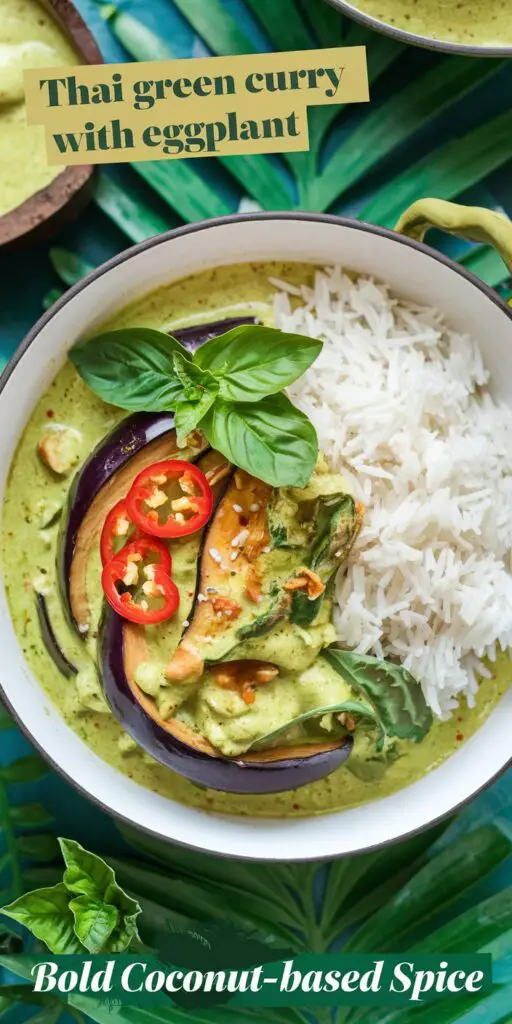
Uniting coconut milk’s mellow sweetness with the bright, peppery blast of green curry paste, Thai Green Curry with Eggplant takes your taste buds on a short but thrilling detour to Southeast Asia. The eggplant’s porous texture seamlessly absorbs the sauce, culminating in a dish that flaunts both a robust chili kick and gentle, creamy undertones. Perfect for a quick dinner or a weekend feast, it requires little more than a pot, some vegetables, and an adventurous spirit.
Now that you’ve grasped the fundamentals—choosing your curry paste, balancing sweet-salty-sour-spicy, and cooking eggplant to just the right tenderness—it’s time to embark on a Thai culinary journey at home. Grab that jar of green curry paste, pick a few fresh eggplants, and let the sizzle of chili-laced coconut milk fill your kitchen. Then return here to share your personal stamp—did you add mushrooms, slip in a spoonful of peanut butter, or toss in extra chilies? Your creativity could encourage fellow spice lovers to see how easily they can replicate Thai flavors in their own kitchens.