



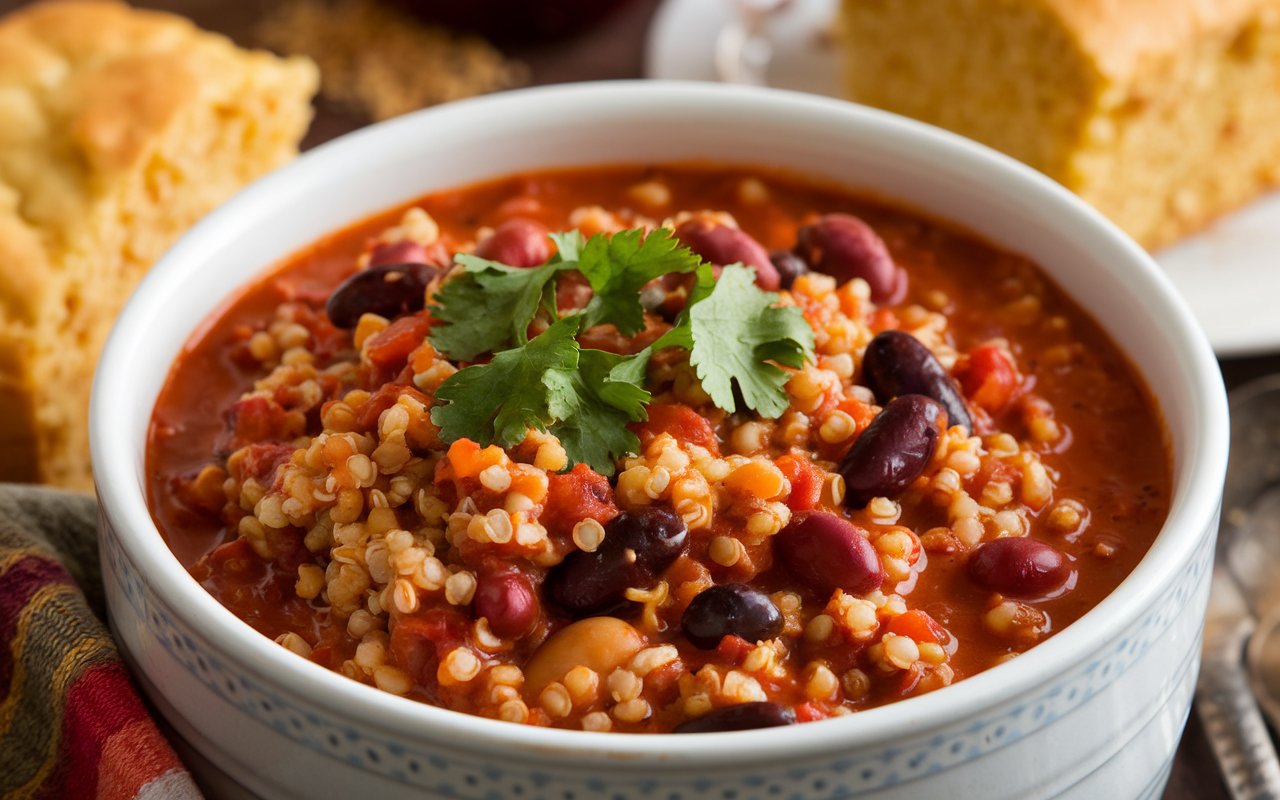
Yearning for a satisfying chili that’s rich in flavor, packed with protein, but not reliant on meat? A hearty Three-Bean Quinoa Chili might just be the ticket. Envision a pot brimming with beans (kidney, black, pinto, or your chosen trio) mingled with vegetables and spiced tomato broth, all thickened by quinoa—the pseudo-grain that adds a pleasantly chewy texture and extra protein. Each ladleful merges chili’s familiar smoky, spiced undertones with the balanced nutrition of beans and quinoa, guaranteeing a dish that can warm you on a cold day or serve as a crowd-friendly staple at potlucks.
My path to quinoa chili began when I craved a vegetarian option robust enough to please even the most committed carnivores. Traditional bean chili was good, but I found the addition of quinoa introduced a subtle bite that made each spoonful more substantial—almost reminiscent of ground meat’s texture, yet wholly plant-based. Over multiple tries, I discovered the right ratio of quinoa to beans prevented an overly thick stew while ensuring it remained a true chili, not just a vegetable soup. Now, Three-Bean Quinoa Chili stands as one of my go-to winter meals (or any season, really), bridging health, flavor, and budget-friendly ingredients. The result is a high-fiber, protein-dense meal that doesn’t compromise on that smoky chili essence we all love.
In this guide, we’ll cover how to prepare Three-Bean Quinoa Chili—from selecting and rinsing your beans (if not canned) and prepping quinoa, to layering spices, simmering to marry flavors, and finishing with classic chili garnishes. Whether you’re a vegan, vegetarian, or simply seeking a break from meat-based chilis, prepare for a recipe that offers all the heartiness of chili with an extra nutritional boost from quinoa.

Why Three-Bean Quinoa Chili Excels
- Protein & Fiber Punch
Beans already supply ample protein and fiber. Quinoa adds even more, making this dish particularly satiating and beneficial for stable energy levels. - Meaty Texture Without Meat
Quinoa’s slight chew can mimic or replace the typical ground meat mouthfeel in chili, while beans provide robust structure. - Easy & Flexible
Use whichever beans you prefer (kidney, black, pinto, or even chickpeas). Adjust the spice level, toss in extra veggies, or keep it classic with tomatoes and peppers. - One-Pot Meal
Minimal cleanup, straightforward method: sauté aromatics, add ingredients, simmer, and it’s ready to ladle into bowls topped with your favorite chili garnishes.
Ingredient Overview
Serves ~6–8:
| Ingredient | Quantity | Notes |
|---|---|---|
| Beans (three varieties) | 1 can each (15 oz) of black, kidney, pinto (or your choice), drained and rinsed | About 4–5 cups cooked total from scratch if not using canned |
| Quinoa (uncooked) | ~¾–1 cup | Rinse well if not pre-rinsed, to remove bitterness |
| Onion (chopped) | 1 medium | Sauté base for chili |
| Bell Peppers (chopped, optional) | 1–2 (various colors) | Additional flavor and color |
| Garlic (minced) | 2–3 cloves | Classic chili flavor |
| Diced Tomatoes (canned) | 1 can (14–15 oz) | Or use ~2 cups fresh chopped tomatoes |
| Tomato Sauce or Crushed Tomatoes (optional) | ~1 cup | If you want a saucier chili, add more tomato sauce |
| Vegetable Broth (or water) | ~3–4 cups | Enough to cook quinoa and keep the chili consistency |
| Chili Powder, Cumin, Paprika | ~1 tbsp chili powder, 2 tsp cumin, 1 tsp paprika | Adjust to taste. Add a pinch of cayenne for heat. |
| Salt & Pepper | to taste | Basic seasoning |
| Olive Oil | ~1–2 tbsp | For sautéing onion/garlic |
| Optional Toppings (cheese, avocado, cilantro, jalapeños) | as desired | For final garnish, pick dairy-free or standard cheese, sour cream, etc. |
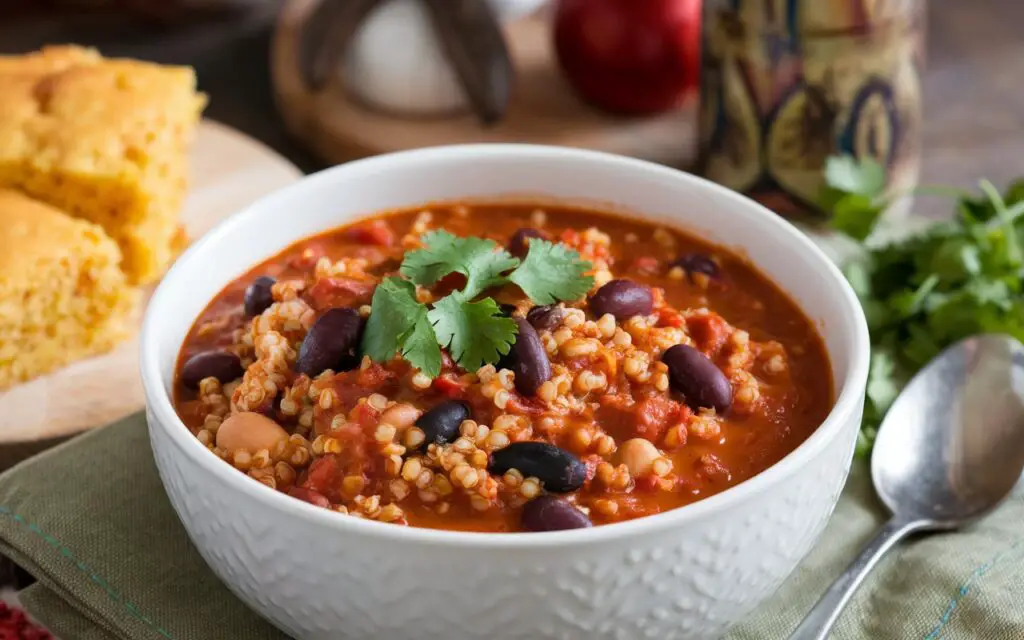
(Note: If you want a smoky dimension, incorporate a teaspoon of smoked paprika or add chipotle peppers in adobo. If you prefer a mild chili, choose a gentle chili powder or reduce the total amount.)
Step-by-Step Recipe (Approx. 30–40 Minutes)
- Rinse Quinoa
- If your quinoa isn’t labeled “pre-rinsed,” place it in a fine mesh sieve and rinse under cold water ~1 minute, stirring gently. This removes the saponin that can cause bitterness.
- Sauté Aromatics
- In a large pot or Dutch oven, warm 1 tablespoon olive oil over medium heat. Add chopped onion (and bell peppers if using). Sauté ~5 minutes until onion is translucent. Stir in minced garlic for the last 30–60 seconds, avoiding browning.
- Add Spices
- Stir in chili powder, cumin, paprika, or any chosen spice blend. Cook ~30 seconds to bloom the spices in the oil, intensifying flavor.
- Incorporate Beans & Liquids
- Add your drained beans (3 cans total), diced tomatoes, plus ~3 cups vegetable broth or water. Season with salt and pepper. Bring to a gentle simmer.
- Add Quinoa
- Stir in ~¾–1 cup rinsed quinoa. The pot should have enough liquid to submerge it. If the mixture looks too thick, add more broth or water. Quinoa expands as it cooks, absorbing liquid. Keep heat at a low simmer, cover partially or fully, and let it cook ~15–20 minutes.
- Check Texture
- After ~15 minutes, test quinoa for doneness (it should have an opened “spiral” tail). The chili might be thick or slightly watery, depending on your ratio of liquid to quinoa. Adjust thickness: if too thick, add liquid; if too thin, simmer uncovered ~5 extra minutes.
- Taste & Adjust
- Sample the chili. Add salt, pepper, or more chili powder/cumin if you want stronger flavor. If you crave smokiness, a dash of liquid smoke or smoked paprika can help. If you want more tang, a spoonful of tomato paste or vinegar can brighten the taste.
(Note: If you want a thicker, stew-like chili, you can mash a portion of the beans. If you prefer a soupy texture, keep the bean shapes intact and add more broth.)
Flavor Variations
- Roasted Veggies
- Roast zucchini, peppers, or sweet potatoes separately, then fold them into the chili near the end. This intensifies the flavors of those vegetables.
- Southwestern Spice
- Add a teaspoon of dried oregano plus a pinch of cinnamon or cocoa powder for a southwestern-chocolate undertone reminiscent of some mole flavors.
- Green Chili Edition
- Incorporate a can of diced green chiles or jalapeños for a mild to medium heat. Also, you could use tomatillo sauce or green enchilada sauce as part of the liquid for a “verde” flair.
- Creamy Touch
- Stir in a little plain yogurt or a nondairy creamer to create a creamier chili. This approach can mellow the heat and add a silky texture reminiscent of a chowder.
Serving & Storage
- Plating
- Ladle chili into bowls. Offer an array of toppings: shredded cheese (or vegan cheese), diced avocado, chopped cilantro, jalapeño slices, sour cream, or tortilla strips.
- Side Options
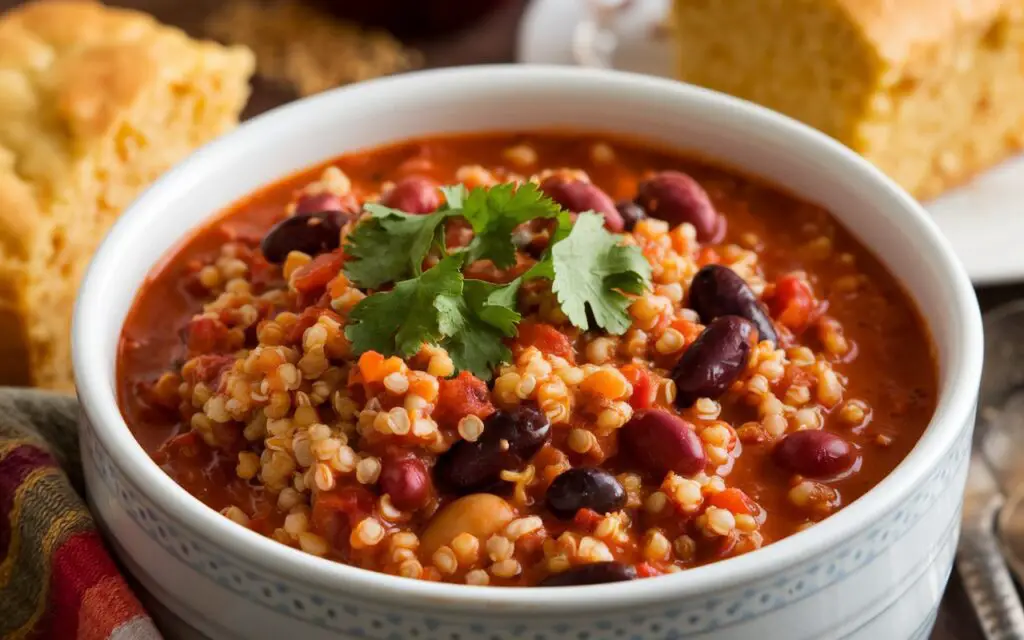
- The chili can stand alone. If you want a side, consider cornbread, a light salad, or warmed tortillas.
- Leftovers
- Refrigerate in a sealed container up to 3 days. The chili often tastes better the second day as flavors meld. Reheat gently in a pot, adding water or broth if thickened too much.
- Freezing
- Quinoa-based chili freezes decently, though the quinoa can soften further upon thawing. Store in freezer-safe containers up to 2 months. Thaw overnight in fridge, reheat thoroughly.
Achieving a Balanced Chili
- Spice Control
- Start with moderate chili powder. You can always add more heat with peppers or flakes. If it’s too spicy, swirl in some yogurt or a splash of cream at the end.
- Liquid Ratio
- Quinoa expands roughly 3–4 times its original volume. Ensuring enough liquid remains in the pot is crucial. Monitor and stir occasionally to prevent scorching at the bottom.
- Don’t Overcook
- The beans are typically pre-cooked (canned or from scratch), so simmer them gently. Over-simmering can break them down too far, though some might prefer that for thickness.
- Bright Finishing Notes
- If the chili tastes flat near the end, a squeeze of lime or dash of vinegar can lift the flavors. Alternatively, add a pinch of sugar if it’s too acidic.
FAQ – Three-Bean Quinoa Chili
Q1: Can I skip one of the bean types?
A1: Absolutely. Use whatever beans you have—kidney, black, pinto, even navy beans. The “three-bean” label is flexible. Two types still yield good variety.
Q2: Does the quinoa have a strong flavor?
A2: Quinoa is relatively mild, slightly nutty. In chili, it’s overshadowed by the tomato/spice profile, mostly serving to enhance texture and protein.
Q3: Could I add ground meat for a non-vegetarian version?
A3: Sure, you can brown ground beef or turkey first, then proceed. Keep the beans if you want, or reduce them. The presence of quinoa remains beneficial for texture and nutrition.
Q4: My chili is bitter—why?
A4: Possibly un-rinsed quinoa caused bitterness, or an overabundance of chili powder or burnt onion. Rinsing quinoa and gentle sauté of onion at the right temperature typically prevents that. Taste and adjust with sweetness or acidity if bitterness appears.
Q5: Do I have to simmer it for a long time like a classic chili?
A5: Not necessarily. Once quinoa is cooked (~15–20 minutes), the dish is done. Longer simmering can deepen flavor, but it’s not mandatory. Just ensure you have enough liquid if you extend cooking time.
Conclusion
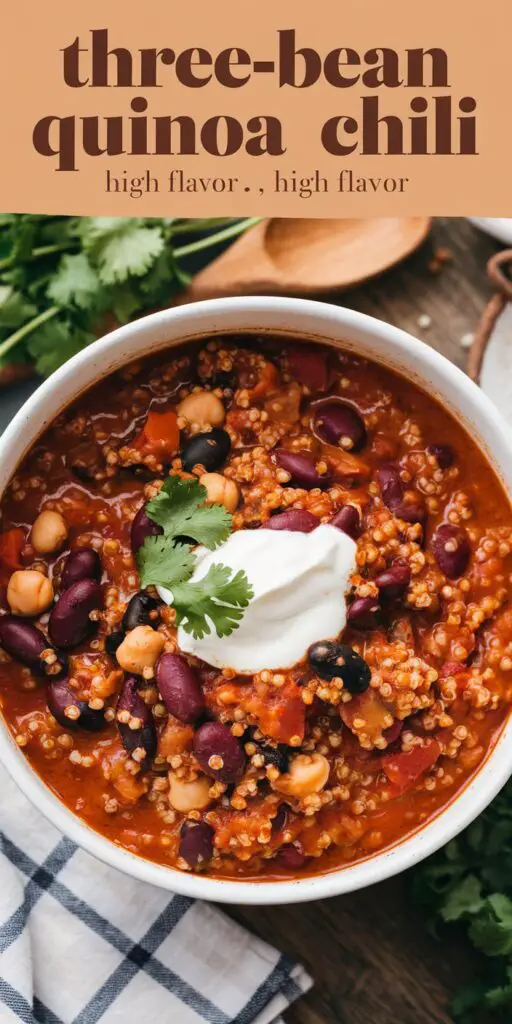
Taking the comforting, hearty spirit of chili and aligning it with a meatless, high-fiber approach, this Three-Bean Quinoa Chili weaves beans, vegetables, and quinoa into a robust stew bursting with southwestern flavors. Each spoonful features the gentle chew of quinoa plus an assortment of beans, united under a mildly spicy or richly spiced tomato-based sauce. Ideal for cold weather, game day, or simply a dinner craving something both cozy and healthful, it’s a recipe that welcomes you to customize with garnish galore.
Now that you know the steps—sautéing aromatics, adding beans and quinoa, simmering to unify flavors—why not serve it up in a big steaming bowl soon? Once you enjoy that final, warming spoonful—maybe accompanied by a wedge of cornbread or topped with fresh cilantro—circle back to share your personal twist. Did you swap in chickpeas, add roasted veggies, or discover a new topping that brings it over the top? Your variation might inspire other chili aficionados to see that a bowl can be plant-focused while retaining the hearty essence we all associate with this classic comfort dish.