




Minestrone soup, with its medley of beans, pasta, tomatoes, and vegetables, represents the heart of Italian home cooking. It’s cozy, filling, and flexible—welcoming a variety of seasonal produce. Yet if you ever hanker for an even more veggie-packed approach, Veggie-Loaded Minestrone Soup might be your perfect remedy: a pot that brims with more robust vegetables than the classic formula, offering a nourishing meal so vibrant it practically hums with health. Each spoonful balances the savor of simmered tomatoes and broth with the natural sweetness of carrots, zucchini, peppers, and maybe even a handful of leafy greens.
My love story with minestrone stems from childhood dinners, where a pot of soup simmering on the stovetop filled the house with warmth. Over time, though, I realized that standard minestrone—while already veggie-forward—could accommodate even more produce if I swapped out or expanded certain ingredients. By doubling the typical veggie ratio, choosing a hearty bean, and tweaking the seasoning, I found a version that felt both classic and newly energizing. Now, whenever a crisp evening invites me to warm up in the kitchen, or I want a single meal that covers multiple nutritional bases, this overstuffed minestrone is my go-to.
In this detailed guide, we’ll explore how to build a Veggie-Loaded Minestrone Soup that adheres to the fundamentals of the Italian classic but hits that extra stride of vegetable density. Whether you’re a soup devotee seeking a fresh spin or simply hankering for a one-bowl wonder that fuels you with vitamins, this minestrone variation aims to exceed your expectations—and your daily veggie quota.

Why Veggie-Loaded Minestrone Soup?
- Italian Comfort, Amplified
Minestrone is already comfort in a bowl, but layering in more veggies intensifies that comforting aspect—visually, nutritionally, and flavor-wise. - Complete & Balanced
With beans, pasta (optional), and an array of vegetables, the soup can serve as a standalone meal. Its fiber, protein, and diverse vitamins make it a healthful choice, especially if you keep the sodium in check. - Adaptable to Pantry & Seasons
The beauty of minestrone is that it readily welcomes whatever produce is at hand—root veggies in colder months, fresh zucchini or green beans in summer. This veggie-loaded version simply emphasizes that adaptability further. - Simple One-Pot Execution
By simmering everything in a single pot, you capture the synergy of flavors as they mingle. Cleanup remains manageable, and the aroma that drifts around your home can be deeply reassuring.
Ingredient Overview
Here’s a quick breakdown:
| Ingredient | Quantity | Notes |
|---|---|---|
| Onion (chopped) | 1 medium | Foundation for sautéing |
| Carrots (chopped) | 2–3 | Traditional minestrone base |
| Celery (chopped) | 2–3 stalks | Completes the classic soup mirepoix |
| Zucchini or Yellow Squash (chopped) | 1–2 cups | For a summery, fresh bite |
| Bell Pepper (chopped) | 1 (optional) | Adds color and sweetness |
| Leafy Greens (spinach or kale) | 2 cups | Boost the soup near the end of cooking |
| Beans (cannellini, kidney, or garbanzo) | 1 can (14–15 oz), drained | Great for protein and texture |
| Diced Tomatoes | 1 can (14–15 oz) | Fire-roasted if possible for extra depth |
| Vegetable Broth (or chicken) | ~6 cups | Adjust for desired thickness |
| Pasta (small shells, ditalini) (optional) | ~1 cup (uncooked) | Traditional in minestrone, but can skip if you prefer no grains |
| Olive Oil | 2 tbsp | For sautéing |
| Garlic (minced) | 2–3 cloves | Enhances the aromatic base |
| Italian Seasoning (basil, oregano, thyme) | 1–2 tsp | Pre-made blend or your own mix |
| Salt & Pepper | To taste | Season carefully |
| Parmesan Cheese (optional garnish) | ~¼ cup, grated | For a final savory flourish |
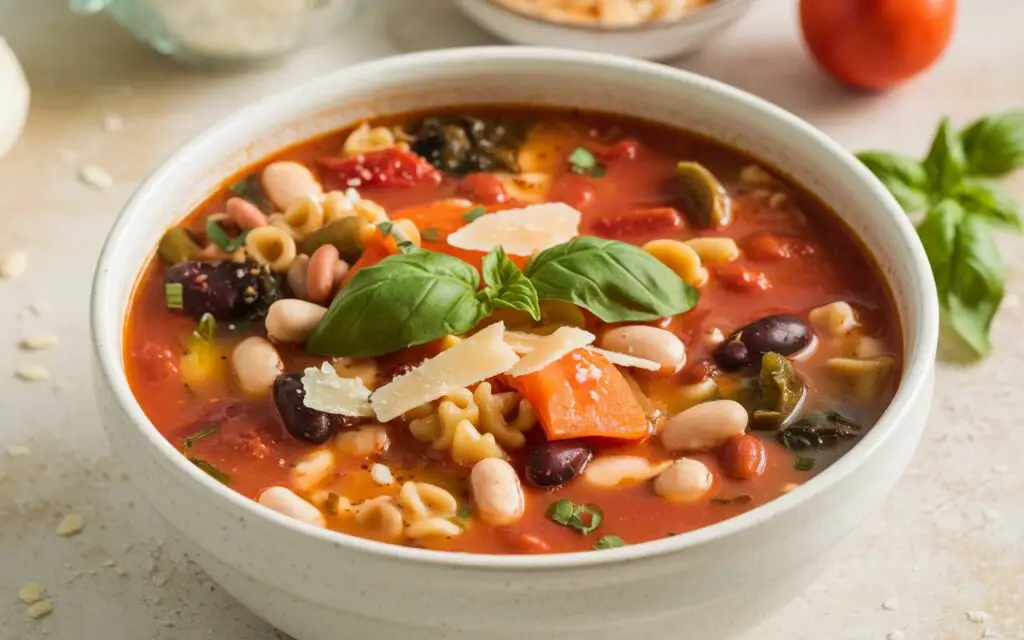
Step-by-Step Recipe (Approx. 40–50 Minutes)
- Sauté the Base Aromatics
- Warm 2 tablespoons of olive oil in a large pot over medium-high heat.
- Add chopped onion, carrots, and celery. Sauté for ~5–7 minutes, stirring occasionally until the onions are translucent and the carrots/celery start to soften. Add minced garlic for the last 1 minute.
- Incorporate Additional Veggies
- Stir in chopped zucchini (or squash), bell pepper if using, and any extra hearty vegetables you desire. Cook for another 3–4 minutes, letting them gain a slight sear or soften a bit.
- Season & Add Liquid
- Sprinkle 1–2 teaspoons of Italian seasoning (or a combination of dried basil, oregano, thyme) over the veggies, stirring to coat.
- Pour in the can of diced tomatoes (with juices) and about 6 cups of broth. Increase the heat to bring everything to a gentle boil.
- Optional Pasta Step
- If including pasta, add it now. Some prefer cooking the pasta separately to avoid sogginess—particularly if you expect leftovers. If you do it in the soup, be mindful that it can soak extra liquid as it cooks.
- Let the soup simmer for about 10–15 minutes, partially covered if you’d like, to unify flavors.
- Beans & Greens
- Stir in the drained beans. If you’re adding spinach or kale, do so in the final 5–7 minutes of simmering. Spinach wilts quickly, whereas kale can go a bit longer.
- Taste the soup. Adjust salt, pepper, or add more seasoning if needed.
- Finish & Serve
- Once the pasta (if used) is cooked al dente and the vegetables are tender, turn off the heat.
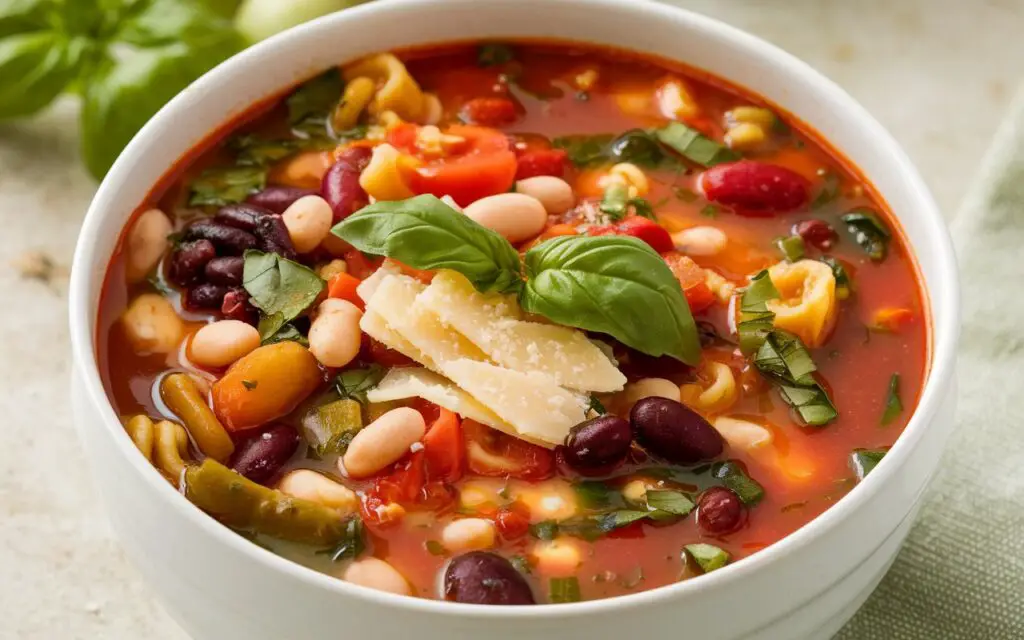
- Ladle into bowls. Top with grated Parmesan if you enjoy that savory, cheesy element. Serve with crusty bread or crackers.
Tips for Best Texture & Flavor
- Don’t Overcook Vegetables
- Part of the joy in minestrone is distinct veggies in each bite. Keep an eye on them, especially if adding more delicate produce (like zucchini) early on.
- Mind the Pasta
- Over time, pasta can absorb broth, thickening the soup or even turning soggy. If you anticipate leftovers, consider cooking the pasta separately and adding only what you need to each portion.
- Use Quality Broth
- Since this soup is heavily vegetable-based, a flavorful broth is critical. Homemade or a reliable store-bought brand can elevate the overall result.
- Season at Multiple Stages
- Lightly season as you sauté veggies, after adding tomatoes/broth, and again near the end. Building flavor in layers ensures a robust, not bland, soup.
Variations & Add-Ins
- Spicy Edge
- Include a pinch of red pepper flakes or diced jalapeños if you enjoy heat.
- Protein Enhancements
- Stir in browned ground turkey, leftover rotisserie chicken, or small turkey meatballs if you prefer a more protein-forward meal.
- Cheese Stuffed
- For a decadent approach, swirl in a spoonful of ricotta or top each bowl with a mini mozzarella ball for a fun surprise.
- Herbal Freshness
- If you love fresh basil, tear some leaves and add them just before serving for a bright, aromatic note.
Serving Suggestions
- Bread Basket: Pair with a crusty baguette, garlic bread, or focaccia to complement the soup’s heartiness.
- Light Salad: A simple green salad with vinaigrette can balance the soup’s more robust flavors.
- Leftover Storage: Minimize pasta in the main pot if you plan to store leftovers. Keep extra pasta separate in the fridge, combining them when reheating to avoid sogginess.
FAQ – Veggie-Loaded Minestrone Soup
Q1: Can I freeze the soup?
A1: Yes, though it’s best to omit pasta before freezing since it can turn mushy upon thawing. Add fresh pasta when reheating, or cook it separately.
Q2: Are there other beans I can use?
A2: Certainly. White beans like great northern or navy beans, red kidney beans, or even chickpeas can all work. The soup is flexible.
Q3: How do I keep the soup from being too acidic with so many tomatoes?
A3: A small pinch of sugar can round out acidity. Adjust with broth or add a small swirl of cream if you prefer a less tangy note.
Q4: Can I skip the celery, carrots, or onion?
A4: You can skip or substitute them, although these form a classic aromatic base for minestrone. If you omit them, consider adding other veggies or seasonings to maintain complexity.
Q5: Could I make it a thicker stew?
A5: Absolutely. Reduce the broth by half or simmer uncovered longer to concentrate flavors. You might also puree a cup of the soup (veggies/beans) and stir it back in for a thicker consistency.
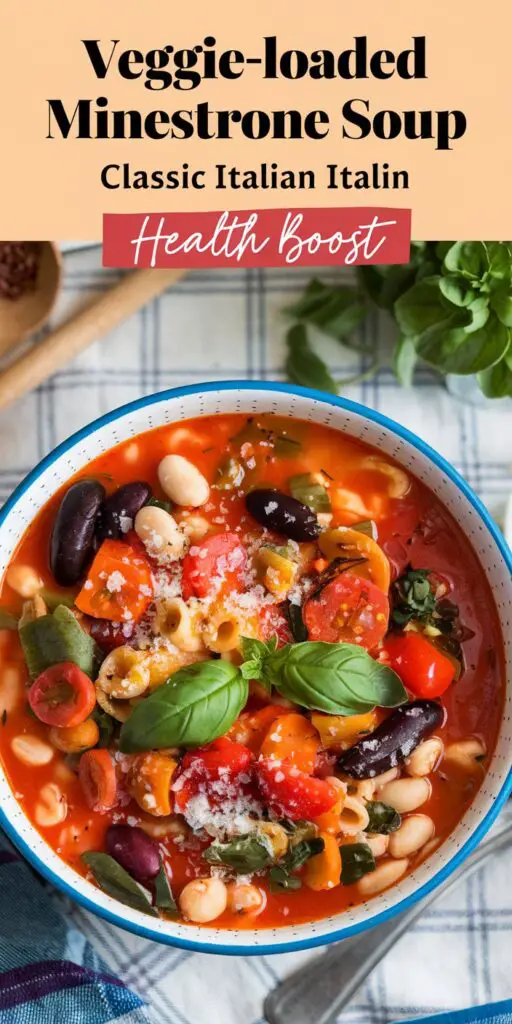
Elevating a classic dish known for its vegetable-forward essence, Veggie-Loaded Minestrone Soup embodies the comforting warmth of traditional minestrone while pushing the envelope on how many veggies a single pot can embrace. Each spoonful layers the mild sweetness of carrots, the earthy presence of legumes, and a swirl of nourishing greens, all underpinned by fragrant herbs and tomatoes. It’s the kind of meal that can chase away chills, fuel you with nutrients, and spark that satisfying “I feel good” glow that only a richly robust soup can deliver.
Now that you’ve discovered how easily you can amplify a standard minestrone, why not gather an armful of produce, clear some space on the stove, and let the aromas of simmering vegetables fill your kitchen? Once you’ve warmed your hands around that first bowl, consider sharing your personal modifications—did you add extra zucchini, swirl in pesto, or top it with a dollop of Greek yogurt for tang? Your unique spin might encourage others to experiment and see just how versatile and nutritious this soup can be.