



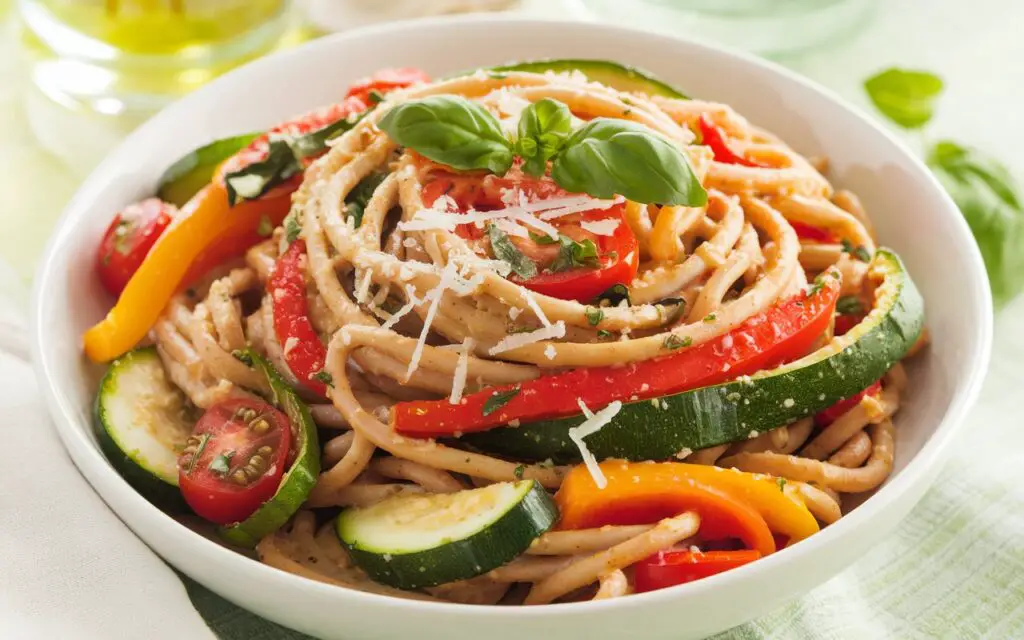
Picture a bowl of pasta primavera, the bright essence of spring captured in a dish loaded with colorful vegetables and a gentle sauce—light enough to highlight the produce, yet still comforting when tossed with noodles. Now consider a whole wheat twist, offering the familiar pasta experience but with a slightly nuttier taste and boosted fiber content. This is Whole Wheat Pasta Primavera, a meal that merges the classic approach of lightly sautéed or blanched veggies, a mild sauce (often something akin to a light cream or olive oil–based coating), and the robust chewiness of whole grain noodles. The result? A dinner that tastes fresh and vibrant without compromising on heartiness.
My personal bond with pasta primavera began in a bid to incorporate more vegetables into my meals, seeking something beyond a tomato-based or heavy cream-laden sauce. The original idea behind primavera—to celebrate the flavors of spring’s earliest produce—lent itself to a fluid recipe that changes with the seasons. Over time, I found that switching to whole wheat pasta not only added a pleasant, slightly earthy note but also made the dish more sustaining, preventing that post-pasta slump. Now, Whole Wheat Pasta Primavera is my go-to for a colorful, versatile dinner: easy to adapt with whichever vegetables are in peak condition, or whichever I happen to have on hand in the fridge.
In this guide, we’ll explore how to assemble Whole Wheat Pasta Primavera—from selecting your vegetable assortment and cooking them for optimal color and texture, to choosing a sauce approach that preserves the dish’s hallmark freshness. Whether you’re a fan of “veg-forward” plates or simply want a pasta that doesn’t weigh you down, prepare for a recipe that merges health-conscious choices with a lively, palate-pleasing result.

Why Whole Wheat Pasta Primavera Resonates
- Celebrates Fresh Produce
Vegetables star in this dish, yielding bright colors and varied textures. The mild sauce supports them rather than drowning them. - Healthier Carbohydrate Base
Whole wheat noodles contain more fiber and micronutrients than refined pasta, leading to slower digestion and a satisfying fullness. - Light Yet Comforting
The sauce can be kept modest—often just a bit of olive oil, a small swirl of cream, or a light cheese dusting—making this a dinner that’s both comforting and easy on the stomach. - Flexible to Seasonal Shifts
Swap in whichever veggies are fresh or on sale. From asparagus in spring to zucchini in summer or broccoli in cooler months, the concept remains the same.
Ingredient Overview
Serves ~4–5:
| Ingredient | Quantity | Notes |
|---|---|---|
| Whole Wheat Pasta (e.g., penne, fusilli, or spaghetti) | ~12 oz (¾ box) | Choose your preferred shape—short for chunkier veg, or long if you like that experience |
| Assorted Vegetables (e.g., broccoli florets, zucchini, bell peppers, carrots, cherry tomatoes) | ~4–5 cups chopped total | Aim for a color mix; slice or chop to uniform bite-size |
| Onion (chopped) | 1 small (optional) | Adds aromatic depth |
| Garlic (minced) | 2–3 cloves | Key flavor booster |
| Olive Oil | ~2–3 tbsp | For sautéing the veggies |
| Salt & Pepper | to taste | Basic seasoning for vegetables and sauce |
| Optional Protein (chicken strips, shrimp, tofu) | ~1 lb (if desired) | For those seeking a heartier meal, can be sautéed separately or with veggies |
| Sauce Approach (light cream, or olive oil + pasta water, or a small bit of butter) | see steps | Minimal to keep the dish fresh, can be just a drizzle of oil or a splash of cream |
| Herbs (fresh basil, parsley, or thyme) | ~¼ cup chopped (optional) | Elevates flavor at the end |
| Parmesan Cheese (optional) | ~½ cup grated | If you want a subtle cheesy finish |
(Note: The “primavera” concept welcomes nearly any vegetable. Just consider cooking times so you don’t end up with some veggies overcooked while others remain underdone.)
Step-by-Step Recipe (Approx. 20–30 Minutes)
- Boil Pasta
- Fill a large pot with water. Salt generously and bring to a boil. Cook ~12 oz whole wheat pasta according to package instructions, typically 8–9 minutes for al dente. Reserve ~½ cup pasta water before draining. Keep pasta warm.
- Chop & Pre-Cook Harder Veggies
- If using carrots, broccoli, or other dense vegetables, consider giving them a brief blanch in the pasta water or a separate small pot for ~1–2 minutes to jumpstart cooking. This step ensures they’re not too hard in the final sauté. Alternatively, you can sauté them first, adding softer veggies later.
- Sauté Onion & Garlic
- In a large skillet or sauté pan, warm 1–2 tablespoons olive oil over medium-high heat. Add chopped onion if using. Cook ~2–3 minutes until translucent. Stir in minced garlic for the last 30–60 seconds, watching that it doesn’t burn.
- Add Veggies
- Next, toss in your vegetable medley: e.g., zucchini slices, bell pepper strips, carrots, broccoli florets, etc. Season with salt and pepper. Sauté ~3–5 minutes, letting them develop a slight browning but remain crisp-tender. If the pan gets too dry, add an extra drizzle of olive oil or a splash of water.
- Incorporate Optional Protein
- If you chose chicken strips or shrimp, you can sauté them now in the same pan with the veggies, cooking thoroughly. Tofu might need an earlier sear. Season lightly.
- Form the Light Sauce
- Once veggies (and optional protein) are near done, turn heat to medium-low. If you want a cream-based approach, add ~¼ cup light cream or half-and-half, letting it warm. Alternatively, skip the cream and rely on 1–2 more tablespoons of olive oil plus some reserved pasta water to create a light sauce that coats everything. Stir in ~¼ cup of the reserved pasta water to unify flavors.
- Combine Pasta
- Add drained pasta to the skillet. Toss thoroughly, ensuring noodles are well mingled with the vegetables and sauce. If dryness appears, splash in more pasta water or a bit more cream/oil. Season with additional salt, pepper, or herbs (like thyme).
- Finishing Touches
- Turn off the heat. Stir in fresh chopped basil or parsley if desired. If you want a mild cheesy note, sprinkle ~¼ cup grated Parmesan. Taste. Adjust salt/pepper, drizzle extra olive oil or lemon juice if you want a slight tang.
(Note: Overcooking leads to mushy veggies and overdone pasta. Aim to keep a bit of crispness in the vegetables, highlighting “primavera’s” hallmark freshness.)
Flavor Variations
- Lemony Primavera
- For a bright citrus twist, incorporate zest of 1 lemon and ~1 tablespoon lemon juice near the end of cooking. Pairs well with asparagus, peas, or spinach for a spring vibe.
- Creamier Sauce
- If you desire more indulgence, use ~½ cup light cream and let it reduce slightly. The vegetables remain the star, but the sauce gains a richer mouthfeel.
- Tomato-Basil
- Stir in a handful of halved cherry tomatoes and extra basil. Keep the sauce mostly olive oil + pasta water for a simpler arrangement that’s reminiscent of a fresh tomato sauce.
- Spicy Kick
- Add red pepper flakes or a small swirl of chili oil for heat. This can contrast nicely with the mild sweetness of carrots, bell peppers, or snap peas.
Serving & Storage
- Presentation
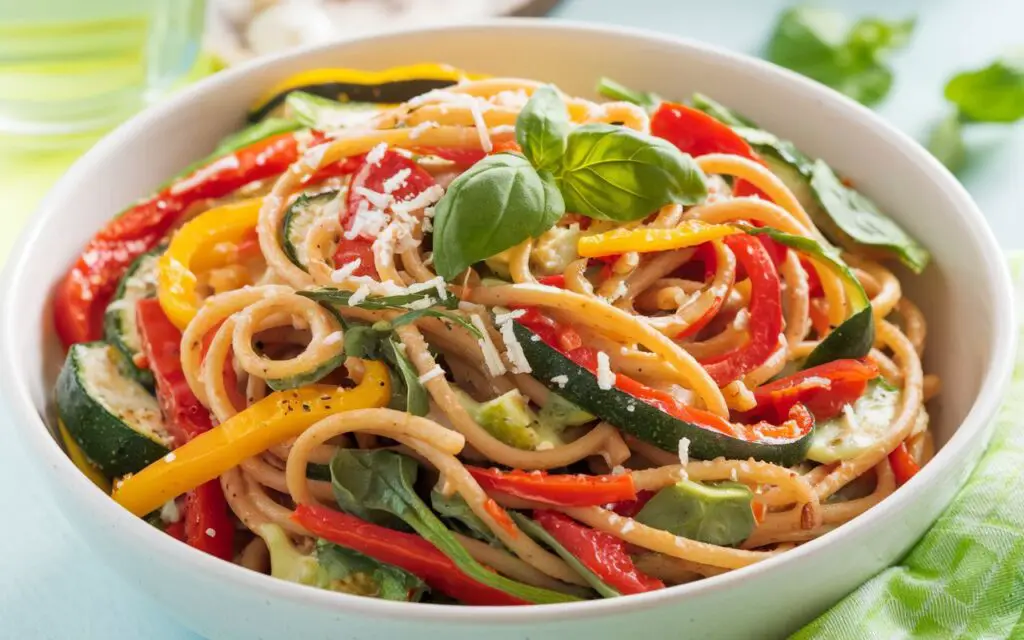
- Plate in shallow bowls, showcasing the vibrant vegetable medley. A final sprinkle of cheese or herbs can deliver a pop of color.
- Side Dishes
- Typically, this dish stands alone with a broad veggie presence. If you want more substance, a side of grilled protein (like chicken breast) or a slice of crusty whole grain bread can enhance the meal.
- Leftovers
- Store in a sealed container up to 2 days. Reheat gently in microwave or skillet. The veggies might soften further, but flavor remains.
- Meal Prep
- If making in bulk, keep sauce or cream minimal if you want it to reheat well. Over time, certain veggies can lose brightness.
Ensuring a Balanced Primavera
- Cut Veggies Uniformly
- Similar sized pieces cook evenly. Harder veggies (carrots, broccoli) can be smaller or receive a brief blanch, so they match the doneness of softer items (zucchini, peppers).
- Avoid Over-Sauciness
- The hallmark of primavera is fresh veggies lightly coated, not drowned. Keep sauce gentle—just enough to moisten and unify.
- Whole Wheat Pasta Doneness
- Whole wheat noodles can become gummy if overcooked. Test a strand 1–2 minutes before the suggested time to ensure it retains a pleasant chew.
- Herb Considerations
- Basil, parsley, thyme, or even oregano can complement. Just be mindful that robust herbs (like thyme) may overshadow milder vegetables if used heavily.
FAQ – Whole Wheat Pasta Primavera
Q1: Can I replace whole wheat pasta with gluten-free options?
A1: Certainly. Brown rice pasta or other GF forms replicate the texture decently. The instructions remain the same—boil until al dente, then incorporate into the vegetables.
Q2: If I skip cream, is it still flavorful?
A2: Absolutely. The core flavor arises from the vegetables, garlic, and olive oil, plus any herbs or seasonings. Pasta water helps the sauce cling, ensuring each noodle has a light coat.
Q3: Could I roast the vegetables instead of sautéing?
A3: Yes, roasting can intensify flavors. Toss veggies in oil, roast at ~400°F (205°C) for 15–20 minutes, then combine with the cooked pasta and minimal sauce. It yields a deeper sweetness in the vegetables.
Q4: How do I avoid mushy vegetables?
A4: Don’t overcook them. Sauté only until crisp-tender or blanch quickly. The final toss with hot pasta also continues cooking slightly, so err on the side of underdone in the pan.
Q5: Is this dish freezer-friendly?
A5: Cooked pasta with vegetables typically doesn’t freeze well. The texture can degrade. If you must, freeze the sauce and veggies separately, then combine fresh-cooked pasta upon thawing. But generally, it’s best served fresh.
Conclusion
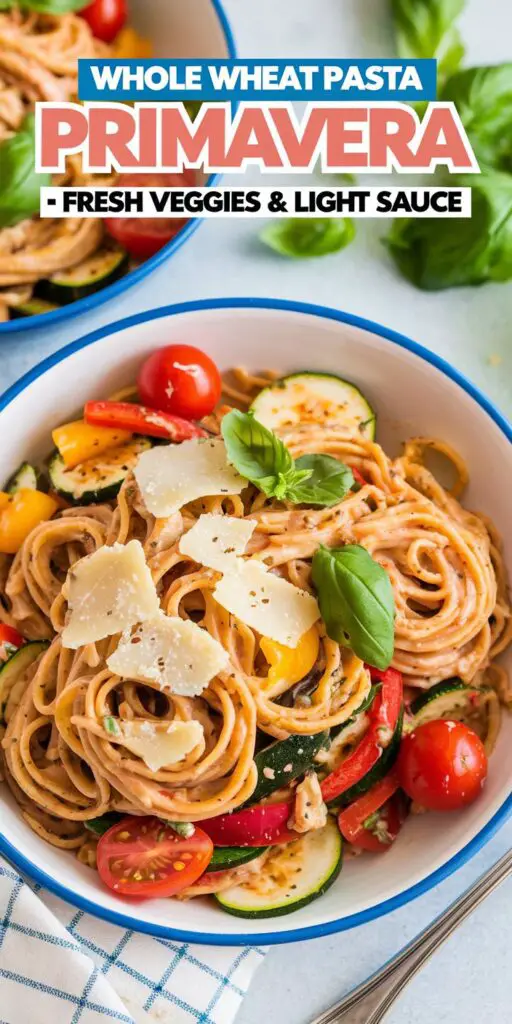
Uniting the bright, diverse flavors of vegetables with the more nutritious baseline of whole wheat pasta, this Whole Wheat Pasta Primavera brings a springtime vibe to your table anytime. Light sauce, minimal fuss, and a parade of colors highlight the dish, ensuring each forkful brims with fresh produce—balanced by a gentle sauce that doesn’t overshadow but rather complements. Perfect for quick weeknights or potluck lunches, it’s a flexible recipe that encourages you to tailor veggies and seasoning to your taste or seasonal availability.
Now that you understand how to pick, prep, and sauté your chosen veggies, whisk together a light sauce, and combine it all with al dente whole wheat pasta, why not serve it for your next dinner? After that final swirl of flavorful noodles—possibly with a pinch of fresh basil—drop back here to share your personal spin. Did you incorporate a unique veggie blend, spice up the sauce, or add a protein? Your creativity might inspire other home cooks to discover how vibrant and satisfying a plant-forward pasta can be when harnessing the flavors of spring year-round.