




When discussing the soul of Brazilian cuisine, one dish often stands at the forefront: Feijoada, a robust black bean and pork stew that brims with comforting warmth and cultural significance. Imagine tender beans simmered with various pork cuts—ribs, sausage, bacon—alongside onions, garlic, and bay leaves, all melding into a hearty, velvety stew. Each spoonful reveals layers of deep flavor built from hours of low-and-slow cooking. In Brazil, feijoada goes beyond nourishment; it symbolizes togetherness, usually enjoyed at large weekend gatherings where friends and family linger over bowls of this aromatic stew, accompanied by rice, collard greens, and orange slices to cut through the richness.
My own introduction to feijoada began when a Brazilian friend invited me to a “Feijoada Saturday”—a social event as much as a meal. The pot of inky-black stew sat at the table’s center, perfuming the air with smokiness and garlic. Every ladleful I tried revealed new textures: succulent pork belly, meaty sausage coins, and beans so tender they practically melted against my teeth. Yet it wasn’t just the taste that impacted me; it was the communal vibe, the sense of tradition behind the dish. Determined to replicate it at home, I discovered how key it is to pick the right pork cuts, soak beans in advance, and calibrate seasoning so that no single flavor overwhelms. Over time, I simplified the steps without stripping away the stew’s essence. Now, feijoada is my go-to comfort meal whenever I crave a fulfilling, shareable dish that still resonates with cultural authenticity.
In this article, we’ll journey through how to make an approachable version of Brazilian Feijoada—selecting cuts of pork, preparing black beans, spicing your stew, and finishing it in a way that’s as close to the homeland experience as possible. Whether you have hours to simmer or need shortcuts, this guide will help you deliver a pot of Black Bean & Pork Stew that evokes the warmth and festivity of Brazil’s beloved comfort food.
Section 1: Why Brazilian Feijoada Captures Hearts

- Rich, Slowly Developed Flavor
Feijoada’s hallmark is its layered taste, derived from multiple pork cuts and smoked meats melding with starchy black beans over a prolonged simmer. Each hour intensifies the stew’s complexity. - Time-Honored Tradition
As Brazil’s national dish, feijoada embodies cultural identity. It’s historically a weekend meal, shared among gatherings, ensuring a leisurely vibe that’s deeply social. - Versatile Pork Parts
Traditional recipes often use everything from salted pork, smoked sausage, and fresh cuts to even pig’s ears or trotters for extra collagen. This variety results in a stew with multiple textures and subtle flavors. - Balanced Accompaniments
Typically served with fluffy white rice, sautéed collard greens, and orange wedges, feijoada balances heaviness with bright, citrusy notes, rounding out the meal in a pleasing way.
Section 2: Ingredient Overview
Use the table below for planning your feijoada:
| Ingredient | Quantity | Notes |
|---|---|---|
| Black Beans (dried) | 1 lb (~450 g) | Soak overnight for quicker cooking; can use less for smaller pot |
| Pork Cuts (ribs, belly, shoulder) | ~1 lb total (mixed) | Traditional versions use various cuts; choose a mix for flavor |
| Smoked Sausage (linguiça, chorizo, or kielbasa) | ~12–16 oz | Sliced or chunked; adds a smoky dimension |
| Bacon (optional) | ~6 oz | If you want extra smokiness, or sub for salted pork belly |
| Onion (chopped) | 1 large | Key aromatic base |
| Garlic (minced) | 4–5 cloves | Distinct flavor crucial for stew |
| Bay Leaves | 2–3 | Traditional herb for braises |
| Salt & Pepper | To taste | Season as the stew progresses |
| Water or Broth (beef/pork) | ~6–8 cups | Adjust for desired thickness and pot size |
| Oil or Lard | 2–3 tbsp | For browning pork, onions, or sausage |
| Orange (sliced, for garnish) | 1 (optional) | Classic side to cut richness |
| Collard Greens (optional side) | ~1 bunch, thinly sliced | Commonly served sautéed with garlic and oil |
| White Rice (optional side) | 2–3 cups cooked | Typically served alongside feijoada |
| Chili Flakes or Hot Sauce (optional) | as desired | If you like a spicy edge |

Section 3: Step-by-Step Recipe (Approx. 2–3 Hours, Some Variations)
- Soak & Prep Beans
- Rinse 1 pound dried black beans under cold water, removing any debris. Soak them overnight in ample water for faster cooking, or do a quick soak by boiling them for 1 minute, then covering and letting sit for 1 hour. Drain before use.
- Season & Brown Meats
- Pat pork cuts (ribs, shoulder, belly) dry. Cut them into chunks if large. Season with salt and pepper.
- In a large pot or Dutch oven, heat 1 tablespoon oil (or lard) over medium-high. Brown the pork pieces in batches, letting each side color. Remove to a plate when done.
- Brown bacon (if using) until crisp. Drain excess fat, reserving about 1–2 tablespoons in the pot.
- Add Onions & Garlic
- Using the remaining oil/bacon fat in the pot, reduce heat to medium. Sauté chopped onion for ~5 minutes until translucent. Add minced garlic for the last 1 minute, stirring to avoid burning.
- Incorporate Sausage & Combine
- Stir in sliced smoked sausage (like linguiça). Let it cook for 2–3 minutes, releasing some smoky flavor.
- Return the browned pork pieces to the pot along with any juices from the plate.
- Add Beans & Liquids
- Drain soaked black beans and add them in. Toss in bay leaves. Pour ~6–8 cups of water or broth, ensuring beans and meats are covered by at least 1 inch of liquid.
- Bring to a gentle boil, then reduce heat to low, covering partially for a simmer. Let the stew bubble gently for about 2 hours, stirring occasionally. If the liquid level drops too low, add more water or broth.
- Check Texture & Flavor
- After ~1½ hours, taste beans—they should be soft but not disintegrating. Pork cuts should be tender enough to break apart easily. If not yet tender, continue simmering.
- Season with salt and pepper gradually. Some salted meats or sausages can release salt into the stew, so taste as you go. For extra richness, you could also add a dash of cachaça (Brazilian sugarcane liquor) or let a piece of orange peel infuse the stew for subtle brightness.
- Optional Skim
- If the stew produces excess fat at the surface (especially if using pork belly or bacon), you can skim some off with a spoon for a less greasy final dish.
- Serve & Garnish
- Once the beans are creamy and meats are succulent, remove bay leaves. Ladle feijoada into bowls.
- Serve with white rice, sautéed collard greens (refogado), and orange slices. Some also garnish with farofa (toasted cassava flour) if you can find it.
(Time-saving tip: Use a pressure cooker for the beans and meats, cutting cooking time roughly in half, then finish on the stovetop to unify flavors.)
Section 4: Key Tips for Authentic Feijoada
- Select Good Quality Meats
- Traditional feijoada uses a variety of pork cuts, including salted or smoked meats. If you can find Brazilian linguiça sausage, it intensifies the authentic note.
- Low & Slow
- Feijoada’s signature depth emerges from a slow simmer. Rushing can yield chewy beans or tough pork. Embrace the stew’s languid pace.
- Adjust Bean to Meat Ratio
- Some prefer more beans for a thicker stew, others heavier on pork. Balance it to your liking or the number of guests.
- Finishing Touches
- Many Brazilians serve feijoada with farofa (toasted cassava flour). If unavailable, you might sprinkle lightly toasted bread crumbs or panko for a similar (though not identical) topping effect.
Section 5: Flavor Variations
- Extra Vegetables
- Though not typical, you can add chopped carrots, tomatoes, or peppers to lighten the dish. However, some purists prefer strictly beans and meat.
- Smoked Influence
- In place of or alongside sausage, use smoked ham hock or smoked pork chops for a deeper smoky profile. The infusion can be quite captivating.
- Spicy Kick
- Feijoada is often mild, letting salty-smoky notes dominate. If you like heat, add fresh chilies, chili powder, or serve with Brazilian malagueta pepper sauce on the side.
- Bean Choice
- Traditional is black beans, but pinto or kidney beans might approximate a flavor if black beans aren’t available. The color and character do shift, though.
Section 6: Serving Suggestions
- Rice & Greens: Typically, feijoada pairs with white rice and sautéed collard greens (couve).
- Orange Slices: Fresh citrus offers a sweet-tart pop that counteracts the stew’s richness.
- Farofa: If you can find cassava flour, toasting it with garlic and butter to make farofa is a classic accent.
- Hot Sauce: For those craving extra spice, a side of pepper sauce or sriracha can stand in for Brazilian malagueta.

Section 7: FAQ – Brazilian Feijoada
Q1: How long should I soak the beans if I forgot overnight?
A1: A quick soak method: boil them for 1 minute, remove from heat, cover, and let stand 1 hour. Then rinse and proceed. The final cook might still be slightly longer than an overnight soak, so check tenderness.
Q2: Can I freeze leftovers?
A2: Yes, feijoada often improves the next day. Store in an airtight container for up to 2–3 months. Reheat gently on the stove, adding water if it’s too thick.
Q3: Are there vegetarian versions?
A3: Typically, feijoada is meaty. A vegetarian adaptation might rely on smoked paprika or liquid smoke plus extra veggies. It’s not standard, but you can replicate some of the flavors.
Q4: Why is orange served on the side?
A4: The acidity and natural sweetness cut through the stew’s fattiness, refreshing the palate. It’s an iconic part of feijoada tradition, though optional if you dislike fruit with savory dishes.
Q5: Do I need to use a Dutch oven?
A5: A Dutch oven or large heavy pot is ideal for even heat distribution. But any big, sturdy pot with a lid can suffice if you occasionally stir to prevent sticking.
Conclusion
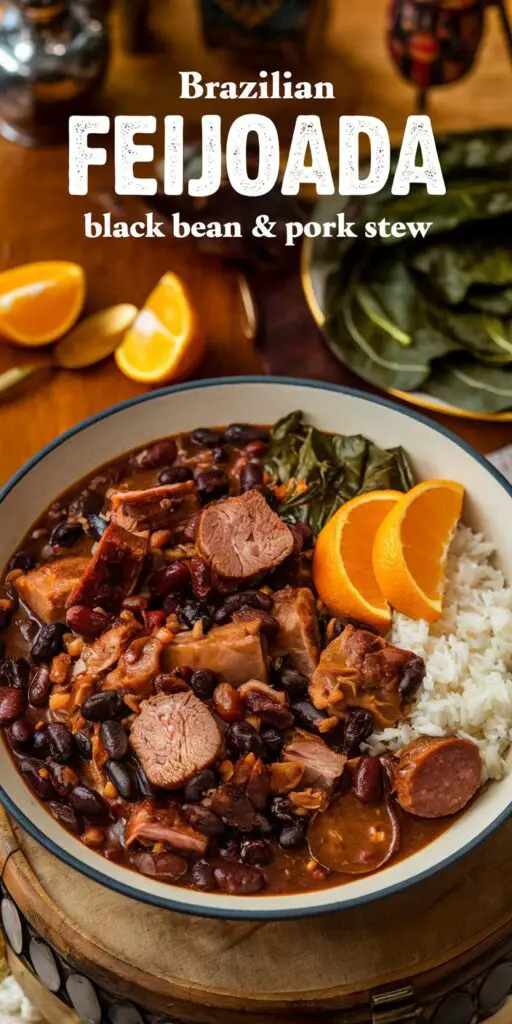
Uniting black beans, multiple pork cuts, and a leisurely simmer, Brazilian Feijoada weaves tradition and depth into a single, robust stew. Each spoonful offers smoky-salty satisfaction, while the tender beans create a luxurious base that resonates comfort. Best shared among friends or family, feijoada’s communal aspect shines as people gather around the pot, spooning stew over rice and passing bright orange slices for that essential contrast.
Ready to experience a slice of Brazilian hospitality at your own table? Grab a bag of black beans, pick a handful of flavorful pork cuts, and set aside an afternoon to let the stew’s aroma fill your home. Once you’ve savored your final bite—perhaps topped with farofa or served with a wedge of orange—drop back to share your personal spin. Did you discover a certain sausage you adore, or sprinkle a unique spice at the end? Your creativity may encourage others to see how this storied dish can be adapted to modern kitchens without losing its soulful essence.