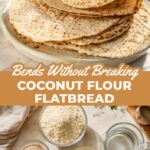




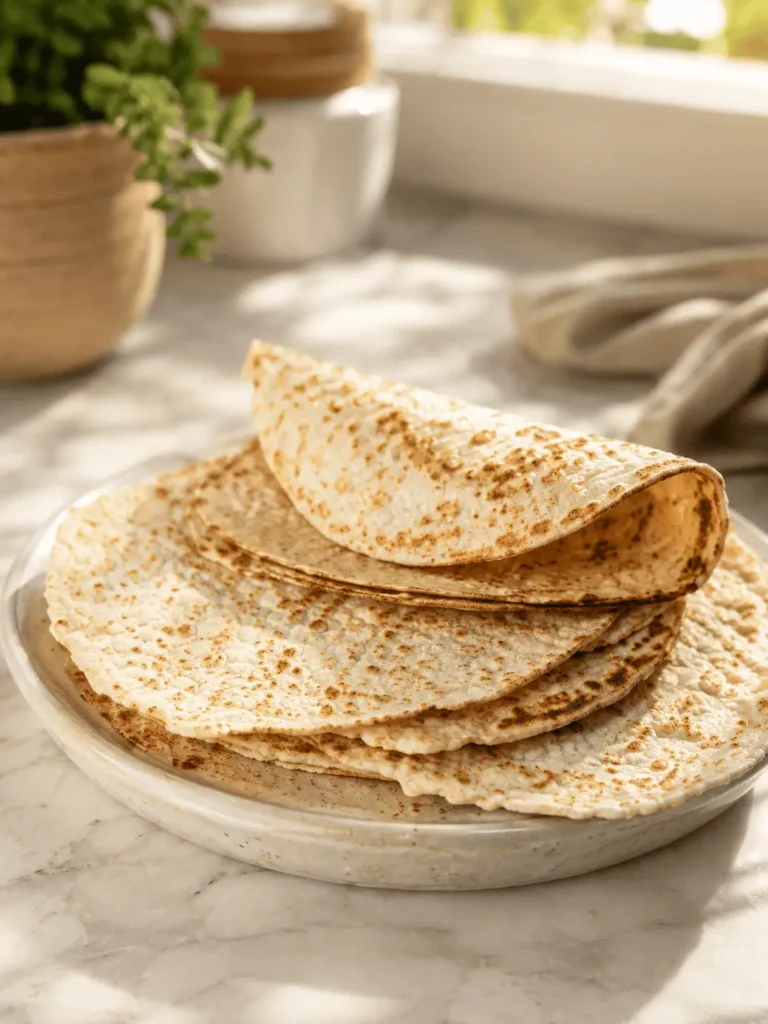
If you’re eating low carb, keto, paleo, or gluten free and missing soft, foldable bread, this flatbread is for you. Coconut flour and psyllium flatbread is a simple, pliable, grain-free bread made from just a handful of pantry ingredients, no wheat, no dairy, and very few carbs. It cooks up soft and bendable with golden spots from a dry skillet, ready in about 25 minutes, and it’s endlessly useful: wrap it around fillings, scoop up dips, serve it alongside curries or soups, or use it as a base for a quick pizza. For anyone who thought low-carb bread had to be a sad compromise, this one is a genuinely satisfying swap.
The secret to making bread without wheat flour is the psyllium husk. It’s what gives this flatbread its chew, flexibility, and structure, the very things that gluten normally provides, so the bread bends and folds instead of crumbling apart. Combined with coconut flour, a little fat, and boiling water, it forms a workable dough you can roll out and pan-fry. It’s quick, forgiving, and easy to flavor however you like, and it fits into so many ways of eating.
Why this works
A few simple things are what make a soft, foldable bread possible without any wheat, and they’re worth understanding.
Psyllium husk is the real star. It’s a soluble fiber that absorbs a lot of water and turns gel-like, which is exactly what gives this bread its bendable, chewy, bread-like texture instead of the crumbly result you’d get from coconut flour alone. In grain-free baking, psyllium does the job gluten does in regular bread: it binds everything and adds elasticity. Without it, you wouldn’t get a flatbread you could fold.
Coconut flour is the other half of the equation, but it behaves very differently from wheat flour, it’s extremely absorbent, soaking up far more liquid than you might expect. That’s why this recipe uses a full cup of boiling water for a relatively small amount of flour. The boiling water is important too: the heat helps the psyllium and coconut flour hydrate and bind quickly into a cohesive dough, so don’t use cold water here.
The dough comes together in a specific, slightly unusual way. You mix the dry ingredients, blend in the fat until it looks like nut butter, then add the boiling water in stages until a dough forms. Working the water in gradually lets you judge the texture as it hydrates. And cooking the flatbreads in a dry skillet (no oil needed) gives them golden, toasty spots and a soft interior.
What goes in
The ingredient list is short and built from low-carb staples.

You’ll need coconut flour, psyllium husk powder, coconut oil (or melted butter), salt, baking powder, and boiling water. Optional herbs or garlic powder let you flavor the bread however you like.
A few notes. Use psyllium husk powder (finely ground) rather than whole husks for the smoothest texture; if you only have whole husks, grind them first, and note that some brands can turn baked goods slightly purple, which is harmless. Coconut flour varies in absorbency by brand, so add the water gradually and adjust, you want a workable dough, not a wet batter or a dry crumble. Use coconut oil to keep it dairy-free and paleo, or melted butter if dairy isn’t a concern. And the boiling water really should be boiling, since the heat is what brings the dough together.
How to make it
Mix the dry ingredients, the coconut flour, psyllium husk powder, salt, baking powder, and any optional herbs or garlic powder, together with a hand whisk.
Add the coconut oil (or melted butter) and blend it in well. At this stage the mixture will look like nut butter, thick and a little crumbly, which is exactly right.
Now add the boiling water, about half at a time, blending after each addition until a dough-like mixture forms. Adding it in stages lets you stop at the right consistency: a soft, cohesive dough that holds together without being wet.
Divide the dough into 6 balls. Place each ball between two sheets of parchment paper and roll it out flat. You can leave them in their natural shape, or cut them into neat circles using a saucepan lid as a guide.
Heat a dry skillet (no oil) over medium heat and dry-fry each flatbread for 2 to 3 minutes per side, until golden with toasty spots. Repeat with the rest, and serve.
Tips, serving, and storing
A few things help. Add the boiling water gradually and judge the dough by feel, since coconut flour brands absorb differently, so you may need a touch more or less. Roll the breads between parchment to keep the sticky dough from sticking to your pin or counter. And use a dry pan over moderate heat so they cook through and brown without burning.
A couple more. If the dough feels too wet, let it sit a minute, the psyllium keeps absorbing, and it’ll firm up; if it’s too dry to come together, add a splash more hot water. And season the dough to match how you’ll use it, plain for wraps, or with garlic and herbs for serving alongside a meal.
These flatbreads are wonderfully versatile. Use them as wraps or soft tacos, fold them around sandwich fillings, tear them to scoop up hummus, baba ganoush, or curries, or serve them warm alongside soups and stews. They also make a great quick low-carb pizza base, just add toppings and warm through. Brushed with a little garlic butter, they’re a lovely side too.
For storing, these keep in an airtight container in the fridge for up to 4 or 5 days. They’re best warm, so reheat them briefly in a dry pan or the microwave to bring back their softness and flexibility, since they firm up when cold. They also freeze well: stack them with parchment between each and freeze for up to a couple of months, then reheat from frozen in a pan. Warming before serving makes all the difference in keeping them soft and foldable.
This makes 6 flatbreads. Soft, foldable, grain-free, and quick, coconut flour and psyllium flatbread is the kind of recipe that makes low-carb and gluten-free eating feel a lot less limiting, and it might just become your go-to bread no matter how you eat.
Print
Coconut Flour and Psyllium Flatbread
A soft, foldable grain-free flatbread made from coconut flour and psyllium husk, dairy-free, low carb, paleo, and gluten free. Just a handful of pantry ingredients and a dry skillet, ready in 25 minutes, for wraps, dipping, or serving alongside any meal.
- Total Time25 minutes
- Yield6 flatbreads 1x
- DietGluten-Free, Vegan, Vegetarian
Ingredients
- 1/2 cup coconut flour
- 2 tbsp psyllium husk powder
- 1.5 oz coconut oil (or melted butter)
- 1/2 tsp salt
- 1 tsp baking powder
- 1 cup boiling water
- herbs or garlic powder (optional, to flavor)
Instructions
- Mix the Dry Ingredients: Whisk together the coconut flour, psyllium husk powder, salt, baking powder, and any optional herbs or garlic powder with a hand whisk.
- Add the Fat: Add the coconut oil (or melted butter) and blend well. The mixture will look like nut butter.
- Form the Dough: Add the boiling water, half at a time, blending until a dough-like mixture forms.
- Shape: Divide the dough into 6 balls. Roll each between two sheets of parchment paper and flatten. Use as-is, or cut into circles with a saucepan lid.
- Cook: Dry-fry in a pan (no oil) for 2 to 3 minutes per side, until golden.
Notes
Psyllium husk gives the bread its foldable, chewy structure; use the powder (or grind whole husks). Some psyllium brands tint baked goods slightly purple, which is harmless. Coconut flour brands vary in absorbency, so add the boiling water gradually and judge by feel, aiming for a soft, cohesive dough. The water should be boiling, since the heat helps the dough come together. If too wet, let it sit a minute to firm up; if too dry, add a splash more hot water. About 2g net carbs per flatbread. Best warm; reheat to restore softness. Keeps 4 to 5 days refrigerated; freezes well with parchment between.
- Prep Time: 10 minutes
- Cook Time: 15 minutes
- Category: Bread
- Method: Stovetop
- Cuisine: American
Nutrition
- Calories: 119
- Fat: 8
- Carbohydrates: 10
- Fiber: 7
- Protein: 2