


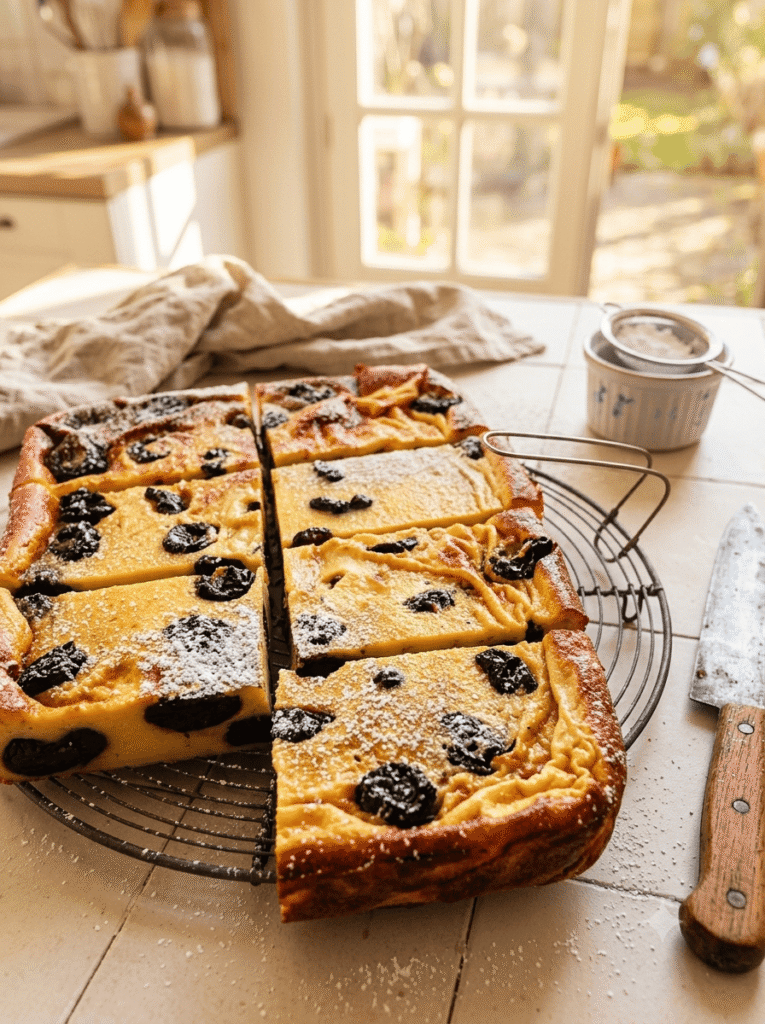
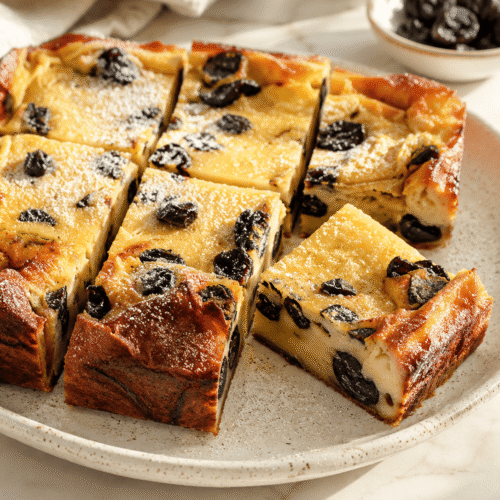
This French classic is somewhere between a baked custard and a cake, and it’s every bit as good as that sounds. Far Breton hails from Brittany in northwest France, and it has a tender, almost flan-like interior studded with brandy-soaked prunes, topped with a slightly caramelized golden crust. Made from a simple blender batter of milk, eggs, sugar, flour, and butter, it’s both humble and genuinely luxurious, a dessert built from pantry staples that tastes far more special than the effort required. It’s wonderful served at room temperature, when the texture settles into its best custardy state, but it holds up beautifully cold too, making it a fantastic make-ahead treat for picnics, hikes, or a leisurely breakfast.
The magic of Far Breton is in its custard-like texture: a thin, smooth, crepe-like batter bakes into something between a flan and a cake, tender and just barely set, with sweet, boozy prunes suspended evenly throughout. Baking the batter in two stages, a thin base layer first, then the prunes and remaining batter, keeps the fruit evenly distributed rather than sinking to the bottom. Dusted with icing sugar, it’s simple to look at and genuinely special to eat.
Why this works
A few key techniques are what give Far Breton its signature texture, and they’re worth understanding.
Soaking the prunes in Armagnac builds deep, boozy flavor. Letting the prunes soak in Armagnac (or brandy or dark rum) for at least 2 hours, or preferably overnight, allows them to plump up and absorb the spirit’s warm, rich flavor, which infuses the whole dessert once baked. This step also softens the prunes further, making them tender and juicy in the finished cake.
The thin, crepe-like batter is what creates the custardy texture. Blending milk, eggs, and vanilla until smooth, then incorporating the flour, sugar, and salt, followed by melted butter, produces a thin, pourable batter much like crepe batter. This thinness is exactly what allows it to bake into a tender, custard-like interior rather than a dense cake crumb.
Chilling the batter before baking improves the texture. Refrigerating the batter for at least 15 minutes (or up to two days) lets the flour fully hydrate and the batter rest, which helps it bake more evenly and gives a better final texture. This also makes Far Breton a genuinely convenient make-ahead dessert, since you can prepare the batter well in advance.
And baking in two stages keeps the prunes evenly distributed. Pouring a thin layer of batter into a hot, buttered tray first and baking it briefly creates a just-set base for the prunes to sit on. Scattering the prunes over that base, then pouring the remaining batter on top, prevents the fruit from all sinking to the bottom, so every slice gets an even distribution of prunes throughout the custard.
What goes in
The ingredient list is simple and mostly pantry staples.

You’ll need pitted prunes, Armagnac (or brandy or dark rum), full-cream milk, eggs, vanilla extract, plain flour, caster sugar, fine sea salt, unsalted butter (both melted for the batter and softened for greasing the tin), and icing sugar for serving.
A few notes. Use good pitted prunes, halved if very large, so they distribute evenly. Armagnac is traditional, but brandy or dark rum both work well as substitutes. This dessert contains alcohol from the spirit-soaked prunes, worth noting if serving to a mixed crowd, including anyone avoiding alcohol. A blender or food processor makes quick work of the smooth, thin batter. And plan ahead, the prunes need at least 2 hours to soak (overnight is better), and the batter needs at least 15 minutes to chill.
How to make it
Place the prunes in a small bowl, pour over the Armagnac, and toss to coat. Cover and soak for at least 2 hours, preferably overnight.
To make the batter, combine the milk, eggs, and vanilla in a blender or food processor and blend on medium-high speed until smooth. Add the flour, sugar, and salt, and blend on low speed until incorporated. Add the melted butter and pulse to combine. The batter should be thin and smooth, like crepe batter.
Transfer the batter to a jug and refrigerate for at least 15 minutes, or up to two days.
When ready to bake, preheat the oven to 180°C fan-forced (200°C conventional). Smear the softened butter all over the base and sides of a baking tray (about 22cm x 33cm, rectangular) and place it in the oven until hot, about 5 minutes.
Remove the batter from the fridge and whisk it well, then pour about one-third (roughly 300ml) into the hot tray. Bake for 5 minutes, until just set, this creates a slightly firm base for the prunes.
Remove the tray from the oven and scatter the soaked prunes and any remaining soaking liquid evenly over the surface. Pour the remaining batter over the top and return the tray to the oven. Bake for a further 30 minutes, until golden, puffed at the edges, and just set in the center.
Remove from the oven and let cool to room temperature in the tray. Cut into squares or slices and dust with icing sugar to serve.
Tips, serving, and storing
A few things help. Soak the prunes as long as you can, overnight gives the best flavor. Whisk the chilled batter well before using, since it can separate slightly as it sits. Bake the base layer just until set before adding the prunes, this is what keeps them suspended rather than sunk. And let it cool fully in the tray before slicing for the cleanest cuts.
A couple more. If you don’t have Armagnac, brandy or dark rum are both excellent substitutes. And a light dusting of icing sugar just before serving looks lovely and adds a touch of sweetness without overwhelming the custard.
Far Breton is wonderful served at room temperature, when its texture settles into its best custardy state, though it’s genuinely delicious cold too, which makes it a great make-ahead treat for picnics, hikes, or a relaxed breakfast. Serve it plain, or with a dollop of lightly whipped cream. It’s an elegant, simple dessert that travels well, which is part of its charm.
For storing, keep it covered in the fridge for up to 4 days. It can be enjoyed cold straight from the fridge, or brought to room temperature before serving. It also travels well unrefrigerated for a few hours, making it ideal for packed lunches, hikes, or picnics. I wouldn’t recommend freezing it, since the custard texture is best enjoyed fresh.
This makes 8 servings. Tender, custardy, and studded with boozy prunes, this Far Breton is a beautifully simple French classic that’s equally at home on a dessert table or tucked into a hiking pack, and it proves that the best desserts don’t need to be complicated to be memorable.
WP Tasty (Tasty Recipes Premium) field values
- Category: Dessert
- Method: Baking
- Cuisine: French
- Diet: Vegetarian (contains egg and dairy, so not vegan or dairy-free. Contains alcohol from the Armagnac-soaked prunes.)
- Keywords: Far Breton, French prune cake, Brittany custard cake, prune clafoutis, make ahead French dessert
- Serving Size: 1 slice (recipe serves 8)
- Calories: (leave blank. No nutrition data was provided. Generate values with Nutrifox before publishing rather than estimating.)
- Equipment: Blender or food processor, 22cm x 33cm rectangular baking tray, small bowl, jug
Far Breton (French Prune Custard Cake)

Equipment
- Blender or food processor
- 22cm x 33cm rectangular baking tray
- Small Bowl
- Jug
Ingredients
- 250 g pitted prunes halved if very large
- 60 ml Armagnac or brandy or dark rum
- 600 ml full-cream milk
- 4 large eggs
- 1 1/2 tsp vanilla extract
- 150 g plain flour
- 120 g caster sugar
- 1/2 tsp fine sea salt
- 60 g unsalted butter melted and cooled
- 15 g unsalted butter softened, for the tin
- icing sugar to serve
Instructions
- Soak the Prunes: Place the prunes in a small bowl, pour over the Armagnac, and toss to coat. Cover and soak at least 2 hours, preferably overnight.
- Make the Batter: Combine the milk, eggs, and vanilla in a blender and blend on medium-high speed until smooth. Add the flour, sugar, and salt, and blend on low speed until incorporated. Add the melted butter and pulse to combine. The batter should be thin and smooth, like crepe batter.
- Chill: Transfer the batter to a jug and refrigerate at least 15 minutes, or up to two days.
- Preheat and Heat the Tray: Preheat the oven to 180°C fan-forced (200°C conventional). Smear the softened butter over the base and sides of a rectangular baking tray and place it in the oven until hot, about 5 minutes.
- Bake the Base: Whisk the chilled batter well, then pour about one-third (roughly 300ml) into the hot tray. Bake 5 minutes, until just set, to create a firm base for the prunes.
- Add Prunes and Finish Baking: Scatter the soaked prunes and remaining soaking liquid evenly over the surface. Pour the remaining batter over the top and return to the oven. Bake a further 30 minutes, until golden, puffed at the edges, and just set in the center.
- Cool and Serve: Cool to room temperature in the tray. Cut into squares or slices and dust with icing sugar to serve.