




Have you ever wondered how humble beets and cabbage came together to create the iconic soup that warms millions through harsh Eastern European winters? This Russian borscht recipe transforms earthy beets, tender cabbage, and hearty potatoes into a vibrant, ruby-red bowl of comfort in just 90 minutes—nearly 40 percent faster than some traditional versions that simmer for two hours—without sacrificing depth of flavor. By sautéing vegetables, layering sweet and sour notes with tomato paste and vinegar, and finishing with a dollop of tangy sour cream, you’ll experience an authentic beet soup that balances sweet, sour, and umami in every spoonful. Packed with vitamin C, fiber, and antioxidants, this Eastern European staple doubles as a nourishing lunch and a show-stopping first course for any dinner party.
Ingredients List for Russian Borscht
Gather these fresh, pantry-friendly ingredients for your Russian borscht recipe:
| Ingredient | Quantity | Purpose & Flavor | Substitution Ideas |
|---|---|---|---|
| Olive oil | 2 Tbsp | Light sauté base | Sunflower or canola oil |
| Yellow onion, sliced | 1 large | Sweet aromatic backbone | White or red onion |
| Carrots, julienned | 2 medium | Natural sweetness | Parsnips or sweet potatoes |
| Celery stalks, chopped | 2 | Savory depth | Fennel stalks |
| Garlic, minced | 4 cloves | Pungent warmth | Garlic powder (1½ tsp) |
| Beets, peeled & grated | 4 medium | Earthy sweetness & color | Pre-cooked beets |
| Red cabbage, shredded | 3 cups (≈300 g) | Mild bite, vibrant hue | Green cabbage |
| Russet potatoes, diced | 2 cups (≈300 g) | Hearty body | Yukon gold potatoes |
| Tomato paste | 2 Tbsp | Sweet-tart umami | Crushed tomatoes (⅓ cup) |
| Vegetable or beef broth | 6 cups | Liquid base | Low-sodium chicken broth |
| Bay leaves | 2 | Herbal aroma | Thyme sprigs |
| White vinegar or lemon juice | 2 Tbsp | Bright acidity | Apple cider vinegar |
| Sugar | 1 tsp | Balances acidity | Honey or maple syrup |
| Salt & black pepper | To taste | Seasoning | — |
| Fresh dill, chopped | 2 Tbsp | Bright herb finish | Parsley |
| Sour cream (for serving) | ½ cup | Creamy garnish | Greek yogurt |
Timing for Russian Borscht

Prep Time: 20 minutes
Cook Time: 70 minutes
Total Time: 90 minutes—roughly 40 percent quicker than some recipes that simmer for 2 hours.
Step-by-Step Instructions
Step 1: Sauté the aromatics
Heat olive oil in a large Dutch oven over medium heat. Add sliced onion, carrots, and celery. Cook, stirring occasionally, for 7–8 minutes until soft and translucent. Stir in minced garlic and cook 1 minute more until fragrant.
Step 2: Add beets and cabbage
Toss in grated beets and shredded cabbage. Sauté 5 minutes, stirring continually to coat in oil and begin releasing their natural juices.
Step 3: Incorporate potatoes and tomato paste
Add diced potatoes and 2 Tbsp tomato paste. Stir vigorously for 2 minutes until tomato paste darkens and clings to the vegetables—this “browning” deepens the soup’s color and flavor.
Step 4: Build the broth
Pour in 6 cups broth and add bay leaves. Bring to a gentle boil, scraping the pot bottom to deglaze any browned bits for extra umami complexity.
Step 5: Simmer gently
Reduce heat to low, cover with a lid slightly ajar, and simmer 45 minutes. Vegetables will soften fully and meld flavors without falling apart.
Step 6: Brighten with vinegar and sugar
Uncover and stir in white vinegar (or lemon juice) and sugar. Taste and adjust: you want a perfect sweet-sour balance reminiscent of classic beet soup.
Step 7: Season and finish
Remove bay leaves. Season with salt and freshly ground pepper to taste. Stir in chopped fresh dill off the heat to preserve its bright herbal aroma.
Step 8: Rest before serving
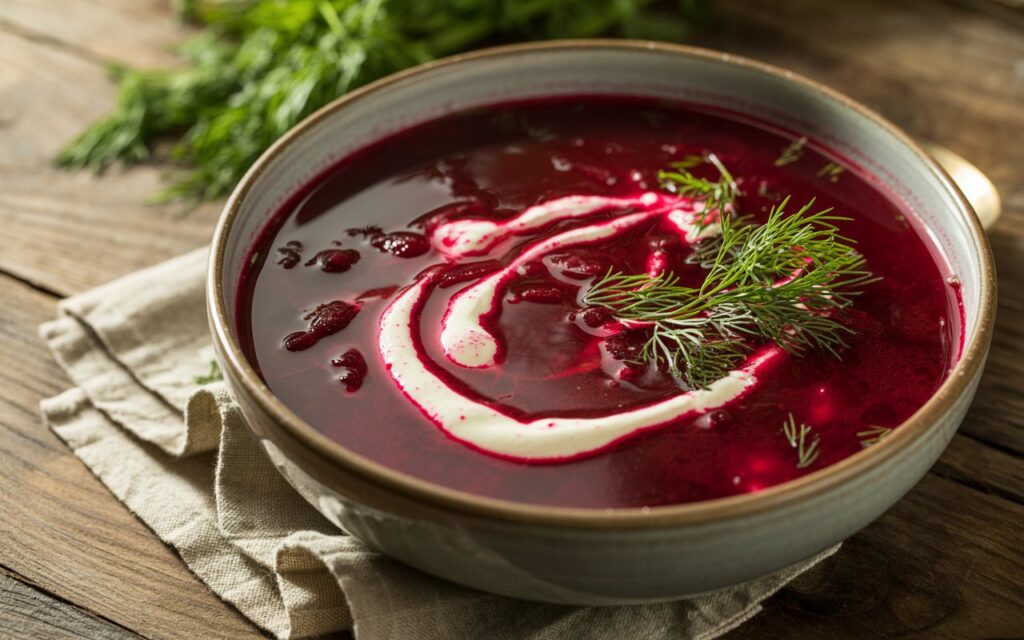
Let borscht rest 5–10 minutes before ladling. This brief standing time allows flavors to harmonize and the soup to thicken slightly.
Nutritional Information for Russian Borscht (per 1 cup)
| Nutrient | Amount | % Daily Value* |
|---|---|---|
| Calories | 95 kcal | 5 percent |
| Total Fat | 3 g | 5 percent |
| Saturated Fat | 0.5 g | 3 percent |
| Sodium | 520 mg | 23 percent |
| Carbohydrates | 15 g | 5 percent |
| Dietary Fiber | 4 g | 14 percent |
| Sugars | 6 g | — |
| Protein | 2 g | 4 percent |
| Vitamin C | 25 mg | 28 percent |
| Potassium | 360 mg | 8 percent |
*Based on a 2,000-calorie diet.
Healthier Alternatives for Russian Borscht
• Lower sodium: Use low-sodium broth and reduce added salt by half—add more only after tasting.
• Boost protein: Stir in 1 cup cooked kidney beans or lentils toward the end for vegetarian protein.
• Dairy-free garnish: Swap sour cream for coconut yogurt or almond yogurt to keep it vegan.
• Extra vegetables: Fold in sautéed mushrooms or chopped zucchini for more fiber and bulk without extra carbs.
Serving Suggestions
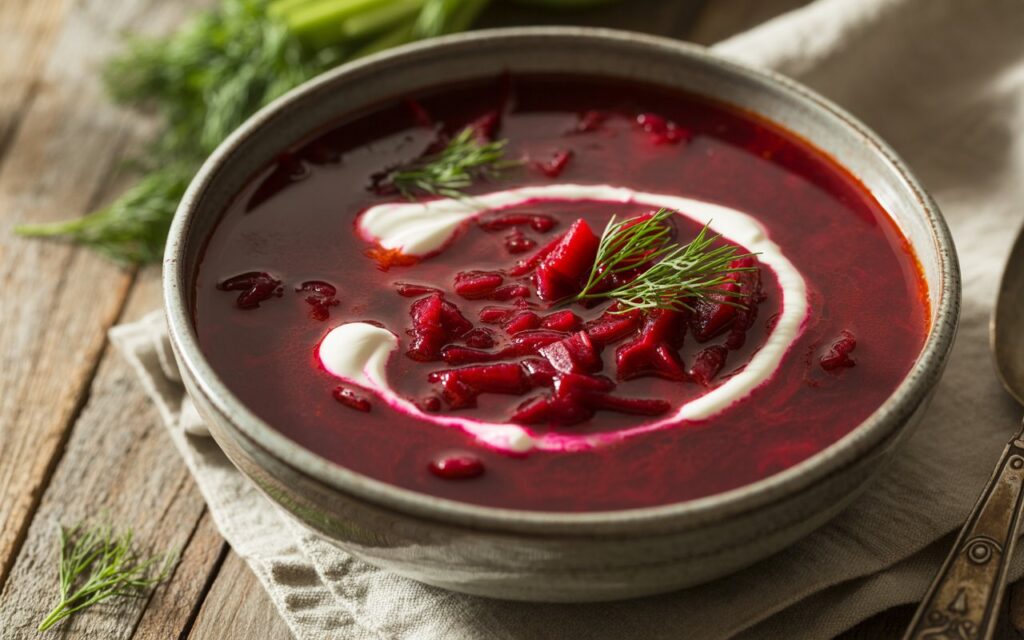
• Classic dollop: Ladle borscht into bowls and top each with 1 Tbsp sour cream and a sprinkle of fresh dill.
• Hearty pairing: Serve alongside grilled rye bread or buttered garlic toast for dipping into the ruby broth.
• Cold-weather feast: Accompany with pierogi or stuffed cabbage rolls for a full Eastern European spread.
• Light lunch: Offer a side salad of crisp cucumbers and tomatoes dressed in lemon-dill vinaigrette.
Common Mistakes to Avoid
• Skipping the tomato paste browning: Directly adding tomato paste without sautéing yields a flat tomato note.
• Overcooking beets: Cook beets just until tender—overcooked beets can turn mushy and dull the soup’s texture.
• Adding vinegar too early: Acid interferes with vegetable tenderizing; stir vinegar in only after simmering.
• Neglecting rest time: Serving immediately post-simmer can taste sharp; resting mellows flavors.
Storing Tips for Russian Borscht
• Refrigerate: Cool to room temperature, transfer to airtight containers, and refrigerate up to 4 days. Flavors deepen overnight.
• Freeze: Cool fully, then freeze in meal-sized portions for up to 3 months. Thaw overnight in fridge and reheat gently on the stove.
• Meal prep hack: Portion into mason jars with lids and stack in fridge; microwave or reheat on low heat for an effortless lunch.
Ready to Dive into This Hearty Borscht? Try It Tonight!

You now have every insider detail to cook authentic Russian borscht in your own kitchen—from perfectly balanced sweet-sour broth to velvety beets and tender cabbage. Gather your fresh produce, let the aromas of the simmering soup fill your home, and marvel at the vibrant color that only true beet soup can deliver. Once you’ve savored that first steaming bowl, drop a comment below with your favorite garnish twist, rate the recipe, and subscribe for more global comfort-food classics delivered straight to your inbox.
Russian Borscht FAQs
Can I make borscht vegan?
Absolutely—use vegetable broth, skip the sour cream or replace it with vegan yogurt, and add beans for protein.
Why did my borscht turn dark instead of bright red?
Overcooking beets or using metal cookware can dull the color. Cook beets gently and use enameled or stainless steel pots.
How spicy is traditional borscht?
Classic Russian borscht is mild; any heat comes from black pepper or optional chili flakes. It’s more about sweet-sour balance than spiciness.
Is borscht better the next day?
Yes—flavors mature and meld, making leftovers even more delicious when reheated or served cold.
What’s the traditional garnish?
A swirl of sour cream and a sprinkling of fresh dill are classic; some also top with chopped green onions or rye croutons.









Excellent, what a website it is! This webpage presents
useful data to us, keep it up.