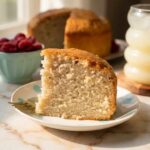




The secret to this lemon custard cake is a batter that looks completely wrong before it goes in the oven.
It’s thin. Watery, almost. There are visible egg white clumps floating in it. You’ll pour it into the pan and think something has gone wrong. Nothing has gone wrong. That loose, lumpy batter is exactly what separates — while it bakes — into three completely distinct layers: a dense lemon custard on the bottom, a creamy middle, and a light sponge on top. One batter. One pan. Three textures.
That’s the trick. And it only works if you trust it.
Why the Batter Does What It Does
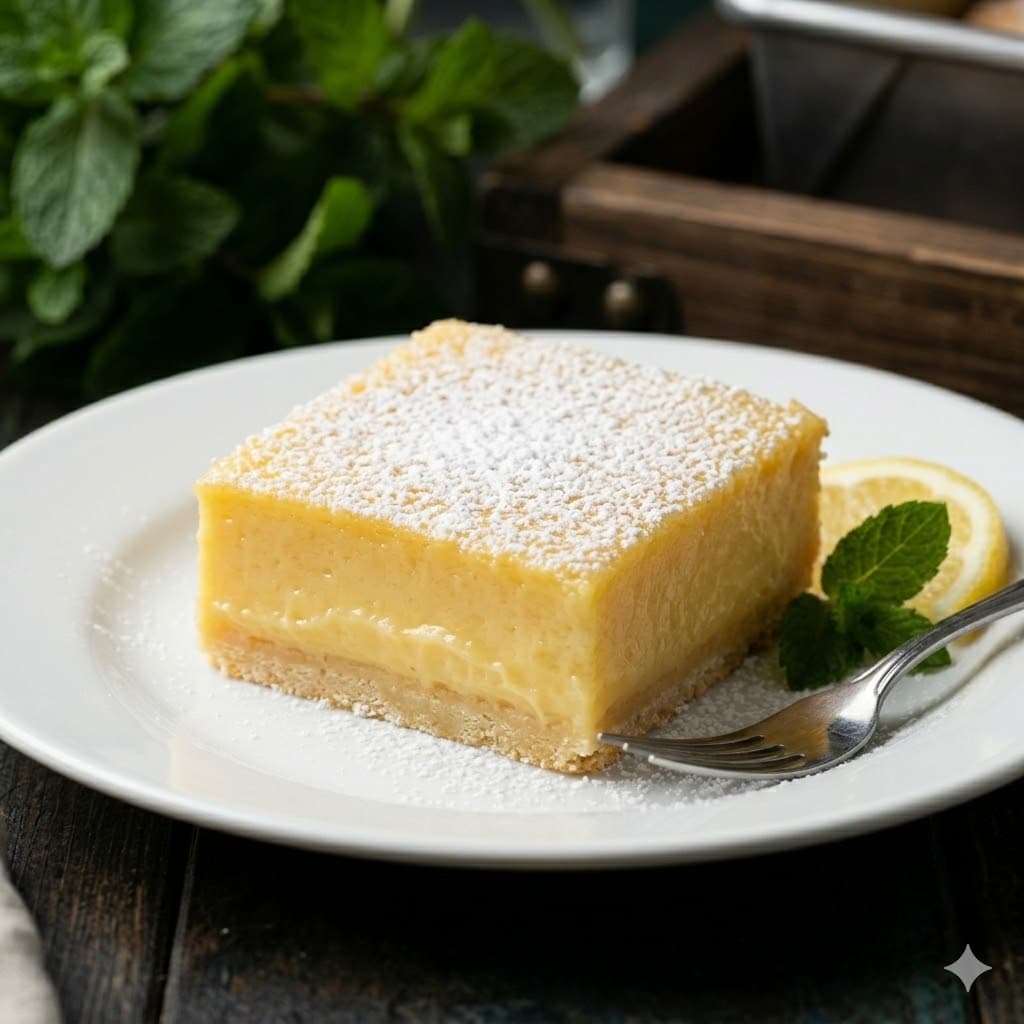
This cake self-layers because of density differences. The heavy components — egg yolks, butter, milk, lemon juice — sink. The lighter egg white foam floats. The flour gets suspended in between. As the oven heat sets each zone at a different rate, you get three distinct layers baked into a single dessert.
Which is why the egg whites matter so much. Stiff peaks — not soft, not medium, stiff. And fold them in loosely. Leaving small white clumps in the batter is intentional. Those clumps are what become the sponge layer on top. Fold until perfectly uniform and you lose the separation — you’ll end up with one dense custard. Still good. But not the point of this recipe.
What Goes Into It
Prep time is about 20 minutes; bake time is 40 to 45 minutes. Allow at least 2 hours total once cooling and chilling are factored in. Serve cold.
Wet Ingredients
| Ingredient | Amount |
| Unsalted butter, melted and slightly cooled | ½ cup (1 stick) |
| Large eggs, separated | 4 |
| Granulated sugar | ¾ cup |
| Lemon zest | 1 tablespoon (about 1 lemon) |
| Fresh lemon juice | ½ cup (from 2–3 lemons) |
| Vanilla extract | 1 teaspoon |
| Whole milk, lukewarm | 2 cups |
Dry Ingredients + Finishing
| Ingredient | Amount |
| All-purpose flour | ¾ cup |
| Salt | ¼ teaspoon |
| Powdered sugar, for dusting | Optional |

The Steps
Preheat Oven and Prep Pan
Heat the oven to 325°F (160°C). Line an 8×8-inch baking dish with parchment paper and lightly grease it. The lower temperature is deliberate — it allows the layers to separate gradually instead of setting all at once.
Beat Egg Yolks and Sugar
Whisk egg yolks with sugar until the mixture is pale and noticeably thickened. Add the melted butter, lemon zest, lemon juice, and vanilla. Mix until combined.
Add Flour and Milk
Whisk in flour and salt. Then slowly pour in the lukewarm milk, whisking constantly. The batter will be very thin. That’s correct. Do not add more flour.
Whip the Egg Whites
In a completely clean bowl — no traces of fat or yolk, or they won’t whip — beat the egg whites to stiff peaks. The peaks should hold their shape without curling.
Fold one-third of the egg whites into the batter first to lighten it. Then fold in the rest. Loosely. Leave the white clumps. This is not a step to perfect.
Pour and Bake
Pour the batter into the prepared pan — it will look uneven on top with white patches of egg white. Fine. Bake for 40 to 45 minutes until the top is golden and springs back slightly when pressed. The center may look barely set when you pull it out. It firms up as it cools.
Cool and Chill
Cool completely in the pan, then refrigerate for at least 1 hour. The custard layer needs this time to set fully. Serve cold — the layers are cleanest and most distinct when the cake is cold.
Dust with powdered sugar and slice into 9 squares.
Other Directions Worth Taking
Orange: Swap the lemon juice and zest for orange. Sweeter, less sharp — a dusting of cinnamon on top works well here.
Lime: More tropical, noticeably tarter. Toasted coconut on top if you’re feeling it.
Vanilla only: Drop the citrus entirely and double the vanilla extract. The three layers still form. You get a quiet, classic custard cake that pairs well with fresh berries.
What’s in Each Square
Per serving (9 squares), approximate:
- Calories: ~230
- Fat: 12g | Saturated fat: 7g
- Carbohydrates: 27g | Sugar: 20g
- Protein: 5g
- Sodium: 110mg | Cholesterol: 110mg
Light enough to serve after a full dinner. The custard layer is the richest part — that’s where the butter and yolks land.
Make It the Night Before
This is the dessert you pull out when you want to genuinely impress someone without a full day in the kitchen. Make it the night before, let it chill overnight, and serve it cold with a cloud of powdered sugar on top.
Leave a comment below if you tried a variation — I especially want to hear from anyone who went lime. And if it earned it, a rating helps more people find the recipe.
Print
Lemon Custard Cake
One thin batter that separates into three distinct layers while it bakes — dense lemon custard on the bottom, creamy middle, and a light sponge on top. A magical single-pan dessert that looks far more impressive than the effort required.
- Total Time1 hour 5 minutes
- Yield9 squares 1x
Ingredients
Wet Ingredients
- 0.5 cup unsalted butter, melted and slightly cooled
- 4 large eggs, separated
- 0.75 cup granulated sugar
- 1 tbsp lemon zest (from about 1 lemon)
- 0.5 cup fresh lemon juice (from 2-3 lemons)
- 1 tsp vanilla extract
- 2 cups whole milk, lukewarm
Dry Ingredients
- 0.75 cup all-purpose flour
- 0.25 tsp salt
For Serving
- powdered sugar, for dusting (optional)
Instructions
- Preheat Oven and Prep Pan Preheat Oven and Prep Pan: Heat the oven to 325°F (160°C). Line an 8×8-inch baking dish with parchment paper and lightly grease it.
- Beat Egg Yolks and Sugar Beat Egg Yolks and Sugar: Whisk egg yolks with granulated sugar until pale and thick. Add melted butter, lemon zest, lemon juice, and vanilla. Mix until combined.
- Add Flour and Milk Add Flour and Milk: Whisk in flour and salt. Slowly add the lukewarm milk, whisking constantly until the batter is smooth and thin. This is correct — do not add more flour.
- Whip the Egg Whites Whip the Egg Whites: In a completely clean bowl, beat egg whites to stiff peaks. Fold one-third into the batter to lighten it, then fold in the rest loosely — leaving small white clumps is intentional and essential for the layers to form.
- Pour and Bake Pour and Bake: Pour the batter into the prepared pan. Bake for 40 to 45 minutes until the top is golden and springs back slightly when touched. The center may look barely set — it will firm up as it cools.
- Cool and Chill Cool and Chill: Let the cake cool completely in the pan, then refrigerate for at least 1 hour until the custard layer is fully set. Serve cold.
- Slice and Serve Slice and Serve: Cut into 9 squares and dust with powdered sugar before serving if desired.
Notes
The batter will look thin and lumpy before baking — this is correct. Do not overfold the egg whites; visible white clumps in the batter are what create the sponge layer. Serve cold for the clearest layer definition. The cake keeps refrigerated for up to 3 days. Variations: replace lemon with orange or lime juice and zest, or omit citrus entirely and double the vanilla for a classic vanilla custard cake.
- Prep Time: 20 minutes
- Cook Time: 45 minutes
- Category: Dessert
- Cuisine: European, French
Nutrition
- Calories: 230
- Sugar: 20
- Sodium: 110
- Fat: 12
- Saturated Fat: 7
- Carbohydrates: 27
- Protein: 5
- Cholesterol: 110