


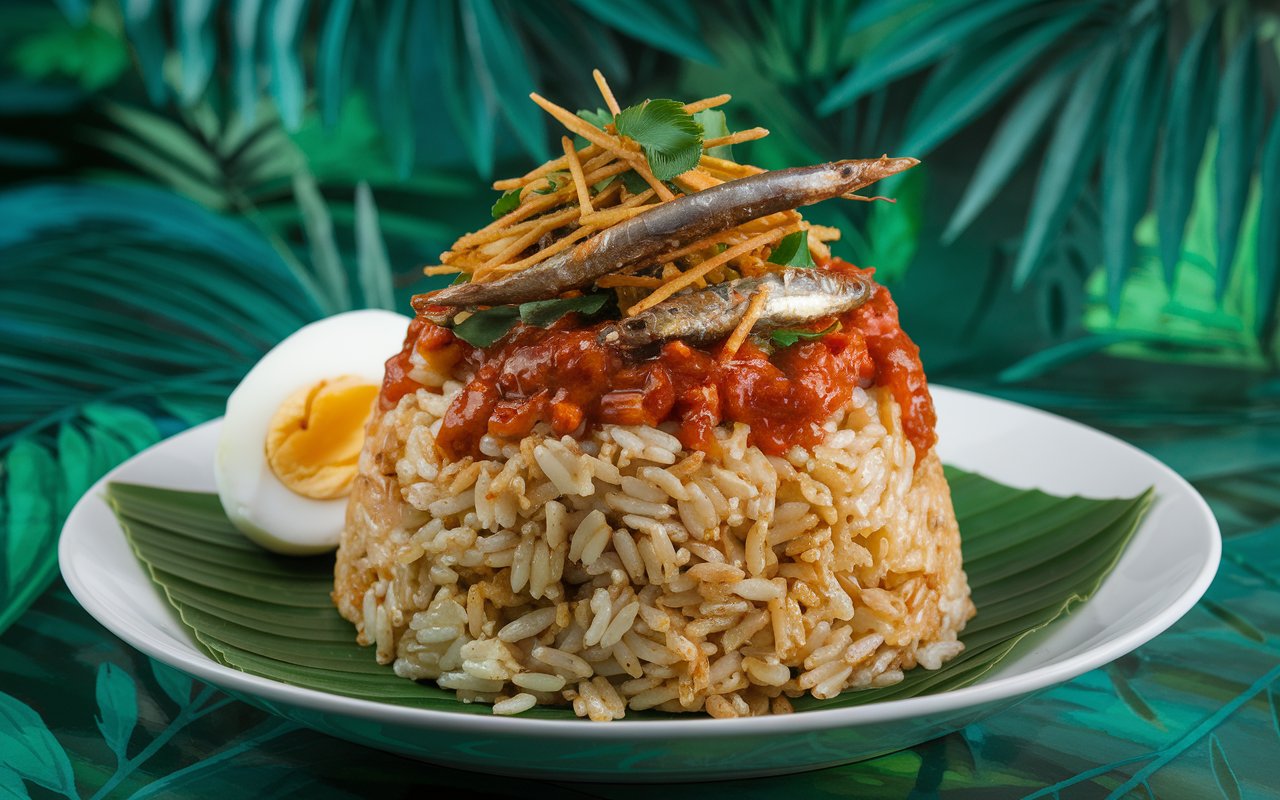
A staple on breakfast tables and roadside stalls throughout Malaysia, Nasi Lemak stands as a national treasure—encompassing fragrant coconut rice, fiery sambal (chili sauce), crisp fried anchovies, peanuts, and a smorgasbord of complementary sides. Translating roughly to “rich/coconutty rice,” nasi lemak’s heart is the aromatic rice cooked in coconut milk and pandan leaves, exuding a sweet, creamy essence. Coupled with a spicy sambal that adds heat and a robust, sweet-sour complexity, every spoonful merges comforting coconut softness with a thrilling tang. The dish often arrives wrapped in banana leaves, capturing a sense of tradition and homemade warmth that has transcended local boundaries to become a global favorite.
I recall my first taste of nasi lemak during a layover at Kuala Lumpur International Airport, where even the humble airport version stunned me with its coconut fragrance and piquant sambal. Determined to recreate it, I discovered the secrets behind achieving perfectly infused coconut rice and how crucial the sambal is—balancing chili’s punch with sweetness from onions and tamarind’s tang. Over time, I also explored the typical accompaniments: crunchy peanuts and anchovies (ikan bilis), cooling cucumber slices, and a boiled egg to quell the heat. The final ensemble, though simple, is quite spectacular in how each component accentuates the others. Now, nasi lemak stands among the most cherished dishes I make whenever I crave a bit of Southeast Asian escapism at home.
In this article, we’ll guide you through the core of Malaysian Nasi Lemak—coconut rice and a spicy sambal—plus suggested sides like fried anchovies, peanuts, and cucumber slices. Whether you’re aiming to expand your global cooking repertoire or just love exploring rice dishes with bold flavors, prepare for a meal that’s truly “lemak,” i.e., luxuriously rich and deeply satisfying.

Section 1: Why Malaysian Nasi Lemak Charms the Palate
- Creamy Coconut Rice
Cooking rice in coconut milk imparts a soft, subtly sweet aroma that’s far removed from plain steamed rice. The presence of pandan leaves (if available) adds a gentle, grassy fragrance too. - Sambal’s Spicy-Sweet Echo
The chili sauce or sambal that often accompanies nasi lemak typically merges dried chilies, onion, garlic, shrimp paste, and tamarind. The result is a sauce that simultaneously tingles, soothes, and sweetens your mouth. - Array of Textures & Flavors
From crunchy peanuts and anchovies to the soft boiled egg, crispy cucumbers, and lush rice, each bite offers a tapestry of sensations. That variety keeps each spoonful exciting. - Highly Customizable
Beyond the classic presentation, some enjoy nasi lemak with fried chicken, rendang, or spicy cuttlefish. Others keep it simple with just the base elements. The choice is yours.
Section 2: Ingredient Overview
Use this table to gather your essentials:
| Ingredient | Quantity | Notes |
|---|---|---|
| Rice (long-grain or jasmine) | 2 cups (uncooked) | Rinsed until water runs clear |
| Coconut Milk (full-fat recommended) | ~1 cup | For cooking rice; partial sub with water if needed |
| Pandan Leaf (optional) | 1–2 leaves, knotted | Adds authentic aroma, if accessible |
| Salt (for rice) | ½ tsp (approx.) | Seasoning the coconut rice |
| Sambal (homemade or store-bought) | Enough for serving | Typically chili-based sauce with onion, garlic, shrimp paste |
| Dried Anchovies (ikan bilis) | ½ cup | Fried crisp for garnish; skip if unavailable |
| Peanuts (unsalted, with or without skin) | ½ cup | Often toasted or fried until crunchy |
| Egg | 2–4 (hard-boiled or fried) | Halved for garnish or served sunny-side-up |
| Cucumber Slices | ~1 cup, thinly sliced | Cooling side to offset spice |
| Oil (vegetable) | 2–3 tbsp | For frying anchovies, peanuts, or parts of sambal making |
| Optional Protein Sides (fried chicken, rendang) | As desired | For a more elaborate meal if you prefer a meat add-on |
Sambal-Specific Ingredients (if making from scratch):
| Ingredient | Quantity | Notes |
|---|---|---|
| Dried Chilies | ~8–10 (soaked) | Adjust for heat preference, typically red dried chilies |
| Onion (chopped) | 1 small | Forms the sambal base, can use shallots for sweeter note |
| Garlic (minced) | 2–3 cloves | Additional aromatics |
| Shrimp Paste (belacan) | 1–2 tsp | Key in Malaysian sambal, toasted first for best aroma |
| Tamarind Pulp/Paste | 1 tbsp (diluted) | Contributes tangy dimension; can sub lime juice if needed |
| Sugar (palm sugar or regular) | 1–2 tbsp | Balances chili heat, up to taste |
| Salt | To taste | Season your sambal carefully |
Section 3: Step-by-Step Recipe (Approx. 1–1.5 Hours)
Coconut Rice
- Rinse the Rice
- Measure 2 cups of jasmine or long-grain rice. Rinse under running water multiple times until water runs almost clear. This step aids fluffy grains, removing excess starch.
- Combine Liquids
- In a pot, mix 1 cup coconut milk with enough water to reach the usual 2:1 ratio for rice cooking (i.e., total liquid ~2 cups for every 1 cup rice, though you can slightly adjust). For 2 cups rice, you want around 3.5–4 cups total liquid if using coconut milk partially.
- Add ½ teaspoon salt, and if you have it, tuck in a knotted pandan leaf for fragrance.
- Cook the Rice
- Bring the mixture to a gentle boil, then reduce heat to low, cover, and let it simmer for ~15 minutes or until liquid is absorbed. Avoid lifting the lid often.
- Turn off the heat and let the rice stand, covered, for another 5–10 minutes to steam. Fluff with a fork when done.
Sambal (If Making at Home)
(If using store-bought sambal, skip to the next step.)
- Soak Chilies
- Soak dried chilies in hot water for ~15 minutes to soften. Drain, removing seeds if you desire a milder sambal.
- Blend Aromatics
- In a blender or food processor, combine soaked chilies, onion, garlic, and toasted shrimp paste (if using). Pulse until it forms a paste, adding a spoonful of water if needed to keep blades moving.
- Sauté & Simmer
- Warm 1–2 tablespoons of oil in a skillet over medium heat. Add the chili paste, stirring constantly for ~5–10 minutes. Season with salt, 1–2 tablespoons of sugar, and 1 tablespoon tamarind water (or lime juice).
- Continue cooking until the oil separates slightly or the sambal thickens, tasting periodically for sweet-sour-salty balance. Adjust chili intensity by adding fewer or more chilies next time.
Anchovies & Peanuts
- Fry Anchovies
- Heat ~¼ cup oil in a small pan. Add dried anchovies. Fry for ~2–3 minutes until golden and crispy. Drain on paper towels. Lightly salt if they’re not pre-salted.
- Alternatively, you can oven-bake them at 350°F (175°C) for ~10 minutes. Keep an eye to avoid burning.
- Toast Peanuts
- In the same oil or a separate dry pan, toast peanuts until golden. They can burn quickly, so stir often. Drain and set aside.
Putting It All Together
- Plate the Rice
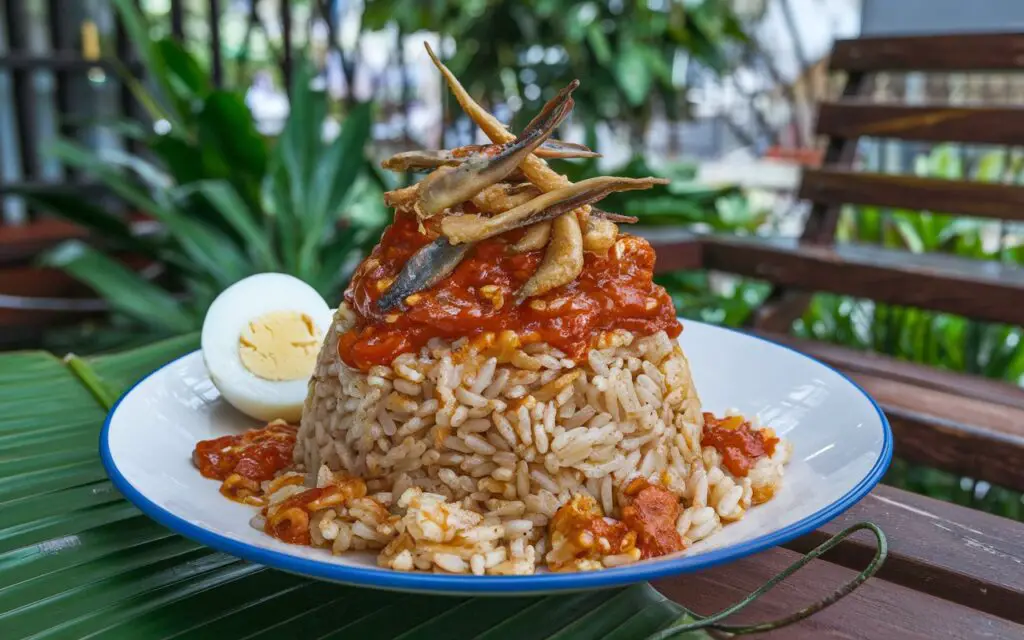
- Scoop a mound of the coconut rice onto each plate. Or if you want the iconic banana leaf experience, place a small portion on a banana leaf square.
- Arrange Sides
- Add a spoonful of sambal near the rice. Place a small pile of fried anchovies and toasted peanuts next to it. Layer on cucumber slices. Optionally slice a boiled egg in half and nestle it among the toppings.
- Additional Protein
- If you want a more substantial plate, include fried chicken or a small portion of Malaysian rendang. Even a sunny-side-up egg can be a comforting addition.
- Serve Warm
- Offer extra sambal in a small bowl for those who love additional spice. Diners typically mix bits of anchovy, peanut, cucumber, and sambal with each forkful of coconut rice. Enjoy the interplay of sweet, spicy, salty, and crunchy.
Section 4: Tips for Authentic Flavor & Texture
- Quality Coconut Milk
- For truly aromatic rice, choose a well-regarded brand of coconut milk. Thinner or watery versions yield less flavor.
- Pandan Leaves
- If available, adding pandan leaves to the rice pot brings a quintessentially Malaysian aroma. If you can’t find them, the dish remains tasty but slightly less fragrant.
- Adjust Sambal’s Spice
- The heat can vary drastically. Start mild if you’re uncertain. You can always add more chilies or chili paste later if your taste buds ask for fire.
- Crunch is Key
- Ensure anchovies are crisp and peanuts well-toasted. That textural contrast lifts the entire dish from standard to enthralling.
Section 5: Flavor Variations
- Herbal Rice
- Some cooks add ginger slices or lemongrass to the rice pot. This intensifies the aromatic base if you adore layered flavors.
- Sweet Sambal
- If you prefer a sweeter chili sauce, add more sugar or even a dab of honey. Balancing tang from tamarind is crucial, though, so don’t over-sweeten.
- Vegetarian/Vegan
- Skip anchovies and fish-based shrimp paste in sambal. Sub in soy sauce or mushroom sauce for savory depth. Tofu or tempeh can replace or supplement anchovies for protein.
- Roasted Peanuts
- Instead of pan-frying peanuts, you can roast them in the oven at 350°F (175°C) for ~10 minutes, stirring occasionally, for a drier, evenly toasted result.
Section 6: Serving Suggestions
- Banana Leaf Presentation: For authenticity, serve each portion on a banana leaf. This not only looks appealing but also lightly perfumes the meal.
- Side of Curry: Some Malaysians pair nasi lemak with a small bowl of curry (chicken or fish) or extra sambal-laden dishes.
- Acar (Pickled Veggies): If you can find or make Malaysian acar (pickled carrots, cucumbers, onions), it complements nasi lemak’s richness.
- Tea or Coffee: In Malaysia, this dish is often a breakfast staple, accompanied by strong coffee or tea, though it’s equally beloved for lunch or dinner.

Section 7: FAQ – Malaysian Nasi Lemak
Q1: Can I use brown rice for a healthier version?
A1: Yes, though the coconut flavor might be less pronounced due to brown rice’s heartier taste. Increase cooking liquid slightly and adjust time for brown rice. The result is less traditional but still tasty.
Q2: What if I skip the overnight bean soak for sambal?
(Note: Sambal typically doesn’t use beans. Possibly user confusion? We’ll adapt…) A2: This question may be moot since sambal doesn’t use beans. The only soaking relevant is dried chilies. Soaking them even 15–30 minutes helps with blending. If you skip it, the chili might not soften well.
Q3: Are anchovies mandatory?
A3: They are classic, but if you dislike fish or want a vegetarian spin, you can omit them. The peanuts still provide crunch, though the dish loses a dimension of salty, fishy crispness.
Q4: Is there a time-saving approach for coconut rice?
A4: A rice cooker can handle coconut rice easily. Just put rinsed rice, coconut milk, water, salt, and pandan leaf in the cooker. Let it automatically do the rest.
Q5: How long does homemade sambal last?
A5: Stored in a sealed container in the fridge, it typically lasts a week or two, thanks to the chili’s preserving qualities. Some even freeze extra sambal in portions for future convenience.
Conclusion

Transporting you to a Malaysian hawker stall in the comfort of your home, Malaysian Nasi Lemak highlights the magic of fragrant coconut rice paired with a spicy, vibrant sambal. Rounded out by crunchy peanuts, anchovies, cucumber slices, and possibly a boiled egg, each plate bursts with diverse flavors and textures. Whether you enjoy it for a hearty breakfast or as a main meal any time of day, nasi lemak exemplifies how a few humble ingredients—when meticulously combined—yield a dish that’s infinitely memorable.
Now that you know how to soak up coconut milk into fluffy rice and craft a zesty sambal (or use a store-bought version for speed), why not gather your peppers, anchovies, peanuts, and fresh eggs to stage your own nasi lemak feast? Once you bite into that luscious coconut-laced rice with a dab of fiery sambal, drop back here to share any creative spins—maybe you added a side of curry, replaced anchovies with a vegetarian alternative, or discovered a different chili variety for the sambal. Your personal flair may spark other culinary adventurers to discover just how enthralling a plate of nasi lemak can be in their own kitchen.