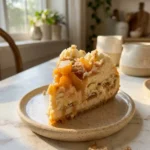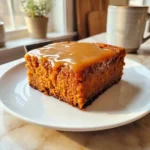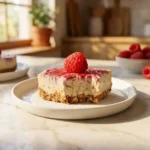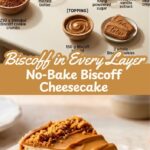



If you’re a Biscoff person, you already know there’s no such thing as too much of it, and this cheesecake is built on exactly that philosophy. No-bake Biscoff cheesecake has a Biscoff cookie crust, a creamy Biscoff-spiked cheesecake filling, and a glossy layer of melted Biscoff spread poured over the top. It’s that warm, caramelized, cinnamon-spiced cookie-butter flavor in three forms at once, and it’s genuinely easy to make. No oven, no water bath, no gelatin, just blend, mix, layer, and chill.
The beauty of a no-bake cheesecake is that it skips every part of baked cheesecake that goes wrong. There’s no risk of cracks, no overbaking, no fussy oven cooling. Instead you whip cream to give the filling its structure and let the fridge do the setting overnight. What you get is a soft, mousse-like, intensely creamy cheesecake that’s lighter than the dense baked kind, and absolutely loaded with Biscoff flavor.
Why this no-bake version works
The whole method hinges on whipped cream, so it’s worth understanding why. In a baked cheesecake, eggs set the filling in the oven. Here there are no eggs and no baking, so the structure comes from heavy cream whipped to stiff peaks and folded in. As the cheesecake chills, that whipped cream holds everything firm enough to slice, while keeping the texture light and airy. This is why the recipe is so particular about whipping the cream to stiff peaks, you should be able to turn the bowl over without it moving. Underwhipped cream means a filling that never properly sets.
The other key is folding, not stirring. Once the whipped cream goes in, you fold it gently into the cream cheese mixture so you don’t knock the air out. Beat it in roughly and you deflate the cream, losing both the lightness and the structure.
And then there’s the Biscoff itself, working in three layers. The cookies become the crust, the spread goes into the filling, and more spread melted over the top creates that signature glossy finish. Using it in all three places is what makes this taste unmistakably, fully of Biscoff rather than just hinting at it.
What goes in
This recipe comes with clean metric weights, which makes it easy to be precise, and precision helps with a no-bake set.

For the crust, you need Biscoff cookies, blended to fine crumbs, and melted butter to bind them. That’s it, no extra sugar needed, since the cookies are already sweet.
For the filling, it’s cream cheese, Biscoff spread, powdered sugar, vanilla, and heavy cream. A few notes here. Use full-fat block cream cheese, not the spreadable tub kind, since the tub style is too soft to set properly. Make sure the heavy cream is cold before whipping, because cold cream whips faster and holds stiffer peaks. And use smooth Biscoff spread, not crunchy, for a silky filling.
For the topping, more Biscoff spread, melted until pourable, plus a couple of crumbled Biscoff cookies for the edge.
You’ll also want a 22 cm / 9 inch springform pan, which is what lets you release the delicate no-bake cake cleanly without trying to lift it out of a solid pan.
How to make it
Start with the crust. Blend the Biscoff cookies in a food processor to a fine, sand-like crumb, then blend in the melted butter until it looks like wet sand. Line a 22 cm springform pan with parchment on the bottom and up the sides, press the crumbs firmly into the base, and pack some up against the sides too, using the bottom of a glass to compact it well. Put the crust in the freezer while you make the filling, which helps it set firm.
For the filling, cream the cream cheese on its own for about a minute until smooth. Add the Biscoff spread, powdered sugar, and vanilla and mix until smooth, scraping down the bowl so there are no lumps. In a separate bowl, whip the cold heavy cream to stiff peaks, taking care to stop before it turns to butter. Then gently fold the whipped cream into the cream cheese mixture with a spatula until just combined, keeping it light and airy.
Spoon the filling into the chilled crust and smooth the top with an offset spatula. Cover with cling film and refrigerate for at least 8 to 12 hours. This long chill is non-negotiable, it’s the entire setting method, so make this the day before you want to serve it.
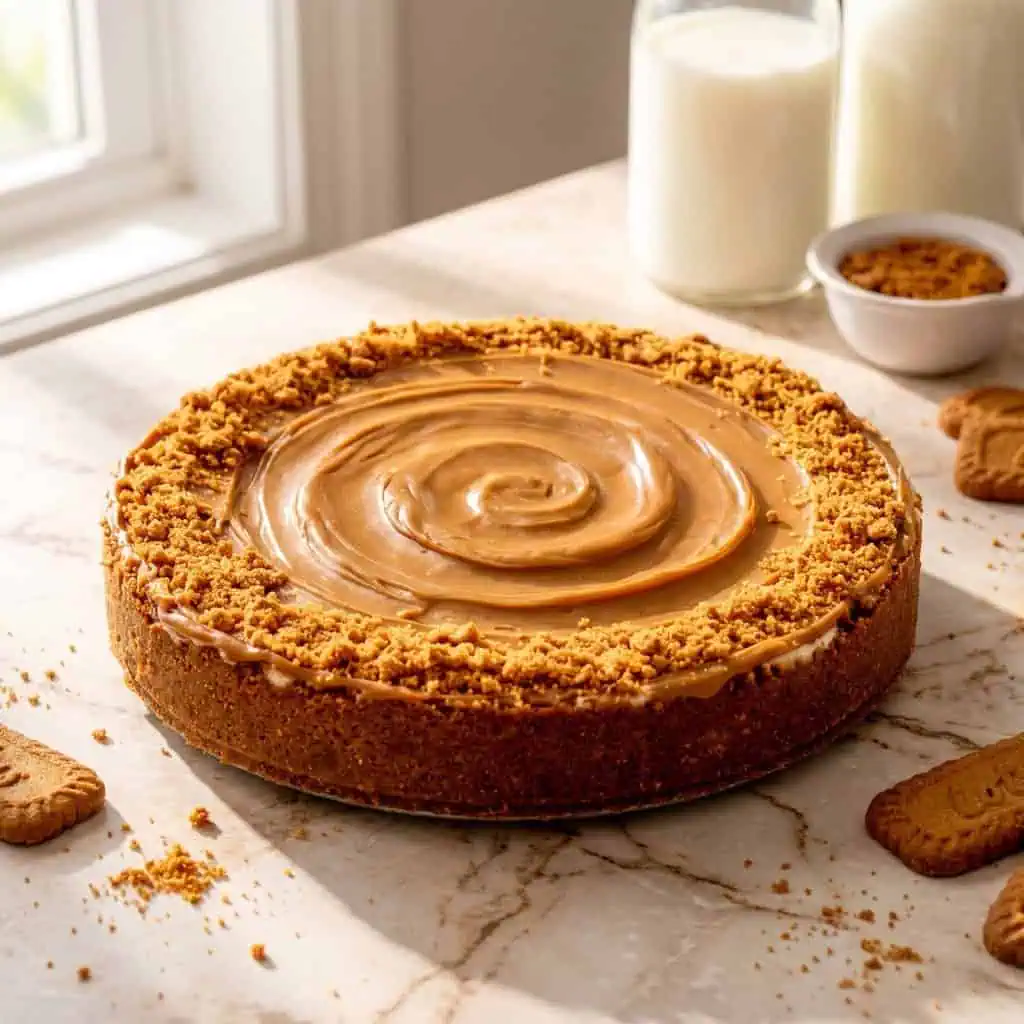
When it’s set, move the cheesecake to a serving dish and release the springform sides. Melt the topping Biscoff spread in the microwave until pourable and pour it over the top, letting it spread into a smooth, glossy layer. Crumble two Biscoff cookies around the edge to finish.
Tips and storing
The two make-or-break steps are whipping the cream to proper stiff peaks and folding it in gently. Get those right and the cheesecake sets beautifully; get them wrong and it stays loose. Everything else is forgiving.
A couple more. Warm your knife under hot water and wipe it between cuts for clean slices through the soft filling. And if you want even more texture, you can press a few extra cookie crumbs into the sides or scatter them across the whole top, not just the edge.
This is a make-ahead dessert by design, which is one of its best features. It needs the overnight chill anyway, so building it the day before a party means it’s done and waiting. Add the melted Biscoff topping closer to serving for the glossiest finish, though it’s fine to top it ahead too.
Store the cheesecake covered in the fridge for a few days. Because it’s a soft no-bake filling, keep it cold right up until serving, since it softens at room temperature. It also freezes well: freeze it solid, then thaw in the fridge before serving, which actually makes it easier to slice cleanly.
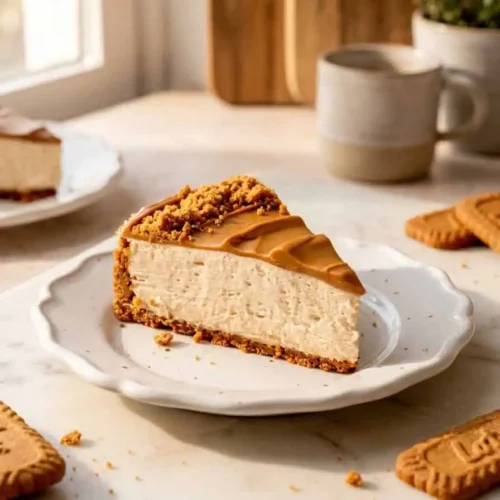
This makes 12 slices from a 9-inch springform. Creamy, spiced, and full of that caramelized cookie-butter flavor in every layer, it’s a dream for anyone who loves Biscoff, and a guaranteed favorite for anyone who’s about to.
No-Bake Biscoff Cheesecake

Equipment
- 22 cm / 9-inch springform pan
- Food processor
- Hand or stand mixer
- Offset spatula
Ingredients
Cookie Crust
- 250 g Biscoff cookies blended
- 75 g butter melted
Cheesecake Filling
- 400 g cream cheese full-fat block
- 110 g Biscoff spread smooth
- 100 g powdered sugar
- 1 tsp vanilla extract
- 240 g heavy cream cold, whipped to stiff peaks
Topping
- 150 g Biscoff spread melted
- 2 Biscoff cookies crumbled
Instructions
- Make the Crust: Blend the Biscoff cookies in a food processor to a fine, sand-like crumb, then blend in the melted butter. Line a 22 cm springform pan with parchment on the bottom and sides, press the crumbs firmly into the base and up the sides with the bottom of a glass, and place in the freezer while you make the filling.
- Cream the Cheese: Cream the cream cheese on medium speed for 1 minute until smooth.
- Add the Biscoff: Add the Biscoff spread, powdered sugar, and vanilla and mix until smooth, about 1 minute. Scrape the bowl and mix on low until combined.
- Whip the Cream: In another bowl, whip the cold heavy cream to stiff peaks (stiff enough to turn the bowl over without it moving), being careful not to whip it to butter.
- Fold and Fill: Gently fold the whipped cream into the cream cheese mixture with a spatula, taking care not to deflate it. Spoon into the chilled crust and smooth the top with an offset spatula. Cover with cling film and refrigerate 8 to 12 hours.
- Top and Serve: Move the chilled cheesecake to a serving dish and release the springform sides. Melt the topping Biscoff spread in the microwave and pour it over the top. Crumble 2 Biscoff cookies around the edge.