



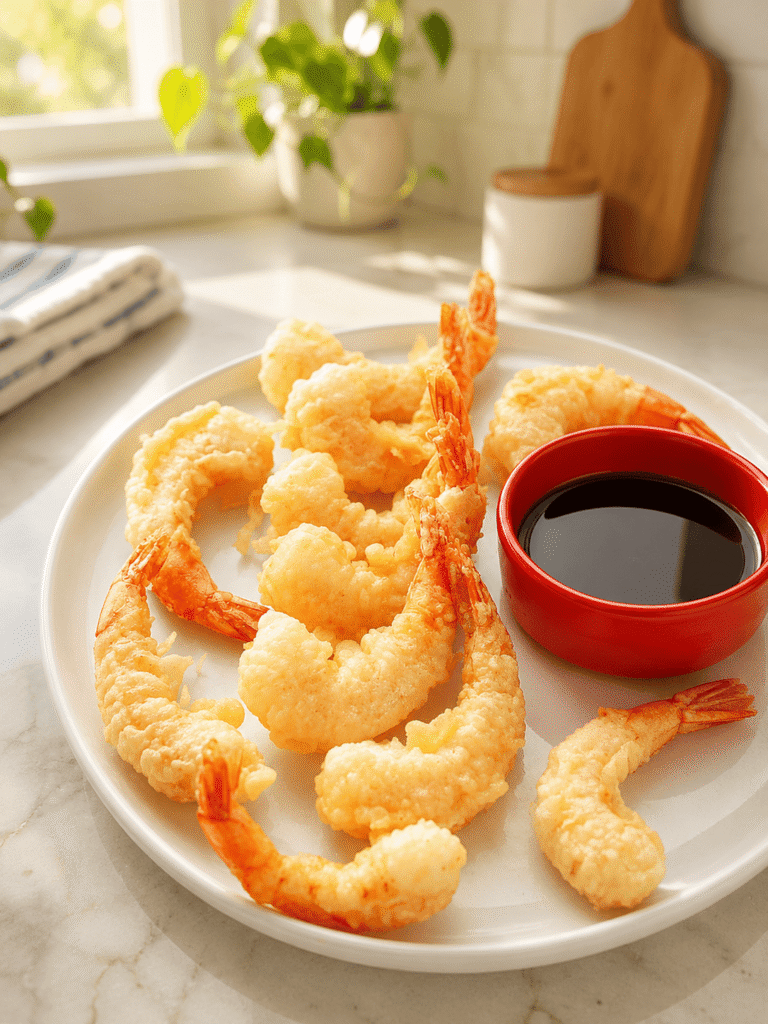
Shrimp tempura is one of those dishes that’s genuinely worth making at home: fresh shrimp coated in a light, crispy batter and deep-fried until golden and delicate. The batter here is thin and airy, almost lacy, giving the shrimp a delicate crunch rather than a heavy, thick coating. Served hot with soy sauce or a tempura dipping sauce, it’s a classic Japanese dish that’s simpler to make at home than you might expect, as long as you get a few key details right, like properly prepping the shrimp and keeping your oil at the correct temperature.
The secret to great tempura is all in the details: a thin, barely-mixed batter, shrimp that’s prepped so it fries straight rather than curling up, and oil held at the right temperature throughout frying. Get those right, and you end up with shrimp that’s crispy and light on the outside, tender and juicy inside, nothing like the heavy, greasy fried shrimp you might get elsewhere. It’s a satisfying appetizer or main that comes together in about 30 minutes.
Why this works
A few key techniques are what give this shrimp tempura its signature light, crispy texture, and they’re worth understanding.
Notching the shrimp keeps them straight as they fry. Making a few small cuts along the belly of each shrimp before frying relaxes the muscle that would otherwise cause it to curl up tightly in the hot oil. This simple step is what gives you those classic, straight, elegant tempura shrimp instead of tightly curled ones, and it takes only a few extra seconds per shrimp.
A light dusting of cornstarch helps the batter adhere. Tossing the shrimp in cornstarch and salt before dipping in batter gives the wet batter something dry to cling to, helping it coat the shrimp more evenly and stick properly during frying.
The batter itself is deliberately thin and minimally mixed. Combining egg and cold water, then stirring in flour with just a few strokes of a fork, without overmixing, is what keeps the tempura batter light and lacy rather than dense and doughy. Overmixing develops gluten in the flour, which would make the coating chewy instead of delicately crisp. Cold water also helps keep the batter light, since it slows gluten development even further. Some lumps left in the batter are actually fine, and even preferable, a perfectly smooth batter is often a sign of overmixing.
And maintaining the right oil temperature is essential for properly fried tempura. Keeping the oil between 340 and 360°F ensures the shrimp cook through and the batter crisps up quickly without absorbing excess oil or burning. Frying in small batches of 4 to 5 shrimp at a time (rather than crowding the pot) helps the oil maintain that temperature throughout cooking.
What goes in
The ingredient list is short and classic.

You’ll need fresh shrimp (jumbo or medium), cornstarch, salt, egg, all-purpose flour, cold water, and oil for frying.
A few notes. Use fresh shrimp, deveined with the shell removed up to the tail (leaving the tail on is traditional). Make the batter right before frying, rather than ahead of time, so it stays light and doesn’t develop too much gluten while sitting. Use cold water in the batter, this is part of what keeps it light and crisp. And vegetable or canola oil both work well for frying.
How to make it
Prepare the shrimp: devein them and remove the shell right up to the tail. Make 4 to 5 small notches on the belly of each shrimp to prevent curling during frying.
Toss the shrimp in cornstarch and salt.
Heat the oil in a pot.
In a medium bowl, mix the egg with the cold water. Add the flour and stir in with a fork, being careful not to overmix.
Once the oil reaches 340 to 360°F, dip each shrimp in the batter and gently place it in the oil.
Fry 4 to 5 shrimp at a time so you don’t overcrowd the pot and lower the oil temperature.
Fry each shrimp 2 to 3 minutes per side. Remove onto a plate lined with paper towel.
Repeat with all the shrimp.
Serve with soy sauce or an Asian dipping sauce.
Tips, serving, and storing
A few things help. Notch the shrimp bellies well so they fry straight rather than curling up. Make the batter right before frying, not ahead of time. Keep a close eye on the oil temperature with a thermometer, staying in the 340 to 360°F range is what gives you crispy, non-greasy results. And don’t overcrowd the pot, frying in small batches keeps the oil hot and the tempura crispy.
A couple more. Nutrition can vary depending on the specific products you use, so treat the figures as an estimate if you’re tracking closely. And serve the tempura as soon as possible after frying, it’s at its crispiest right out of the oil.
Shrimp tempura is a wonderful appetizer or light main course, served with soy sauce, tempura dipping sauce, or a squeeze of lemon. It’s also delicious on top of rice or udon noodles, or as part of a larger Japanese-inspired meal alongside miso soup and a simple salad. Serve it hot, right after frying, for the best texture.
For storing, tempura is really best enjoyed fresh, since the coating loses its crispness as it sits. If you have leftovers, store them in an airtight container in the fridge for up to 1 to 2 days, and reheat in an oven or air fryer (never the microwave) to help crisp the coating back up. I wouldn’t recommend freezing raw battered shrimp, since the texture of the batter doesn’t hold up well.
This makes about 4 servings. Light, crispy, and delicately fried, this shrimp tempura is a classic Japanese dish you can absolutely make at home, and once you’ve mastered the technique, it’s a recipe you’ll want to make again and again. The small details, notching the shrimp, keeping the batter loose, and watching the oil temperature, really are the whole recipe here, and once they click, tempura stops feeling intimidating.
Print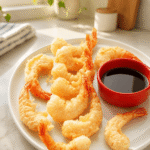
Shrimp Tempura
Fresh shrimp, notched to fry straight, dipped in a light, thin, barely-mixed batter and deep-fried until crispy and golden. Classic Japanese shrimp tempura, delicately crunchy outside and tender inside, served with soy sauce or dipping sauce.
- Total Time30 minutes
- Yield4 servings 1x
Ingredients
- 1 lb fresh shrimp (jumbo or medium, deveined, shell removed to the tail)
- 1/4 cup cornstarch
- 1/2 tsp salt
- 1 large egg
- 1 cup all-purpose flour
- 1 cup cold water
- 1.5 cups oil (vegetable or canola, for frying)
Instructions
- Prep the Shrimp: Devein the shrimp and remove the shell up to the tail. Make 4 to 5 small notches on the belly of each shrimp to prevent curling during frying.
- Coat: Toss the shrimp in cornstarch and salt.
- Heat the Oil: Heat the oil in a pot.
- Make the Batter: In a medium bowl, mix the egg with the cold water. Add the flour and stir in with a fork, being careful not to overmix.
- Fry: Once the oil reaches 340 to 360°F, dip each shrimp in the batter and gently place in the oil. Fry 4 to 5 shrimp at a time so you don’t overcrowd the pot.
- Cook Through: Fry each shrimp 2 to 3 minutes per side. Remove onto a plate lined with paper towel. Repeat with all the shrimp.
- Serve: Serve with soy sauce or an Asian dipping sauce.
Notes
Notch the shrimp bellies well so they fry straight. Make the batter right before frying, not ahead of time (prepare it while the oil heats). Keep the oil between 340 and 360°F for crispy, non-greasy results, use a thermometer. Don’t overcrowd the pot, fry in small batches to keep the oil hot. Some lumps in the batter are fine, a perfectly smooth batter suggests overmixing. Best served immediately. Store leftovers up to 1 to 2 days refrigerated; reheat in an oven or air fryer, not the microwave. Don’t freeze raw battered shrimp.
- Prep Time: 15 minutes
- Cook Time: 15 minutes
- Category: Appetizer
- Method: Deep-frying, Frying
- Cuisine: Japanese
Nutrition
- Serving Size: 1 serving
- Calories: 348
- Sugar: 1
- Sodium: 1192
- Fat: 11
- Saturated Fat: 1
- Carbohydrates: 31
- Fiber: 1
- Protein: 28
- Cholesterol: 327