


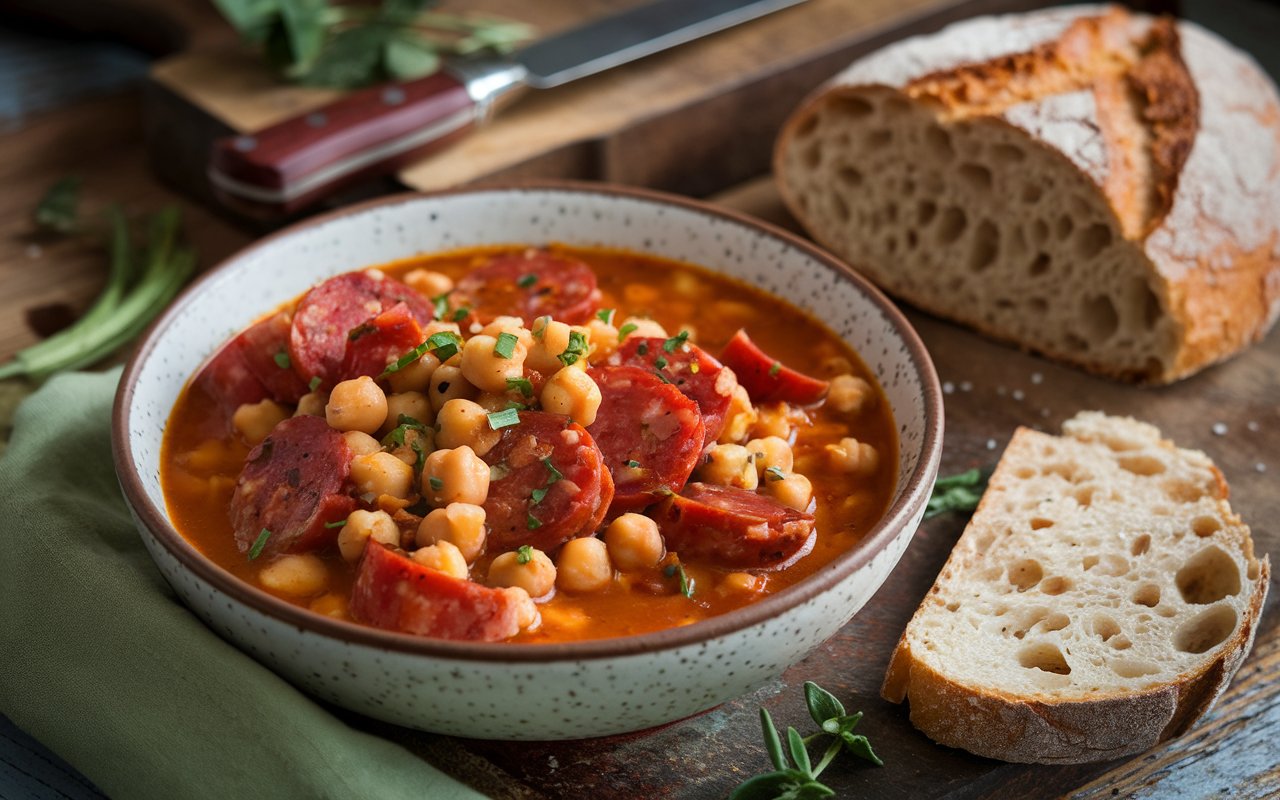
Spain’s culinary tradition boasts a rich tapestry of one-pot stews that harness bold ingredients, layered spices, and the warmth of communal dining. Spanish Chorizo & Chickpea Stew – Rustic, Flavorful Comfort draws on these fundamentals, uniting smoky chorizo sausage, tender chickpeas, and earthy vegetables in a single pot. The result is a hearty stew that brims with deep flavor—smokiness from paprika-laced chorizo, the creaminess of chickpeas, and the aromatic background of onions, garlic, and perhaps a touch of saffron or bay leaf.
- Why Spanish Chorizo & Chickpea?
- Key Ingredients in Table Form
- Step-by-Step Procedure
- 1. Brown Chorizo (3–5 minutes)
- 2. Sauté Onions & Peppers (3–5 minutes)
- 3. Build the Stew Base (5–10 minutes)
- 4. Chickpeas & Simmer (10–15 minutes)
- 5. Final Touches (1–2 minutes)
- Serving & Presentation
- Flavor & Texture Keys
- Possible Variations
- Dietary & Health Notes
- Storing & Reheating
- Frequently Asked Questions
- Conclusion
In this detailed guide, you’ll see how to build the stew base by sautéing sausage and vegetables, then simmer them in a robust broth or tomato sauce. We’ll provide a table of essential ingredients, step-by-step instructions, plus tips on customizing your stew—for instance, with extra herbs, potatoes, or even seafood add-ins reminiscent of Spanish coastal dishes. By the final spoonful, you’ll have a pot that captures the comforting essence of Spanish home cooking—a smoky, savory harmony you can dip bread into or pair with a simple salad.
Why Spanish Chorizo & Chickpea?

Key Ingredients in Table Form
Below is a concise table for ~4–6 servings:
| Ingredient | Quantity (Approx.) | Purpose / Notes |
|---|---|---|
| Spanish Chorizo (sliced) | ~8 oz | Smoky, paprika-rich sausage that forms the stew’s flavor base. |
| Chickpeas (canned or cooked) | 2 cans (15 oz each) | Creamy legumes absorbing stew flavors; drained & rinsed if canned. |
| Onion (chopped) | 1 medium | Aromatic base for sauté. |
| Garlic (minced) | 2–3 cloves | Essential depth and pungency. |
| Bell Pepper (optional) | 1 small (chopped) | Additional veggie, commonly found in Spanish stews. |
| Tomato (crushed or sauce) | ~1 cup | Adds sweetness and slight acidity; can use diced if chunkier texture desired. |
| Broth (chicken/veggie) | ~2 cups | Creates stew consistency; adjust for thick or soupy. |
| Paprika (smoked if available) | 1 tsp | Reinforces smoky essence. |
| Bay Leaf (optional) | 1 leaf | Adds herbal note typical in Spanish stews. |
| Olive Oil | 1–2 tbsp | Sautéing onions, peppers, and browning chorizo if needed. |
| Salt & Pepper | To taste | Adjust once chorizo’s saltiness is known. |
| Optional Potato or Spinach | 1–2 cups (diced or handful) | Potatoes for extra starch; spinach for greenery near the end. |
Step-by-Step Procedure
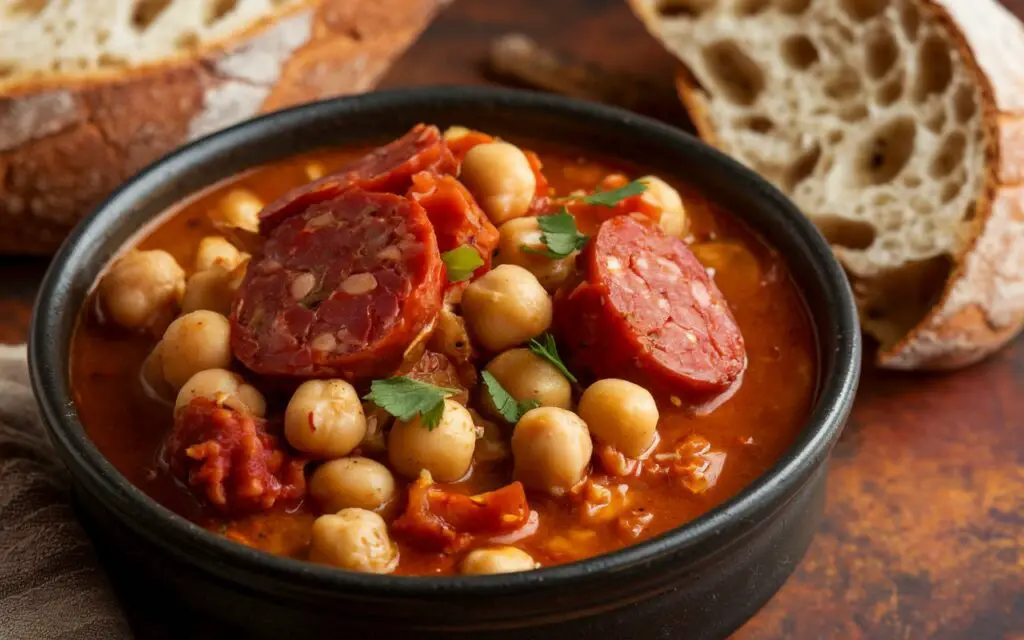
1. Brown Chorizo (3–5 minutes)
- Slice or Dice: ~8 oz Spanish chorizo into rounds or small chunks.
- Heat Oil: In a large pot or Dutch oven over medium-high, add ~1 tablespoon olive oil.
- Sear: Cook chorizo ~2–3 minutes until edges crisp. Remove with a slotted spoon, leaving flavored oil in the pot.
2. Sauté Onions & Peppers (3–5 minutes)
- Onions: Add 1 chopped onion to the pot. Sauté ~2 minutes.
- Bell Pepper: If using, toss in diced pepper. Cook until softened, ~2–3 minutes.
- Garlic: Stir in 2–3 minced garlic cloves last ~30 seconds to 1 minute, avoiding burn.
3. Build the Stew Base (5–10 minutes)
- Spices: Add 1 teaspoon paprika (preferably smoked), plus any additional seasonings (bay leaf, pepper).
- Tomato: Stir in ~1 cup crushed tomatoes or sauce. Let it bubble ~1–2 minutes to reduce raw flavor.
- Broth: Pour in ~2 cups chicken or veggie broth. Scrape pot bottom to deglaze.
4. Chickpeas & Simmer (10–15 minutes)
- Chickpeas: Add 2 cans (drained/rinsed). If including potatoes, add them now if raw.
- Return Chorizo: Stir in cooked chorizo slices.
- Simmer: Lower heat, cover partially, cook ~10–15 minutes to merge flavors. If too thick, add more broth; if watery, simmer uncovered.
5. Final Touches (1–2 minutes)
- Taste & Adjust: Salt, pepper, or even a pinch of sugar if tomatoes are too acidic.
- Optional Greens: If using spinach or kale, stir in now to wilt.
- Remove Bay Leaf: Discard if used.
Serving & Presentation
- Bowl: Ladle stew into bowls.
- Garnish: Fresh parsley or chopped roasted peppers for color. A drizzle of olive oil if you want extra richness.
- Side: Crisp bread (baguette or rustic loaf) helps soak up the smoky broth. Alternatively, serve with plain rice.
Flavor & Texture Keys
- Quality Chorizo
Spanish chorizo is typically cured or semi-cured with a distinct smoky paprika flavor. Avoid substituting Mexican chorizo, which is raw and spicier. - Slight Crisp on Chorizo
Browning it first releases fat and intensifies flavor. - Simmer Time
A short simmer merges flavors quickly, but longer cooking can yield deeper complexity. Just watch for over-reduction.

Possible Variations
- Add Wine
A splash of dry white or red wine when deglazing adds extra depth. - Use Lentils
Replace chickpeas with lentils, adjusting cooking time. - Seafood Twist
Add shrimp or clams near the end, reminiscent of Spanish coastal stews. - Potatoes
Chopped potatoes can boost heartiness if you prefer more carb content.
Dietary & Health Notes
- Protein & Fiber
Chickpeas supply fiber, while chorizo adds protein (with some fat). - Sodium Awareness
Chorizo can be salty. Monitor added salt. Possibly choose low-sodium broth. - Moderate Fat
The sausage oil can be high in saturated fat. Skim or reduce as needed.
Storing & Reheating
- Refrigerate: Up to 3 days in a sealed container. Flavors often improve overnight.
- Reheat: Stove or microwave. If it’s too thick, add splash of water/broth.
- Freeze: The chickpeas and sauce generally freeze well ~2 months, though the texture may soften slightly upon thawing.
Frequently Asked Questions
Q1: Can I use Mexican chorizo?
Yes, but it’s raw and crumbly. Cook it thoroughly, drain excess fat, and note the flavor profile is spicier, less smoky.
Q2: My stew is too greasy—help?
Skim visible oil from the surface after simmering, or drain chorizo more thoroughly post-browning.
Q3: Are dried chickpeas better than canned?
Soaked/cooked dried chickpeas can taste fresher. For convenience, canned is fine—just rinse well.
Q4: Could I omit tomatoes for a lighter color stew?
Yes, though tomatoes add tang. You may want to add extra broth or a bit of vinegar for acidity.
Q5: Is saffron used in Spanish stew?
Some regions incorporate a few saffron threads for subtle color/flavor. It’s optional but authentic in certain recipes.
Conclusion
Spanish Chorizo & Chickpea Stew – Rustic, Flavorful Comfort stands as a tribute to Spain’s tradition of slow-simmered dishes teeming with hearty legumes, robust sausages, and layered spices. The smoky undertones from chorizo, combined with the soft bite of chickpeas and a tomato-forward base, yield a stew that’s simultaneously comforting and full of bold personality.
Whether you incorporate potatoes for extra substance or accentuate the stew with saffron and a dash of wine, the core remains the synergy of chickpeas soaking up the sausage’s rich oils and the stew’s savory aroma. Serve it piping hot with crusty bread or a side of rice, and each spoonful conjures images of Spanish hearths and communal dining—a satisfying meal that merges tradition, flavor, and warmth in every bowl.