


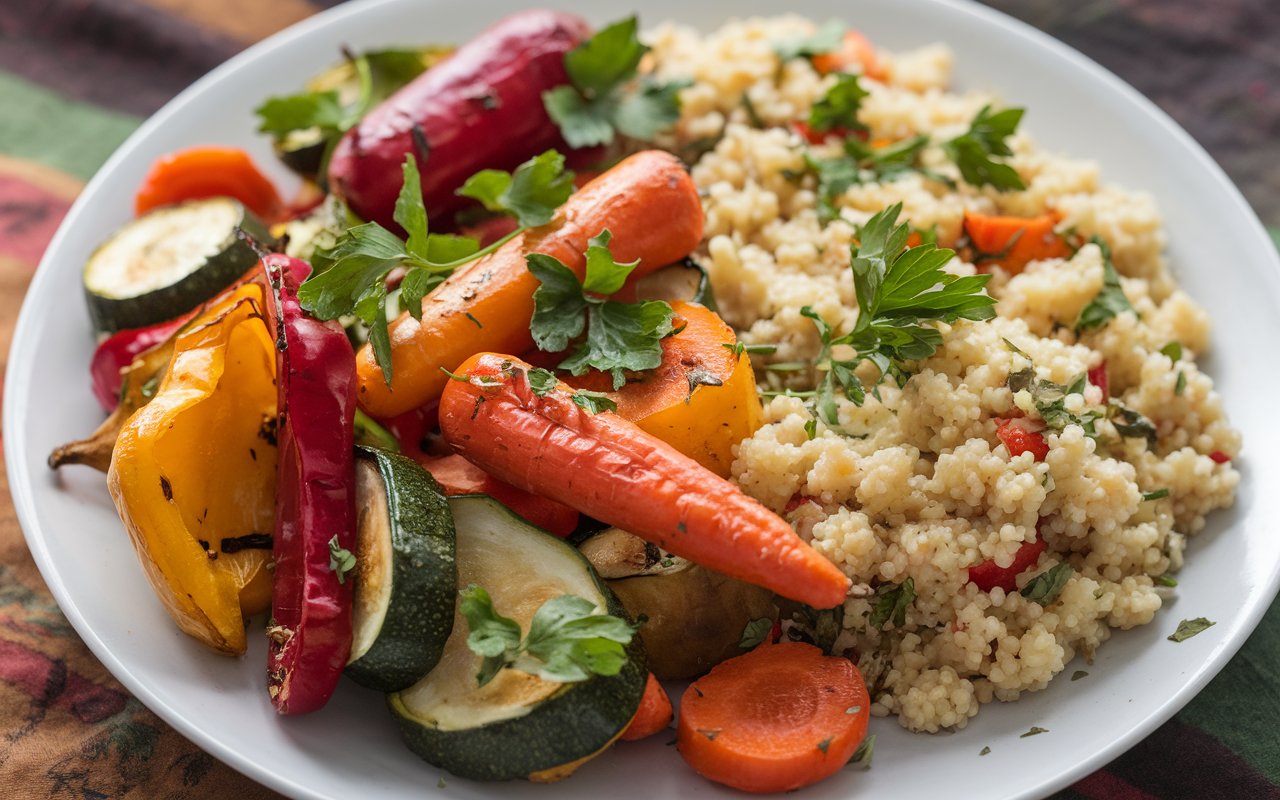
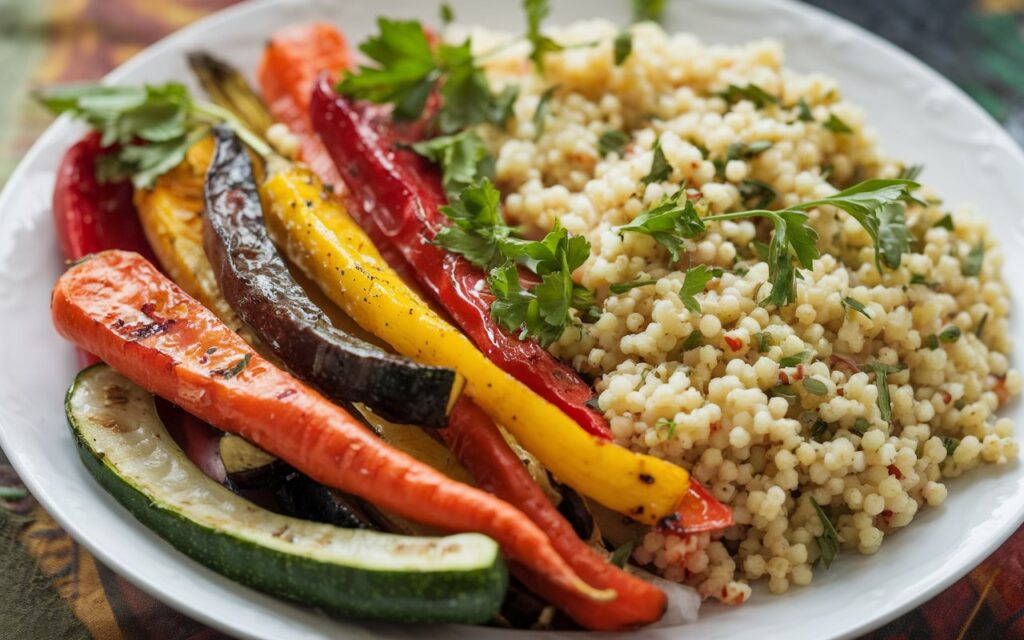
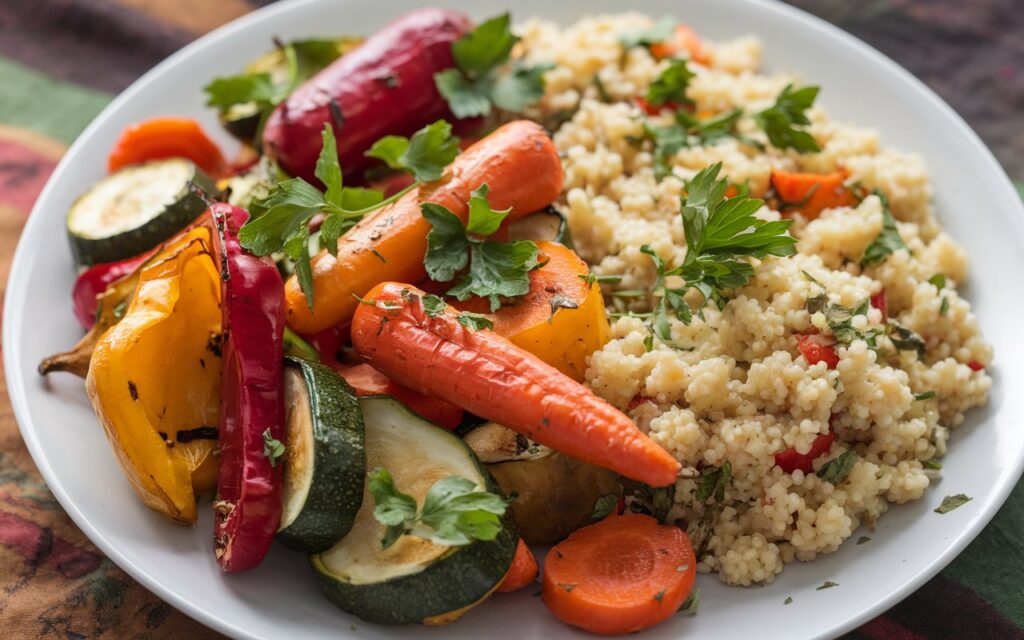
A craving for vegetables doesn’t need to be dull—especially when you toss them in olive oil, roast them to caramelized perfection, and combine them with a tender grain. Roasted Veggie & Couscous Medley – Earthy, Colorful, Satisfying harnesses that concept, featuring whatever seasonal vegetables you love (peppers, zucchini, onions, eggplant, etc.) alongside fluffy couscous for a hearty yet nutritious dish. It’s the perfect union of bright produce, sweet roasted edges, and a subtle nutty grain that soaks up all the juices.
In this guide, you’ll discover how to optimize roasting times for various veggies, flavor the couscous with simple seasonings (like lemon juice, herbs, or even stock), and combine everything for a comforting meal that can stand alone or work as a side. We’ll provide a table of core ingredients, step-by-step instructions, plus suggestions for finishing touches—like fresh herbs, feta cheese, or a drizzle of balsamic glaze. By the end, you’ll have a roasted vegetable and couscous formula that transforms everyday produce into a vibrant, balanced plate.
Why Roasted Veggies & Couscous?

- Versatility
You can adapt it to any vegetables on hand—peppers, squash, carrots, etc. The roasting process highlights their natural sweetness. - Couscous Simplicity
Couscous is famously quick to cook—five minutes in hot water or broth yields a light, fluffy base. - Contrast in Texture & Flavor
The slightly chewy couscous counters the crisp-tender roasted vegetables, while any juices or oils from roasting add extra taste. - Meal or Side
Enjoy it as a vegetarian main dish or pair it with grilled chicken, fish, or tofu for a more robust dinner.
Key Ingredients in Table Form
Below is a concise table for ~4 servings:
| Ingredient | Quantity (Approx.) | Purpose / Notes |
|---|---|---|
| Couscous (regular or whole) | 1 cup (dry) | Absorbs flavor from roasting juices or added seasonings. |
| Mixed Veggies (peppers,zucchini,onions,eggplant) | ~4 cups (chopped) | The star of the dish; choose your favorites. |
| Olive Oil | ~3–4 tbsp | For tossing veggies; can also drizzle over final dish. |
| Salt & Pepper | To taste | Basic seasoning for both veggies & couscous. |
| Herbs (dried or fresh) | ~1–2 tsp (if dried) | E.g., thyme, oregano, or rosemary for roasting; fresh parsley or basil for garnish. |
| Broth or Water (for couscous) | ~1 cup | Check couscous package ratio; often 1:1 or 1:1.25. |
| Garlic (optional) | 2–3 cloves (for roasting) | Enhances veggie flavor or can be added raw to dressing. |
| Lemon Juice (or vinegar) | 1–2 tbsp (for finishing) | Brightens final dish, especially if using hearty veggies. |
| Optional Cheese (feta) | ~1/2 cup (crumbled) | Salty, tangy accent if desired. |
| Optional Nuts (pine nuts) | ~1/4 cup (toasted) | Crunch and extra flavor if you like. |
Step-by-Step Instructions
1. Chop & Season Veggies (5–10 minutes)
- Choose Veggies: For an earthy medley, consider bell peppers, zucchini, red onion, mushrooms, eggplant. Chop into ~1-inch pieces.
- Toss with Oil & Spices: In a bowl, combine ~4 cups veggies with 2–3 tablespoons olive oil, salt, pepper, plus dried herbs (e.g., thyme, oregano). Optionally add smashed garlic cloves or onion wedges.
2. Roast Veggies (20–30 minutes)
- Oven: Preheat to 400°F (200°C).
- Single Layer: Spread veggies on a lined baking sheet, ensuring minimal overlap for even browning.
- Bake: About 20–30 minutes, flipping halfway. Look for caramelized edges. Time varies by veggie density (e.g., carrots might need longer).
3. Cook Couscous (5–10 minutes)
- Boil Liquid: In a pot, bring ~1 cup water or broth to a boil. Season lightly with salt.
- Add Couscous: Stir in 1 cup dry couscous, cover, remove from heat.
- Wait: Let stand ~5 minutes. Fluff with a fork. The grain should be tender yet slightly firm.
4. Combine & Flavor (2–5 minutes)
- Large Bowl: Transfer roasted veggies and fluffed couscous.
- Stir Gently: Drizzle 1 tablespoon olive oil or leftover pan juices from roasted veggies.
- Acidity: Add 1–2 tablespoons lemon juice or a mild vinegar (e.g., balsamic or red wine).
- Herbs/Cheese: If using fresh basil or parsley, fold in now. Crumbled feta or goat cheese adds a tangy dimension.
5. Taste & Serve (Immediate or Up to 1 day)
- Adjust Seasoning: If it’s bland, a pinch more salt/pepper or a dash of lemon.
- Temperature: Serve warm or at room temp. Both are delicious.
- Garnish: Pine nuts or chopped nuts for texture.
Why This Medley Works
- Roasting Boosts Flavor
High heat caramelizes natural sugars in vegetables, intensifying sweetness and complexity. - Couscous Efficiency
Cooking couscous is near effortless. Its neutral taste allows roasted veggie flavors to shine. - Customizable
Vary veggies, herb combos, or add proteins like chickpeas or shredded chicken for a fuller meal.
Serving & Presentation
- Platter: Spread the couscous on a large platter, top with roasted veggies, drizzle oil or dressing.
- Individual Bowls: Let each diner enjoy the mixture, possibly topped with extra condiments.
- Side or Main: Great as a side for grilled meats or fish, but can stand alone for a vegetarian lunch or dinner.
Possible Variations
- Mediterranean Spin
Use dried oregano, basil, thyme, top with feta cheese and kalamata olives. - Moroccan Twist
Season with cumin, coriander, add chickpeas, and garnish with fresh cilantro. - Spicy Kick
Sprinkle chili flakes, smoked paprika, or harissa for a robust note. - Adding Proteins
Roasted or grilled chicken, shrimp, or tofu mixed in transforms it into a full one-dish meal.
Dietary & Health Notes
- Low Fat, High Nutrients
Veggies supply fiber, vitamins. Couscous offers moderate carbs. Adjust oil usage for calorie control. - Whole Wheat Couscous
If you want extra fiber and micronutrients, choose whole-grain couscous. - Gluten
Couscous is wheat-based. For gluten-free diets, substitute quinoa or rice.
Storing & Reheating
- Refrigerate: In a sealed container up to 3–4 days. Flavors deepen as they meld.
- Serve Cold or Warm: Reheat gently in microwave or stovetop with a splash of water. Alternatively, enjoy as a cold salad.
- Freezing: Cooked veggies can freeze well, but couscous might become mushy. Fresh assembly is best.
Frequently Asked Questions
Q1: Can I skip or reduce the oil for roasting?
Yes, but minimal oil helps veggies caramelize. Using a cooking spray might suffice if you’re restricting fats.
Q2: Do root veggies need a longer roast time?
Yes, carrots, sweet potatoes, or beets often need 30–40 minutes. You can start them earlier or chop them smaller.
Q3: Could I use instant couscous in a microwave?
Yes, follow package directions. Then combine with roasted veggies afterward.
Q4: My roasted veggies turned mushy—help?
Ensure a single layer on the pan, use high enough heat (~400°F), and pick a large sheet to avoid steaming from overcrowding.
Q5: Are dried herbs enough, or should I use fresh?
Dried herbs hold up in roasting. Fresh herbs are best added post-roasting for brightness.
Conclusion
Roasted Veggie & Couscous Medley – Earthy, Colorful, Satisfying proves that a simple combination of oven-caramelized vegetables and quickly cooked couscous can deliver a meal that’s both visually appealing and fulfilling. The roasting process amplifies each vegetable’s natural sweetness and texture, while the couscous absorbs their juices (and any finishing touches like a drizzle of lemon or olive oil). Together, they form a dish that neatly balances convenience with a robust mosaic of flavors.
Whether you keep it vegetarian as a stand-alone entree or serve it as a vibrant side to roasted chicken or fish, this medley suits an array of dietary preferences. Adjust the herb profile (Mediterranean, Moroccan, or otherwise), incorporate chickpeas or cheese for added protein, or vary the veggies by season to keep it fresh all year. At its heart, though, the concept remains: a simple grain plus roasted produce, united in a single bowl for an effortless, wholesome meal. Once you try it, you’ll see how it can slip easily into your weekly rotation—a testament to how minimal effort can yield a dish that’s both nourishing and deeply satisfying.