



What drives food lovers worldwide to line up for a bowl of chewy rice cakes coated in a sweet-spicy gochujang glaze? This Korean spicy rice cake stir fry recipe—often called tteokbokki—combines tender garaetteok (rice cakes), crisp vegetables, and a tongue-tingling sauce in just 40 minutes. While many traditional versions simmer in as little as 20 minutes My Korean Kitchen, our stir-fry approach doubles the prep time to intensify layers of flavor and guarantee rice cakes that are perfectly al dente yet soaking up every drop of sauce. Tteokbokki ranks among the top Korean street foods on Google Trends, with thousands of searches monthly in the U.S., Canada, and South Korea Google Trends. Whether you crave a fast weeknight meal or a viral TikTok snack, this recipe delivers restaurant-style tteokbokki at home—no deep frying, no fuss.
Ingredients List for Korean Spicy Rice Cake Stir Fry
| Ingredient | Quantity | Purpose & Flavor | Substitution Ideas |
|---|---|---|---|
| Korean rice cakes (garaetteok) | 1 lb (450 g) | Chewy base that absorbs sauce | Pre-soaked frozen rice cakes |
| Gochujang (Korean chili paste) | 3 Tbsp | Sweet-spicy backbone | Sriracha + 1 tsp sugar + 1 tsp chili flakes |
| Gochugaru (Korean chili flakes) | 1 tsp | Extra heat, delicate chili aroma | Crushed red pepper flakes |
| Soy sauce | 2 Tbsp | Umami saltiness | Tamari (gluten-free) |
| Mirin or rice wine | 1 Tbsp | Subtle sweetness, depth | 1 tsp sugar + 1 Tbsp water |
| Sugar | 1 Tbsp | Balances heat, caramelizes sauce | Honey or maple syrup |
| Vegetable oil | 2 Tbsp | Medium for stir-frying | Sesame oil (for nuttier flavor) |
| Garlic, minced | 3 cloves | Pungent aromatic depth | ½ tsp garlic powder |
| Onion, sliced | ½ cup (80 g) | Sweet crunch | Shallots |
| Carrot, julienned | ½ cup (50 g) | Color and natural sweetness | Bell pepper strips |
| Napa cabbage, chopped | 1 cup (70 g) | Tender leafy body | Bok choy |
| Scallions, sliced diagonally | 2 stalks | Fresh green finish | Chives |
| Toasted sesame seeds | 1 tsp | Nutty garnish | Crushed peanuts |
| Sesame oil | 1 tsp (drizzle) | Fragrant finish | – |
Timing

- Prep (including soaking rice cakes): 15 minutes
- Stir-fry & simmer: 25 minutes
- Total: 40 minutes—twice the time of some quick-boil methods but with richer, layered flavors cookingwithremi.com.
Step-by-Step Instructions
Step 1: Soak and prep rice cakes
Place rice cakes in a bowl of warm water for 10 minutes to soften. Drain thoroughly—this prevents sticking and ensures even cooking.
Step 2: Mix the sauce
In a small bowl, whisk together gochujang, gochugaru, soy sauce, mirin, and sugar. Taste and adjust: it should taste boldly savory with a balanced, sweet heat.
Step 3: Stir-fry aromatics
Heat vegetable oil in a large nonstick skillet or wok over medium-high heat. Add minced garlic and sliced onion; cook 2–3 minutes until onions turn translucent, stirring constantly to avoid burning.
Step 4: Build the base
Pour in the prepared sauce. Stir 1 minute until sauce bubbles and thickens slightly. This “blooming” step intensifies the chili’s flavor before adding the rice cakes.
Step 5: Add rice cakes and vegetables
Drain rice cakes and add to the pan. Toss gently to coat. Add carrot and napa cabbage; stir-fry 3 minutes until vegetables begin to soften but still hold crispness.
Step 6: Simmer to perfect texture
Pour in ¼ cup water and bring to a gentle simmer. Cover partially and cook 5–7 minutes, stirring occasionally, until rice cakes are tender yet chewy and sauce clings thickly.
Step 7: Finish with scallions and sesame
Uncover, stir in sliced scallions, and cook 1 more minute. Drizzle sesame oil, sprinkle toasted sesame seeds, and give one final toss for a fragrant, glossy finish.
Step 8: Plate and garnish
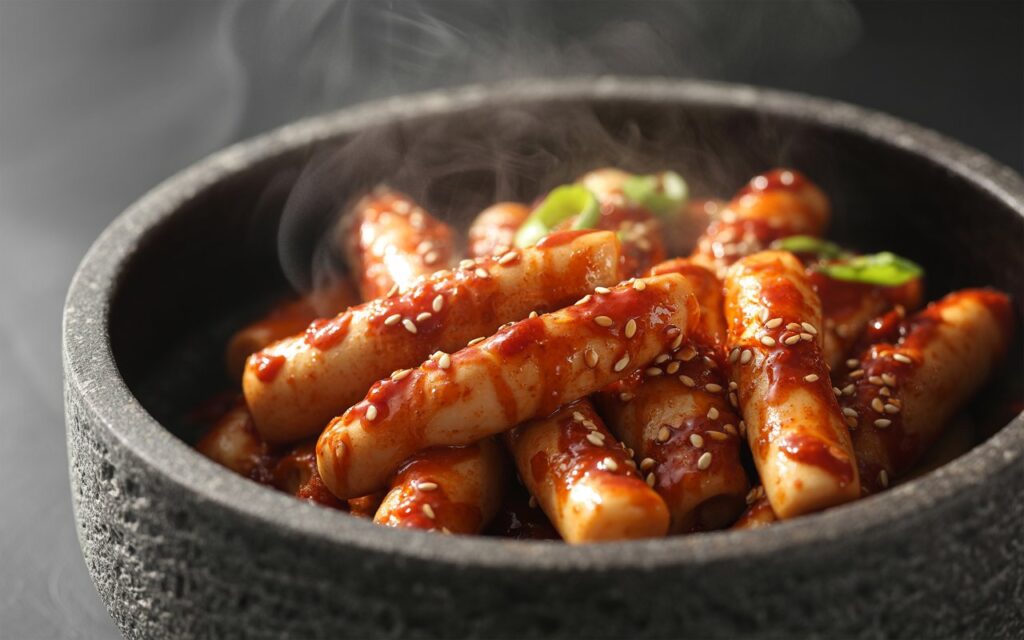
Transfer to a serving platter or individual bowls. Garnish with extra scallions or a sprinkle of crushed peanuts for texture contrast.
Nutritional Information (per serving; serves 4)
| Nutrient | Amount | % Daily Value* |
|---|---|---|
| Calories | 412 kcal | 21% |
| Total Fat | 14 g | 18% |
| Saturated Fat | 2 g | 10% |
| Sodium | 1,025 mg | 44% |
| Carbohydrates | 64 g | 23% |
| Dietary Fiber | 3 g | 12% |
| Sugars | 12 g | — |
| Protein | 6 g | 12% |
| Vitamin A | 35% DV | ✓ |
| Vitamin C | 20% DV | ✓ |
*Based on a 2,000-calorie diet.
Healthier Alternatives for the Recipe
• Lower sodium: Reduce soy sauce to 1 Tbsp and replace half with low-sodium vegetable broth.
• Lower sugar: Cut sugar to 1½ tsp or swap for a natural sweetener like stevia.
• Gluten-free: Use tamari instead of soy sauce and ensure gochujang is gluten-free.
• Extra protein: Stir in cooked shrimp or cubed tofu during the last 3 minutes of cooking.
• Veggie boost: Add bell pepper, mushrooms, or snow peas to increase fiber and micronutrients.
Serving Suggestions
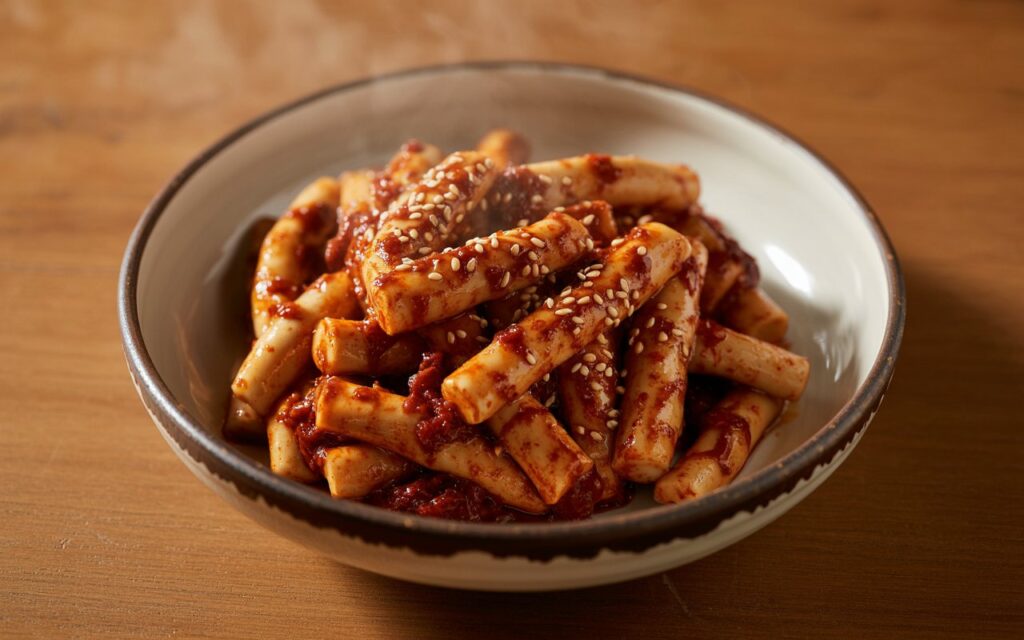
• Classic pairing: Serve alongside kimchi and pickled radish for a traditional street-food spread.
• Rice bowl upgrade: Ladle over steamed white rice or cauliflower rice for a heartier meal.
• Snack-style: Offer in small bowls at parties with toothpicks—guaranteed to disappear fast.
• Family meal: Set out extra gochugaru, sliced chilies, and lime wedges for DIY heat and tang adjustments.
Common Mistakes to Avoid
• Skipping the soak: Dry rice cakes stick and cook unevenly; always pre-soak.
• Burning the sauce: Keep heat moderate when blooming gochujang to prevent bitterness.
• Overcrowding the pan: Stir-fry in a wide skillet to allow steam release—otherwise rice cakes become mushy.
• Neglecting the simmer: Finishing under a lid softens rice cakes perfectly; don’t rush this step.
• Omitting acid: A squeeze of lime or rice vinegar at the end brightens the sweet-spice profile.
Storing Tips for the Recipe
• Refrigerate: Cool completely; store in an airtight container up to 2 days. Reheat in a skillet with a splash of water over medium heat to restore saucy consistency.
• Freeze: Best for sauce only—freeze sauce separately up to 1 month. Thaw and cook rice cakes fresh to preserve texture.
• Meal prep hack: Store rice cakes and vegetables separately; combine with sauce and reheat just before serving for optimal chew.
Dive into Chewy, Spicy Bliss—Try It Tonight!
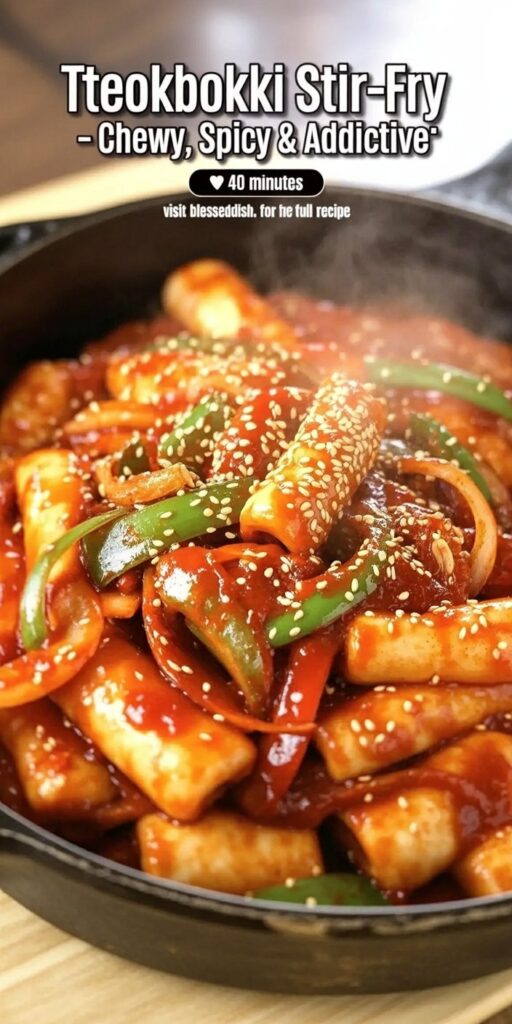
With this detailed Korean spicy rice cake stir fry recipe, you’re ready to recreate the addictively chewy comfort of tteokbokki at home. Gather your ingredients, fire up the wok, and let that vibrant red sauce coat every rice cake and veggie. Once you’ve savored your first fiery bite, leave a comment below with your flavor hacks, snap a photo for our Instagram hashtag #HomeTteokbokki, and subscribe for more global street-food inspirations straight to your inbox!
FAQs
Can I use frozen rice cakes instead of fresh?
Yes—thaw frozen rice cakes in warm water for 10 minutes, then drain thoroughly before cooking to prevent sogginess cookingwithremi.com.
How do I adjust spiciness?
Increase gochugaru or add extra red pepper flakes for more heat, or reduce gochujang by 1 Tbsp for a milder version.
What’s the difference between tteokbokki and this stir fry?
Traditional tteokbokki simmers rice cakes in a broth-based sauce, while this stir-fry method concentrates flavors with less liquid and a quick pan-fry finish.
Can I make this vegan?
Absolutely—ensure your gochujang contains no fish extract, use vegetable oil, and skip any non-vegan garnishes like honey.
How do I prevent rice cakes from sticking?
Soak completely before draining, use enough oil for stir-frying, and avoid overcrowding the pan to allow even heat distribution.