


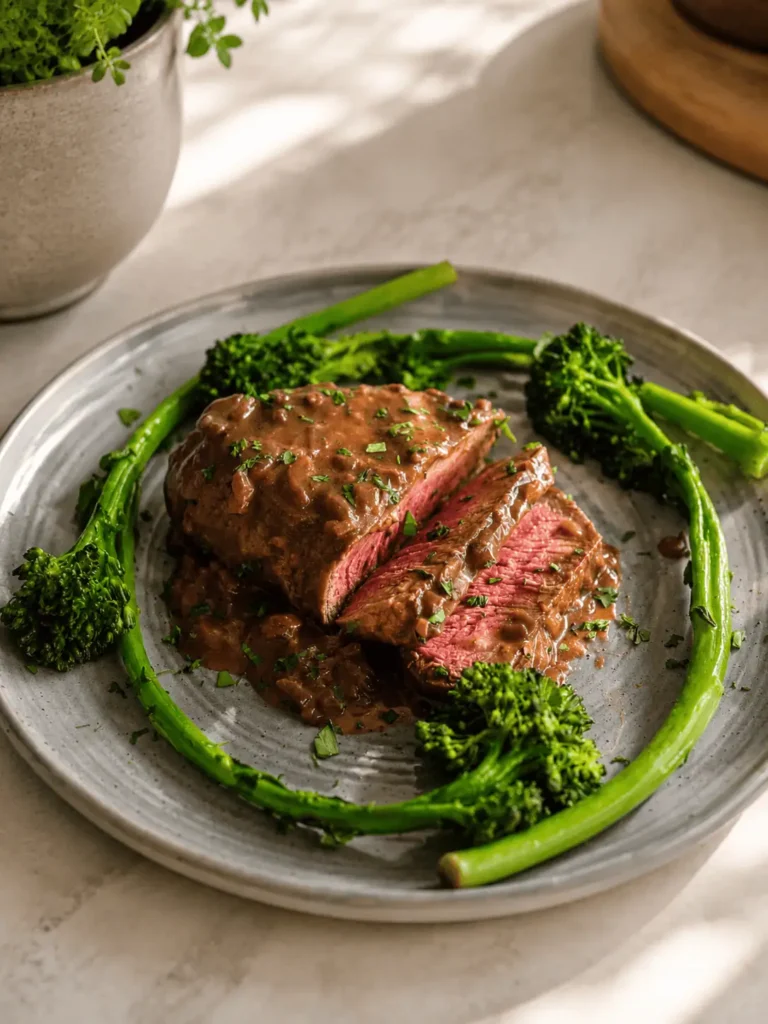
You don’t need a reservation to eat like you’re at a steakhouse. This steakhouse tenderloin gives you tender, juicy beef tenderloin steaks with a deeply seared crust, finished in the oven to a perfect medium-rare, and served with a rich, savory pan sauce made right in the same skillet. The sauce, built on shallots, red wine, Dijon, Worcestershire, beef broth, and a little cream, is glossy, bold, and herby, and it turns a simple seared steak into a restaurant-worthy dinner. It comes together in under an hour and tastes far more impressive than the effort it takes, which makes it perfect for a special occasion or an at-home date night.
Tenderloin is the most tender cut of beef, prized for its buttery, melt-in-your-mouth texture. The technique here, a hot sear on the stovetop followed by a finish in the oven, is exactly how steakhouses get that beautiful browned crust on the outside while keeping the inside juicy and pink. Then, instead of wasting the flavorful browned bits left in the pan, you build a quick pan sauce right on top of them, capturing all that flavor. It’s a classic restaurant method made approachable for a home kitchen.
Why this works
A few key techniques are what give you a steakhouse-quality result, and they’re worth understanding.
The sear-then-roast method is the foundation. Searing the steaks in a screaming-hot cast-iron skillet develops a deep, browned, flavorful crust through the Maillard reaction, which is where so much of a steak’s flavor comes from. Then transferring them straight to a hot oven lets the centers cook through gently and evenly to your target doneness without burning the crust. Thick tenderloin steaks benefit especially from this two-stage approach.
Two prep steps make a real difference. Patting the steaks completely dry before searing removes surface moisture, which is what lets them brown rather than steam, dry meat sears, wet meat doesn’t. And letting them come to room temperature before cooking helps them cook more evenly, so you don’t end up with an overcooked exterior and a cold center.
Resting the steaks after cooking is not optional. As meat cooks, its juices move toward the center; resting lets them redistribute throughout, so they stay in the meat when you slice rather than running out onto the board. Tenting with foil keeps the steaks warm while they rest. The recipe also smartly accounts for carryover cooking: pull the steaks at about 130°F and they’ll climb about 5 degrees more as they rest, landing at a perfect medium-rare.
And the pan sauce makes the dish. Building it in the same skillet means you deglaze and dissolve all those flavorful browned bits (the fond) into the sauce. Cooking the wine down concentrates its flavor, the Dijon and Worcestershire add tang and savory depth, the broth gives body, and the cream finishes it silky. Stirring in the resting juices from the steaks at the end adds even more flavor.
What goes in
The ingredients split into the steaks and the pan sauce.

For the steaks, you’ll need beef tenderloin steaks (about 1½ inches thick), kosher salt, black pepper, and vegetable oil.
For the pan sauce, it’s unsalted butter, a shallot, dry red wine (optional), Dijon mustard, beef broth, Worcestershire sauce, heavy cream, fresh parsley, and fresh thyme.
A few notes. Use thick (about 1½-inch) tenderloin steaks so the sear-and-roast timing works; thinner steaks cook faster. Use a high-smoke-point oil like vegetable or avocado oil for searing, since butter would burn at that heat (the butter comes later, in the sauce). The red wine is optional, the sauce works without it, just skip that step and proceed; use a dry red you’d drink. And use fresh parsley and thyme for the brightest finish.
How to make it
Heat your oven to 425°F. Pat the steaks completely dry with paper towels, then season both sides with the salt and pepper. Let them sit at room temperature for about 30 minutes.
Heat the vegetable oil in a large cast-iron skillet over medium-high heat until it’s shimmering. Add the steaks and cook, without moving them, for 3 minutes to build a crust. Flip them with tongs and immediately transfer the skillet to the preheated oven.
Roast until the steaks reach about 130°F internally for medium-rare, about 8 to 9 minutes (they’ll rise about 5 degrees more as they rest). Transfer the steaks to a warm plate and tent with foil to rest.
Now make the sauce. Return the skillet to the stovetop over low heat. Add the butter and let it melt, then add the minced shallot and cook, stirring often, for about a minute. Pour in the red wine, bring it to a boil, and cook, scraping up the browned bits from the bottom of the pan, until the wine has mostly evaporated, about 2 to 3 minutes.
Stir in the Dijon and raise the heat to medium-high. Add the beef broth and Worcestershire, bring to a boil, and cook, stirring, until slightly reduced, about 5 minutes. Lower the heat to medium and stir in the cream. Simmer until the sauce coats the back of a spoon, about 3 minutes.
Turn off the heat and stir in the parsley and thyme. Pour any juices that have collected under the resting steaks into the sauce and stir. Serve the steaks with the pan sauce spooned over.
Tips, serving, and storing
A few things make the difference. Pat the steaks dry and let them come to room temperature for the best sear and even cooking. Use a hot cast-iron skillet, and don’t move the steaks while they sear so the crust forms. Use a meat thermometer and pull them at 130°F for medium-rare (adjust up for more well-done). And always rest the steaks before slicing.
A couple more. Cast iron is ideal here because it goes from stovetop to oven and holds high heat, if you don’t have one, use any oven-safe heavy skillet. And if your sauce reduces too far and gets thick, loosen it with a splash more broth; if it’s too thin, simmer a moment longer.
This is a special dinner, so pair it accordingly. Classic steakhouse sides like mashed or roasted potatoes, creamed spinach, roasted asparagus, mushrooms, or a crisp green salad all work beautifully, and the sauce is wonderful over the potatoes too. A glass of the same red wine you used in the sauce is a natural match.
For storing, leftover steak keeps in an airtight container in the fridge for 3 to 4 days, with the sauce stored separately. Reheat the steak gently (a low oven or quick sear) to avoid overcooking it further, and warm the sauce on the stovetop with a splash of broth, since cream sauces thicken as they sit. Leftover tenderloin is also delicious sliced cold over a salad or in a sandwich.
This serves 2, and it scales up easily for more. Tender, juicy, perfectly seared, and draped in a rich pan sauce, this steakhouse tenderloin is a restaurant-quality dinner you can make at home, the kind of meal that makes an ordinary evening feel like an occasion.
WP Tasty (Tasty Recipes Premium) field values
- Category: Main Course
- Method: Stovetop and Oven
- Cuisine: American
- Diet: (leave blank. It contains beef, dairy (cream/butter), and Worcestershire sauce. It’s gluten-free only if you use a gluten-free Worcestershire and broth, since standard Worcestershire often contains malt/wheat. Halal with halal beef and a halal Worcestershire; the optional wine would need to be omitted for halal.)
- Keywords: steakhouse tenderloin, beef tenderloin steak, pan seared tenderloin, tenderloin with pan sauce, filet mignon pan sauce
- Serving Size: 1 steak (recipe serves 2)
- Calories: (leave blank. No nutrition data was provided. Generate values with Nutrifox before publishing rather than estimating.)
- Equipment: Cast-iron (oven-safe) skillet, tongs, meat thermometer, paper towels
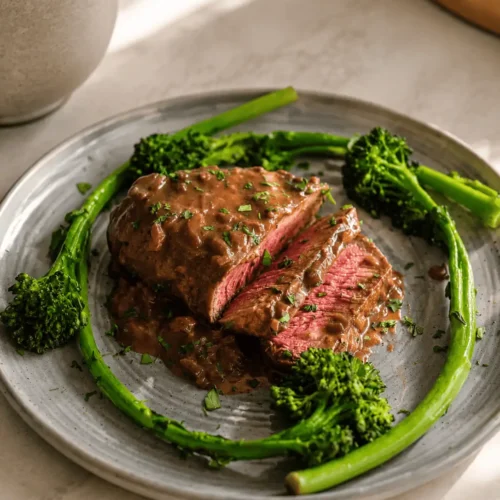
Steakhouse Tenderloin

Equipment
- Cast-iron (oven-safe) skillet
- Tongs
- Meat Thermometer
- Paper Towels
Ingredients
For the Steaks
- 2 beef tenderloin steaks 1 1/2-inch thick
- 1/4 tsp kosher salt
- 1/2 tsp ground black pepper
- 1 tbsp vegetable oil
For the Pan Sauce
- 1 tbsp unsalted butter
- 1 small shallot minced
- dry red wine optional, to taste
- 2 tsp Dijon mustard
- 1 cup beef broth
- 1 tbsp Worcestershire sauce
- 2 tbsp heavy cream
- 1 tbsp fresh parsley chopped
- 2 tsp fresh thyme chopped
Instructions
- Prep: Preheat the oven to 425°F. Pat the steaks completely dry, season both sides with the salt and pepper, and let sit at room temperature about 30 minutes.
- Sear: Heat the vegetable oil in a large cast-iron skillet over medium-high until shimmering. Add the steaks and cook without moving them for 3 minutes.
- Roast: Flip the steaks with tongs and immediately transfer the skillet to the oven. Roast until about 130°F internally for medium-rare, about 8 to 9 minutes (they rise about 5 degrees as they rest).
- Rest: Transfer the steaks to a warm plate and tent with foil.
- Start the Sauce: Return the skillet to low heat. Melt the butter, add the shallot, and cook, stirring, about 1 minute. Add the red wine, bring to a boil, and cook, scraping up the browned bits, until mostly evaporated, 2 to 3 minutes.
- Build the Sauce: Stir in the Dijon and raise the heat to medium-high. Add the beef broth and Worcestershire, bring to a boil, and cook until slightly reduced, about 5 minutes.
- Finish the Sauce: Lower the heat to medium and stir in the cream. Simmer until it coats the back of a spoon, about 3 minutes. Turn off the heat and stir in the parsley and thyme.
- Serve: Stir any juices from under the resting steaks into the sauce. Serve the steaks with the pan sauce spooned over.