


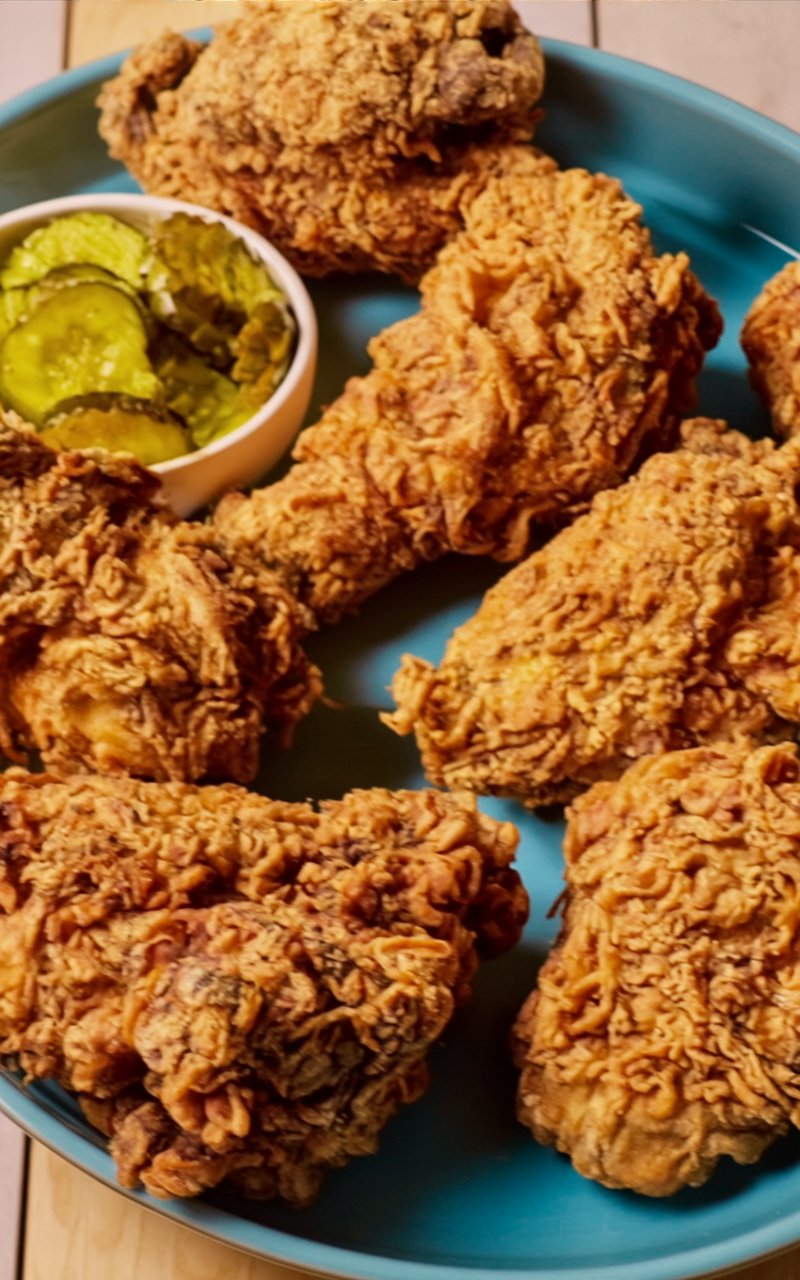
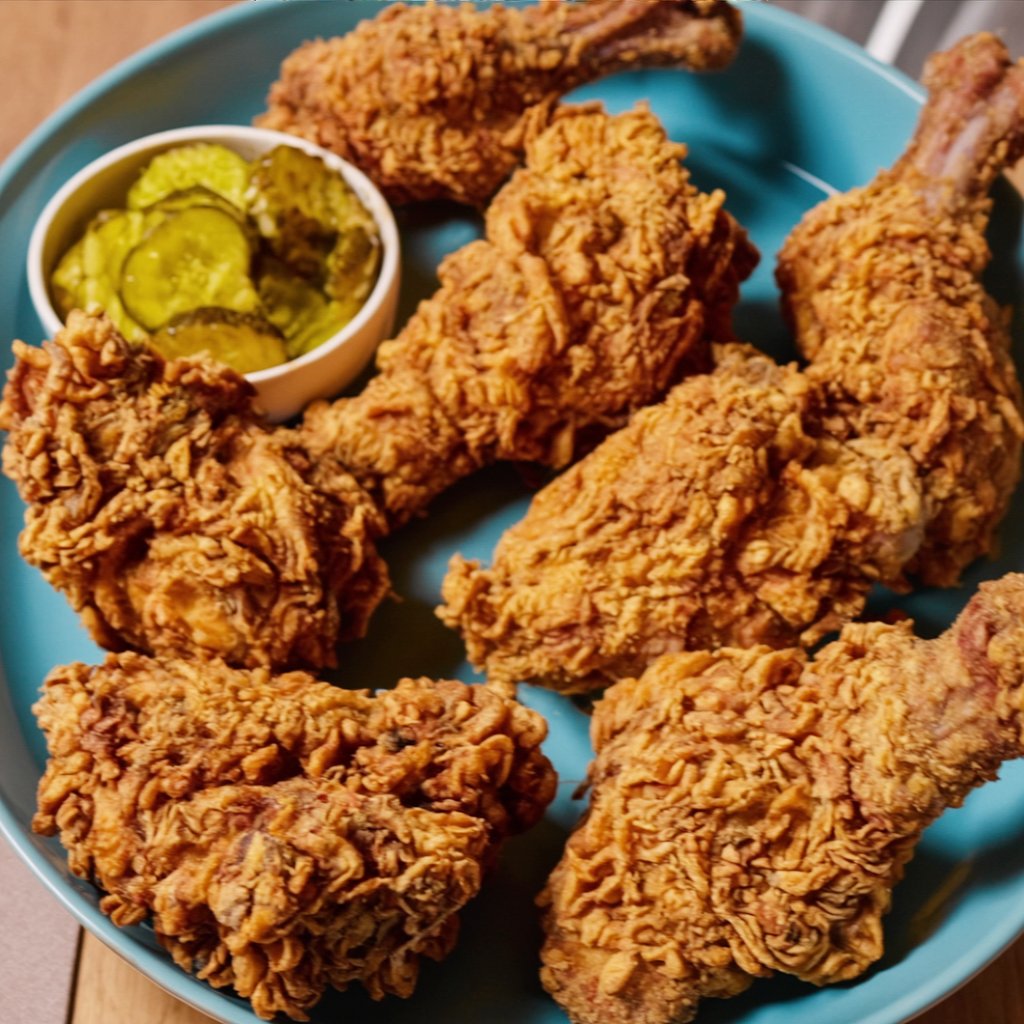
You hear that sound? That deep, aggressive sizzle when seasoned chicken hits hot oil and the crust starts forming in real time? That’s the sound of supercrunchy buttermilk fried chicken doing exactly what it’s supposed to do. This isn’t regular fried chicken. This is shatteringly crispy, seasoned-to-the-bone, golden-brown-all-over fried chicken — the kind where the crunch is so loud you can hear it across the table. The secret is a cornstarch-heavy dredge, a brine that goes deep, and a buttermilk batter that creates layers of texture most recipes can’t touch.
I fried chicken badly for years before I figured out the brine-batter-dredge system. Once I did, everything clicked.
Why This Recipe Crunches Harder Than the Rest
Most fried chicken recipes use flour. Just flour. And that gives you a fine crust — but not this crust.
Here, cornstarch is the star of the dredge, not a supporting player. Two full cups of it, blended with flour, baking powder, and a wall of seasoning. Cornstarch fries up lighter, crispier, and stays crunchy longer than flour alone. The baking powder creates tiny air pockets in the coating. And the buttermilk batter between the chicken and the dredge? That’s what builds those gnarly, craggy ridges that get impossibly crisp in the oil.
It’s a three-layer system: brine → batter → dredge. Each one does a different job, and together they’re unstoppable.
Everything Laid Out, Group by Group
The Brine
| Ingredient | Amount | What It Does |
|---|---|---|
| Sugar | 2 Tbsp | Balances the salt, helps the skin brown |
| Table salt | 1½ Tbsp | Seasons the meat all the way through |
| Garlic powder | 1 Tbsp | Savory depth that penetrates with the brine |
| Cayenne pepper | ½ tsp | A low hum of heat — not spicy, just warm |
| Cold water | 1 quart | The vehicle that carries all that flavor in |
The Batter and Dredge
| Ingredient | Amount | What It Does |
|---|---|---|
| Cornstarch | 2 cups (8 oz) | The crunch engine — fries lighter and crispier than flour |
| All-purpose flour | 1 cup (5 oz) | Structure and browning |
| Dried thyme | 4 tsp | Earthy, aromatic, classic fried chicken flavor |
| Garlic powder | 1 Tbsp | More garlic. Always more garlic. |
| Black pepper | 1 Tbsp | Bold, sharp warmth through the whole coating |
| Baking powder | 2 tsp | Creates air pockets for an extra-light, craggy crust |
| Onion powder | 2 tsp | Sweet, savory background note |
| Cayenne pepper | ¼ tsp | Another whisper of heat |
| Buttermilk | ⅔ cup | Tangy binder that creates that thick, clingy batter |
| Table salt | 1 tsp | Seasons the batter layer |
| Sugar | 1 tsp | A tiny bit of balance |
The Frying
| Ingredient | Amount | Notes |
|---|---|---|
| Bone-in chicken pieces | 4 lbs | Breasts, drumsticks, and/or thighs — well-trimmed |
| Peanut or vegetable oil | ~2½ quarts | Enough to measure 1¾ inches deep in a Dutch oven |

The Timeline: Plan for the Brine
| Time | |
|---|---|
| Brine | 2–24 hours (fridge) |
| Active prep | 30 minutes |
| Frying | 20–36 minutes (two batches) |
| Rest | 20 minutes |
| Total | ~3½ hours (mostly hands-off) |
The brine needs at least 2 hours — overnight is even better. Once you start frying, it moves fast.
From Brine to Golden, Shattering Crust
Step 1: Brine the Chicken
Dissolve the sugar, salt, garlic powder, and cayenne in 1 quart of cold water in a large container. Submerge the chicken pieces completely. If using split breasts, halve them crosswise on a diagonal so they’re closer in size to the drumsticks and thighs — this means more even cooking.
Cover and refrigerate for at least 2 hours, up to 24. The longer it sits, the deeper the seasoning goes. Overnight is the move if you can swing it.
Step 2: Build the Dredge
Whisk together the cornstarch, flour, thyme, garlic powder, pepper, baking powder, onion powder, and cayenne in a large bowl. It should smell incredible — peppery, herby, garlicky.
Scoop out 1¼ cups of this mixture and set it aside in a separate bowl. Transfer the rest to a wide baking pan or dish for dredging.
Step 3: Make the Batter
Take that reserved 1¼ cups of dredge mix and whisk in the buttermilk, salt, and sugar until you get a smooth, thick batter — think extra-thick pancake batter. It should coat the back of a spoon and drip slowly. This is the glue layer between the meat and the crunchy exterior.
Step 4: Heat the Oil
Pour peanut or vegetable oil into a large Dutch oven until it measures 1¾ inches deep. Heat over medium to 340°F. Use a clip-on thermometer — guessing oil temperature is how people end up with greasy, soggy chicken.
Set a wire rack over a rimmed baking sheet nearby. This is your landing pad.
Step 5: Coat and Fry, One Piece at a Time
Pull the chicken from the brine and pat each piece very dry with paper towels. Drop all pieces into the batter bowl and toss until evenly coated.
Now here’s the rhythm: one wet hand, one dry hand. Use your wet hand to lift a piece from the batter, let the excess drip off, and place it in the dredge. Use your dry hand to pack dredge over every surface, press gently, then shake off the excess. Lay it carefully into the oil.
Repeat with half the chicken only. Don’t crowd the pot.
Fry, adjusting the burner to keep the oil between 305°F and 315°F, until breasts hit 145°F and thighs/drumsticks hit 160°F internally — about 10 to 18 minutes depending on the cut. Transfer to the wire rack.
Step 6: Second Batch
Bring the oil back up to 340°F. Coat and fry the remaining chicken exactly the same way. Same temperatures, same patience.
Step 7: The Hardest Twenty Minutes of Your Life
Let the chicken rest on the rack for 20 minutes. The carryover heat finishes the cooking, the crust sets and tightens, and the juices settle back into the meat. Cutting into it too soon gives you a great crust and dry meat. Twenty minutes gives you a great crust and juicy meat.
Oil Temperature Is Everything (and Other Traps)
1. Oil too hot at the start. 340°F to start, then maintain 305–315°F while frying. Too hot and the crust burns before the bone-in chicken cooks through. Use a thermometer. Always.
2. Crowding the Dutch oven. Fry in two batches. Overcrowding drops the oil temp dramatically and steams the coating instead of crisping it. Half at a time.
3. Skipping the brine. The brine isn’t just salt water — it’s seasoned salt water that penetrates the meat. Without it, all your flavor lives on the surface. Two hours minimum.
4. Wet chicken into the batter. If you don’t pat the chicken dry after brining, the batter slides right off. Paper towels. Both sides. Thoroughly.
5. Cutting into it immediately. That 20-minute rest isn’t a suggestion. Breasts coast from 145°F to a safe 160°F+ during the rest. Skip it and you’ve got overcooked or underdone chicken and lost juices.
What a Serving Actually Looks Like
Serves 6 (about 2 pieces per person).
| Nutrient | Per Serving |
|---|---|
| Calories | 480 |
| Total Fat | 22 g |
| Saturated Fat | 4 g |
| Cholesterol | 145 mg |
| Sodium | 620 mg |
| Carbohydrates | 30 g |
| Fiber | 1 g |
| Sugar | 3 g |
| Protein | 40 g |
40 grams of protein. Yes, it’s fried — but bone-in chicken brings serious protein, and frying in the right temperature range means the chicken absorbs far less oil than you’d expect.
Set the Scene Around This Chicken
- Creamy coleslaw piled high, cool and tangy against that hot, crunchy crust.
- Buttermilk biscuits split open with a smear of honey butter — the ultimate Southern plate.
- Mac and cheese baked until the top is golden and bubbling. No explanation needed.
- Pickles and hot honey drizzled over the top — sweet, sour, spicy, crunchy, all at once.
- Straight out of the paper towel, standing at the counter, burning your fingers. The chef’s portion.
This Is the Fried Chicken Recipe You Stop Searching After
I’ve tested a lot of fried chicken methods. A lot. This one — with its brine that seasons from the inside, its cornstarch-heavy dredge that crunches like nothing else, and that thick buttermilk batter that builds texture in layers — this is the one that ended the search. It’s the recipe I make when I want to show off. It’s the one people ask me about for weeks afterward.
It takes some time. It takes some oil. It’s worth every minute and every splatter. Make it for a weekend dinner, a summer cookout, a “just because” Tuesday that needs to feel special.
Then come back and tell me how it went. Rate the recipe, leave a comment, tell me which piece you reached for first. And subscribe if you want more recipes that are worth getting your hands dirty for.
Print
Supercrunchy Buttermilk Fried Chicken
Shatteringly crispy fried chicken with a cornstarch-heavy dredge, tangy buttermilk batter, and a garlic-cayenne brine that seasons the meat all the way through. The three-layer coating system creates an unbelievably crunchy crust that stays crisp long after frying.
- Total Time3 hours 30 minutes
- Yield6 servings 1x
Ingredients
Brine
- 2 tablespoons Sugar
- 1 1/2 tablespoons Table salt
- 1 tablespoon Garlic powder
- 1/2 teaspoon Cayenne pepper
- 4 pounds Bone-in chicken pieces (split breast, drumsticks, and/or thighs), well-trimmed
Batter and Dredge
- 2 cups Cornstarch (8 ounces)
- 1 cup All-purpose flour (5 ounces)
- 4 teaspoons Dried thyme
- 1 tablespoon Garlic powder
- 1 tablespoon Black pepper
- 2 teaspoons Baking powder
- 2 teaspoons Onion powder
- 1/4 teaspoon Cayenne pepper
- 2/3 cup Buttermilk
- 1 teaspoon Table salt
- 1 teaspoon Sugar
- ~2 1/2 quarts Peanut or vegetable oil for frying
Instructions
- Brine the Chicken: Dissolve 2 tablespoons sugar, 1½ tablespoons salt, 1 tablespoon garlic powder, and ½ teaspoon cayenne in 1 quart cold water in a large container. Add 4 pounds trimmed bone-in chicken pieces (halve split breasts crosswise on a diagonal). Refrigerate for at least 2 hours or up to 24 hours.
- Build the Dredge: Whisk together 2 cups cornstarch, 1 cup flour, 4 teaspoons thyme, 1 tablespoon garlic powder, 1 tablespoon pepper, 2 teaspoons baking powder, 2 teaspoons onion powder, and ¼ teaspoon cayenne until well combined. Remove 1¼ cups of this mixture and set aside. Transfer remaining mixture to a wide baking pan for dredging.
- Make the Batter: Return reserved cornstarch mixture to a bowl and whisk in ⅔ cup buttermilk, 1 teaspoon salt, and 1 teaspoon sugar until a smooth, extra-thick batter forms.
- Heat the Oil: Add peanut or vegetable oil to a large Dutch oven until it measures 1¾ inches deep (about 2½ quarts). Heat over medium heat to 340°F. Place a wire rack in a rimmed baking sheet and set aside.
- Coat and Fry First Batch: Remove chicken from brine and pat dry with paper towels. Add to batter and toss until evenly coated. Using one hand, lift each piece from batter, allow excess to drip off, then place in dredge. With dry hand, coat evenly and shake off excess. Add half the chicken to oil. Fry, maintaining oil between 305–315°F, until breasts register 145°F and drumsticks/thighs register 160°F, 10 to 18 minutes. Transfer to wire rack.
- Fry Second Batch: Return oil to 340°F. Coat and fry remaining chicken in the same manner.
- Rest and Serve: Let chicken rest on wire rack for 20 minutes before serving. The carryover heat finishes cooking the meat to safe temperatures while the crust sets.
Notes
Use a clip-on thermometer to monitor oil temperature throughout frying — maintaining 305–315°F during cooking is critical for a crispy, non-greasy crust. Always fry in two batches to avoid crowding and oil temperature drops. Pat chicken very dry after removing from brine so the batter adheres properly. The 20-minute rest is essential: breasts will coast from 145°F to a safe internal temperature during this time. If using split breasts, halve them crosswise so all pieces are similar in size for even frying.
- Prep Time: 30 minutes
- Cook Time: 36 minutes
- Category: Dinner, Main Course
- Cuisine: American, Southern
Nutrition
- Calories: 480
- Sodium: 620
- Saturated Fat: 4
- Protein: 40
- Cholesterol: 145