


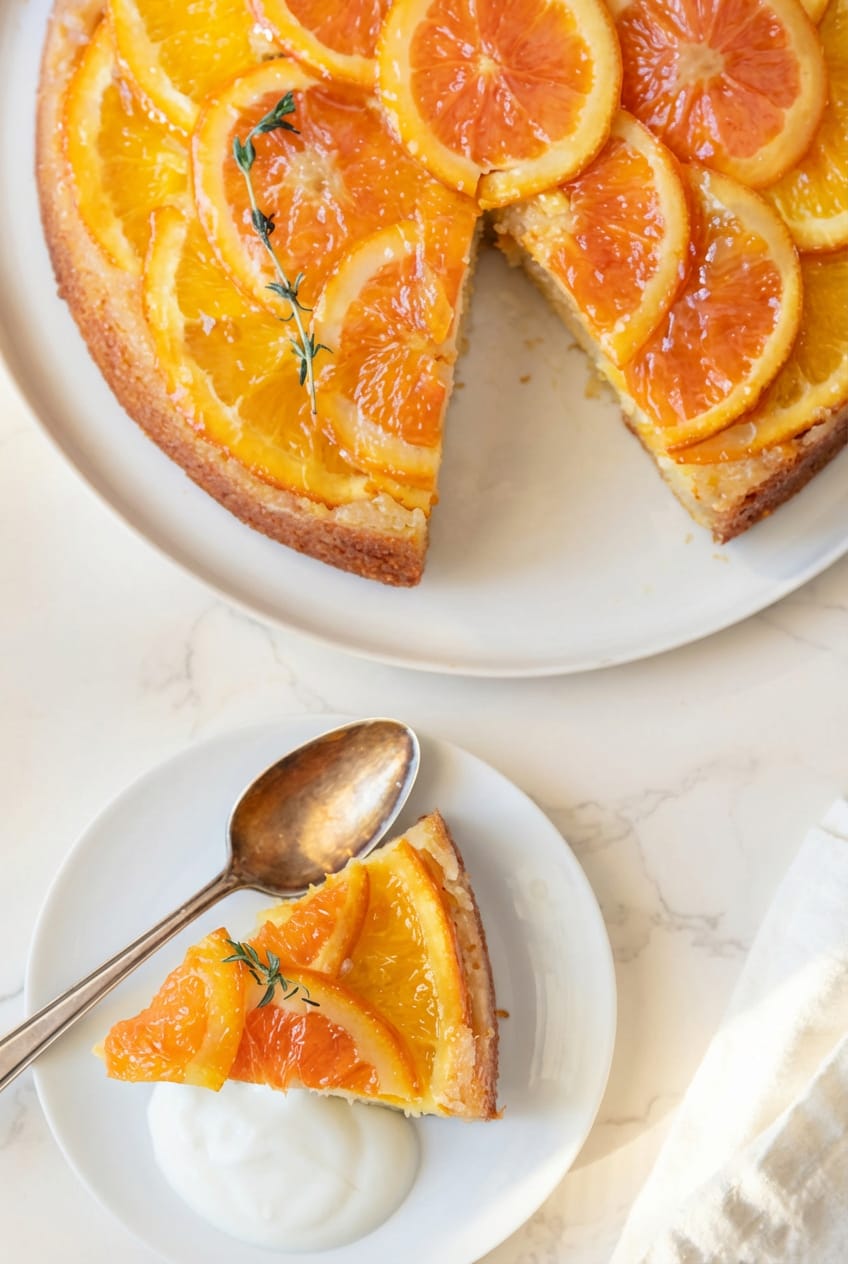
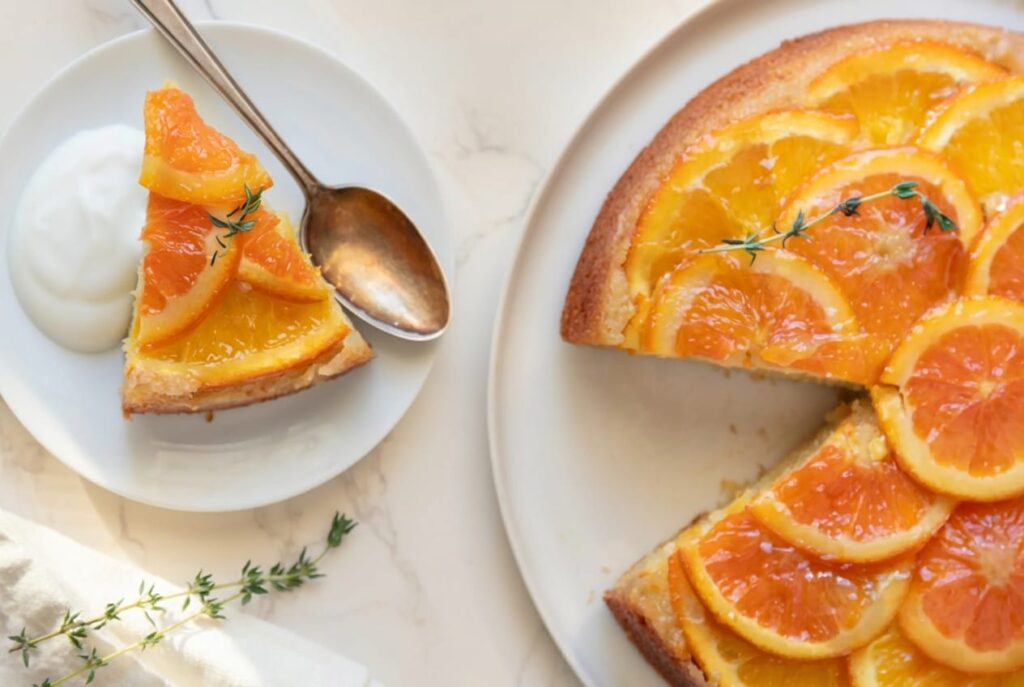
There’s something almost theatrical about flipping a cake. You hold your breath, press the plate against the pan, and turn the whole thing over in one brave motion. Then you lift — and there it is. A glistening, golden mosaic of caramelized citrus slices on top of the most tender, buttery crumb you’ve ever baked. This upside-down citrus cake is the kind of recipe that makes people gasp before they even taste it.
I first tried it during a winter stretch when blood oranges were everywhere and I was craving something bright and warm at the same time. The cake that came out of my oven that afternoon genuinely made me set down my fork and stare at it for a second. It was that pretty.
The Flip Is the Easy Part — Here’s What Actually Matters
Before I walk you through the steps, let me tell you where this cake can go sideways so yours comes out flawless on the first try.
1. Not slicing the citrus thin enough. You want your slices paper-thin — about ⅛ inch. Thick slices won’t caramelize properly, they’ll stay tough and chewy, and they’ll make the cake hard to slice neatly. A sharp knife or mandoline is your best friend here.
2. Skipping the bitterness fix. Citrus peel can be intensely bitter, especially grapefruit. You have two options: peel the fruit completely before slicing, or give the slices a quick simmer in water with a bit of sugar, then drain and cool. Either method takes two minutes and saves the whole cake.
3. Overmixing the batter. Once the flour goes in, you’re stirring just until combined. Overmixing develops gluten, and gluten turns your tender, fluffy cake into something dense and rubbery. A few small lumps are perfectly fine. Stop before you think you should.
4. Panicking during the flip. Let the cake rest in the pan for 10–15 minutes after baking. This lets the caramel layer set just enough to hold. Too soon and it slides everywhere. Too long and it cements to the pan. That 10–15 minute window is the sweet spot. Press the plate firmly against the pan, flip confidently, and lift straight up. You’ve got this.
5. Using cold butter for the cake batter. Room temperature butter is non-negotiable. Cold butter won’t cream properly with the sugar, and you’ll end up with a dense, heavy crumb instead of that light, airy texture this cake is known for. Set it out an hour before you start.
Every Layer, Every Ingredient
This cake has two components — a caramelized citrus layer that lines the bottom of the pan (and becomes the gorgeous top when flipped) and a vanilla-citrus butter cake that bakes on top. Both are simple. Both are essential.
The Citrus Layer
| Ingredient | Amount | What It Does |
|---|---|---|
| Unsalted butter, melted | 4 tbsp | Creates a glossy, buttery caramel base |
| Granulated sugar | ½ cup | Melts into the butter and caramelizes around the fruit |
| Citrus fruits, thinly sliced | 2–3 | The show-stopping top — oranges, blood oranges, Cara Cara, grapefruit, or a gorgeous mix |
The Cake
| Ingredient | Amount | What It Does |
|---|---|---|
| Unsalted butter, room temp | 8 tbsp | Tender, rich crumb — the backbone of the batter |
| Granulated sugar | ⅔ cup | Sweetness and structure |
| Vanilla extract | 1 tbsp | Warm, fragrant depth |
| Citrus zest | 2 tsp | Bright, aromatic oils from the fruit itself |
| Citrus juice | 3 tbsp | Tangy punch that balances the sweetness |
| Large eggs | 2 | Moisture, structure, golden color |
| Buttermilk or plain yogurt | ¾ cup | Tangy richness and an incredibly soft crumb |
| All-purpose flour | 1½ cups | Your sturdy base |
| Baking powder | 1½ tsp | Lift and lightness |
| Baking soda | ¼ tsp | Reacts with the buttermilk for extra rise |
| Salt | ¼ tsp | Sharpens every single flavor |

On choosing your citrus: This is where you get to play. Blood oranges give you those dramatic, ruby-red jewel tones. Cara Caras are pink and mild. Grapefruit adds gorgeous color and a sophisticated bitter edge. Mix them for the most stunning visual — different colors layered in the pan make the reveal absolutely breathtaking.
From Bowl to Oven in About 20 Minutes
Prep: 20 minutes | Bake: 35–40 minutes | Rest: 10–15 minutes | Total: About 1 hour 15 minutes | Serves: 8–10
Most of your active time is slicing fruit and mixing batter. The oven does the rest.
Building This Cake, Layer by Beautiful Layer
Heat the Oven and Prep the Pan
Preheat to 350°F. Line a round or square cake pan with parchment paper. If you’re making individual cakes in a muffin tin, grease each cup well. Parchment is your insurance policy for a clean release — don’t skip it.
Slice and Treat the Citrus
Slice your citrus fruits as thinly as you can — translucent is the goal. If bitterness concerns you (especially with grapefruit or navel oranges), peel the fruit completely before slicing or give the slices a quick simmer in sugared water. Drain, cool, and they’re ready.
Build the Caramel Floor
Stir the melted butter and ½ cup sugar together in a small bowl. Pour this mixture into the bottom of your prepared pan and spread it into an even layer. Now arrange your citrus slices in a single layer on top — overlapping slightly is fine and looks beautiful. This is the top of your finished cake, so take a moment to make it look intentional.
Mix the Dry Ingredients
In a medium bowl, whisk together the flour, baking powder, baking soda, and salt. Set it aside. Having this ready makes the alternating additions go smoothly.
Cream the Butter and Sugar
In a stand mixer with the paddle attachment (or use a hand mixer), beat the room-temperature butter and ⅔ cup sugar together until light and fluffy — a full 3–4 minutes. Don’t rush this step. You’re beating air into the butter, which is what gives the cake its tender, cloud-like crumb. The mixture should look pale and almost doubled in volume.
Add the Flavor and Eggs
Pour in the vanilla extract, citrus zest, and citrus juice. Mix until combined — the batter might look slightly curdled from the juice. That’s completely normal. Add the eggs one at a time, mixing just until each one disappears into the batter.
Alternate Dry and Wet
With the mixer on low speed, add the flour mixture and buttermilk in alternating additions — dry, wet, dry, wet, dry. Three additions of dry, two of wet, starting and ending with flour. Mix just until combined after each addition. The batter should be thick, smooth, and velvety. Stop the mixer the moment the last streak of flour vanishes.
Layer and Bake
Spoon the batter gently over the citrus layer. Use an offset spatula or the back of the spoon to smooth the top into an even surface. Slide the pan into your preheated oven and bake for 35–40 minutes. The cake is done when it’s set, golden on top, and a toothpick inserted in the center comes out clean.
The Big Moment
Let the cake rest in the pan for 10–15 minutes. Then place your serving plate face-down on top of the pan. Hold both firmly together and flip in one confident motion. Lift the pan straight up. Peel away the parchment. And there it is — jeweled, golden, caramelized, stunning.
What Each Slice Brings
Per slice (1 of 10):
| Nutrient | Amount |
|---|---|
| Calories | ~310 |
| Fat | ~14 g |
| Saturated Fat | ~9 g |
| Carbohydrates | ~42 g |
| Sugar | ~28 g |
| Protein | ~4 g |
| Fiber | ~1 g |
| Sodium | ~180 mg |
Worth noting: The buttermilk adds a dose of calcium and keeps the fat content lower than an all-butter cake. And you’re getting real vitamin C from those gorgeous citrus slices on top. Not bad for something this beautiful.
How to Serve Something This Gorgeous
- Slightly warm with a generous cloud of freshly whipped cream — the cool cream against the warm cake is everything.
- With a spoonful of crème fraîche and a scatter of fresh mint leaves for something a little more elegant.
- Alongside a strong espresso or a cup of Earl Grey tea — the bergamot in the tea echoes the citrus beautifully.
- At room temperature, dusted lightly with powdered sugar, letting those caramelized slices be the star.
- Sliced thin and served on a cake stand in the center of a brunch spread — this cake is the centerpiece.
Go Flip Something Beautiful
This is one of those recipes that delivers way beyond the effort it asks of you. An hour of your time, one pan, a handful of everyday ingredients, and suddenly you’re pulling a glistening, caramelized citrus cake out of your kitchen like some kind of baking prodigy. It’s impressive every single time, whether you’re making it for a dinner party or a quiet afternoon just for yourself.
So pick your citrus, butter your pan, and go for it. Then leave a comment and tell me which fruit combination you used — I want to see what you come up with. Rate the recipe so other bakers can discover it, and subscribe so you’re the first to know when the next showstopper drops.
That flip is going to be so satisfying. Trust me.
Print
Upside-Down Citrus Cake
A stunning upside-down citrus cake with a caramelized butter-sugar base topped with thinly sliced oranges, blood oranges, Cara Cara, or grapefruit, baked beneath a tender, vanilla-citrus buttermilk cake. Flip it, reveal the gorgeous jeweled top, and serve warm with whipped cream.
- Total Time1 hour 15 minutes
- Yield10 slices 1x
Ingredients
Citrus Layer
- 4 tablespoons unsalted butter, melted
- 1/2 cup granulated sugar
- 2–3 citrus fruits (oranges, blood oranges, Cara Cara, grapefruit, or a mix), thinly sliced
Cake
- 8 tablespoons unsalted butter, room temperature
- 2/3 cup granulated sugar
- 1 tablespoon vanilla extract
- 2 teaspoons citrus zest
- 3 tablespoons citrus juice (from the sliced fruit)
- 2 large eggs
- 3/4 cup buttermilk or plain yogurt
- 1 1/2 cups all-purpose flour
- 1 1/2 teaspoons baking powder
- 1/4 teaspoon baking soda
- 1/4 teaspoon salt
Instructions
- Preheat and Prep Pan: Preheat the oven to 350°F. Line a round or square cake pan with parchment paper. For individual cakes, grease a muffin tin well.
- Prepare the Citrus: Slice the citrus fruits as thinly as possible. To reduce bitterness, either peel the fruit completely or briefly simmer the slices in water with a little sugar, then drain and cool before using.
- Build the Caramel Base: Stir together the melted butter and ½ cup sugar. Pour into the prepared pan and spread evenly. Arrange the citrus slices in a single layer over the butter-sugar mixture. Set aside.
- Mix Dry Ingredients: In a medium bowl, whisk together the flour, baking powder, baking soda, and salt. Set aside.
- Cream Butter and Sugar: In a stand mixer with the paddle attachment or using a hand mixer, beat the room-temperature butter and ⅔ cup sugar until light and fluffy, about 3–4 minutes.
- Add Flavorings and Eggs: Add the vanilla extract, citrus zest, and citrus juice. Mix until combined. Add the eggs one at a time, mixing just until incorporated after each addition.
- Alternate Dry and Wet: With the mixer on low, alternate adding the flour mixture and buttermilk in three additions of dry and two of wet, starting and ending with dry ingredients. Mix just until combined after each addition. Do not overmix.
- Assemble and Bake: Spoon the batter gently over the citrus layer and smooth the top. Bake for 35–40 minutes, until the cake is set and a toothpick inserted in the center comes out clean.
- Rest and Flip: Let the cake rest in the pan for 10–15 minutes. Place a serving plate face-down on the pan, flip confidently, and lift the pan straight up. Peel away the parchment paper.
- Serve: Serve warm or at room temperature with whipped cream or crème fraîche if desired.
Notes
Slice citrus as thinly as possible for even caramelization and a beautiful presentation. Blood oranges, Cara Cara oranges, and grapefruit can all be mixed for a stunning multicolored top. To reduce bitterness from the peel, either remove the peel entirely before slicing or simmer the slices briefly in sugared water. Butter must be at room temperature for the cake batter — cold butter will not cream properly and results in a dense crumb. Let the cake rest 10–15 minutes before flipping; too soon and the caramel slides, too long and it sticks. Parchment paper ensures a clean release.
- Prep Time: 20 minutes
- Cook Time: 40 minutes
- Category: Cake, Dessert
- Cuisine: American
Nutrition
- Calories: 310
- Sugar: 28
- Sodium: 180
- Fat: 14
- Saturated Fat: 9
- Carbohydrates: 42
- Fiber: 1
- Protein: 4
- Cholesterol: 75