




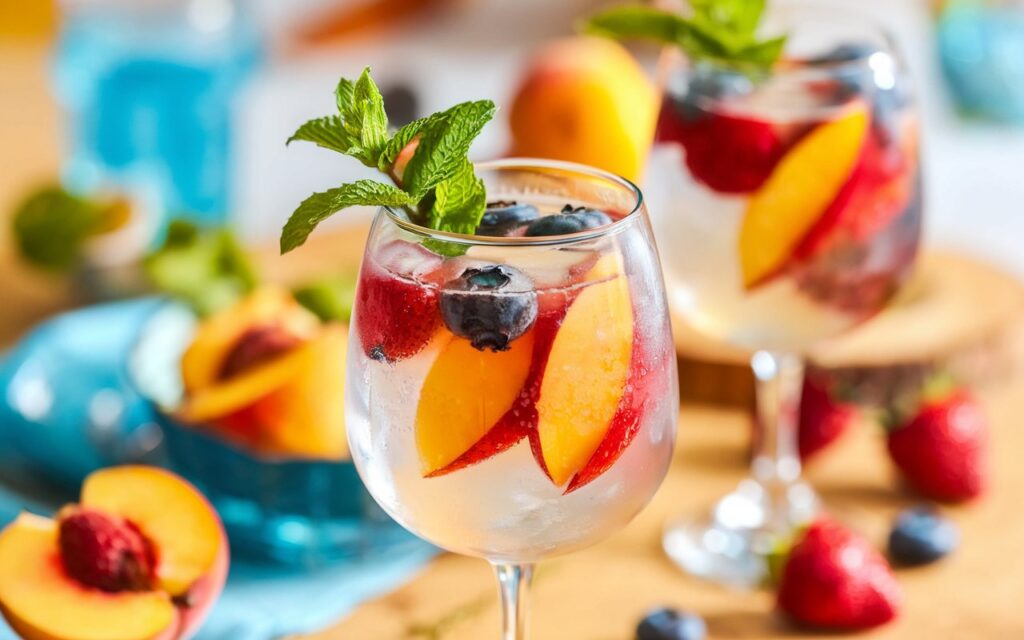
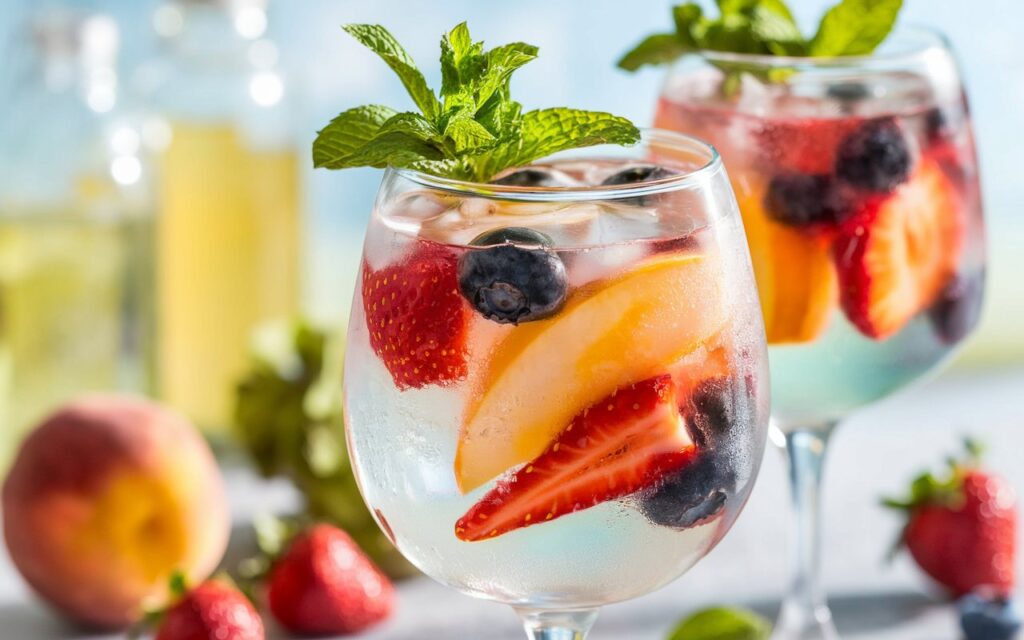
Conjure a pitcher of chilled wine bursting with peaches, berries, and perhaps a splash of citrus—each glass exuding a sweet, floral fragrance. This is White Sangria with Peaches & Berries: a refreshing take on the classic Spanish punch typically made with red wine. Emphasizing white wine fosters a lighter, more summery vibe, showcasing the gentle sweetness of stone fruits and the bright pop of fresh berries. The result is a crowd-pleasing beverage that’s as visually appealing as it is easy to sip, especially on warm afternoons or alongside brunch spreads.
My journey to white sangria began as an alternative to the classic red, wanting something that wouldn’t overpower delicate dishes or weigh me down in the heat. Spotting ripe peaches at the market, I combined them with a crisp white wine, adding a few handfuls of berries for color and topping with sparkling water. The synergy was immediate: the wine’s dryness balanced the fruit’s sweetness, while the fizz contributed a celebratory note reminiscent of a mild spritzer. Over repeated gatherings, I discovered how easily I could adapt the recipe—swapping in different fruits, sweeteners, or even a dash of liqueur. Yet, White Sangria with Peaches & Berries remains my baseline, embodying a breezy, orchard-inspired aroma that pleases both wine enthusiasts and casual drinkers.
In this guide, we’ll explore how to assemble White Sangria with Peaches & Berries—from choosing the right wine (and optional fruit liqueur) to slicing fruit for maximum flavor release, plus tips on chilling and serving. Whether you’re hosting a garden party or simply craving a vibrant fruit-infused beverage, brace for a light, colorful punch that marries orchard and berry flavors with the crispness of white wine.

Why White Sangria with Peaches & Berries Enchants
- Fruity & Light
The combination of peaches, berries, and white wine yields a bright, sweet-tart flavor that’s less heavy than red sangria. - Visual Appeal
The swirl of fruit in a large, transparent pitcher draws immediate admiration, each slice of peach or pop of berry color signifying a fresh, summery treat. - Mild Alcohol Content
Typically diluted with soda or fruit juice, white sangria’s ABV is lower than pure wine, making it friendlier for leisurely daytime gatherings. - Infinite Adaptability
Different fruit combinations, variations in sweetness, or the addition of liqueur can yield countless unique spins while preserving the sangria essence.
Ingredient Overview
Makes ~6–8 servings (depending on glass size):
| Ingredient | Quantity | Notes |
|---|---|---|
| White Wine (Sauvignon Blanc, Pinot Grigio, or Moscato) | 1 bottle (750 ml) | Crisp, fruit-forward white suits best. Avoid heavily oaked varieties like some Chardonnays |
| Peaches (fresh, sliced) | ~2–3 medium | For a single pitcher, about 1–1½ cups total fruit slices |
| Berries (strawberries, raspberries, blueberries, or combo) | ~1 cup | Add color and a sweet-tart dimension |
| Sweetener (sugar, honey, or simple syrup) | ~2–4 tbsp (to taste) | Adjust based on wine dryness and fruit sweetness |
| Sparkling Water or Club Soda | ~1–2 cups | For a bubbly finish, can also use a lemon-lime soda or lightly flavored seltzer |
| Optional Liqueur (peach schnapps, triple sec, etc.) | ~¼–½ cup | Increases fruit flavor and sweetness, can skip if you want a lower-alcohol version |
| Lime or Lemon Juice (optional) | ~2–4 tbsp | A small tang to offset sweetness, if desired |
| Optional Garnish (mint leaves, extra fruit slices) | as desired | For visual flourish and subtle herbal accent |
| Optional Orange Slices or Apple Slices | 1 each (sliced) | Additional fruit variety for color and flavor |
*(Note: For a sweet sangria, pick a Moscato or a fruit-forward Riesling. For drier sangria, a Sauvignon Blanc or Pinot Grigio might be better. The fruit’s sweetness can also reduce the need for sugar or honey.)
Step-by-Step Recipe (Approx. 15–20 Minutes + Chilling Time)
- Choose & Slice Fruit
- Rinse peaches, berries, and any optional fruit thoroughly. Slice peaches into thin wedges, discarding pits. Halve or quarter strawberries if large. Keep raspberries and blueberries whole. If adding orange or apple, slice thinly.
- Mix Fruit & Sweetener
- In a large pitcher, place sliced peaches, berries, and (if using) orange or apple. Add ~2–4 tbsp sugar, honey, or syrup. If you’re using a liqueur (like peach schnapps or triple sec), pour ~¼–½ cup now. Gently stir to coat fruit in sweetener and liqueur. Let it macerate a few minutes for initial flavor release.
- Pour Wine
- Uncork your selected white wine. Gently add the full bottle to the fruit mixture in the pitcher. Stir. If you want a hint of citrus tang, incorporate ~2–4 tbsp lime or lemon juice, adjusting to taste. Also, taste for sweetness—if the wine plus fruit is still too tart, add a bit more sweetener.
- Chill
- Cover the pitcher. Refrigerate at least 1–2 hours, letting fruit infuse the wine. For best flavor, some prefer 4–6 hours or overnight. If you do an extended chill, the fruit can become softer, sometimes releasing more color (like strawberries might tinge the drink pink).
- Add Sparkle Before Serving
- Just before serving, top off with ~1–2 cups sparkling water or soda, stirring gently to preserve carbonation. If you add it too early, you risk going flat during the chilling stage.
- Serve Over Ice
- Fill glasses with ice, ladle or pour the sangria, ensuring each glass gets some fruit slices. Optionally garnish with mint sprigs or extra berries on top. Provide a small spoon or straw if guests want to nibble the wine-soaked fruit.
*(Note: If you prefer a less diluted sangria, keep the sparkling water separate so guests can top up their glass. Alternatively, skip soda and rely on the plain white wine-fruit synergy for a more direct flavor.)
Flavor Variations
- Tropical White Sangria
- Use pineapple chunks, mango slices, and a dash of coconut rum instead of peach schnapps. Berries remain optional, though some add color.
- Cucumber & Herb
- For a spa-like twist, add thin cucumber slices, fresh basil or mint leaves. The cooling effect merges with the wine’s dryness, delivering a refreshing herbal sangria.
- Rose White Sangria
- Sub half the wine with a dry rosé for a subtle pink hue. Peaches and strawberries unify well with rosé’s fruity undertones.
- No Added Sugar
- If the wine is sweet enough or fruit is particularly ripe, skip the sugar. Or rely on a sweet liqueur or natural fruit sweetness alone for a lighter approach.
Serving & Storage
- Pitcher Presentation
- A transparent glass pitcher reveals the vibrant fruit. It looks summery and enticing. Some freeze a portion of the fruit for floating “ice cubes” that won’t dilute the sangria.
- Party Setting
- White sangria with peaches & berries suits brunch, barbecues, or holiday gatherings. Provide a ladle and some smaller glasses so folks can control how much fruit they get.
- Leftovers
- If leftover, strain out fruit to prevent over-soaking or bitterness from extended contact. The base can store in the fridge ~1 day, though the fizz from soda won’t persist. A quick swirl of fresh sparkling water revives it slightly.
- Transport
- Keep in a sealed container or large jar in a cooler if taking to a picnic. Wait to add sparkling water until just before serving.
Ensuring Fruity, Balanced Sangria
- Ripe & Sweet Fruit
- Unripe peaches or bland berries won’t deliver robust flavor. Seek peak-season fruit or consider a spoon of jam if fruit is off-season for added flavor.
- Wine Choice
- Crisp, unoaked whites or lightly sweet wines pair best. Overly sweet Moscato might require minimal extra sugar. A dry Pinot Grigio might demand more sweetener. Taste is key.
- Chill Time
- Rushing sangria doesn’t let the fruit infuse thoroughly. At least an hour is recommended; more is better. However, too long can make some fruits mushy or bitterness from citrus rinds—taste after 6 hours if you plan an overnight infusion.
- Sparkling Water
- Add last. Seltzer, soda water, or a mild lemon-lime soda are all viable. The aim is a delicate fizz without drowning out the wine’s flavor or sweetness.
FAQ – White Sangria with Peaches & Berries
Q1: Is it mandatory to peel peaches?
A1: Not necessarily. If the peaches are fuzzy or you dislike the texture, peel them. Otherwise, many prefer leaving the skin on for color and vitamins, especially in a visually appealing sangria.
Q2: Could I turn this into a frozen sangria slush?
A2: Definitely. Blend the fruit, wine, and sweetener with ice. Serve immediately. The flavor is stronger if you freeze some of the wine or fruit beforehand, preventing watery slush.
Q3: What if I want a stronger drink?
A3: Increase liqueur or skip the soda water. Another approach: use brandy or triple sec to intensify the alcohol content. But remember, sangria is often enjoyed for its lightness.
Q4: My sangria turned out too sweet—what can I do?
A4: Add more dry white wine or a splash of plain soda water. If it’s extremely sweet, incorporate some fresh lemon or lime juice to cut the sugar.
Q5: Is it safe to eat the fruit afterwards?
A5: Indeed, many find the wine-soaked fruit delicious. Just note it can contain a fair bit of alcohol or sugar from the marinade, so enjoy responsibly.
Conclusion
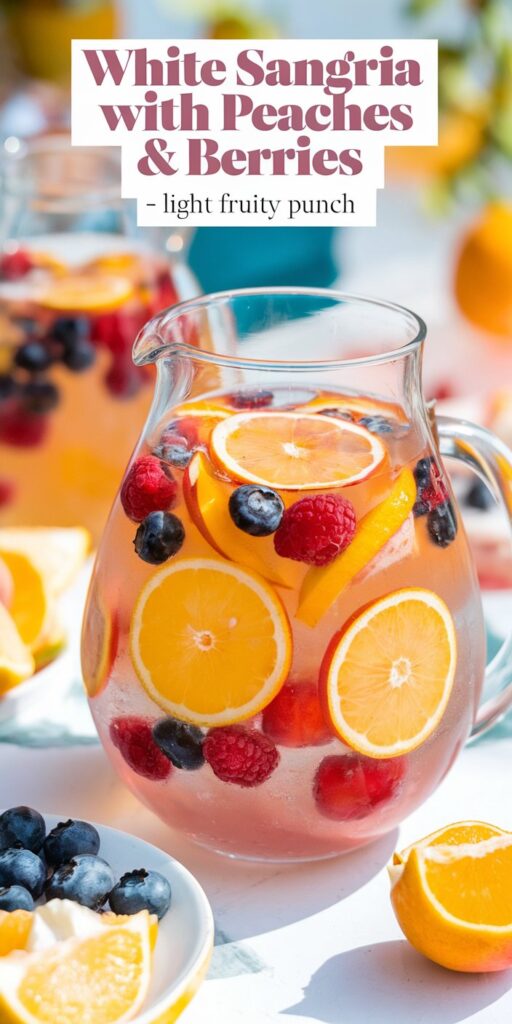
Combining white wine, peaches, berries, and a hint of fizz, this White Sangria with Peaches & Berries conjures a sun-soaked orchard in each glass. The gentle orchard fruit merges seamlessly with the wine’s crisp dryness, delivering a punch that’s sweet, refreshing, and elegantly simple. Whether for an alfresco lunch or a breezy evening get-together, it’s a versatile, crowd-pleasing beverage that highlights the best of seasonal fruit without overshadowing the wine’s nuanced flavors.
Now that you know how to slice and macerate fruit, pick the right white wine, sweeten to your preference, and finalize with a sparkling flourish, why not serve up a pitcher at your next summer party or relaxed dinner? After that final fruity pour—maybe adorned with a handful of mint or a swirl of peach schnapps—drop back here to share your personal twist. Did you incorporate other fruits, add an herbal note, or skip added sugar altogether? Your approach might spark fellow sangria-lovers to rediscover how a lighter, fruit-laden white wine punch can become a star beverage in any casual or festive setting.