


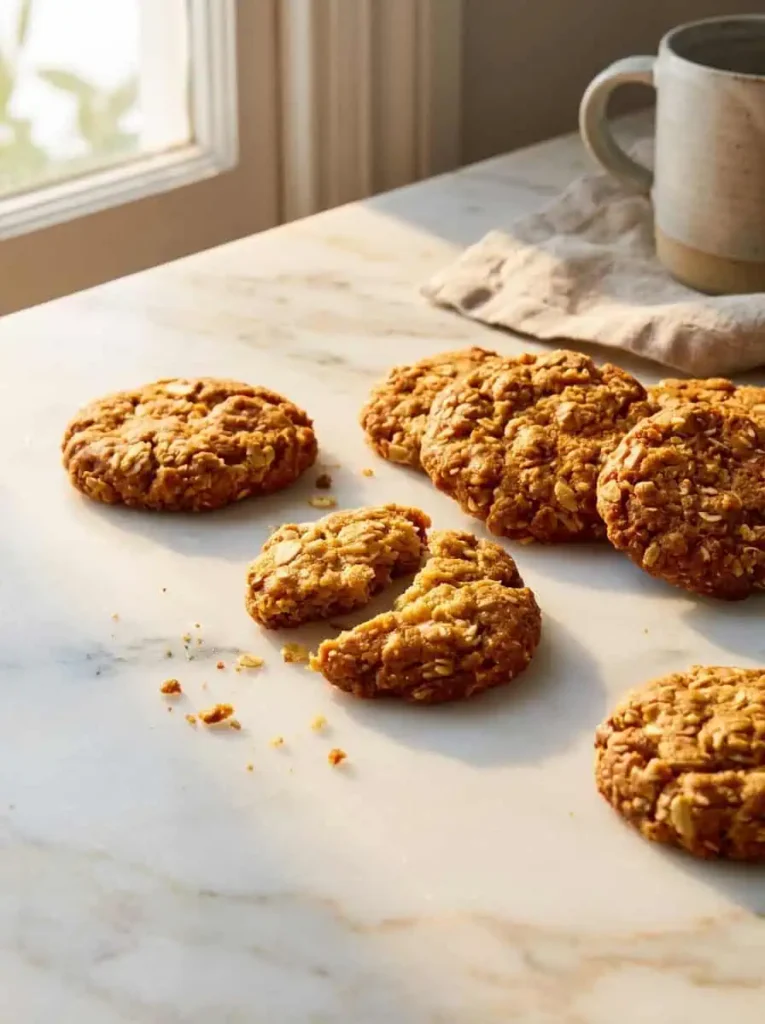
Anzac biscuits are the chewy-crisp, caramel-scented oat and coconut cookies that are a baking institution across Australia and New Zealand. They’re golden, a little nubbly from the oats and coconut, and sweet with that deep toffee note that comes from brown sugar and golden syrup. Best of all, they’re genuinely simple: no eggs, no mixer, and a dough that comes together in one bowl with one little bit of kitchen-science drama in the middle.
The name comes from the Australian and New Zealand Army Corps, and the cookies are tied to the World War I era, though the sweet, buttery version we love today is a far cry from the hard, plain ration “tiles” of that history. What makes the modern Anzac biscuit so good is texture and caramel: toasty rolled oats and shredded coconut for chew and bite, and golden syrup plus brown sugar for that signature caramelized flavor. They’re the kind of cookie that’s wonderful with a cup of tea and keeps beautifully for days.
What makes these cookies work
The signature move in this recipe is a quick reaction that happens right in the saucepan, and it’s the reason these cookies have their texture. You melt butter with brown sugar, golden syrup, and water until it bubbles, then pull it off the heat and stir in baking soda. The slightly acidic syrup and sugar react with the baking soda and foam up, roughly doubling in volume into a pale, airy froth.
That foam does two jobs. It binds the dough together in place of the eggs this recipe skips, and it lightly aerates it, giving the baked cookies their characteristic crisp-yet-tender crumb. It’s the same fizzing reaction you might remember from a grade-school volcano, put to delicious use. You pour that hot foam straight over the dry ingredients and mix, and the dough comes together fast.
The other thing that makes these special is the caramel character. Golden syrup is the traditional ingredient and it’s worth seeking out, since its mellow, buttery-caramel flavor is a big part of what makes an Anzac biscuit taste like an Anzac biscuit. Honey works as a substitute if you can’t find golden syrup, with a slightly different but still lovely flavor.
And you get to choose your texture. Baking them to a lighter golden gives you chewier cookies; baking longer to a deep amber gives you crunchier ones. Same dough, your call.
What goes in
The ingredient list is short and built from pantry staples.

For the dry mix you’ll need old-fashioned rolled oats, all-purpose flour, unsweetened shredded coconut, granulated sugar, and a little fine salt. Use rolled oats, not quick or steel-cut, since they give the right chew and structure, and unsweetened coconut so the cookies aren’t cloying.
The caramel base is unsalted butter, light brown sugar, golden syrup (or honey), and a little water, melted together. And baking soda is the magic ingredient that gets stirred in at the end to create the foam.
A couple of notes. Golden syrup is increasingly easy to find in the baking aisle or online, and it’s the authentic choice; honey is the backup. To make these vegan, simply swap in vegan butter, since there are no eggs to worry about. And if you want them coconut-free, leave out the coconut and add an extra half cup or so of oats in its place.
How to make them
Heat your oven to 325°F and line two large sheet pans with parchment. In a big bowl, stir together the oats, flour, coconut, granulated sugar, and salt, and set it aside.
Measure your baking soda out ahead of time and keep it within reach, because the next step moves quickly. In a saucepan over medium heat, melt the butter together with the brown sugar, golden syrup, and water, stirring now and then, until the butter is fully melted and the mixture just starts to bubble. Take it off the heat immediately and stir in the baking soda. In a few seconds it will foam up and roughly double in volume into a pale, airy froth.
Pour that hot foam over the dry ingredients, scraping the saucepan well, and mix just until everything is evenly combined. Press the dough together into a mass and let it rest for about 5 minutes, which makes it easier to shape.
Scoop a couple of tablespoons of dough at a time and roll into balls about an inch and a half across, setting them on the pans about 2 inches apart. If the dough is too crumbly to hold together, stir in a little water, a half teaspoon at a time, until it binds. Flatten each ball slightly with your hand.
Bake for about 17 to 22 minutes. Pull them at a lighter reddish-gold for chewy cookies, or let them go to a deeper amber for crunchy ones. Let them cool on the pan or a wire rack for at least 10 minutes, since they firm up considerably as they cool.
Tips and storing
A few things to keep in mind. Work fairly quickly once the baking soda goes in, since you want to get that active, foamy mixture into the dough while it’s lively. Don’t overmix once the wet and dry come together; mix just until combined. And trust the cooling time, these cookies are soft and fragile straight from the oven and set into their proper texture as they cool, so resist the urge to move them too soon.
The chewy-versus-crunchy choice is worth playing with. If you’re not sure which you prefer, bake one pan a little lighter and one a little darker and compare. They’ll keep their texture for days either way.
Storing is easy and these are made for it. Once completely cooled, keep them in an airtight container at room temperature, where they stay good for up to 5 days. Their sturdy, low-moisture texture is exactly why they were historically able to travel well, and it’s why they’re such a reliable cookie to bake ahead, pack into lunches, or send as a gift. They also freeze well in an airtight container for longer storage.
This makes about 20 cookies. Golden, caramelized, chewy or crisp as you like them, Anzac biscuits are a humble, satisfying cookie with a lot of history and an even better flavor, the kind of recipe you’ll come back to whenever you want something easy that everyone enjoys.
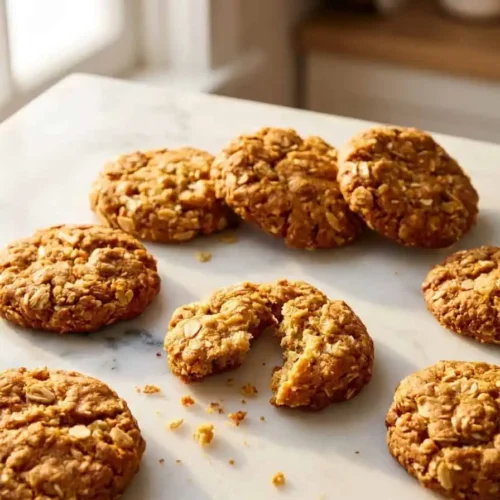
Anzac Biscuits (Oat and Coconut Cookies)

Equipment
- Two sheet pans
- Large Mixing Bowl
- Medium Saucepan
- Wire rack
Ingredients
- 1 1/3 cups old-fashioned rolled oats 132 g
- 1 1/4 cups all-purpose flour 170 g
- 3/4 cup unsweetened shredded coconut 62 g
- 2/3 cup granulated sugar 132 g
- 1/4 tsp fine salt
- 1 1/4 tsp baking soda
- 10 tbsp unsalted butter 141 g
- 1/4 cup light brown sugar 53 g
- 4 tsp golden syrup or honey 28 g
- 3 tbsp water 45 g
Instructions
- Mix the Dry Ingredients: Heat the oven to 325°F and line two large sheet pans with parchment. In a large bowl, stir together the oats, flour, coconut, granulated sugar, and salt. Set aside.
- Make the Caramel Foam: Have the baking soda measured and ready. In a saucepan over medium heat, melt the butter with the brown sugar, golden syrup, and water, stirring occasionally, until the butter melts and the mixture just begins to bubble. Remove from the heat at once and stir in the baking soda; it will foam up to roughly double its volume in a few seconds.
- Combine: Pour the foamy mixture over the dry ingredients, scraping the pan well, and mix just until evenly combined. Press the dough into a mass and let it rest 5 minutes to make shaping easier.
- Shape: Roll about 2 tablespoons of dough into balls roughly 1 1/2 inches across and place them 2 inches apart on the pans. If the dough is crumbly, stir in water 1/2 teaspoon at a time until it binds. Flatten each ball slightly.
- Bake: Bake for 17 to 22 minutes, to a lighter reddish-gold for chewy cookies or a deep amber for crunchy ones. Cool on a wire rack at least 10 minutes, since they firm up as they cool.
- Store: Once fully cooled, store in an airtight container at room temperature for up to 5 days.