



Once you make garlic aioli from scratch, the jarred stuff is going to taste a little sad to you. Homemade garlic aioli is a thick, glossy, garlicky emulsion of egg yolk, olive oil, lemon, and Dijon that comes together in about seven minutes and tastes miles better than anything you can buy. It’s the condiment that turns an ordinary sandwich into something you’d order at a restaurant, and it’s just as good as a dip for fries, a sauce for roasted vegetables, or a spread for burgers.
Aioli has a reputation for being fancy or temperamental, but it really isn’t, as long as you understand what’s happening when you make it. It’s essentially a garlicky mayonnaise, an emulsion where oil is whisked into egg yolk until the two combine into something thick and creamy. Get the technique right, and it comes together reliably every time. Below I’ll walk through both the how and the why, because knowing what’s going on is what makes this foolproof.
How an emulsion works (and why it sometimes breaks)
The whole magic of aioli is emulsification: forcing oil and water-based ingredients, which naturally want to separate, to combine into one smooth, stable sauce. The egg yolk is what makes this possible. It contains lecithin, a natural emulsifier that lets tiny droplets of oil stay suspended evenly throughout the mixture instead of pooling. The mustard helps too, both as a flavor and as an extra emulsifier.
The key to a stable emulsion is going slowly at the start. You add the oil gradually, just a half teaspoon to a teaspoon at a time at first, whisking constantly, so each bit of oil gets fully broken up and incorporated before more goes in. Dump the oil in too fast and you overwhelm the yolk’s ability to hold it, the emulsion “breaks,” and you end up with a greasy, separated mess instead of a thick sauce. Once you’ve got a stable base going, you can pour the rest of the oil in a steadier stream while whisking vigorously.
If it does break, all is not lost. Whisking in a tablespoon or two of hot boiling water helps stabilize the egg and bring it back together, so don’t panic and don’t pour it out.
What goes in
This is a short list of good ingredients, which is the point of a condiment this simple.

You’ll need pasteurized eggs, separated for the yolks. The recipe calls for pasteurized eggs specifically, and that matters: because aioli uses raw yolks, pasteurized eggs are the safer choice, since they’ve been treated to kill bacteria without cooking. It’s worth seeking them out for any raw-egg sauce.
Olive oil is the body of the sauce, 12 ounces of it. One note worth knowing: a strong, peppery extra-virgin olive oil can turn bitter when emulsified at high speed, so many cooks use a lighter olive oil, or cut it with a neutral oil, for a mellower aioli. Use a good but not aggressively bitter oil here.
Garlic, finely minced, is the star flavor, so mince it well so it distributes evenly. Lemon juice brightens and adds acidity, Dijon mustard adds tang and helps the emulsion, and salt seasons it. You’ll adjust the lemon and salt to taste at the end.
How to make it
You can make this by hand with a whisk, but a food processor is genuinely the easiest way, and a stand mixer or hand beaters work too. The machine keeps a steady speed and frees up a hand for drizzling the oil.
Start by combining the egg yolks, lemon juice, minced garlic, and Dijon in your bowl or food processor. Mix on low until they’re combined and just slightly frothy. This is your emulsion base.
Now the important part. Begin adding the olive oil very slowly, just a half teaspoon to a teaspoon at a time, mixing constantly until each addition is fully incorporated before adding more. Patience here at the beginning is what guarantees the emulsion holds. Once you’ve built a thick, stable base, you can pour the remaining oil in a slow, steady stream while whisking vigorously by hand or running the processor on low, until all the oil is in and the aioli is thick, glossy, and emulsified.
Finish by tasting and adjusting with more lemon juice and salt until it’s balanced to your liking. That’s it.
Ways to use it, plus storing
This is one of the most useful things to have in your fridge. Spread it on sandwiches, burgers, and wraps, use it as a dip for fries, sweet potato fries, or roasted vegetables, dollop it alongside grilled fish or chicken, or thin it slightly with a little water or lemon to make a quick salad dressing. The garlic flavor goes with almost everything savory.
You can also riff on it endlessly. Stir in roasted garlic for a sweeter, mellower version, chipotle or sriracha for heat, fresh herbs like dill or basil, lemon zest for extra brightness, or a little smoked paprika. The base recipe is a launching pad.
For storing, this is a make-ahead-friendly sauce. You can make it up to 3 days in advance, and it keeps, covered and refrigerated, for about 7 to 10 days. Because it’s made with raw egg yolk, keep it well chilled and don’t leave it sitting out at room temperature, and use clean utensils when scooping to keep it fresh.
One note on yield: this recipe makes a generous batch, about 32 tablespoons, since 12 ounces of oil goes a long way. If that’s more than you’ll use in a week and a half, the recipe halves easily, just use one yolk and 6 ounces of oil.
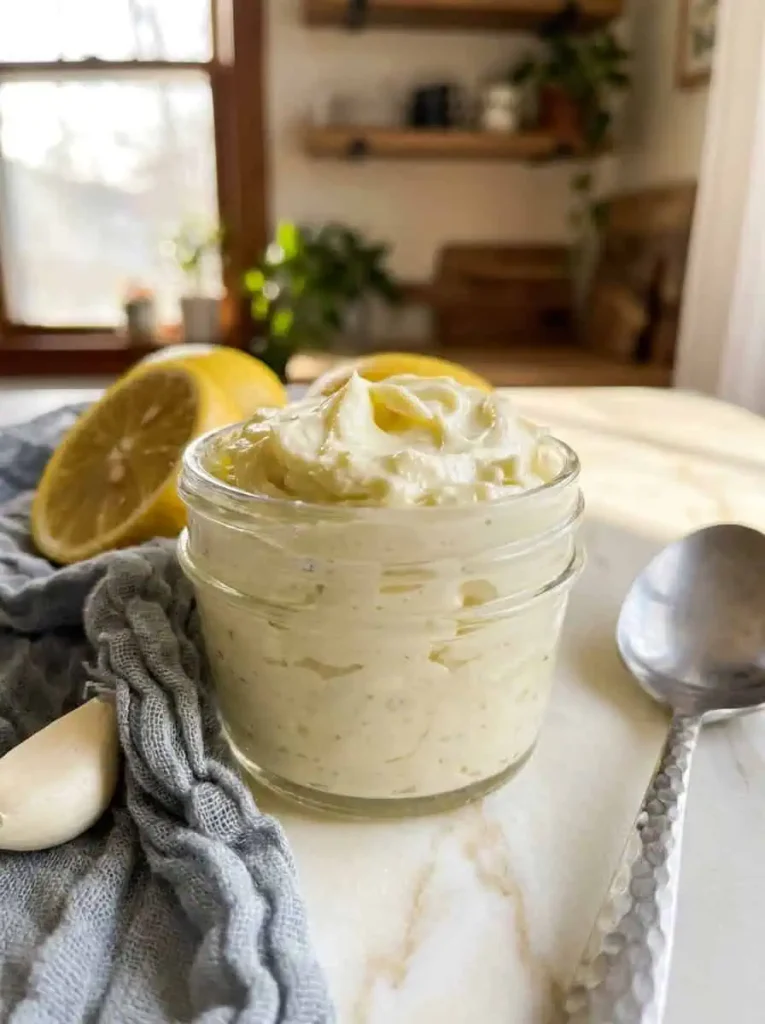
This makes about 2 cups of aioli, enough to last through a week of sandwiches and snacks. Thick, creamy, bright, and garlicky, homemade garlic aioli is one of those small kitchen wins that makes everything you put it on taste better, and it costs pennies compared to the fancy jarred versions.
A quick word on the difference between aioli and mayonnaise, since people ask: traditional aioli is technically just garlic and olive oil emulsified, while mayonnaise uses egg and neutral oil. This recipe, like most modern versions, sits in between, an egg-based emulsion built on olive oil and loaded with garlic, which gives you the best of both: the stability and ease of mayo with the bold flavor of true aioli. Whatever you call it, it’s the good stuff, and once you’ve made a batch you’ll find excuses to put it on everything.
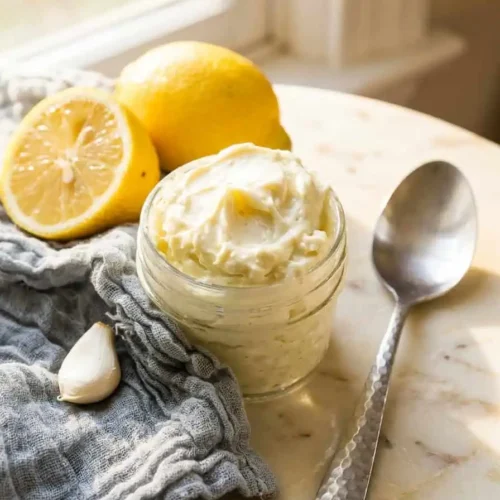
Homemade Garlic Aioli

Equipment
- Food processor (or whisk, stand mixer, or hand beaters)
- Mixing Bowl
Ingredients
- 2 pasteurized eggs yolks separated
- 1 1/2 tsp lemon juice plus more to taste
- 1 clove garlic finely minced
- 1 tsp Dijon mustard
- 12 ounces olive oil
- salt and lemon juice to taste
Instructions
- Make the Base: Mix together the egg yolks, lemon juice, garlic, and Dijon mustard in a bowl or food processor on low speed until combined and slightly frothy.
- Start the Emulsion: Add about 1/2 to 1 teaspoon of olive oil slowly while continuing to mix, until it has been fully incorporated.
- Add the Oil: Slowly pour in the remaining olive oil while whisking vigorously by hand or mixing on low in a food processor, until all the oil is added and the aioli is thick and emulsified.
- Season: Finish by adding lemon juice and salt to taste.