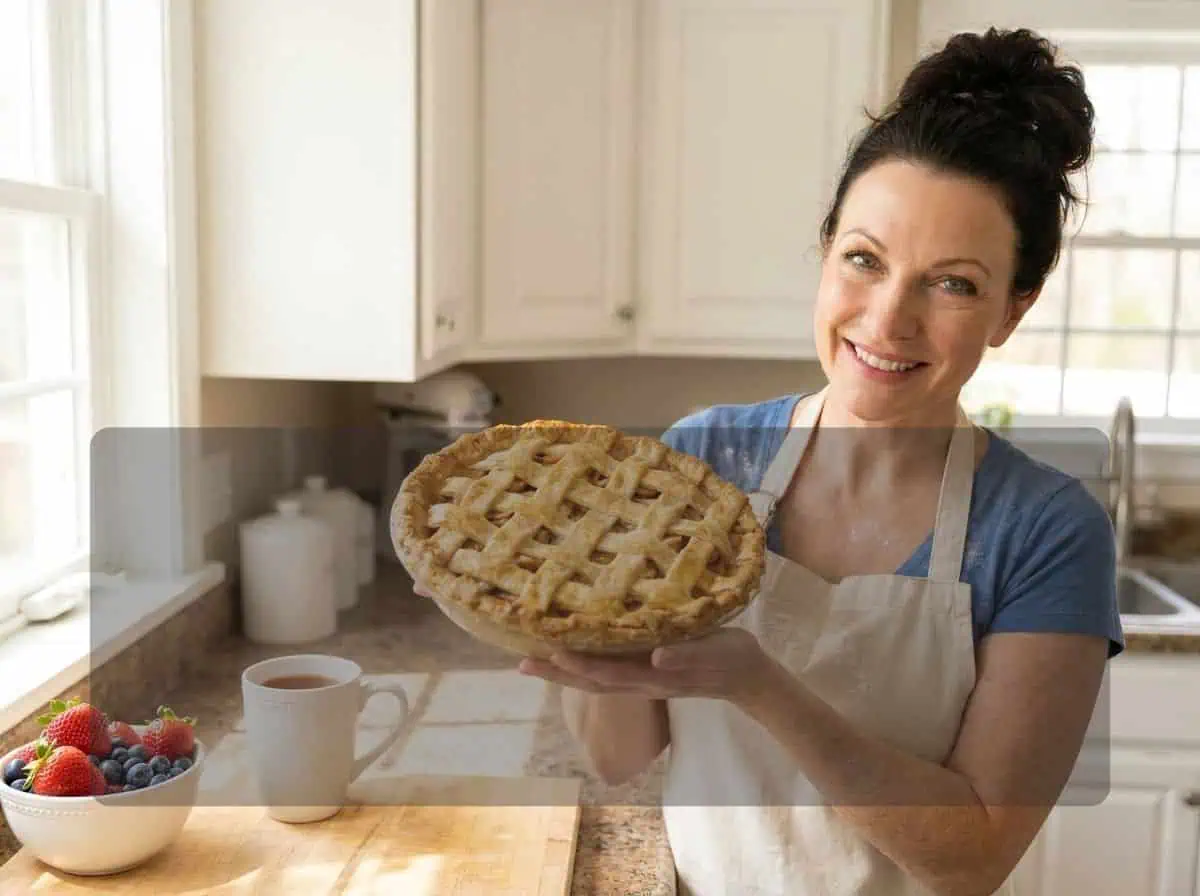




Few aromas can brighten a chilly day (or any day, really) like citrus enveloping your kitchen. Pair that with the cheerful cranberry—its tangy pop of flavor—and you get a Cranberry Orange Loaf that stands out as both a snack and a subtle sweet treat. Visualize a moist, tender loaf carrying orange zest’s zing in each slice, speckled with tart cranberries that contrast delightfully with the loaf’s gentle sweetness. An ideal companion to a warm mug of tea or coffee, this loaf also works as a quick breakfast bite when you crave something fruity but not over-the-top sugary.
My discovery of this flavor combination emerged when I searched for a baked good that spanned multiple occasions: a Sunday brunch item, a mid-afternoon pick-me-up, or even a lightly sweet dessert. The synergy of orange and cranberry felt natural—citrus brightens the sometimes-bitter tang of cranberries. After testing a few recipes, I found that a spoonful of orange zest, a splash of orange juice, and fresh or dried cranberries gave each slice a pleasantly tart flavor, balanced by a soft crumb. Now, whether it’s holiday season or just a normal week, I default to this loaf for a spark of color and lively taste among the routine breads or muffins.
In this article, we’ll break down how to create a Cranberry Orange Loaf that merges the tangy essence of citrus with the pleasing snap of cranberries, all within a moist, easy-to-slice bread. Whether you’re new to quick breads or simply craving a vibrant slice to pair with tea, prepare for a loaf that’s as visually appealing as it is flavor-forward.
Section 1: Why Cranberry Orange Loaf Charms

- Citrus-Fruit Contrast
The sweet, floral note of orange pairs well with cranberries’ tartness, ensuring the loaf doesn’t devolve into one-dimensional sweetness. - Quick Bread Simplicity
Unlike yeast breads, quick breads rely on baking powder or soda. They’re straightforward—mix wet and dry ingredients, combine, and bake without fuss. - Versatile Serving
This loaf can serve as a mid-morning snack, a Sunday brunch staple, or a dessert with a modest glaze. The dryness (or moisture) level can be adjusted via the recipe to suit your preference. - Seasonal or Year-Round
While fresh cranberries peak during cooler months, frozen or dried ones can maintain this loaf in your repertoire any time you desire a bright, fruity treat.
Section 2: Ingredient Overview
Use this table for a standard 9×5-inch loaf (about 8–10 slices):
| Ingredient | Quantity | Notes |
|---|---|---|
| All-Purpose Flour | 2 cups (~250 g) | Sift if you want a lighter crumb |
| Baking Powder | 2 tsp | Primary leavening agent |
| Salt | ½ tsp | Balances sweet and citrus |
| Sugar (granulated) | ~¾–1 cup | Adjust sweetness based on cranberries’ tartness |
| Orange Zest | 1–2 tbsp | Fresh zest from ~1 large orange |
| Orange Juice (freshly squeezed) | ~¼–⅓ cup | Enhances flavor and provides moisture |
| Egg (large) | 1 | Helps bind the loaf together |
| Milk or Buttermilk | ~½ cup | Combined with orange juice, total liquid ~¾ cup (milk + juice) |
| Vegetable Oil or Melted Butter | ⅓ cup | Adds moisture; butter gives richer flavor, oil yields a lighter texture |
| Cranberries (fresh or frozen) | 1–1½ cups, chopped or whole | If frozen, do not thaw fully; if dried, measure ¾ cup and soak if desired |
| Optional Add-Ins (nuts, e.g., pecans or walnuts) | ~½ cup, chopped | If you like a crunchy element, complements the tart fruit |
| Optional Glaze (powdered sugar + orange juice) | ~½–¾ cup sugar + ~2 tbsp juice | For a light drizzle if you prefer a sweeter top |
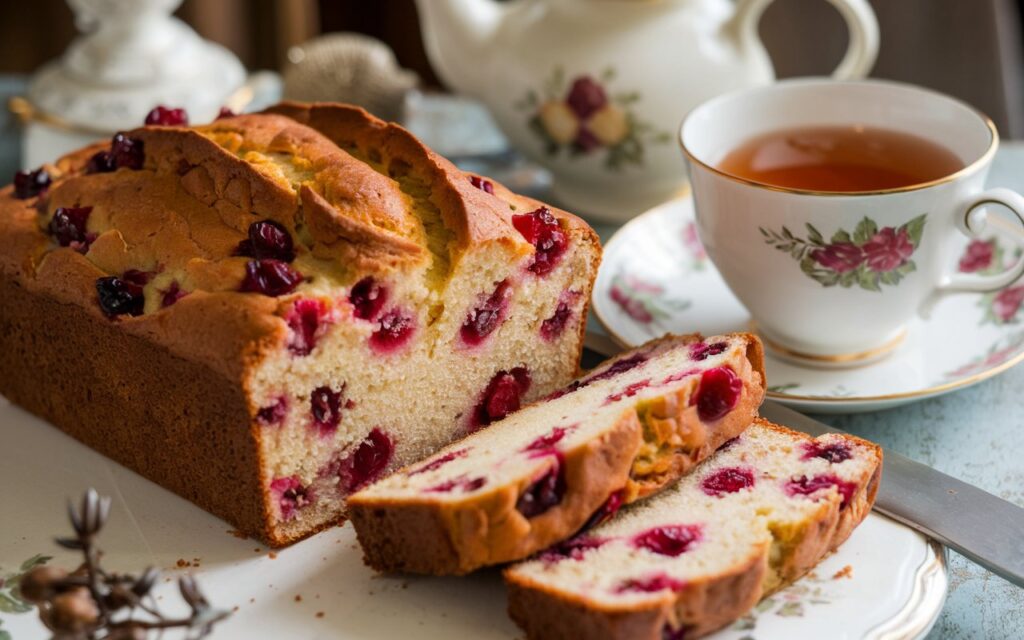
Section 3: Step-by-Step Recipe (Approx. 1–1.5 Hours)
- Preheat & Prep Pan
- Preheat oven to 350°F (175°C). Grease a 9×5-inch loaf pan or line it with parchment. This ensures an easy release.
- Combine Dry Ingredients
- In a medium bowl, whisk 2 cups flour, 2 teaspoons baking powder, and ½ teaspoon salt. If using sugar in the dry mix (some prefer to cream sugar with wet), you can combine ¾–1 cup sugar here as well. Another approach is to add sugar with wet ingredients—both methods can succeed.
- Incorporate Orange Zest
- Stir in ~1–2 tablespoons orange zest. This helps distribute citrus oils throughout the dry mixture. You could also rub zest into sugar to release more oils.
- Wet Ingredients
- In another bowl or measuring cup, whisk 1 egg, ~⅓ cup vegetable oil (or melted butter), and the combination of orange juice plus milk/buttermilk (aim for ~¾ cup total liquid). If you prefer a distinct tang, choose buttermilk.
- Combine Mixtures
- Create a well in the dry mixture. Pour in the wet ingredients. Stir gently until just combined. Overmixing can yield a tough loaf.
- Add Cranberries
- Fold in 1–1½ cups cranberries (fresh or frozen). If they’re large, chop them. If dried, you might want to soak them briefly in warm water or orange juice for plumpness. Add chopped nuts now if desired.
- Fill Pan & Bake
- Transfer batter to the loaf pan. Tap gently to remove air pockets. Bake at 350°F (175°C) for ~45–55 minutes. Check doneness by inserting a toothpick in the center—if it comes out with minimal crumbs, it’s done. The top should be golden, and edges pulling slightly from the pan.
- Cool
- Remove from oven, let it rest in pan ~10 minutes. Turn loaf onto a cooling rack. If desired, drizzle an orange glaze once it’s mostly cool to avoid run-off. Wait until fully cooled (or at least 30 minutes) before slicing for cleaner cuts.
Section 4: Optional Glaze
- Prepare Simple Drizzle
- Whisk ~½ cup powdered sugar with 1 tablespoon fresh orange juice. Adjust sugar or juice for a thicker or thinner consistency.
- For a bolder citrus hint, add extra zest or a drop of orange extract.
- Apply
- Using a spoon or small piping bag, drizzle over the cooled or slightly warm loaf. Let the glaze set for about 10 minutes before slicing.
Section 5: Tips for Moist, Tangy Results
- Use Fresh Citrus
- Canned or bottled OJ pales compared to fresh. Fresh zest also holds essential oils for the best flavor.
- Don’t Overmix
- Once liquids meet flour, stir gently. Quick breads can turn dense if you over-stir the gluten.
- Temperature of Ingredients
- Room-temperature egg ensures better blending. Milk or buttermilk slightly cool is fine, but not super cold—extreme temperature differences can affect batter consistency.
- Check Doneness
- The toothpick test remains reliable. However, keep an eye on the color. If the top browns too quickly, tent with foil in the last 10–15 minutes.
Section 6: Flavor Variations
- Cranberry-Orange-Chocolate
- Toss in ½ cup mini chocolate chips or swirl melted white chocolate on top. The sweet creaminess plays nicely off the tangy fruit.
- Cranberry-Lime
- Sub lime juice and zest for a sharper, greener citrus twist. The bread transforms into a zippier variant.
- Cinnamon Hint
- Add ½ teaspoon cinnamon to the dry mix for a cozy flavor. This can bring a warm, autumn vibe to an otherwise bright, summery loaf.
- Healthy Twists
- Swap some white flour with whole wheat pastry flour for extra fiber. Or reduce sugar to make it more of a breakfast loaf than a dessert.
Section 7: Serving Suggestions
- With Tea/Coffee: A natural fit. The loaf’s bright citrus tang complements warm beverages.
- Toasted Slices: Lightly toast or warm leftover slices with a pat of butter or jam for a breakfast delight.
- Dessert Mode: Pair with whipped cream or a small scoop of vanilla ice cream for a more indulgent spin.
- Leftovers: Store in an airtight container at room temp for 2–3 days, or fridge up to 5 days. Freeze slices for up to 2 months; thaw individually for quick treats.
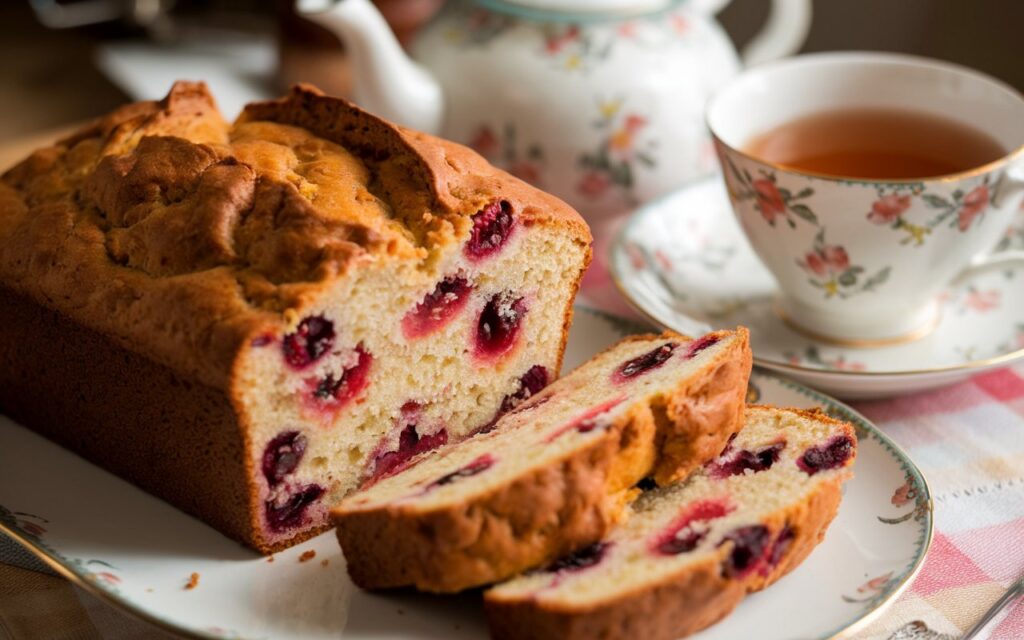
Section 8: FAQ – Cranberry Orange Loaf
Q1: Can I use dried cranberries instead of fresh?
A1: Yes. If dried, you might soak them in warm water or orange juice to soften. Use about ¾ cup. The loaf’s tang might be slightly reduced because dried cranberries are usually sweetened.
Q2: My loaf turned out soggy. Why?
A2: Possibly underbaked or too many wet ingredients. Verify your oven temperature. Or your cranberries might have exuded extra moisture—try chopping them or pat them dry if fresh/frozen.
Q3: Do I need a glaze for flavor?
A3: Not essential. The loaf stands on its own. A glaze adds extra sweetness and a polished look, but skipping it is fine if you prefer less sugar.
Q4: Can I double the recipe for a 9×13 pan?
A4: Yes, you can create bars by doubling the ingredients and adjusting bake time. Check around 25–30 minutes, but it may need more depending on your oven and pan depth.
Q5: Is it safe to reduce the sugar significantly?
A5: You can trim it by up to half if you don’t mind a more tart loaf. Just note that sugar aids in moisture retention, so texture might be slightly different.
Conclusion
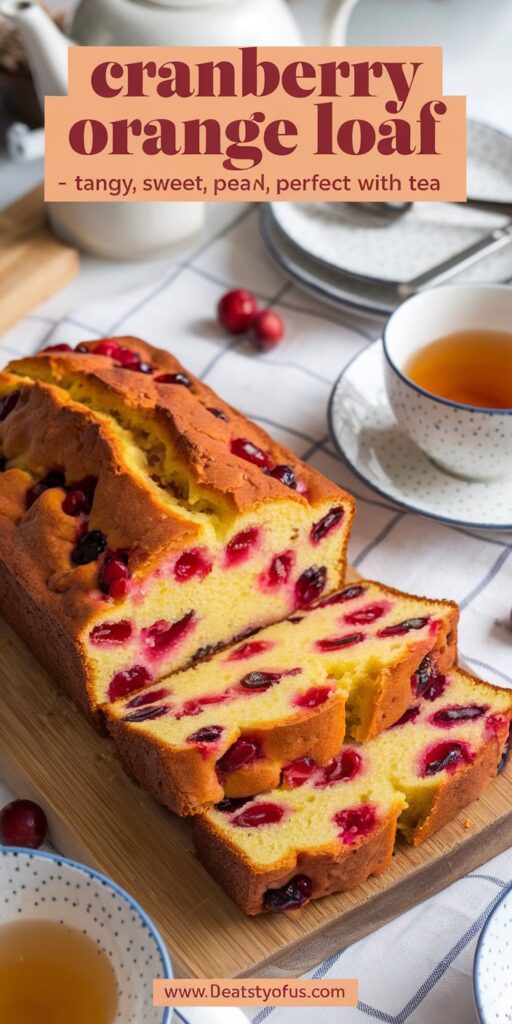
Blending the spark of citrus with the lively pop of cranberries, Cranberry Orange Loaf stands out as a moist, tangy-sweet creation perfect for tea time or a morning snack. Each slice unites the fresh aroma of orange zest with pockets of tart cranberry, ensuring no bite feels monotonous. Easy to whip up with minimal fuss, this quick bread can adapt to both holiday seasons (when cranberries abound) and everyday cravings for a bright, fruit-based treat.
Now that you know how to harness fresh citrus juice, incorporate cranberries, and balance sweetness in a quick bread format, why not greet your next morning with a warm slice of tangy delight? After enjoying that first moist, citrus-kissed slice—maybe topped with a bit of butter or a swirl of simple glaze—come back and share your personal flourishes. Did you add nuts, sub a different citrus, or swirl in some chocolate? Your creative angle could spark others to embrace the delightful synergy of cranberries and oranges in their own baking adventures.