



I almost called this a stew. It’s that thick. The first time I made creamy chicken soup this way I’d meant to do a regular brothy bowl, then I got distracted, sprinkled in cornstarch out of habit, and ended up with something my husband ate two helpings of standing at the counter before it even hit a bowl. So. Soup, technically. But you’ll want bread.
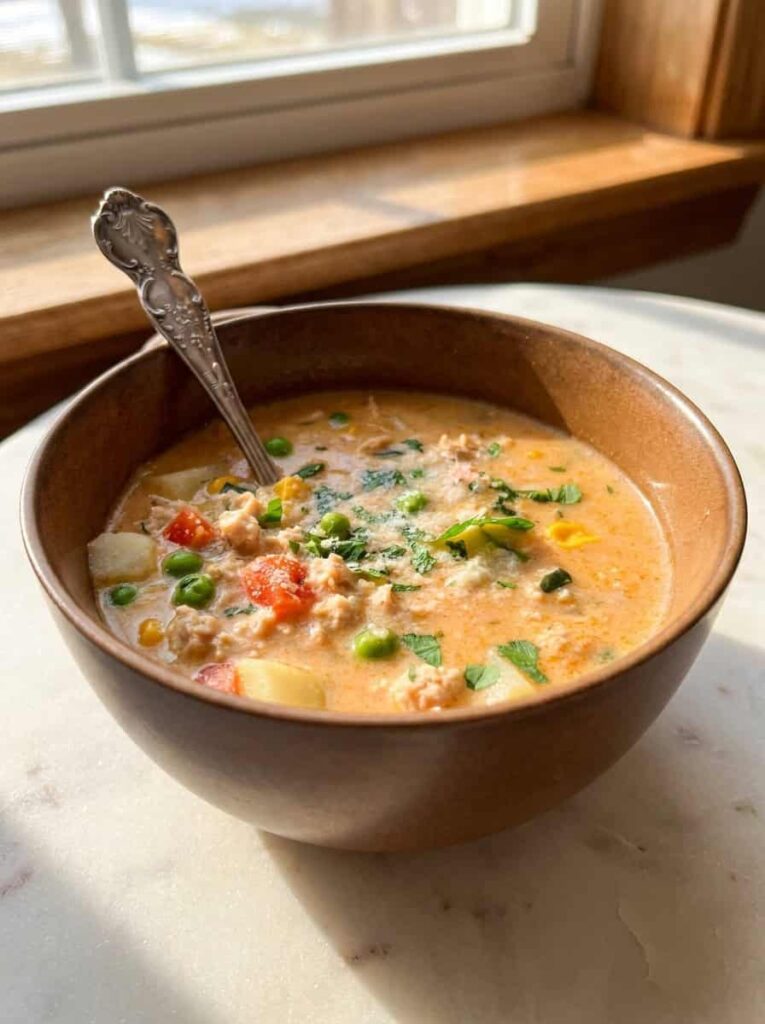
What makes it work is that it borrows from both worlds. You get the cozy, spoon-it-up ease of soup, plus the body of a stew, because there’s ground chicken, potatoes, a little pasta, and enough cream to coat the back of a spoon. It’s the kind of pot you make on a cold Sunday and pick at for two days.
Why this one turns out thicker than most chicken soups
Most creamy chicken soups lean on a roux or a flood of heavy cream to get there. This one cheats smarter. The cornstarch goes in early, right onto the cooked chicken, so it toasts a little and then thickens the broth gradually as it simmers instead of clumping. By the time the potatoes are soft, the liquid has already gone velvety.
Then there’s the risoni. If you’ve never used it, it’s the little rice-shaped pasta (Americans usually call it orzo). It does two jobs here. It soaks up some of the broth and releases starch as it cooks, which thickens things further, and it gives every spoonful a bit of chew so the soup feels like a meal and not a starter.
The ground chicken matters too. I’ve made versions with shredded rotisserie chicken and they’re fine, but the mince breaks down into the broth and seasons the whole pot from the inside. You taste chicken in the liquid, not just in the bites.
What goes in the pot
Nothing here is fussy, but a few things are worth a note before you start.

Use ground chicken (chicken mince) rather than turkey if you can. Turkey works but goes drier. The 500g, roughly a pound, is the right amount for six servings; any more and it stops being soup and starts being a casserole that lost its way.
Cornstarch is your thickener. If your bag says cornflour and you’re outside the US, same thing. Don’t swap in flour at the same amount, it won’t thicken as cleanly and you’ll taste it raw if you rush.
Cooking cream or heavy cream, about 300ml, which is a touch over a cup. Cooking cream is steadier and won’t split if the pot’s a little too hot, but heavy cream tastes richer. Either is good. Just stir it in at the end, off a hard boil, or you risk it breaking.
For the potatoes, anything waxy or all-purpose holds its cube. I use whatever’s in the bin. Russets will start to dissolve, which honestly isn’t a tragedy here since we’re going for thick anyway, but you’ll lose the distinct chunks.
The smoked paprika is the one spice I wouldn’t skip. It’s a small amount but it gives the broth a low, warm backnote that makes people ask what’s in it. Regular paprika works if that’s what you have. It just won’t have the smoke.
Frozen peas and corn go in at the very end so they stay bright and don’t turn to mush. And the risoni can be subbed for any small pasta, but check the package timing because some cook faster and you don’t want them blowing out.
How to make it without babysitting the pot
Start with the butter and oil in a big pot over medium heat. Both, not one. The butter is for flavor, the oil keeps the butter from scorching. Add your onion, garlic, and celery and let them go four or five minutes until they soften and smell sweet. Don’t rush this part. Soft vegetables here mean a deeper broth later.
In goes the ground chicken. Break it up with the back of your spoon and cook just until it loses its pink. You’re not browning it hard, just cooking it through, so it’ll stay tender in the soup.
Now the tomato paste and smoked paprika, stirred in for about a minute. You’ll smell when it’s ready. The paste loses its raw edge and the kitchen suddenly smells like the soup is going to be good.
Sprinkle the cornstarch over everything and stir until the chicken is coated. It’ll look a little pasty and weird. That’s right. Keep going.
Add the carrots, potatoes, thyme, bay leaf, and the stock. Stir well to lift anything stuck to the bottom, bring it up to a boil, then drop it to a simmer for fifteen minutes. Lid mostly on. This is your hands-off window. Go fold the laundry.
Stir in the risoni and give it another ten minutes, stirring now and then so the pasta doesn’t catch and stick to the bottom of the pot. It will want to. Pay attention to it.
The last five minutes are for the peas, corn, cream, and most of the parsley. Salt and pepper now, and taste. It’ll need more salt than you think because there’s a lot of liquid. Add a pinch more than feels right, then taste again. Pull the bay leaf and thyme stems before serving.
Serve it hot with extra parsley on top and a little grated parmesan if you’ve got it. The parmesan isn’t in the recipe but I always do it.
A few things I’ve figured out
It thickens as it sits. By day two it’s basically a stew you eat with a fork, which I love but some people don’t, so loosen leftovers with a splash of stock or water when you reheat. Reheat gently over low heat, covered, and stir the cream back in. A hard reboil can make the dairy grainy.
If you want it lighter, you can skip the risoni and bump the potatoes. You lose some of the stew feel but it’s still a good bowl. The reverse also works, more pasta, less potato, if you’re feeding teenagers.
Freezing is the one place this soup struggles. Cream-and-potato soups go a little grainy and weepy after a freeze and thaw. If you know you’re freezing it, hold the cream out, freeze the base, then stir fresh cream in when you reheat. It’s a small extra step that saves the texture.
And don’t bother peeling the carrots if they’re clean. Nobody at my table has ever noticed.
Serves 6. Leftovers reheat well in a covered pot with a splash of stock.
Print
Creamy Chicken Soup
A thick, cozy creamy chicken soup built in one pot with ground chicken, potatoes, carrots, and a handful of risoni so it eats almost like a stew. Cornstarch goes in early for a velvety broth, and a splash of cream at the end rounds everything out. Ready in about 50 minutes.
- Total Time50 minutes
- Yield6 bowls 1x
Ingredients
Base & Chicken
- 2 tbsp butter
- 1 tbsp olive oil
- 1 onion (finely diced)
- 2 cloves garlic (crushed)
- 1 stick celery (finely diced)
- 1 tbsp tomato paste
- 1 tsp smoked paprika
- 500 g ground chicken (chicken mince)
- 2 tbsp cornstarch (cornflour)
Simmer
- 2 carrots (cubed)
- 3 medium potatoes (cubed)
- 2 sprigs fresh thyme
- 1 bay leaf
- 6 cups chicken stock (1.5 litres)
- 1/2 cup risoni (orzo)
Finish
- 1/2 cup frozen peas
- 1/2 cup frozen corn
- 300 ml cooking cream (or heavy cream)
- 2 tbsp fresh parsley (chopped, plus extra to serve)
- salt and pepper (to taste)
Instructions
- Soften the Base: Melt the butter in a large pot over medium heat. Add the olive oil, onion, garlic, and celery. Cook for 4 to 5 minutes until softened.
- Brown the Chicken: Add the ground chicken and cook, breaking it up with a spoon, until it just changes colour.
- Bloom the Tomato Paste: Stir in the tomato paste and smoked paprika. Cook for 1 minute until fragrant.
- Coat with Cornstarch: Sprinkle over the cornstarch and stir well to coat the chicken evenly.
- Add Vegetables and Stock: Add the carrots, potatoes, thyme, bay leaf, and chicken stock. Stir well and bring to the boil.
- Simmer: Reduce the heat and simmer for 15 minutes.
- Cook the Risoni: Stir in the risoni and cook for another 10 minutes, stirring occasionally so the pasta does not stick to the bottom of the pot.
- Finish the Soup: Add the peas, corn, cream, and parsley during the last 5 minutes of cooking. Season with salt and pepper to taste, then discard the bay leaf and thyme stems.
- Serve: Ladle into bowls and serve hot with extra parsley and a sprinkle of grated parmesan on top.
Notes
The soup thickens as it sits and is closer to a stew by day two. Loosen leftovers with a splash of stock or water and reheat gently, covered, over low heat so the cream does not turn grainy. To freeze, hold the cream out, freeze the base, and stir in fresh cream when reheating.
- Prep Time: 15 minutes
- Cook Time: 35 minutes
- Category: Main Course, Soup
- Method: Stovetop
- Cuisine: American