



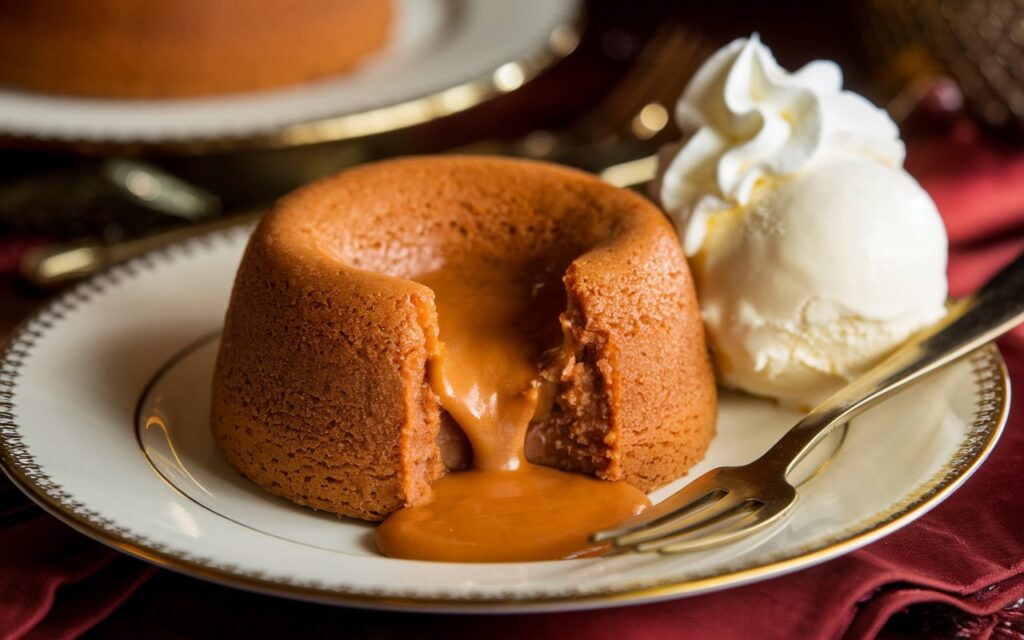
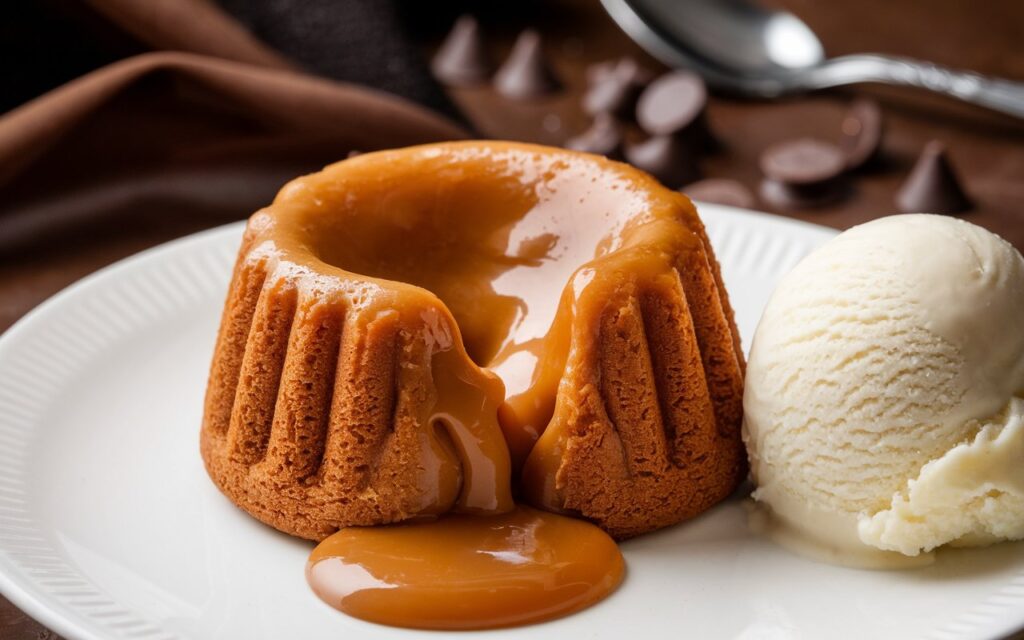
Visualize a warm, single-serving cake with a molten dulce de leche center that oozes from each spoonful—a luscious wave of caramel reminiscent of gooey flan and toffee all at once. This is the alluring promise of a Dulce de Leche Lava Cake: the decadent counterpart to classic chocolate lava cakes, but pivoting to the golden sweetness of caramelized milk. Each portion hides a velvety pool of dulce de leche in the middle, delivering an indulgent surprise that might just surpass even the chocolate version in its smooth, comforting sweetness.
I stumbled upon the idea of a caramel-based lava cake while craving a twist on the typical chocolate meltdown. Realizing that dulce de leche—with its spreadable yet thick consistency—could mimic the molten center, I experimented by layering spoonfuls of dulce de leche in partially filled ramekins. The result was pure indulgence: a lightly baked exterior forming a delicate, cake-like shell, hugging a soft, buttery caramel interior that flows once you break in. Now, Dulce de Leche Lava Cake stands among my top “wow factor” desserts—ideal for dinner parties or date nights, especially since you can prepare them ahead and bake at the last minute.
In this guide, we’ll detail how to construct Dulce de Leche Lava Cake—from selecting or making the caramel filling, preparing the quick batter, layering the molten center, and baking each ramekin for the perfect gooey interior. Whether you’re a fan of molten desserts seeking variety or a caramel devotee, get ready for a dessert that merges the charm of creme caramel with the drama of a lava cake in a single, golden-brown showstopper.

Why Dulce de Leche Lava Cake Captivates
- Molten Caramel Surprise
Lava cakes typically revolve around chocolate. Here, the star is a silky, golden center that departs from the usual dark cocoa, offering a new dimension of sweetness. - Creamy, Familiar Flavor
Dulce de leche, a staple in Latin American sweets, exudes a rich, caramelized note reminiscent of toffee or sweetened condensed milk treats. - Simple to Serve
Baked in individual portions, each diner experiences the thrill of spooning into their own molten center. The plating demands minimal garnish beyond a dusting of sugar or a swirl of sauce. - Swift & Dramatic
The batter and filling come together quickly, and the bake time is short—only enough to set the exterior while preserving a molten core. Perfect for quick yet unforgettable finales.
Ingredient Overview
Makes ~4–6 individual lava cakes (depending on ramekin size):
| Ingredient | Quantity | Notes |
|---|---|---|
| Dulce de Leche (store-bought or homemade) | ~½–¾ cup | For the molten center; thicker consistency aids layering |
| Butter (unsalted) | ~½ cup (1 stick, 113 g) | Softened or melted, for the cake batter |
| Brown Sugar (light or dark) | ~½–¾ cup | Or use a mix of brown & white sugar for distinct caramel depth |
| Eggs (large) | 2 | Room temperature helps incorporate smoothly |
| Vanilla Extract | 1–2 tsp | Rounds out flavor |
| All-Purpose Flour | ~½ cup (60–65 g) | Provides structure, some add a pinch of baking powder but not mandatory |
| Salt | ¼ tsp | Balances sweetness |
| Optional Additional Caramel or White Chocolate | ~2 oz melted (optional swirl) | If you want extra flavor swirl in the batter or drizzle on top |
| Powdered Sugar (for dusting) | As needed | For garnish |
| Optional Toppings (ice cream, whipped cream) | As desired | Contrasts the warm molten center |
*(Note: Thicker dulce de leche is easier to handle. If it’s runny, chill it to stiffen slightly. For homemade, simmer a can of sweetened condensed milk or use a quick pressure cooker method.)
Step-by-Step Recipe (Approx. 30–40 Minutes + possible cooling)
- Gather Ramekins & Preheat
- Preheat oven to 400°F (205°C). Butter or grease 4–6 small ramekins (4–6 oz capacity each). A standard lava cake portion is ~4 oz. Dust lightly with flour or sugar if you want easy unmolding, though you can serve in the ramekins directly.
- Prepare Dulce de Leche Portions
- Spoon or scoop 4–6 small lumps (~1–2 tbsp each) of dulce de leche onto a parchment-lined plate. Chill them in the freezer ~10 minutes to firm up. This step helps keep the center molten and distinct from the batter during baking.
- Create Cake Batter
- In a bowl, cream ~½ cup softened or melted butter with ~½–¾ cup brown sugar. If the butter is melted, whisk quickly to blend. Add 2 eggs, beating until mixture is smooth. Stir in 1–2 tsp vanilla extract and ¼ tsp salt. Gradually fold in ~½ cup flour. The batter should be thick but pourable. If adding an optional swirl (like melted white chocolate), incorporate it gently.
- Fill Ramekins
- Fill each ramekin about halfway with batter. Retrieve your chilled dulce de leche lumps from the freezer. Press one gently into the center of each ramekin’s batter. Then top with more batter, covering the dulce de leche. Ensure you leave ~¼ inch from the rim for rising.
- Bake
- Place ramekins on a baking sheet. Bake ~10–12 minutes. The edges should look set, but the center remains slightly soft. For smaller ramekins (3–4 oz), check around 9 minutes. Overbaking eliminates the molten effect, so watch carefully. If uncertain, gently jiggle a ramekin—if the center jiggles more than the edges, it’s typically right for a lava center.
- Rest & Serve
- Let them rest ~1 minute out of the oven (they continue cooking slightly). Run a knife around the edges if you plan to invert onto plates, or serve in the ramekins if you prefer. Dust with powdered sugar or top with a small scoop of ice cream. The first spoonful reveals the dulce de leche meltdown inside.
*(Note: The key is short bake time. Traditional chocolate lava cakes are ~12–14 minutes at 400°F, but these can vary with your oven, ramekin size, and batter thickness. The aim is a just-set exterior so that the interior remains molten.)
Flavor Variations
- Salted Caramel Lava
- Stir a pinch of sea salt into the dulce de leche lumps or top the final cakes with flaky salt. This balancing note cuts the sweetness elegantly.
- Chocolate-Caramel Hybrid
- Mix 1–2 tbsp cocoa powder or melted chocolate into the cake batter for a mild chocolate background. The center remains dulce de leche, so you get the best of chocolate-caramel synergy.
- Coffee Infusion
- Add 1 tsp instant espresso powder to the batter or swirl a bit of strong coffee into the dulce de leche lumps. The mocha-caramel blend can be mesmerizing.
- Nut Crunch
- Fold chopped pecans or hazelnuts into the batter. The molten center remains caramel, but each bite includes a crunchy dimension reminiscent of turtle candies or praline vibes.
Serving & Storage
- Plating
- Typically served warm so the center flows. If you want them out of ramekins, invert each onto a plate after a short rest. Drizzle extra dulce de leche or chocolate sauce, top with whipped cream, or garnish with a mint leaf.
- Accompaniments
- A scoop of vanilla or coffee ice cream pairs well. The cold plus the warm molten center yields a sophisticated temperature contrast.
- Leftovers
- Rarely do these remain, but if so, store in fridge up to 1 day. The center stiffens upon chilling, so reheat carefully in a microwave or low oven, though the molten effect might be diminished.
- Make-Ahead
- You can prepare batter in ramekins, store covered in the fridge for ~1 day. Add the dulce de leche lumps just before baking or store them already in. Extend bake time by a minute or two if starting from chilled.
Ensuring a Molten Center
- Chilled Dulce de Leche
- Freezing or at least chilling the lumps reduces the chance they incorporate into the batter fully. This helps preserve a distinct meltdown zone.
- Accurate Bake Time
- A minute or two can separate a molten center from a fully set interior. Conduct a test with one ramekin if you’re uncertain.
- Proper Ramekin Size
- If you use bigger molds, you might need extra time. If smaller, reduce time. Keep an eye on them from the 8-minute mark onward.
- Doneness Clues
- Edges appear puffy and set, center looks slightly underdone. Gently tapping the side of the ramekin should show minor wiggle in the center.
FAQ – Dulce de Leche Lava Cake
Q1: Can I use store-bought caramel sauce if I can’t find dulce de leche?
A1: Caramel sauce typically is thinner. Dulce de leche is thicker, akin to spreadable fudge consistency. If your sauce is runny, reduce it on the stovetop or swirl in a bit of flour to thicken. Alternatively, sweetened condensed milk can be turned into dulce de leche by simmering it in a can or in a pot until golden.
Q2: Do I absolutely need ramekins?
A2: Ramekins are typical, but small oven-safe cups or muffin tins could work. If using a muffin tin, greasing thoroughly is crucial for easy release. Bake time might differ.
Q3: Is it safe to eat partially baked batter?
A3: Lava cakes intentionally remain semi-liquid in the center but are typically hot enough to handle most pathogens, especially if you use fresh ingredients. If you have health concerns, ensure eggs are pasteurized or do a quick test. The internal molten portion is mostly the dulce de leche rather than raw batter.
Q4: Will a water bath help?
A4: Not necessary. Lava cakes bake quickly; a water bath might hamper the desired set edges and molten center. Typically, direct oven heat is ideal.
Q5: Could I swirl some dulce de leche into the batter as well?
A5: Absolutely. This yields an overall caramel-laced cake, though it might reduce the distinct contrast between cake and center. Consider swirling a tablespoon or two for added flavor depth.
Conclusion
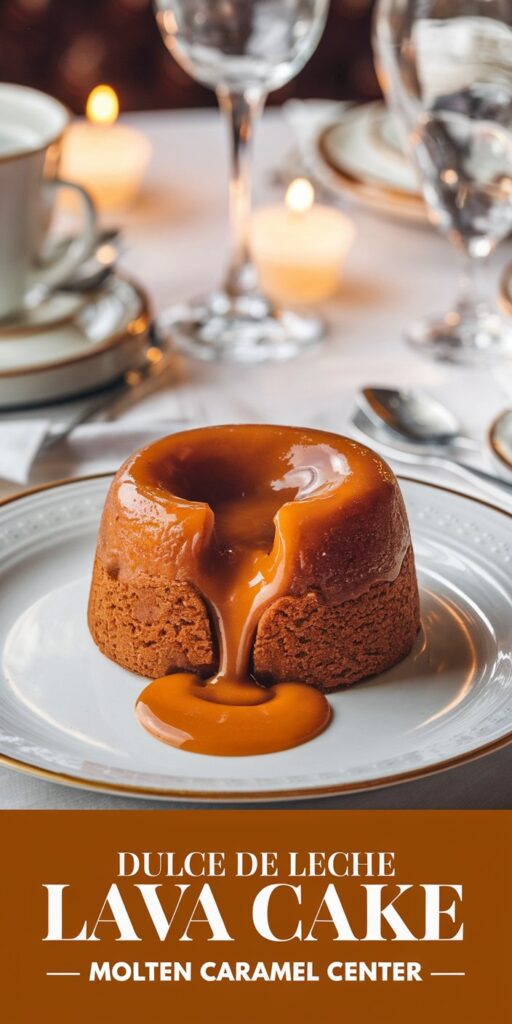
Unfolding the luscious potential of dulce de leche as a molten center, Dulce de Leche Lava Cake reimagines the classic lava dessert in a sweet caramel direction. Each warm spoonful delivers a gentle, cakey exterior that gives way to a golden, flowing core, channeling the same excitement chocolate lava cakes once introduced. Perfect for dinner parties or cozy nights in, it’s a straightforward recipe that yields a refined “wow” factor, bridging the nostalgia of caramel and the drama of molten desserts.
Now that you can chill lumps of dulce de leche, mix a simple cake batter, and bake each portion briefly for that signature meltdown, why not impress guests (or treat yourself) with a new spin on molten desserts? After you delve into the final spoonful—maybe topped with a pinch of sea salt or a drizzle of extra dulce de leche—do come back and share how you personalized it. Perhaps you added cinnamon, served with coffee ice cream, or used a swirl of chocolate in the batter. Your creative approach might inspire other dessert lovers to discover a molten caramel dessert that challenges the chocolate classic for first place in their hearts.