




Picture a fragrant dish of sweet, glutinous sticky rice crowned with slices of ripe mango, all drizzled with creamy coconut sauce. The mere aroma evokes a bustling Thai street stall where dessert-lovers line up for this iconic treat—Thai Mango Sticky Rice—the perfect harmony of chewy rice, luscious coconut sweetness, and the bright tang of tropical mango. Each spoonful merges the gentle, warming sweetness of coconut milk with the juicy burst of fresh mango, delivering a dessert that, while simple in components, feels refreshingly exotic and pleasingly indulgent.
My first taste of Thai Mango Sticky Rice was at a night market in Bangkok—where, after sampling spicy noodles and tangy papaya salad, I craved something to offset the heat. The vendor handed me a small tray of sticky rice topped with mango slices, dousing everything in a creamy coconut sauce. The interplay of fruit’s natural sweetness, creamy coconut notes, and the slightly salty garnish enthralled me so thoroughly that I found myself replicating it at home to keep the memory alive. Now, whether it’s a warm summer evening or just a random sweet craving, Thai Mango Sticky Rice stands as a go-to dessert, reminding me of carefree nights roaming Thai street-food alleys, spoon in hand, savoring each bite.
In this article, we’ll guide you on how to create Thai Mango Sticky Rice—from sourcing the right rice and perfectly ripe mango to simmering coconut milk into a sauce that seeps into each grain. Whether you’re new to Asian desserts or recalling a favorite Thai travel memory, get ready for a sweet, tropical delight that’s surprisingly quick and heartbreakingly good.

Why Thai Mango Sticky Rice Mesmerizes
- Contrasting Textures
The glutinous rice forms a chewy base, while the mango slices present a slippery, juicy texture. Tied by coconut cream, each mouthful offers a comforting mouthfeel that’s neither too heavy nor overly saccharine. - Tropical & Accessible
Mango sticky rice is found from Thai street carts to high-end restaurants, bridging local tradition and global popularity. With the right ingredients—glutinous/sticky rice, coconut milk, and ripe mango—recreating it at home is straightforward. - Balance of Sweet & Salt
The coconut sauce is typically sweetened but also includes a subtle pinch of salt, which underscores the dessert’s complexity, reminiscent of salted caramel’s sweet-savory interplay. - Seasonal Joy
In Thailand, the peak mango season sees an abundance of ripe, sweet fruit. But with global imports, many can attempt this dessert year-round, especially if you track down sweet, yellow-fleshed mangoes.
Ingredient Overview
Makes ~4 servings:
| Ingredient | Quantity | Notes |
|---|---|---|
| Glutinous Rice (sticky rice) | 1 cup (uncooked) | Must be sweet/glutinous rice, not normal long-grain or sushi rice |
| Coconut Milk | 1 can (13–14 oz) | Full-fat recommended for creaminess |
| Sugar | ~½–¾ cup (adjust to taste) | White sugar is typical, but palm sugar can also be used for a more authentic note |
| Salt | ~½ tsp | Enhances overall flavor |
| Ripe Mangoes | 2–3, depending on size | Look for sweet, yellow-flesh varieties (Ataulfo or similar) |
| Pandan Leaf (optional) | 1 leaf, knotted | Common in Thai cooking for aroma, skip if unavailable |
| Toasted Sesame Seeds (optional garnish) | ~1 tbsp | Traditional garnish for a light, nutty crunch |
(Note: Glutinous “sweet” rice is essential. Substituting standard rice yields a different result. If fresh mangoes aren’t in season, check if your market has good quality, sweetly ripe ones or consider partially thawed frozen mango slices in a pinch, though fresh is best.)
Step-by-Step Recipe (Approx. 30–45 Minutes + Soaking Time)
- Soak & Rinse Sticky Rice
- Rinse 1 cup glutinous rice in cold water several times until water runs clearer. Soak the rice in water for ~4 hours or overnight. This ensures even cooking and the right sticky texture. Drain thoroughly before cooking.
- Steam or Cook Rice
- Traditional Steaming Method: Drain soaked rice. Line a bamboo steamer or steamer basket with cheesecloth. Spread the rice evenly, cover, and steam over boiling water ~20–25 minutes, or until grains become tender and translucent. Stir halfway for even cooking.
- Alternatively: Some folks use a rice cooker or pot method designed for sticky rice, but the classic approach is steaming for optimal texture.
- Prepare Coconut Sauce
- While rice steams, in a small saucepan, whisk together ~1 cup coconut milk, ~½ cup sugar, and ~¼ tsp salt. If using pandan leaf, add it. Heat over medium heat until sugar dissolves and mixture is hot but not boiling. Taste—should be sweet with a hint of salt. If you prefer sweeter, add more sugar. Turn off heat, remove pandan leaf if used.
- Marinate Rice
- Transfer cooked sticky rice to a bowl. Gradually pour ~¾ of the sweetened coconut sauce over the warm rice. Gently fold so the rice absorbs the sauce. Cover and let it rest ~10–15 minutes. The rice should become glossy and sticky with the coconut infusion.
- Second Coconut Drizzle
- In another small saucepan (or the same cleaned one), mix remaining coconut milk (~½ cup), ~¼ cup sugar, and ~¼ tsp salt. Warm gently to form a slightly thicker sauce for drizzling on top. Some add cornstarch (1 teaspoon mixed with 1 tablespoon water) if you want it thicker. This step is optional but replicates that additional creamy sauce spooned over the final dish.
- Slice Mangoes
- Peel the mango skin with a knife or peeler. Cut into slices or cubes. The fruit should be sweet, not fibrous. Set aside in a bowl.
- Assemble
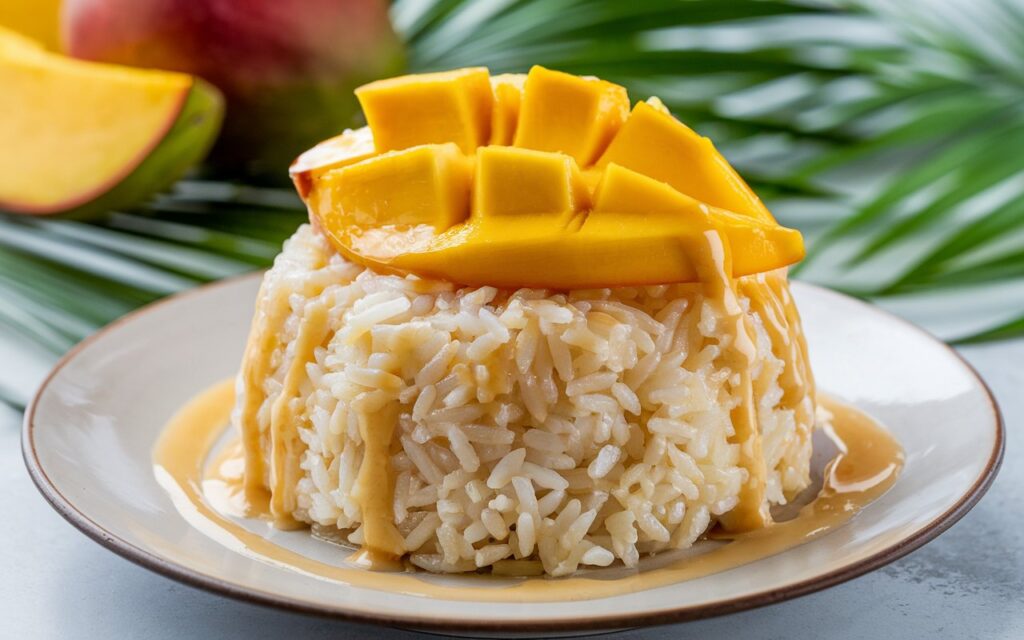
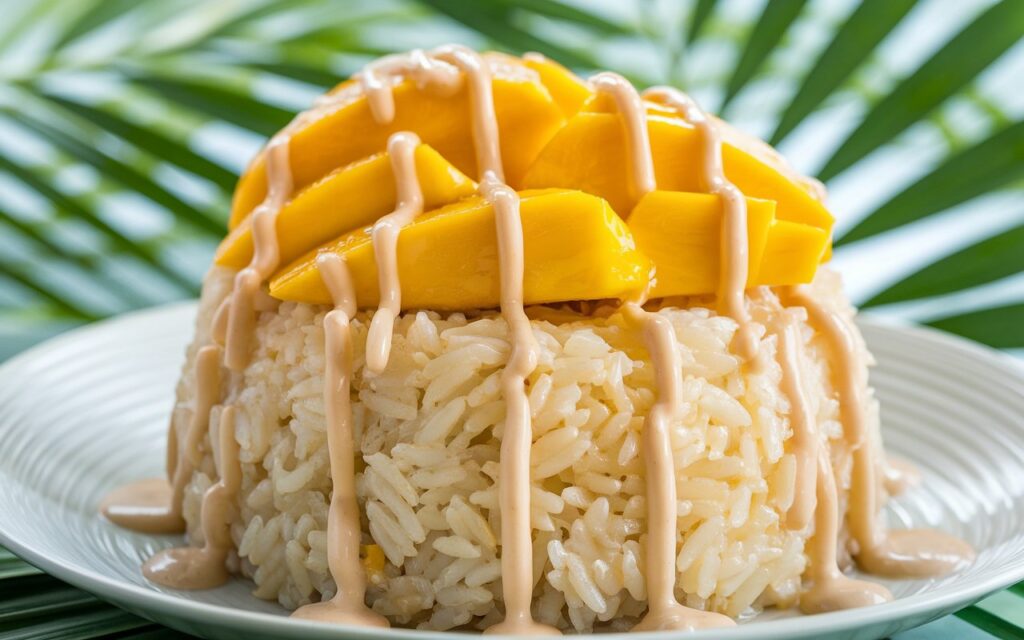
- On each plate, mound a portion of coconut-infused sticky rice. Arrange sliced mango beside or on top. Drizzle with the second coconut sauce if you made it, ensuring a luscious, creamy finish. Garnish with toasted sesame seeds if you desire a crunchy accent.
(Note: The success rests on using the correct glutinous rice, properly soaking, and letting it absorb sweet coconut sauce. The second sauce drizzle is a hallmark in many Thai street stalls—some keep it simpler by using just one portion of coconut sauce, but this layered approach adds extra creaminess.)
Flavor Variations
- Pandan Infusion
- If you love the aroma of pandan, tie a leaf into the rice steamer. Or steep chopped pandan in the coconut sauce as it warms, removing before mixing with rice. This yields a distinct green-hued fragrance beloved in Thai desserts.
- Salted Coconut Topping
- Some prefer a lightly salted finishing sauce that contrasts the sweet rice. Increase salt to ~½–¾ tsp in the second sauce to achieve a pleasant sweet-salty interplay.
- Fruit Medley
- While classic is all about mango, you can garnish with other tropical fruits—pineapple chunks, kiwi slices, or bananas. But keep in mind that might overshadow the dish’s authentic simplicity.
- Colored Sticky Rice
- For festivities, Thai cooks sometimes color sticky rice with butterfly pea (for blue) or other natural dyes. This results in a visually striking dessert, though the flavor remains close to the original.
Serving & Storage
- Temperature
- Typically served at room temperature or slightly warm. The sticky rice should not be cold nor piping hot—somewhere in between is best. The mango is usually fresh and cool or room temp.
- Portion Size
- Thai Mango Sticky Rice is quite sweet and filling. A small portion often suffices as dessert. You can scale up for larger gatherings or smaller for personal indulgence.
- Leftovers
- Store leftover sticky rice and mango separately in the fridge up to a day. Rewarm the rice in a microwave or gentle steamer. Mango is best fresh but can remain edible though might soften or brown slightly.
- Presentation
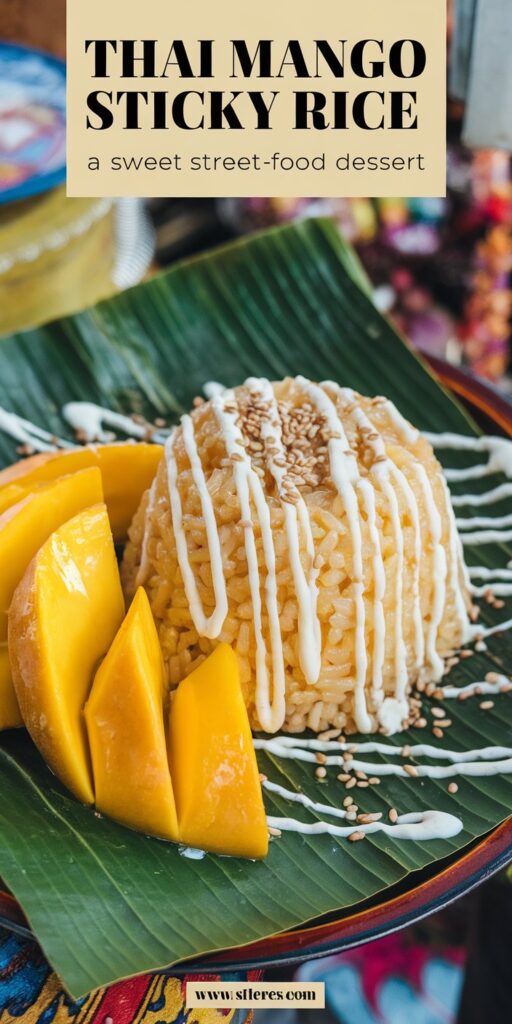
- Some add a small pinch of toasted mung beans or sesame seeds. The bright yellow mango and glistening white rice can also be showcased on a banana leaf or a simple white plate.
Ensuring Authentic Texture
- True Glutinous Rice
- Non-sticky rice or sushi rice won’t replicate the distinct “pull” or bounce glutinous rice provides. Check labels for “sweet rice” or “glutinous rice.”
- Soaking
- Resist skipping or cutting short the soak. It’s crucial for an even cook. If under-soaked, the rice might be gritty or unevenly cooked.
- Gentle Mix
- When combining the coconut sauce with hot rice, fold lightly. Over-stirring can break the grains or create a starchy mush. Even distribution is key.
- Balancing Sweet & Salt
- The sauce typically has a sweet-forward note, balanced by a subtle saltiness. Taste as you go, adjusting so neither aspect dominates.
FAQ – Thai Mango Sticky Rice
Q1: Can I use regular rice if sticky rice isn’t available?
A1: You could try, but the texture changes drastically. Jasmine rice or sushi rice is somewhat sticky, but the signature mouthfeel arises from glutinous rice. For authenticity, glutinous is recommended.
Q2: How do I know if my mango is ripe enough?
A2: It should yield slightly to gentle pressure and smell fragrant at the stem end. The flesh typically is bright yellow or orange, free from large fibrous strings.
Q3: Is coconut cream the same as coconut milk?
A3: Cream is thicker, with more fat. Milk is thinner. For the sauce, full-fat coconut milk or a combination of milk and cream can suffice. Pure coconut cream yields a richer sauce if you prefer an extra indulgent dessert.
Q4: Do I have to steam the rice?
A4: Steaming is the traditional method. Some use a rice cooker with a special “sticky rice” setting or a direct simmer method, but watch water ratios carefully. Overly wet or too dry can ruin consistency.
Q5: Is this dish always served with sesame seeds?
A5: Toasted sesame seeds are a common garnish, adding subtle nuttiness. However, it’s optional. Some vendors skip it; others might garnish with fried mung beans or keep it plain.
Conclusion
Marrying the sweet fragrance of mango with the gently chewy decadence of coconut-infused sticky rice, Thai Mango Sticky Rice remains a cherished dessert—both in Thailand and internationally among fans of bright, tropical flavors. Each bite fuses mild sweetness with a hint of salt, bridging sumptuous fruit and creamy sauce for a satisfying final course or an afternoon treat.
Now that you grasp the art of properly soaking glutinous rice, creating a coconut sauce, and pairing it with ripe mango slices, why not recreate this sweet street-food dessert for your next meal? Once you savor that final spoonful—perhaps sprinkled with sesame seeds or accompanied by an extra drizzle of coconut cream—circle back and share how it turned out. Did you incorporate a pinch of salt in the topping sauce, or garnish with other tropical fruit? Your creative flourish might inspire fellow dessert enthusiasts to relish the joys of homemade Thai Mango Sticky Rice as they would in the bustling lanes of Bangkok.