


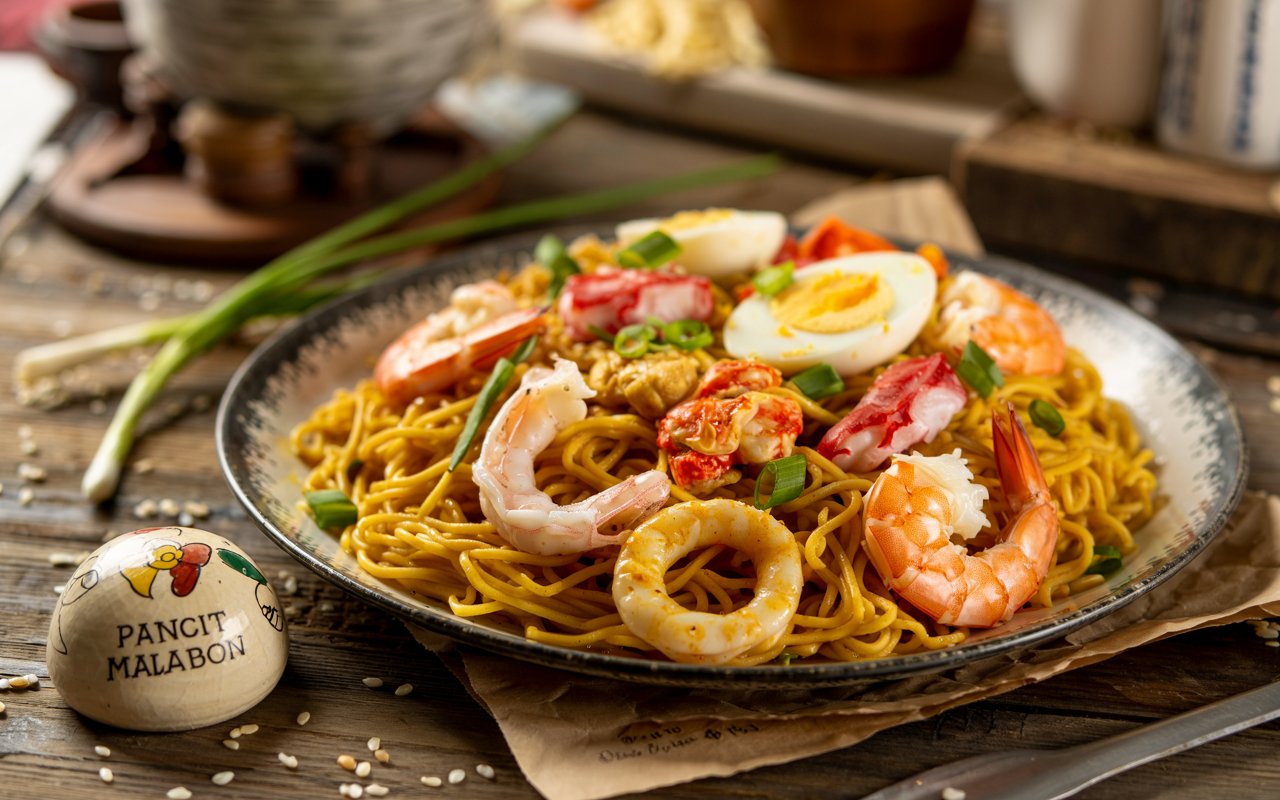
Have you ever tasted a noodle dish so vibrant it feels like a celebration on your plate? Pancit Malabon, hailing from the coastal city of Malabon in Metro Manila, delivers just that: thick rice noodles drenched in a savory-orange sauce, piled high with shrimp, squid, smoked fish flakes, and hard-boiled eggs. Traditionally enjoyed at fiestas and family gatherings, this festive pancit is renowned for its umami-rich flavor, eye-catching color, and textural contrast—from tender seafood to crisp vegetables and crunchy chicharrón bits. A single generous serving provides approximately 20 grams of protein from seafood and eggs, plus ample vitamins from sautéed cabbage and carrots. Whether you’re hosting a special occasion or craving a taste of Filipino street food at home, this Pancit Malabon recipe will guide you step by step to recreate the authentic flavors and festive spirit of Malabon’s signature noodle dish.
Ingredients List
| Ingredient | Amount | Substitutions & Notes |
|---|---|---|
| Thick rice noodles (pancit Malabon style) | 1 lb (450 g) | Thick rice stick noodles; substitute bihon rice noodles (softer) |
| Pork fatback or bacon (minced) | 2 tbsp | Vegetable oil for vegetarian version |
| Garlic (minced) | 4 cloves | Garlic powder, ½ tsp |
| Onion (chopped) | 1 medium | Shallots for milder flavor |
| Shrimp (medium, peeled & deveined) | 12–15 pieces | Crab meat or surimi |
| Squid rings | 8 oz (225 g) | Scallops or mussels |
| Smoked fish flakes (tinapa or tinapang isda) | ½ cup | Dried shrimp (hibi) |
| Cabbage (shredded) | 2 cups | Bok choy or napa cabbage |
| Carrots (julienned) | 1 cup | Bell pepper strips |
| Gabi (taro) or mashed potato (optional) | ½ cup | Cornstarch slurry for thickening |
| Fish or shrimp stock | 3 cups (720 ml) | Chicken or vegetable broth |
| Annatto oil (atsuete-infused oil) | 2 tbsp | 1 tsp annatto powder + oil |
| Soy sauce | 2 tbsp | Coconut aminos |
| Oyster sauce | 1 tbsp | Hoisin sauce |
| Salt & freshly ground black pepper | To taste | |
| Hard-boiled eggs (sliced) | 3 | Quail eggs for bite-sized garnish |
| Green onions (sliced) | 3 stalks | Chives |
| Lemon or calamansi wedges | For serving | Lime wedges |
| Pork cracklings (chicharrón), crushed | ½ cup | Toasted garlic chips |
| Crispy garlic bits (optional) | 2 tbsp | Omit for less oil |
Timing

- Preparation & chopping: 15 minutes
- Annatto oil infusion (if making from powder): 5 minutes
- Stir-frying aromatics and seafood: 5 minutes
- Simmering with stock & vegetables: 8 minutes
- Cooking noodles & combining: 5 minutes
- Assembly & garnishing: 5 minutes
- Total hands-on time: ~40 minutes
By preparing annatto oil and stock ahead of time (or using store-bought), you’ll have a festive Pancit Malabon ready in under 45 minutes—perfect for last-minute celebrations.
Step-by-Step Instructions
Prepare the Annatto Oil (if using powder)
- Heat 2 tablespoons oil in a small pan over low heat.
- Stir in 1 teaspoon annatto powder until oil turns bright orange, about 2 minutes.
- Strain seeds and set oil aside.
Tip: Annatto oil not only provides color but also a subtle earthy flavor—essential for Pancit Malabon’s signature hue.
Cook Aromatics and Pork Fatback
- In a large wok or deep skillet, heat pork fatback or bacon over medium-high heat until rendered and crisp.
- Add minced garlic and chopped onion; sauté 1–2 minutes until fragrant and translucent.
Mistake to Avoid: Watch garlic carefully—overcooked garlic turns bitter and dark.
Add Seafood and Smoked Fish
- Push aromatics to one side; add shrimp and squid. Stir-fry 1–2 minutes until shrimp turn pink.
- Stir in smoked fish flakes; cook another minute to release smoky aroma.
Serving Suggestion: Reserve a few shrimp whole for plating on top as a colorful accent.
Build the Sauce Base
- Stir in soy sauce and oyster sauce, mixing well.
- Pour in fish or shrimp stock and bring to a gentle boil.
- Add mashed gabi or a cornstarch slurry (1 tbsp cornstarch mixed with 2 tbsp water) to thicken slightly.
Data Insight: Traditional Pancit Malabon sauce is creamy-fluid, coating noodles without pooling—use just enough thickener.
Add Vegetables and Noodles
- Add shredded cabbage and julienned carrots; simmer 2–3 minutes until just tender.
- Drop in rice noodles; gently turn to coat with sauce and heat through, about 2 minutes.
Tip: If noodles stick, splash a bit more stock or water to loosen and prevent tearing.
Plate and Garnish
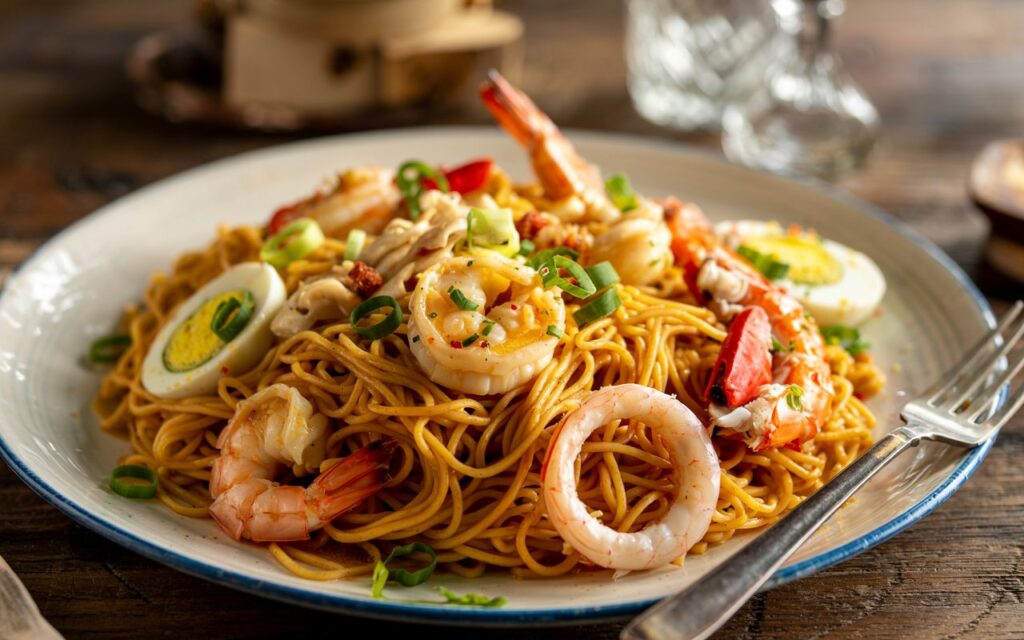
- Transfer noodles and toppings to a large serving platter or individual plates.
- Arrange sliced hard-boiled eggs, green onions, and whole shrimp on top.
- Sprinkle crushed chicharrón and crispy garlic bits for crunch.
- Serve with lemon or calamansi wedges on the side.
Presentation Tip: A handful of smoked fish flakes added at the final moment enhances both aroma and texture contrast.
Nutritional Information (per serving; yields 6 servings)
| Nutrient | Amount | % Daily Value* |
|---|---|---|
| Calories | 410 kcal | 21% |
| Protein | 22 g | 44% |
| Total Fat | 18 g | 23% |
| – Saturated Fat | 5 g | 25% |
| Carbohydrates | 36 g | 12% |
| – Fiber | 3 g | 12% |
| – Sugars | 4 g | — |
| Sodium | 820 mg | 34% |
| Vitamin A | 900 IU (18%) | — |
| Vitamin C | 12 mg (13%) | — |
| Iron | 3 mg (17%) | — |
Percent Daily Values are based on a 2,000-calorie diet.
Healthier Alternatives for the Recipe
- Lower Fat: Omit pork fatback; use 1 tablespoon olive oil and increase garlic for flavor.
- More Vegetables: Add green beans, snow peas, or cabbage varieties to boost fiber and vitamins.
- Gluten-Free Sauces: Ensure oyster sauce is GF or replace with tamari + mushroom seasoning.
- Lean Protein: Substitute extra shrimp or smoked fish for pork fatback for a pescatarian twist.
- Reduced Sodium: Use low-sodium stock and soy sauce; adjust salt after tasting.
Serving Suggestions
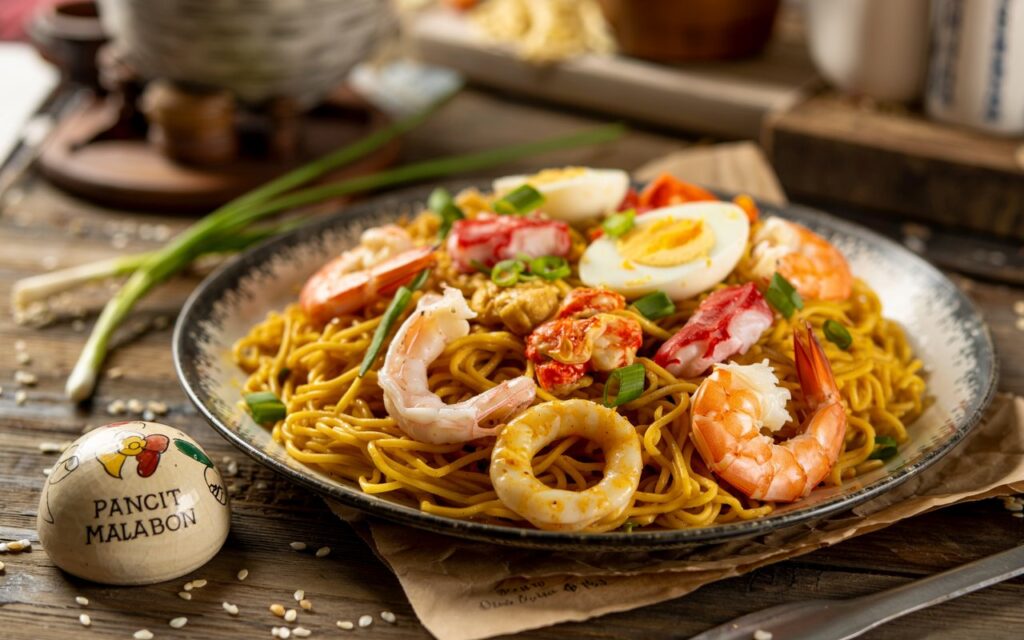
- Pair with lumpia shanghai (Filipino spring rolls) and isda sa bawang (garlic-fried fish) for a full fiesta spread.
- Offer a side of achara (pickled papaya) to cut through richness with tangy crunch.
- Enjoy alongside a chilled calamansiade or cucumber-mint agua fresca for refreshment.
- Heat leftovers with a splash of stock; top with fresh herbs and a squeeze of calamansi for quick lunch bowls.
Common Mistakes to Avoid
- Overcooking Noodles: Thick Pancit Malabon noodles can become gummy if over-simmered—heat just until tender.
- Underdressing: Noodles should glisten with sauce—add a bit more stock or annatto oil if dry.
- Skipping Annatto: Without it, the dish loses its signature vibrant color—don’t omit.
- Too Much Thickener: Excess cornstarch yields a gluey texture—start small and adjust carefully.
- Neglecting Texture Contrast: Chicharrón and crispy garlic are not optional—they provide essential crunch.
Storing Tips for the Recipe
- Refrigeration: Store in airtight containers for up to 2 days. Reheat gently in a pan with a splash of water or stock.
- Freezing: Not recommended—seafood and eggs lose texture when frozen. Instead, freeze only noodles and stock mixture separately.
- Make-Ahead Prep: Cook noodles and prepare sauce up to a day ahead; reheat and combine with seafood and veggies just before serving.
Conclusion
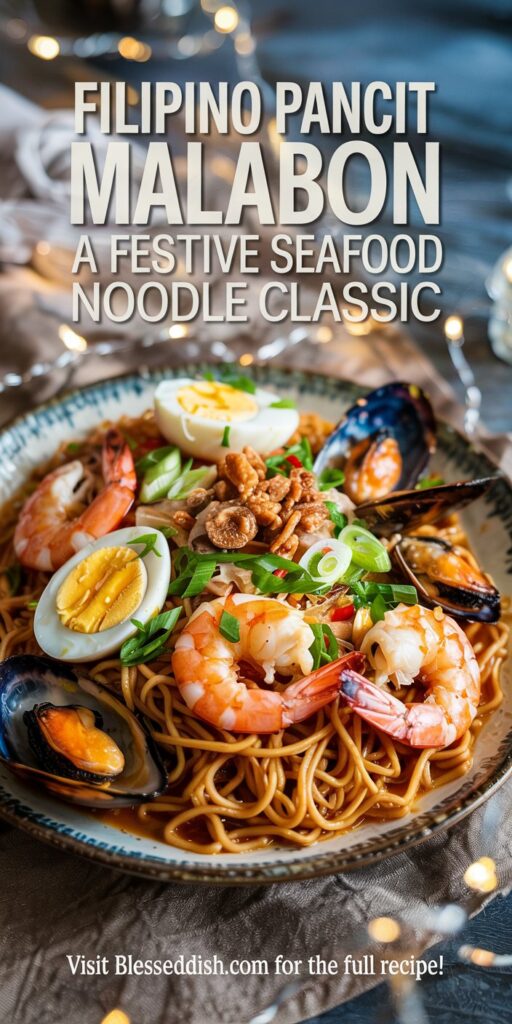
Pancit Malabon brings the coastal flavors of Malabon, Philippines, to your table with its rich seafood medley, bright annatto-colored sauce, and festive garnishes. In under 45 minutes, you can enjoy a dish revered at Filipino celebrations—each bite a harmony of textures and umami depth. Whether you’re honoring tradition or putting your own twist on this classic, Pancit Malabon is guaranteed to impress. Try this recipe, share your festive pancit moments in the comments, and subscribe for more globally inspired, data-driven recipes that make every meal a celebration!
FAQs
Q1: Can I make Pancit Malabon vegetarian?
Yes—replace seafood and pork fatback with tofu cubes and extra vegetables; use vegetable stock and omit smoked fish.
Q2: What can I use if I can’t find annatto?
Substitute 1 teaspoon paprika plus a drop of yellow food coloring or a few strands of saffron for color.
Q3: How do I reheat without drying out?
Warm in a skillet over low heat with a splash of stock and a drizzle of oil, stirring gently until heated through.
Q4: Can I use thin bihon noodles?
You can, but the texture and sauce ratio will change—soak thin noodles separately, then combine gently with sauce.
Q5: What is the key to authentic flavor?
Annatto oil, smoked fish flakes, and a finishing squeeze of calamansi (or lemon) are non-negotiable for the traditional taste.