



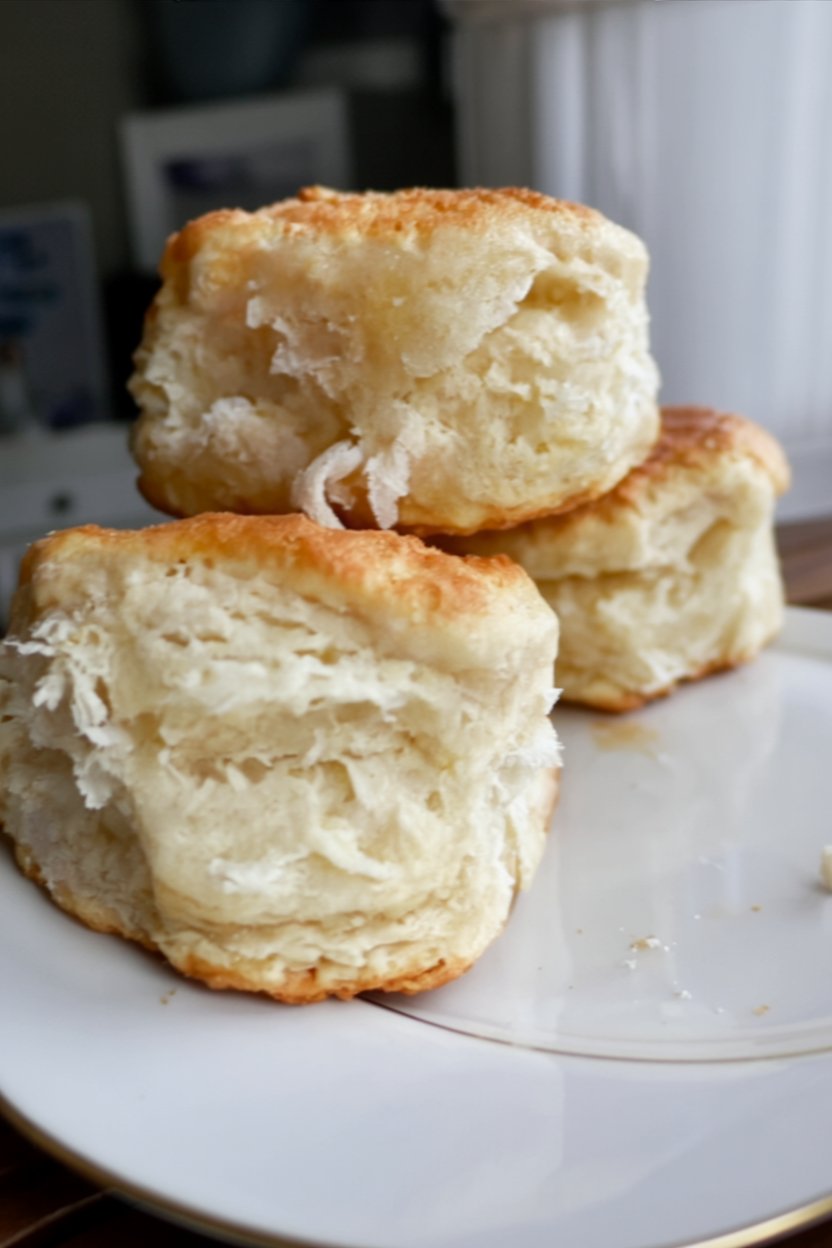
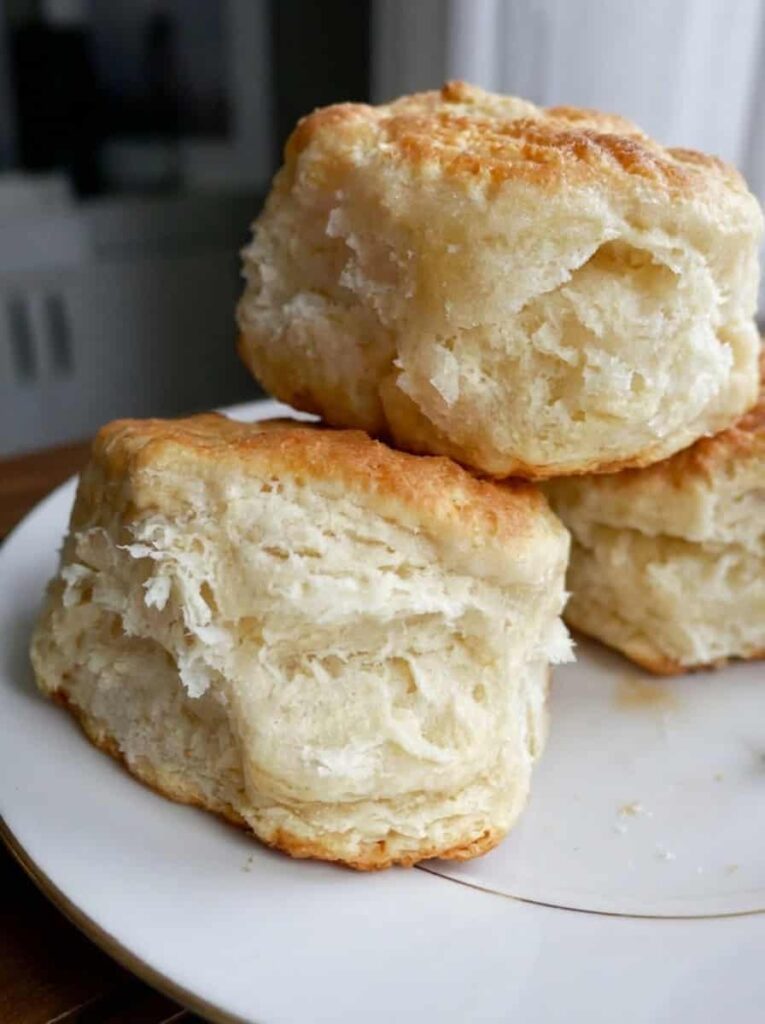
The secret to tall, flaky buttermilk biscuits is something most recipes bury in the middle of step two: your butter needs to stay cold all the way until it hits the oven. That’s it. That’s the whole thing.
When those cold butter chunks melt in the heat, they release steam — and steam is what creates the layers. If the butter softens before baking, you get a dense, flat biscuit instead. So before you start: cube your butter and put it back in the fridge. Pull it out only when you’re ready to use it.
These come together in 30 minutes and make about 8 biscuits.
A Heads-Up Before You Mix
A few things that’ll save you from a bad batch:
Don’t twist the biscuit cutter. Press straight down and lift straight up. Twisting seals the dough edges and the biscuits won’t rise properly — this one trips people up constantly and it’s such an easy fix.
Check your baking powder. If the can has been open for a year, drop a teaspoon into hot water. No bubbling means no lift. Buy a fresh one.
Work fast once the butter’s out. Warm hands and a slow pace are how butter softens before you want it to. If the dough starts feeling greasy, stick the bowl in the freezer for 10 minutes.
What You Need
| Ingredient | Amount |
|---|---|
| All-purpose flour | 2 cups, spooned and leveled |
| Baking powder | 1 tablespoon |
| Baking soda | ½ teaspoon |
| Salt | 1 teaspoon |
| Unsalted butter, cold and cubed | 6 tablespoons |
| Buttermilk, cold | ¾ cup |

No buttermilk? Add 1 tablespoon of lemon juice or white vinegar to a measuring cup, fill to ¾ cup with regular milk, and let it sit for 5 minutes. It’ll curdle slightly — that’s what you want.
Salted butter works too — just drop the added salt to ½ teaspoon.
Making Them
Get the oven hot and whisk your dry ingredients
425°F (220°C). Line a baking sheet with parchment. Whisk the flour, baking powder, baking soda, and salt together in a large bowl — whisking aerates things a little, which helps.
Cut in the butter
Add the cold cubed butter to the flour mixture. Work it in with a pastry cutter or your fingertips until it looks like coarse crumbs with some pea-sized chunks still visible. Stop there. Those chunks are the whole point — don’t keep going until it looks smooth.
Add the buttermilk — then stop
Pour the cold buttermilk in and stir with a fork just until the dough comes together. It should look rough and shaggy. The second you don’t see dry flour streaks, put the fork down.
Overmixing develops gluten. Gluten makes biscuits tough. Tough biscuits are a waste of butter.
Fold for layers
Turn the dough onto a lightly floured surface and gently pat it together. Fold it over itself, turn it 90 degrees, pat it down. Repeat 4–5 times.
This is the part that physically builds the layers — you’re stacking dough and butter the same way croissants work, just faster and simpler. Gentle folds, not kneading. It’s not bread.
Cut and bake
Pat the dough to 1-inch thickness. Dip your biscuit cutter in flour, press straight down, straight back up. No twisting.
Place biscuits on the parchment with their sides just touching — this pushes them upward instead of outward. Bake 12–15 minutes until the tops are golden brown.
Where This Goes Wrong
Warm butter — the #1 culprit for flat biscuits. Cold from the fridge, worked in fast.
Overmixing the dough — shaggy and rough is correct. Smooth and elastic is wrong.
Rolling too thin — keep it at least 1 inch before cutting. Thinner dough means flat biscuits, no matter how well you did everything else.
Twisting the cutter — seals the edges shut. Straight press, straight lift.
What You’re Actually Eating
Per biscuit (8 total): about 200 calories, 9g fat (5g saturated), 25g carbs, 4g protein, 400mg sodium. They’re biscuits. Not health food — but an honest, simple, good thing to bake.
How to Eat Them
Split open while hot and add butter. That’s the baseline and it’s hard to beat. Or go full Southern breakfast and smother them in sausage gravy. They also work as a quick dinner side with fried chicken or chili, or split with macerated strawberries and whipped cream for a shortcake that takes almost no extra effort.
Storing
Best the day they’re made, genuinely. But they freeze well — wrap cooled biscuits tightly, freeze up to 3 months, reheat at 350°F for 5–10 minutes (a few extra from frozen). Keeps them from going dry.
Make these once and the cold-butter rule clicks into place permanently. After that, 30-minute scratch biscuits become something you can actually pull off on a weekday morning.
Drop a comment below if you tried them — especially if you got a proper rise on the first attempt. And subscribe for more recipes like this one.
Print
Flaky Butter Buttermilk Biscuits Recipe (Classic Southern Style)
This recipe uses simple pantry staples to create magic. Using cold ingredients and a special folding technique is the absolute key to success! These biscuits are tall, tender, and possess incredible flaky layers. They are quick to assemble, making them perfect for a weekend morning breakfast or a last-minute dinner side.
- Total Time30 minutes
- Yield8 Biscuits 1x
- DietVegetarian
Ingredients
- 2 cups All-Purpose Flour, spooned and leveled
- 1 tablespoon Baking Powder
- 1/2 teaspoon Baking Soda
- 1 teaspoon Salt
- 6 tablespoons Unsalted Butter, cold and cubed
- 3/4 cup Buttermilk, cold
Instructions
- Preheat and Whisk Dry Ingredients: Preheat your oven to 425°F (220°C). Line a baking sheet with parchment paper. In a large mixing bowl, whisk together the flour, baking powder, baking soda, and salt until well combined.
- Cut in the Cold Butter: Add the cold, cubed butter to the flour mixture. Use a pastry cutter or your fingers to work the butter into the flour until the mixture resembles coarse crumbs with some pea-sized pieces of butter remaining.
- Add Buttermilk and Mix: Pour the cold buttermilk into the bowl. Stir gently with a fork just until the dough comes together. It should look shaggy and a bit messy. Do not overmix.
- Fold for Layers: Turn the shaggy dough out onto a lightly floured surface. Gently pat it together. Fold the dough over onto itself, turn it 90 degrees, and pat it down again. Repeat this folding process 4-5 times.
- Cut and Bake: Gently pat the dough out to about 1-inch thickness. Using a biscuit cutter dipped in flour, press straight down into the dough to cut your biscuits. Place the biscuits on the prepared baking sheet with their sides touching. Bake for 12-15 minutes, or until the tops are golden brown.
Notes
- Cold is Key: Keep your butter and buttermilk cold until the very last second. The melting cold butter creates steam pockets that result in flaky layers.
- Don’t Twist: When cutting the biscuits, press straight down and pull up. Twisting the cutter seals the edges and prevents the biscuits from rising fully.
- Touching Sides: Placing the biscuits on the baking sheet so they are just touching helps them climb higher and rise evenly.
- Folding Technique: The folding step mimics puff pastry and is essential for creating distinct, flaky layers. Be gentle and don’t knead the dough like bread.
- Prep Time: 15 minutes
- Cook Time: 15 minutes
- Category: Bread, Breakfast, Side Dish
- Method: Baking
- Cuisine: American, Southern
Nutrition
- Serving Size: 1 biscuit
- Calories: 200 kcal
- Sugar: 2 g
- Sodium: 400 mg
- Fat: 9 g
- Saturated Fat: 5 g
- Unsaturated Fat: 3 g
- Trans Fat: 0 g
- Carbohydrates: 25 g
- Fiber: 1 g
- Protein: 4 g
- Cholesterol: 25 mg








I’m on a mission to make the perfect biscuit and will try this soon and let you know how they turned out. Thanks for all the great tips!
A wonderful recipe, especially the tips about not twisting when cutting them out, and folding the dough. I live in southern Mexico and buttermilk is impossible to come by, but recently I found out that milk kefir makes a great substitute and that is what I used. The biscuits turned out great!
This is by far my favorite recipe. I only adjusted the butter by making it a full stick and this also caused me to fall in love with the freezing/grating butter method. This will now be our Sunday ritual.