



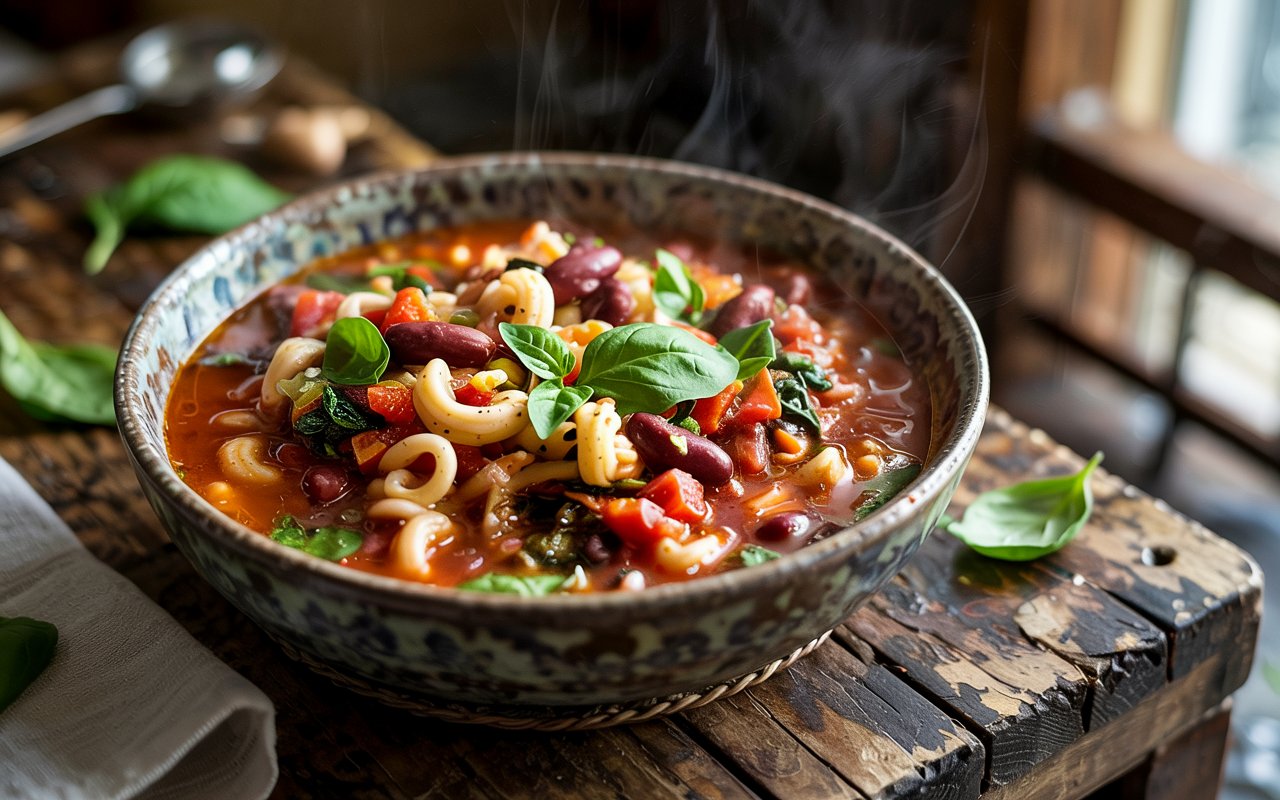
There’s something deeply restorative about a steaming bowl of Hearty Minestrone Soup. I still remember visiting my Nonna’s little kitchen in Tuscany as a child—how the afternoon light filtered through lace curtains, illuminating the rows of dried herbs hanging above her stove. She’d ladle spoonfuls of her signature minestrone into cracked ceramic bowls, the rich aroma of garlic and oregano swirling around us. Every mouthful felt like an embrace: tender vegetables swimming in a savory tomato broth, al dente pasta pearls, and creamy beans adding just enough heft. Today, I’m honored to share her cherished recipe, updated with fresh, seasonal produce and extra nutritional boosts so you can recreate that same soulful experience at home. Whether you’re fighting off a chill, need a crowd‑pleasing dinner, or simply crave comforting flavor, this Hearty Minestrone Soup is destined to become your go‑to “hug in a bowl.”
The History of Minestrone Soup
The word minestrone comes from the Italian minestra, meaning “soup,” but its roots stretch far deeper than that name suggests. Historians believe that as far back as ancient Rome, cooks would stretch limited resources—vegetables, legumes, grains—into hearty pottages that would feed entire families. Over the centuries, regional variations blossomed across Italy:
- Tuscany: Focuses on white beans, leafy greens like cavolo nero or spinach, and often includes a splash of local extra‑virgin olive oil.
- Liguria: Incorporates pesto stirred in at the end, along with potatoes, green beans, and sometimes rice.
- Northern Italy: Sometimes replaces pasta with rice (making a “minestra di riso”) or even barley.
- Southern Italy: May add chickpeas, chickpea flour dumplings, or abundant tomatoes and basil.
What unifies every version is the humble spirit of making the most of garden produce, pantry staples, and an inviting pot—there’s no strict “one true recipe,” just a celebration of whatever fresh and local ingredients you have on hand.

Why You’ll Love This Hearty Minestrone Soup
- Vegetable‑packed: Carrots, celery, zucchini, onions, and spinach deliver fiber, vitamins A & C, and vibrant color.
- Protein‑rich: Cannellini beans and a modest portion of pasta make it a satisfying, all‑in‑one meal.
- Versatile: Easily adapt it to gluten‑free, vegan, or low‑carb diets by swapping pasta, beans, or garnishes.
- One‑pot ease: From sautéing to simmering in the same Dutch oven—minimal dishes!
- Make‑ahead magic: Flavors deepen overnight, so it’s perfect for batch cooking and freezing.
- Immune‑boosting: Garlic, onions, and tomatoes bring antioxidants to help you feel your best through cold weather.
Ingredients You’ll Need
| Ingredient | Quantity |
|---|---|
| Olive oil | 2 tablespoons |
| Yellow onion, diced | 1 medium |
| Carrots, peeled & sliced | 2 |
| Celery stalks, chopped | 2 |
| Garlic cloves, minced | 4 |
| Canned diced tomatoes (28 oz can) | 1 can |
| Vegetable broth | 6 cups |
| Cannellini beans, drained & rinsed | 1 (15 oz) can |
| Tomato paste | 2 tablespoons |
| Dried oregano | 1 teaspoon |
| Dried basil | 1 teaspoon |
| Bay leaf | 1 |
| Salt and pepper | To taste |
| Zucchini, diced | 1 small |
| Baby spinach leaves | 2 cups |
| Small pasta (ditalini or elbow) | 1 cup |
| Fresh parsley, chopped (optional) | 2 tablespoons |
| Grated Parmesan cheese (optional) | For serving |
Pro Tip: Swap in other seasonal veggies—diced butternut squash in autumn or fresh green peas in spring—for new flavor twists.
Equipment Needed
| Equipment | Purpose |
|---|---|
| Large Dutch oven or soup pot | For sautéing vegetables and simmering |
| Wooden spoon | To stir without scratching the pot |
| Chef’s knife | For chopping vegetables |
| Cutting board | For safe and efficient prep |
| Ladle | To serve hot soup |
| Measuring cups and spoons | To ensure precise measurements |
Step‑by‑Step Instructions
- Warm the oil (2 minutes).
Heat 2 tablespoons of olive oil in your Dutch oven over medium. You want it shimmering but not smoking. - Sauté the base (6–8 minutes).
Add the diced onion, sliced carrots, and chopped celery. Stir frequently until the onions turn translucent and the carrots begin to soften. - Build flavor (1–2 minutes).
Push veggies to the side, then stir in minced garlic. Cook until fragrant—about 30 seconds—then stir in the tomato paste. Let it cook down for a minute, coating the vegetables in that rich, concentrated flavor. - Combine tomatoes & broth (2 minutes).
Pour in the diced tomatoes, including their juices, and scrape up any flavorful bits stuck to the bottom of the pot. Then add the 6 cups of vegetable broth. - Season (1 minute).
Sprinkle in dried oregano, basil, the bay leaf, and season with salt and freshly cracked pepper. Give it a stir. - Bring to simmer & meld (15 minutes).
Increase heat just until you see gentle bubbles, then reduce to low. Cover partially and let the flavors marry for 15 minutes. - Add beans & pasta (8–10 minutes).
Stir in the rinsed beans and pasta. Keep the soup uncovered so the pasta cooks in the broth and releases a bit of starch, slightly thickening the soup. - Finish with greens (2–3 minutes).
Add the zucchini and spinach. They’ll wilt quickly—keep an eye so the spinach remains bright green. - Taste & adjust (1 minute).
Remove the bay leaf, taste for seasoning, and add extra salt or pepper if needed. - Garnish & serve.
Ladle into warmed bowls. Top each serving with chopped parsley and a generous dusting of grated Parmesan, if you like.
(Total active cook time: approx. 45 minutes)
Nutrition Facts (per serving)
| Nutrient | Amount |
|---|---|
| Calories | 220 kcal |
| Total Fat | 6 g |
| – Saturated Fat | 1 g |
| Sodium | 680 mg |
| Carbohydrates | 30 g |
| – Dietary Fiber | 6 g |
| – Sugars | 6 g |
| Protein | 8 g |
| Vitamin A | 70% DV |
| Vitamin C | 25% DV |
| Calcium | 8% DV |
| Iron | 10% DV |
Tip: To reduce sodium, use a low‑sodium broth and omit added salt until after tasting.
Tips for Customizing Your Minestrone Soup
- Vegan/Vegetarian: Omit Parmesan or use a plant‑based alternative.
- Gluten‑Free: Replace pasta with gluten‑free ditalini or extra beans.
- Low‑Carb: Swap pasta for spiralized zucchini (“zoodles”) or cauliflower rice.
- Spicy Kick: Stir in ¼–½ teaspoon red pepper flakes with the seasonings.
- Protein Boost: Stir in cubed cooked chicken, Italian sausage, or cooked lentils.
- Herb Variation: Finish with a spoonful of homemade pesto or fresh chopped basil for brightness.
Storing, Reheating & Freezing
- Refrigerator: Cool completely, then refrigerate in an airtight container for up to 4 days.
- Freezer: Ladle into freezer‑safe bags or containers, leaving 1 inch of headspace. Freeze for up to 3 months.
- Reheating: Thaw overnight in the fridge if frozen. Warm gently on the stovetop over medium-low, adding a splash of broth or water if it’s too thick.
Delicious Variations to Try
- Tuscan Pesto Minestrone: Stir in 2 tablespoons of pesto at the end for a fresh, herby twist.
- Creamy Minestrone: Whisk in ½ cup of heavy cream or coconut milk during the last few minutes of cooking.
- Autumn Harvest: Add roasted butternut squash cubes and swap spinach for chopped kale.
- Middle Eastern Flair: Omit pasta; stir in ½ tsp ground cumin and top with chopped cilantro and a dollop of yogurt.
- Cheesy Rice Version: Substitute pasta with 1 cup cooked arborio rice, then sprinkle with Pecorino Romano.
Serving & Pairing Suggestions
- Homemade Crusty Bread: A warm baguette or focaccia to soak up every last drop.
- Garlic Crostini: Toast baguette slices brushed with garlic‑infused olive oil.
- Cheese Board: A side of aged Parmesan, Pecorino, or goat cheese for nibbling.
- Wine Pairing: A light Chianti, Pinot Grigio, or Vermentino complements the tomato base.
- Simple Salad: Arugula with lemon‑olive oil vinaigrette keeps the meal bright and fresh.
Health Benefits at a Glance
- High Fiber: Beans and veggies help digestion and satiety.
- Plant‑Powered Protein: Beans deliver sustained energy.
- Low Saturated Fat: Olive oil and vegetables keep it heart‑healthy.
- Antioxidant‑Rich: Tomatoes, garlic, and onions support immune health.
- Vitamin Boost: A rainbow of produce supplies essential micronutrients.
Frequently Asked Questions
Q1: Can I make this soup ahead for a party?
A1: Yes! Prepare up to step 6, cool, and refrigerate. When ready to serve, reheat, add beans/pasta/greens, and finish cooking steps 7–9.
Q2: My pasta always gets soggy—how do I prevent it?
A2: Add pasta during the final 8–10 minutes of cooking and watch it closely. If making leftovers, cook pasta separately and stir it into bowls just before serving.
Q3: Can I use fresh tomatoes in summer?
A3: Absolutely! Swap the canned tomatoes for 4 cups of coarsely chopped ripe tomatoes. You may need an extra minute of simmering to break them down.
Q4: Is Minestrone Soup suitable for weight‑loss diets?
A4: Yes—this veggie‑forward, high‑fiber dish keeps you full longer and can be made lower in calories by skipping cheese and choosing low‑sodium broth.
Q5: How do I make this soup in a slow cooker?
A5: After sautéing the aromatics (onion, carrot, celery, garlic, and tomato paste), transfer to your slow cooker along with broth, tomatoes, beans, and seasonings. Cook on LOW for 6–8 hours. Add pasta and spinach during the last 30 minutes on HIGH.
Conclusion
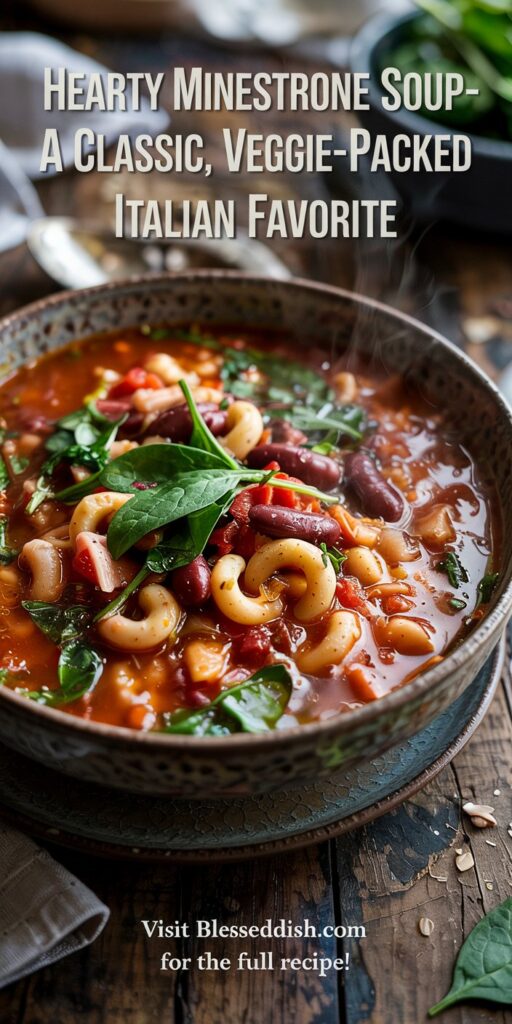
This Hearty Minestrone Soup brings together the very best of Italian home‑cooking: nourishing vegetables, satisfying beans, and soul‑warming broth. It’s versatile, freezer‑friendly, and brimming with flavor and health benefits. Ready to create your own bowl of comfort? Gather your ingredients, fire up the Dutch oven, and let your kitchen fill with the aromas of Italy. When you try this recipe, please leave a ★★★★★ rating below, share your photos on Instagram with #BlessedSoup, and subscribe for more chef‑inspired, soul‑nourishing recipes delivered straight to your inbox. Buon appetito!