


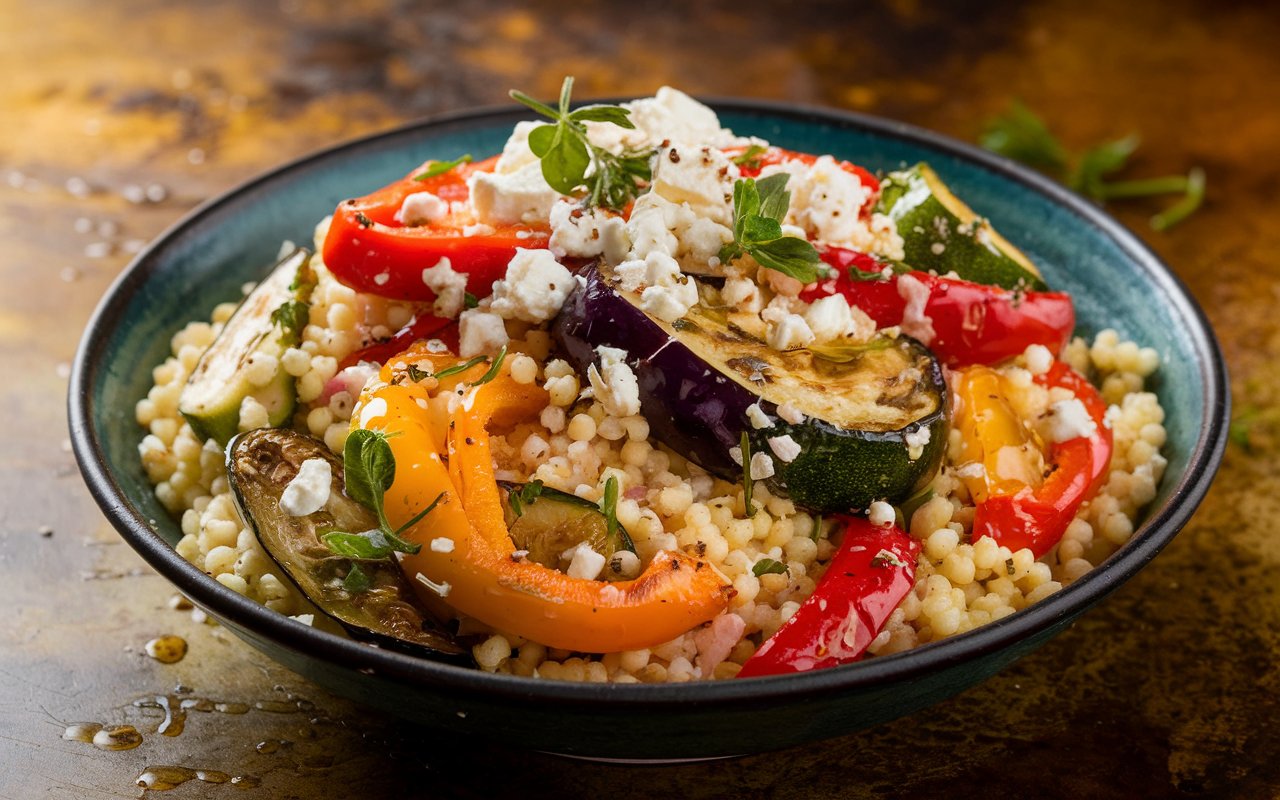
Israeli couscous, also known as pearl couscous, stands out for its unique, chewy texture and subtle wheat flavor. While often overshadowed by its smaller-grain cousin, this plump pasta has become a sought-after favorite for dishes that marry Mediterranean, Middle Eastern, and global influences. In Israeli Couscous with Roasted Veggies – Middle Eastern Twist So Good, you’ll discover how to turn this ingredient into a hearty base loaded with colorful, caramelized vegetables and aromatic spices that nod to the region’s culinary heritage.
This comprehensive guide will walk you through selecting and cooking the couscous to perfection, roasting vegetables for maximum flavor, and introducing Middle Eastern flair with spices like sumac, za’atar, or cumin. We’ll also cover how to adapt the recipe for dietary needs—be it vegan, gluten-free, or protein-enhanced. By the end, you’ll be serving a well-rounded dish that can stand as a main course or a vibrant side, perfect for busy weeknights or dinner parties in need of something fresh and exciting.
Why Israeli Couscous?

- Hearty Texture
The pasta-like pearls of Israeli couscous provide a bite that’s both comforting and refined, making them a welcome alternative to rice or smaller couscous. - Versatility
It marries seamlessly with roasted vegetables, fresh herbs, and tangy dressings. Think of it as a blank canvas for your favorite flavors. - Easy & Quick
Israeli couscous often cooks in under 10 minutes, making it ideal for weeknight meals or large batch cooking. - Middle Eastern Influence
Though you’ll find variations of pearl couscous in different cuisines, it’s particularly at home with spices and ingredients from the Levant, North Africa, and the Mediterranean.
Key Ingredients in Table Form
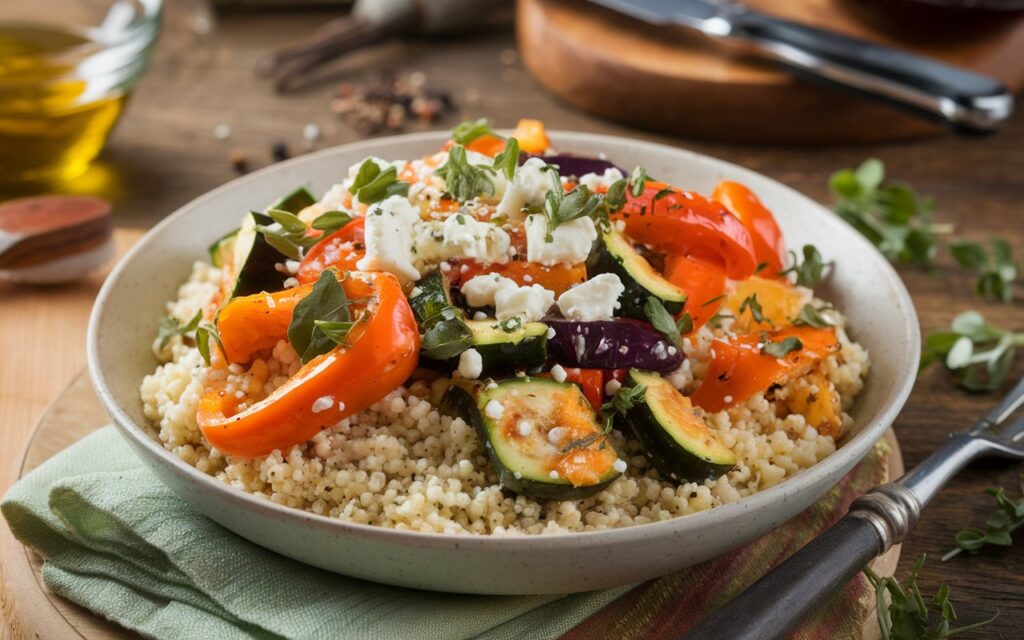
Below is a table highlighting the core elements you’ll need:
| Ingredient | Quantity (Approx.) | Purpose / Notes |
|---|---|---|
| Israeli Couscous (pearl couscous) | 1 cup | The main starch base, absorbs flavors, yields chewy texture. |
| Roasted Veggies (mixed) | 2–3 cups (chopped) | Could include zucchini, bell peppers, onions, eggplant, carrots. |
| Olive Oil | ~3 tbsp total | Coats veggies for roasting, plus a drizzle for couscous dressing. |
| Seasonings (Salt, Pepper) | To taste | Basic flavor foundation for both roasting and couscous. |
| Middle Eastern Spices (Za’atar, Sumac, Cumin) | 1–2 tsp each optional | Adds signature regional flair; pick your favorite or combine them. |
| Broth or Water | 1–1.25 cups | Liquid for cooking couscous; use vegetable or chicken broth for flavor. |
| Garlic (minced) | 1–2 cloves | Enhances overall savory depth. |
| Fresh Herbs (Parsley, Mint, Cilantro) | 1 handful | Adds brightness, color, and a finishing touch to the dish. |
| Lemon Juice | 1–2 tbsp | A tangy accent that ties roasted veggies and couscous together. |
| Optional Feta Cheese | ~1/2 cup (crumbled) | Offers a salty, creamy counterpoint to the sweet roasted vegetables. |
Step-by-Step Recipe
1. Prep & Roast Vegetables (15–20 minutes)
- Choose Veggies: Zucchini, bell peppers, onions, carrots, and eggplant roast well. Dice into roughly similar-sized chunks.
- Toss with Oil & Spices: Drizzle 1–2 tablespoons olive oil, sprinkle salt, pepper, and your chosen Middle Eastern spices (za’atar, sumac, or cumin).
- Roast: Spread on a baking sheet. Roast at 400°F (200°C) for about 15–20 minutes, flipping halfway. Aim for slightly browned edges for caramelized flavor.
2. Cook Israeli Couscous (8–10 minutes)
- Toast (Optional): Heat 1 tablespoon of olive oil in a saucepan. Add 1 cup Israeli couscous, stirring for a minute until lightly golden. This adds nuttiness.
- Add Liquid: Pour in 1 to 1.25 cups of broth or water. Bring to a simmer, reduce heat to low, cover, and cook until couscous absorbs the liquid (~8–10 minutes).
- Fluff & Season: Remove from heat, uncover, and fluff with a fork. Stir in a pinch of salt if needed.
3. Combine & Season (2–3 minutes)
- Mix with Roasted Veggies: Transfer couscous to a large bowl. Add roasted veggies, plus any pan drippings for extra flavor.
- Flavor Boosters: Stir in minced garlic (raw or lightly sautéed), fresh herbs (parsley, mint, or cilantro), and a squeeze of lemon juice.
- Optional Cheese: Fold in crumbled feta or goat cheese for creaminess. Taste, then add salt, pepper, or more spice as desired.
4. Final Touches (1–2 minutes)
- Taste & Adjust: If it’s too dry, drizzle more olive oil or lemon juice. If the flavors seem bland, a pinch of chili flakes or an extra dash of spice can lift it.
- Serve Warm or Room Temp: This dish can be a cozy side when warm or a summery salad when cooled down. Both ways highlight its versatility.
Middle Eastern Flair
- Za’atar: A blend of dried thyme, sumac, sesame seeds, and salt. It brings earthy tang to roasted vegetables or the final drizzle on top.
- Sumac: A tangy, deep red powder from dried sumac berries. Lends a lemony brightness that complements many Levantine recipes.
- Cumin: Earthy and warm, pairs well with carrots, bell peppers, and eggplant. Use sparingly—too much can overpower.
- Tahini Drizzle: If you want a creamy dressing, whisk tahini with lemon juice, garlic, water, and salt. Drizzle over the final dish.
Serving Suggestions
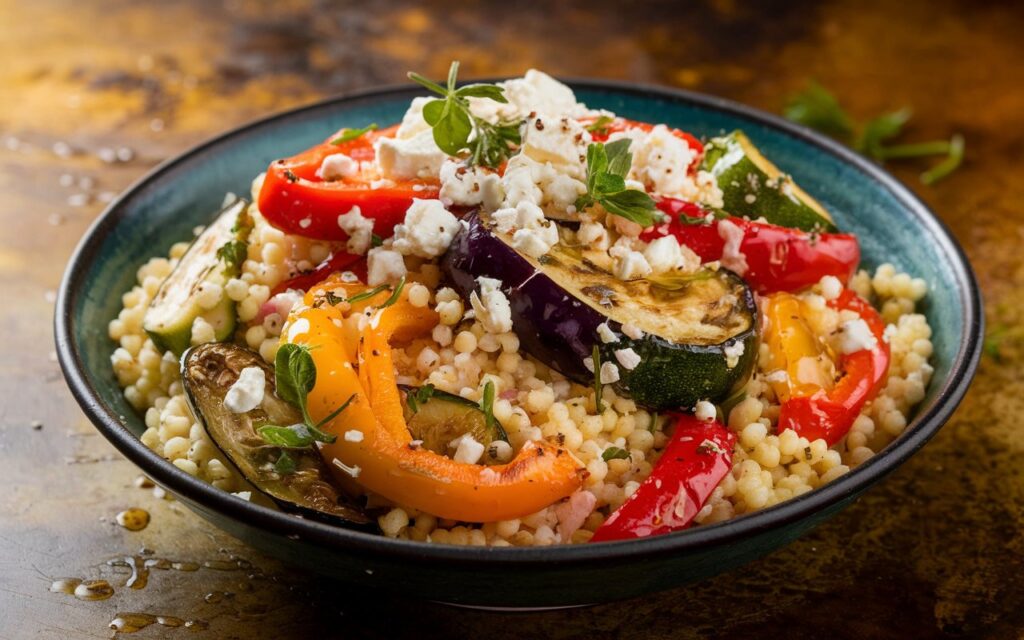
- Protein Pairings:
- Grilled chicken, lamb kebabs, or falafel complement the dish’s Middle Eastern vibe.
- Chickpeas or white beans can be stirred in for a vegetarian protein boost.
- Side or Main:
- As a main, it’s filling enough, especially if you add beans or cheese.
- As a side, serve next to roasted fish or hearty stew.
- Presentation:
- Spoon the Israeli couscous-veggie mix into a shallow bowl.
- Garnish with extra fresh herbs or toasted pine nuts for a finishing flourish.
Nutritional & Dietary Info
- Balanced Macronutrients
- Couscous provides carbs and some protein.
- Roasted veggies add fiber, vitamins, and minerals.
- Olive oil offers healthy fats.
- Gluten-Free?
- Traditional Israeli couscous is wheat-based, so it’s not GF. Look for gluten-free pearl couscous alternatives made from corn or cassava if needed.
- Vegan/Veg
- Without cheese, it’s vegan. The dish is already vegetarian otherwise.
Potential Variations
- Fruity Twist: Add dried apricots or golden raisins to the couscous for a hint of sweetness that echoes Middle Eastern traditions.
- Crunch Element: Toasted almonds, pistachios, or pine nuts impart a satisfying bite.
- Herb Explosion: Combine multiple herbs—parsley, mint, dill—for a “green” version that feels extra fresh.
- Spicy Kick: Include chili flakes, harissa paste, or finely diced fresh chili if you crave heat.
Storing & Reheating
- Refrigeration: In a sealed container, it lasts 3–4 days. The roasted veggies might lose crispness, but the flavors often deepen.
- Reheat: A quick microwave zap or stovetop warm-up with a splash of water or broth to keep couscous moist.
- Enjoy Cold: Because it’s also tasty at room temperature, many prefer it as a chilled lunch or picnic dish.
Frequently Asked Questions
Q1: What if I only find regular couscous, not Israeli?
Regular couscous can substitute, but the cooking time and texture differ. Follow the package instructions. The result is still tasty, just a smaller-grained consistency.
Q2: Can I skip roasting veggies and just sauté them?
Yes. Sautéing is faster but yields a different flavor profile—less caramelization, more of a stir-fry vibe. Still valid if time is short.
Q3: Is there a way to add a creamy sauce?
Consider a yogurt-based sauce (like tzatziki) or whisk together tahini, lemon, garlic, and water for a drizzle that complements the Middle Eastern theme.
Q4: Could I transform this into a soup or stew?
Potentially. By adding more broth and stirring in the roasted veggies and couscous, you’d get a hearty soup. Just remember that couscous may soak up a lot of liquid.
Q5: How do I ensure my veggies don’t go mushy?
Spread them in a single layer on a baking sheet. Overcrowding traps steam, leading to sogginess. Use high heat (400–425°F) for caramelized edges.
Conclusion
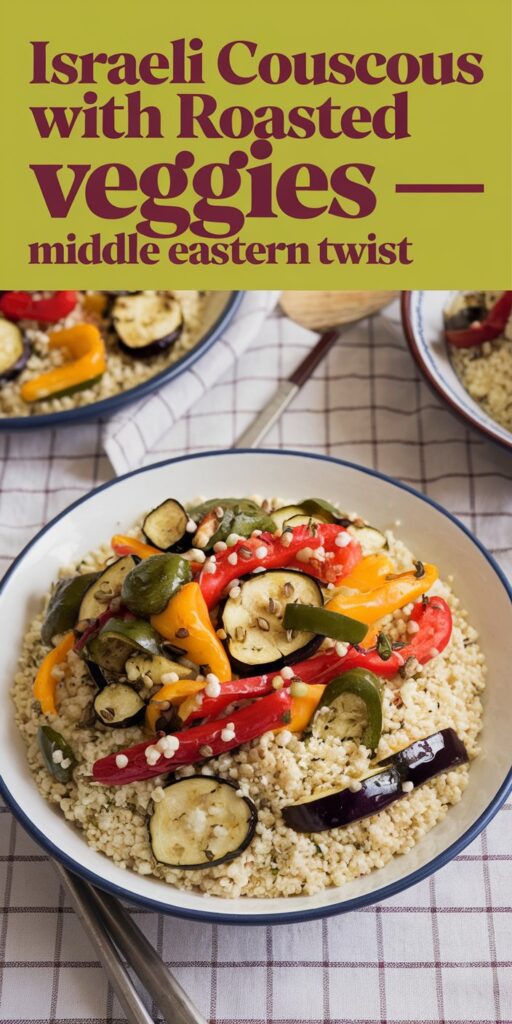
Israeli Couscous with Roasted Veggies – Middle Eastern Twist So Good bridges the gap between hearty pasta salads and robust grain bowls, delivering a dish bursting with color, chew, and complex flavors. Roasting the veggies at high heat coaxes out their natural sweetness and textures, while the pearl-like couscous forms a filling base that soaks in every aromatic note. With the addition of Middle Eastern spices—za’atar, sumac, cumin—you evoke culinary traditions that elevate humble ingredients to something truly memorable.
Whether served warm as a main course or chilled as a side for picnics or potlucks, this recipe is a testament to how simple, wholesome elements can unite in a bowl of satisfying comfort. Change up the veggies seasonally, toss in your favorite beans or proteins, or drizzle on a tangy tahini sauce for a personal signature. In essence, the combination of Israeli couscous, roasted vegetables, and a gentle nudge of Middle Eastern flair ensures your table stays fresh, vibrant, and irresistibly inviting.