



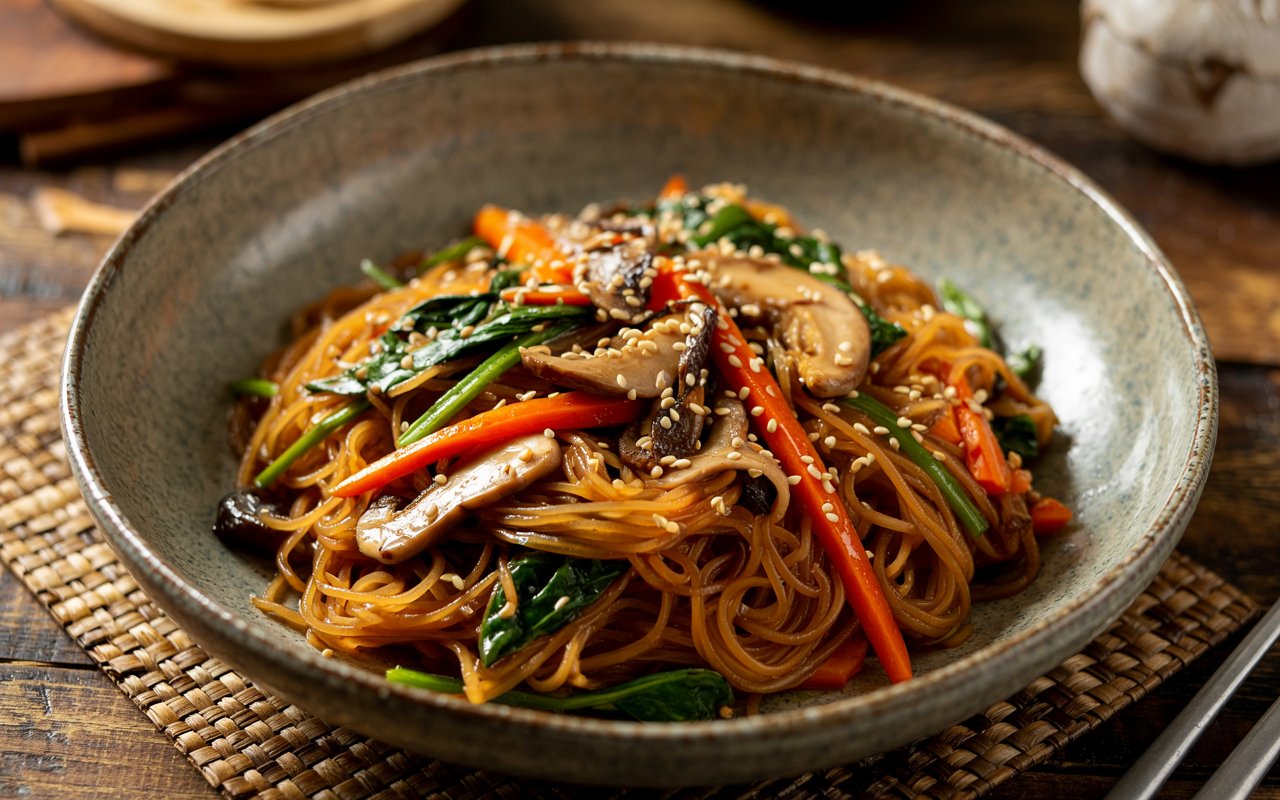
The first time I experienced Korean Japchae was during a bustling celebration at a friend’s home in Seoul. Each mouthful of the glossy, translucent noodles burst with sweet, savory, and smoky flavors, intertwined with colorful vegetables and toasted sesame seeds. As I twirled the noodles around my chopsticks, I was captivated by their delicate, chewy texture and the balanced harmony of soy sauce, sesame, and gentle sweetness. Inspired by that moment, I set out to perfect my own Japchae recipe, combining traditional techniques with accessible ingredients. Today, I’m excited to share my ultimate recipe for this beloved Korean classic—easy to make at home, vibrant to the eye, and deeply satisfying. Ideal for celebrations, everyday meals, or meal prepping, this Korean Japchae with Vegetables will become a standout dish in your culinary repertoire.
Why You’ll Love This Korean Japchae
- Irresistibly Chewy: Sweet potato glass noodles have an appealing, springy bite.
- Sweet & Savory: Balanced seasoning of soy sauce, sugar, and sesame oil.
- Packed with Veggies: Colorful array of stir-fried vegetables adds nutrition and crunch.
- Versatile: Enjoy hot, warm, or chilled—perfect for meal prep or gatherings.
- Easy Customization: Add protein, spice, or swap veggies to your preference.
- Gluten-Free Option: Naturally gluten-free when using tamari or gluten-free soy sauce.
The Story of Japchae

Japchae (잡채) translates to “mixed vegetables” and originated as a royal dish in Korea’s Joseon Dynasty. Initially a vegetable-only dish, noodles were later added, transforming Japchae into a staple at celebrations, especially during Korean New Year (Seollal) and festivals. Today, it symbolizes prosperity and abundance, beloved for its rich flavor and pleasing textures.
Ingredients You’ll Need
| Ingredient | Quantity |
|---|---|
| Korean sweet potato glass noodles (dangmyeon) | 8 oz (225 g) |
| Spinach, fresh | 4 cups |
| Carrot, julienned | 1 medium (1 cup) |
| Red bell pepper, julienned | 1 medium (1 cup) |
| Shiitake mushrooms, sliced | 1 cup |
| Yellow onion, thinly sliced | 1 medium |
| Garlic cloves, minced | 3 |
| Green onions, chopped | 3 stalks |
| Soy sauce (or tamari) | ¼ cup |
| Sesame oil | 3 tablespoons, divided |
| Brown sugar or honey | 2 tablespoons |
| Toasted sesame seeds | 2 tablespoons |
| Vegetable oil | 1 tablespoon |
| Salt and freshly ground pepper | To taste |
Pro Tip: Find sweet potato noodles in Asian supermarkets or online; substitute rice noodles in a pinch.
Equipment Needed
| Equipment | Purpose |
|---|---|
| Large pot | To cook noodles and blanch spinach |
| Large skillet or wok | For stir-frying vegetables |
| Colander | To drain noodles and vegetables |
| Chef’s knife & cutting board | To julienne vegetables |
| Mixing bowls | For seasoning and sauce mixing |
| Measuring cups and spoons | To ensure accurate measurements |
Step-by-Step Instructions
1. Cook the Noodles & Spinach (8 minutes)
- Bring water to a boil in a large pot. Add noodles and cook for 5–6 minutes until tender yet chewy.
- In the last minute, blanch spinach quickly, then remove spinach and set aside.
- Drain noodles; rinse under cold water, drain well, and transfer to a large bowl.
2. Season Noodles & Spinach (2 minutes)
- Drizzle noodles with 1 tablespoon sesame oil and toss to prevent sticking.
- Season spinach lightly with sesame oil, salt, and a dash of soy sauce; set aside separately.
3. Stir-Fry Vegetables (5 minutes)
- In a large skillet or wok, heat vegetable oil over medium-high heat.
- Add sliced onions, mushrooms, carrots, bell peppers, and garlic; stir-fry until crisp-tender, about 4–5 minutes.
- Season lightly with salt and pepper; transfer vegetables to bowl with noodles.
4. Prepare Sauce & Combine (2 minutes)
- In a small bowl, whisk together soy sauce, remaining sesame oil (2 tablespoons), brown sugar (or honey), and half the toasted sesame seeds.
- Pour sauce over noodles and vegetables; toss gently until evenly coated.
5. Finish & Garnish (2 minutes)
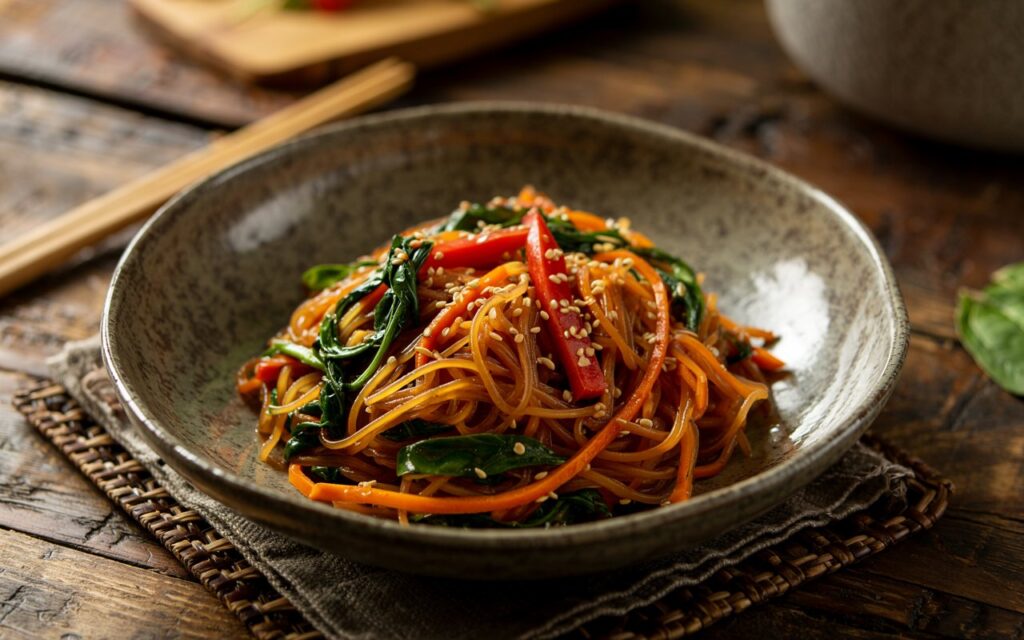
- Fold in spinach and chopped green onions.
- Garnish with remaining sesame seeds before serving.
(Total active time: approx. 20 minutes; total prep and cook time: about 25–30 minutes)
Nutrition Facts (per serving)
(Serves 4)
| Nutrient | Amount |
|---|---|
| Calories | 320 kcal |
| Total Fat | 10g |
| – Saturated Fat | 1g |
| Sodium | 700mg |
| Carbohydrates | 52g |
| – Dietary Fiber | 4g |
| – Sugars | 8g |
| Protein | 6g |
| Vitamin A | 80% DV |
| Vitamin C | 60% DV |
| Iron | 15% DV |
| Calcium | 6% DV |
Nutrition Insight: Japchae provides energy-boosting carbs and essential vitamins from colorful vegetables.
Tips for the Best Japchae
- Perfect Texture: Cook noodles until just chewy, as they’ll soften slightly when mixed.
- High Heat Stir-Fry: Quickly stir-fry vegetables over high heat to retain crispness and vibrant color.
- Even Cutting: Uniform julienned vegetables ensure consistent cooking and balanced bites.
- Make-Ahead Flavor: Japchae tastes even better after resting—great for meal prep or gatherings.
Flavor Variations & Add-ins
- Protein Addition: Add stir-fried beef strips, chicken, or tofu cubes for extra protein.
- Spicy Kick: Toss in gochujang (Korean chili paste) or chili flakes.
- Extra Veggies: Include zucchini, snow peas, or bok choy.
- Nutty Crunch: Sprinkle roasted peanuts or cashews on top before serving.
Make-Ahead & Storage
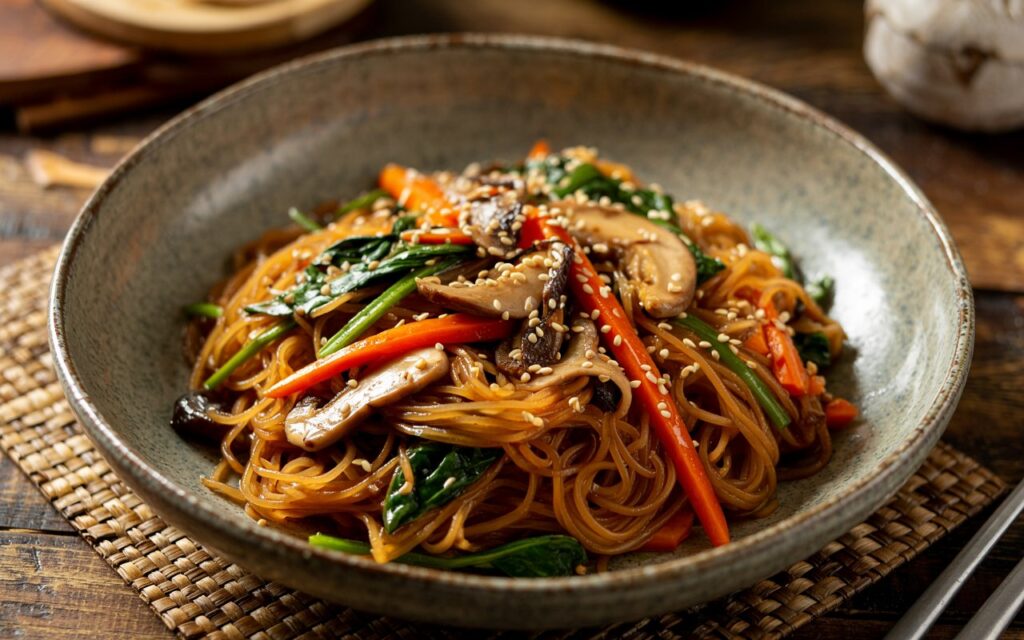
- Make Ahead: Prepare fully; flavors develop after refrigeration. Serve chilled or at room temperature.
- Refrigerate: Store in airtight container for up to 4 days. Refresh with a drizzle of sesame oil before serving.
- Reheat: Warm gently in a skillet with a splash of water or broth to restore moisture.
Frequently Asked Questions
Q1: Can Japchae be served cold?
A1: Yes, Japchae is traditionally enjoyed at room temperature, hot, or chilled.
Q2: Are glass noodles gluten-free?
A2: Yes, Korean sweet potato glass noodles are naturally gluten-free. Use tamari or gluten-free soy sauce to maintain gluten-free status.
Q3: Can I substitute noodles?
A3: Yes, substitute with rice noodles or even soba noodles, though the texture differs slightly.
Q4: How do I prevent noodles from clumping?
A4: Toss cooked noodles immediately with sesame oil.
Q5: What protein pairs best?
A5: Traditionally beef is common, but chicken, shrimp, or tofu are also excellent options.
Conclusion
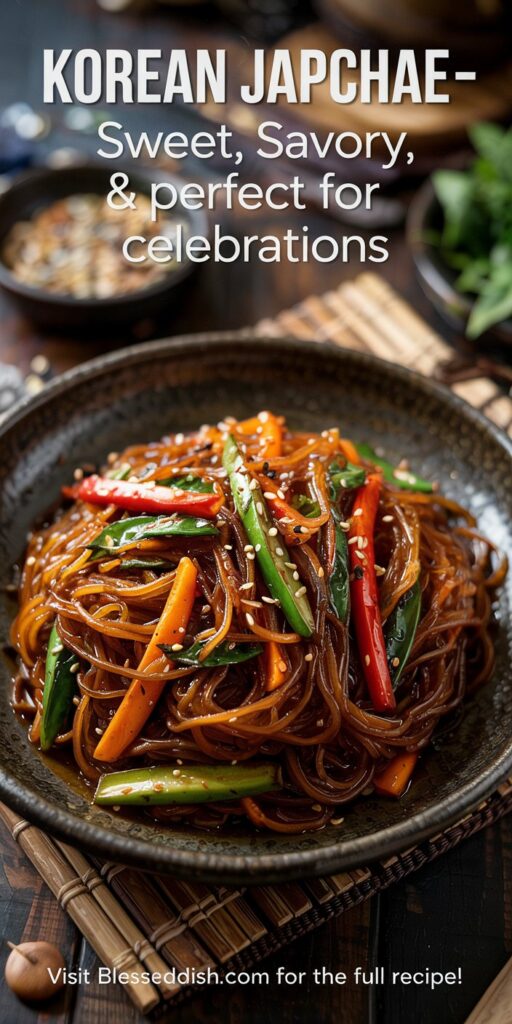
This vibrant, flavorful Korean Japchae with Vegetables is a delightful addition to any table—whether for festive gatherings, everyday dining, or nourishing meal prep. Ready to stir-fry your way to deliciousness? Visit BlessedDish.com for more authentic global recipes crafted with love. If you enjoyed this Japchae, please leave a ★★★★★ review below, share your vibrant creation on Instagram with #BlessedDish, and subscribe for weekly culinary inspiration delivered straight to your inbox.
Enjoy your colorful noodle adventure—맛있게 드세요! (Enjoy your meal!)