



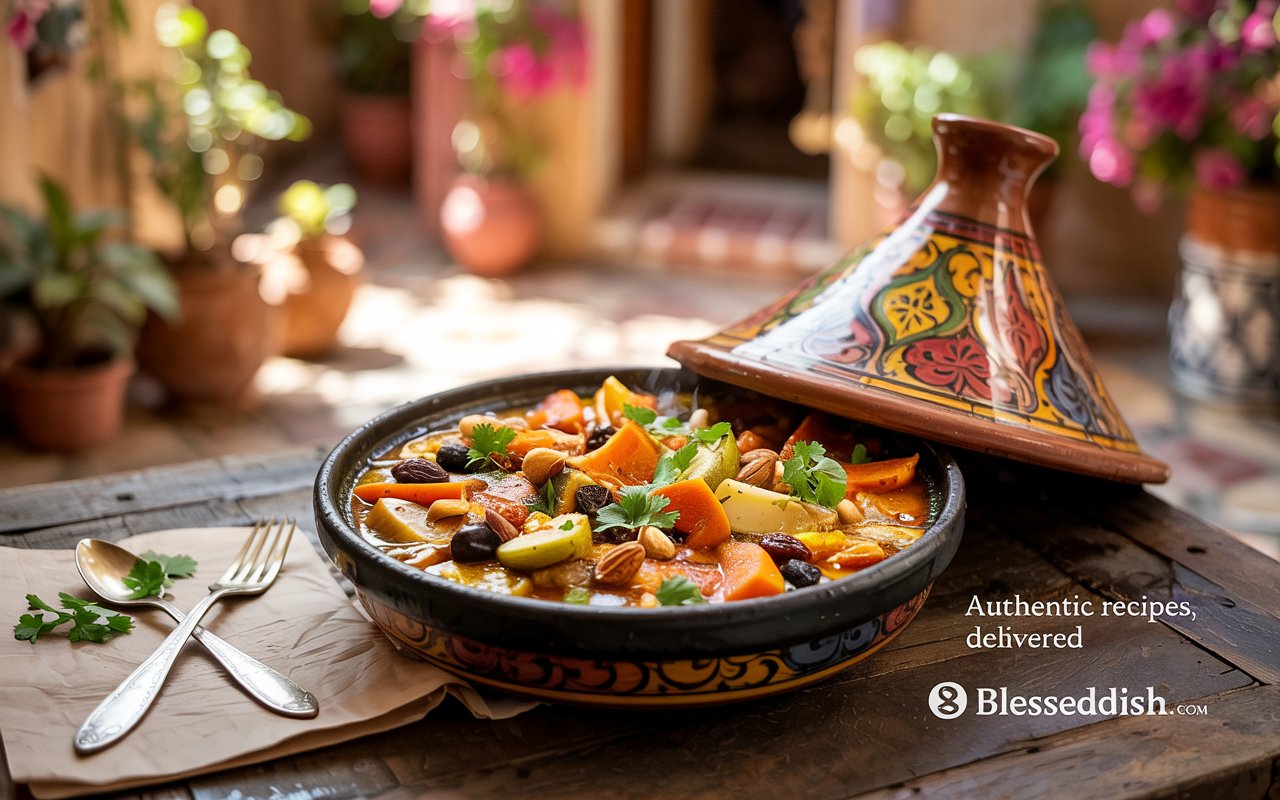
Imagine a dish that transports you to the vibrant, sun-drenched markets of Marrakech—a hearty, slow-cooked stew filled with tender seasonal vegetables, protein-rich chickpeas, and sweet, plump dried fruits, all simmered in a fragrant broth spiced with warm cumin, aromatic cinnamon, and a hint of saffron. Moroccan Vegetable Tagine is more than just a meal; it’s an exotic journey that combines rustic flavors with intricate spices to create a comforting yet spirited experience. I still remember my first taste of this tagine—the way the rich, slow-cooked flavors mingled with a subtle sweetness from dried apricots and raisins, and how the stew’s tender vegetables seemed to melt in my mouth, leaving behind a deep, memorable warmth. Perfect for a cozy dinner or a festive gathering, this tagine brings the allure of Moroccan culinary traditions right to your table.
The Inspiration Behind the Dish
Inspired by the traditional tagine cooking method—a slow, gentle simmer in a conical clay pot that preserves moisture and amplifies flavors—this recipe is a celebration of Moroccan heritage and its rich tapestry of spices. My travels through North Africa, with its bustling souks, intricate spice markets, and communal dining traditions, instilled in me a deep appreciation for the art of slow cooking. I wanted to capture that essence by creating a dish that not only nourishes but tells a story. The infusion of dried fruits like apricots and raisins adds a layer of unexpected sweetness, symbolizing the delightful surprises found in Moroccan cuisine. Combined with hearty chickpeas and a colorful array of vegetables, this tagine is a testament to the beauty of simple, rustic ingredients elevated by masterful use of spices.
Ingredient Insights & Nutritional Harmony
Every ingredient in the Moroccan Vegetable Tagine is chosen for its ability to contribute to a balanced, nutrient-rich dish while imparting a unique flavor. Seasonal vegetables such as carrots, zucchini, and bell peppers provide a spectrum of vitamins, minerals, and antioxidants, while chickpeas deliver plant-based protein and fiber, ensuring the stew is both filling and heart-healthy. Dried fruits, often overlooked, lend a natural sweetness and a chewy texture that beautifully contrasts with the tender vegetables. The spices, including cumin, cinnamon, and a touch of ginger, work in harmony to create a layered flavor profile—warm and earthy with a subtle exotic twist. This tagine is not only a feast for the senses but also a nutritionally balanced meal that supports digestion, boosts energy, and offers an array of health benefits.

Key Ingredients & Their Role
- Seasonal Vegetables: The backbone of the tagine, providing a vibrant mix of textures and essential nutrients.
- Chickpeas: Contribute a hearty protein punch and fiber, making the dish filling and satisfying.
- Dried Fruits (Apricots/Raisins): Introduce natural sweetness and a delightful, chewy contrast to the tender vegetables.
- Spices (Cumin, Cinnamon, Ginger): Infuse the stew with warm, aromatic flavors that are quintessentially Moroccan.
- Aromatics (Onions & Garlic): Create a rich base that deepens the overall flavor of the dish.
- Herbs (Fresh Cilantro/Parsley): Add a burst of freshness upon serving, balancing the robust, slow-cooked flavors.
Ingredients Table
| Ingredient | Quantity | Purpose/Notes |
|---|---|---|
| Carrots | 2-3 medium, peeled and cut into chunks | Adds sweetness, color, and a tender-crisp texture |
| Zucchini | 2 medium, sliced into thick rounds | Provides moisture, nutrients, and a delicate texture |
| Bell Peppers | 2 medium (any color), cut into strips | Contributes vibrant color and essential vitamins |
| Onion | 1 large, roughly chopped | Forms the aromatic base and lends depth to the stew |
| Garlic Cloves | 4 cloves, minced | Infuses the tagine with pungent, savory flavor |
| Chickpeas | 1 can (15 oz), drained and rinsed | Offers protein, fiber, and a hearty texture |
| Dried Apricots or Raisins | 1/2 cup, roughly chopped (if apricots) or whole raisins | Introduces natural sweetness and chewiness |
| Crushed Tomatoes | 1 can (14.5 oz) | Creates a rich, tangy base for the stew |
| Vegetable Broth | 2 cups | Serves as the liquid base that melds the flavors together |
| Ground Cumin | 1 teaspoon | Provides a warm, earthy flavor |
| Ground Cinnamon | 1/2 teaspoon | Adds a sweet and aromatic note |
| Fresh Ginger (grated) | 1 teaspoon | Infuses the stew with a subtle spicy kick |
| Olive Oil | 2 tablespoons | Used for sautéing the aromatics |
| Salt and Black Pepper | To taste | Essential seasonings to enhance the overall flavor |
| Fresh Cilantro or Parsley (for garnish) | 1/4 cup, roughly chopped | Adds a fresh, herbaceous finish upon serving |
Step-by-Step Recipe Instructions
- Sauté Aromatics:
In a large, heavy-bottomed pot or a traditional tagine, heat 2 tablespoons of olive oil over medium heat. Add the chopped onion and garlic, and sauté for 4-5 minutes until the onions become soft and translucent. Stir in the grated ginger, allowing it to release its aroma for an additional minute. - Build the Flavor Base:
Add the chopped carrots, zucchini, and bell peppers to the pot. Sauté for about 3-4 minutes, letting the vegetables begin to soften while absorbing the flavors of the aromatics. Season lightly with salt and black pepper. - Incorporate Chickpeas and Dried Fruits:
Stir in the drained chickpeas and add the dried apricots or raisins. Mix well so that the sweet elements begin to blend with the savory vegetables. - Add the Liquid Components:
Pour in the crushed tomatoes and vegetable broth. Stir the mixture to combine all ingredients thoroughly. Allow the stew to come to a gentle simmer. - Spice It Up:
Sprinkle in the ground cumin, ground cinnamon, and a pinch of additional salt and pepper if needed. Stir well to distribute the spices evenly. Bring the mixture to a simmer and then reduce the heat to low. - Slow-Cook the Tagine:
Cover the pot with a lid (or close the tagine) and let the stew simmer slowly for 25-30 minutes. This slow cooking process allows the vegetables to become tender, the flavors to meld, and the dried fruits to plump, releasing their natural sweetness into the dish. - Final Adjustments & Garnish:
Taste the tagine and adjust the seasonings as needed. If you prefer a slightly thicker consistency, continue simmering uncovered for an additional 5 minutes. Once satisfied, remove the tagine from the heat and garnish with a generous sprinkle of fresh cilantro or parsley.
Presentation & Serving Suggestions
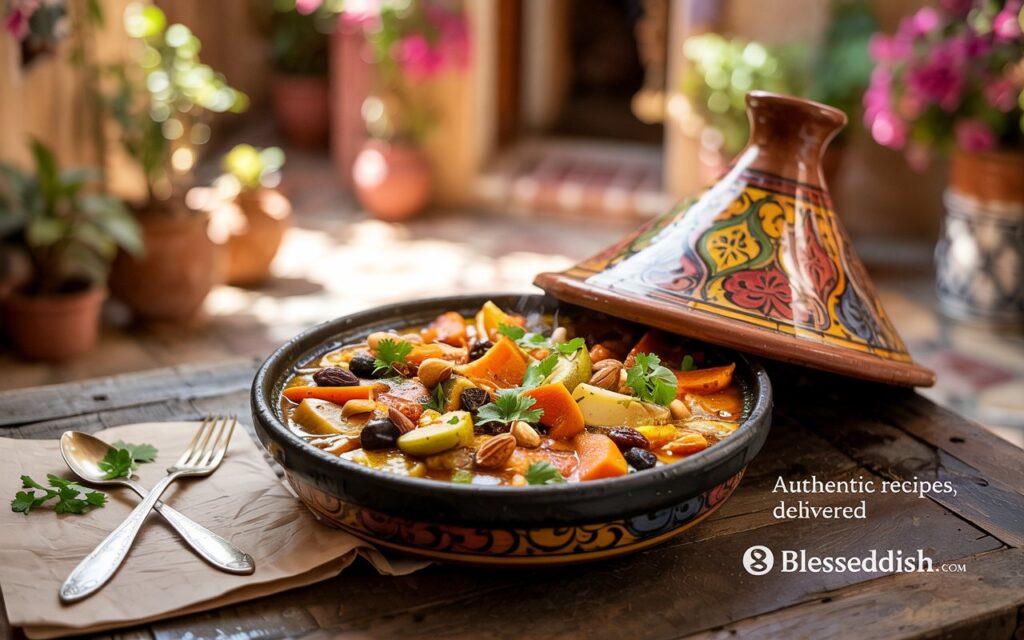
Serve your Moroccan Vegetable Tagine in a traditional deep, rustic bowl or a tagine pot to showcase its rich, hearty colors and textures. This stew pairs beautifully with warm, crusty bread like a baguette or Moroccan khobz to soak up the flavorful sauce. For an extra touch of authenticity, serve alongside a small bowl of couscous or rice, which perfectly complements the stew. A side of harissa or a cooling cucumber yogurt dip can add extra layers of flavor for those who enjoy a bit of heat or creaminess in their meal.
Tips & Tricks for Tagine Perfection
• Slow Cooking is Key:
Allowing the tagine to simmer slowly is crucial—it tenderizes the vegetables and allows the spices and fruits to meld seamlessly into a harmonious flavor.
• Adjusting Sweetness:
If the dried fruits are too tart, a small drizzle of honey or a pinch of sugar can balance the flavors without overpowering the dish.
• Vegetable Variations:
Feel free to experiment with other seasonal vegetables such as eggplant, squash, or even potatoes to create a tagine that reflects your local harvest.
• Traditional Touch:
For a more authentic experience, serve the tagine directly from a traditional clay tagine pot if available. Its unique heat retention properties can enhance the dish further.
• Garnish Wisely:
Fresh herbs not only add color but also a burst of fresh flavor—add them right before serving to maintain their vibrancy.
Frequently Asked Questions (FAQs)
Q: Can I make this tagine vegan?
A: Absolutely. This recipe is naturally vegan as long as you use vegetable broth. Simply ensure that any additional garnishes or sides are also vegan-friendly.
Q: How do I adjust the consistency if the stew is too watery?
A: If the tagine appears too thin, simmer it uncovered for an additional 5-10 minutes to let the liquid reduce and thicken to your desired consistency.
Q: Can I use dried fruits other than apricots or raisins?
A: Yes, you can experiment with dried figs, dates, or even prunes. Each brings its own unique sweetness and texture to the dish—just adjust the quantity based on your taste preference.
Q: Is it necessary to cook the tagine in a traditional tagine pot?
A: Not at all. While a clay tagine pot can enhance the flavor and authenticity, any heavy-bottomed pot with a tight-fitting lid will work perfectly.
Conclusion

Moroccan Vegetable Tagine is a celebration of rustic, exotic flavors that transports you directly to the heart of North Africa. With its tender seasonal vegetables, hearty chickpeas, and delightful bursts of dried fruits, all slow-cooked with aromatic spices, this stew offers both nourishment and a feast for the senses. It’s a dish that invites you to embrace the art of slow cooking while savoring the complex balance between savory, sweet, and spicy.
I encourage you to try this recipe in your own kitchen, experiment with your favorite vegetable additions, and share your culinary creations with our community. Leave your feedback or tag your photos with #MoroccanTagineMagic on social media to join fellow food enthusiasts in celebrating this timeless dish.
Enjoy your Moroccan Vegetable Tagine and happy, exotic cooking!